
Why does the first crisp morning immediately trigger a complete porch overhaul? Hauling dead soil and entirely replacing your front yard containers every single season is exhausting. A smart landscape design plans for the fade. Dropping structural elements like dark heuchera, trailing vines, and hardy ornamental grasses into your pots creates a continuous, evolving display.
These specific plants shift their colors dynamically with the cooling weather. This clever layering hides the dying summer blooms organically. You get an incredibly cohesive entrance that looks deliberate and well-maintained straight through to winter.
1. Stepping up the slope with corten steel
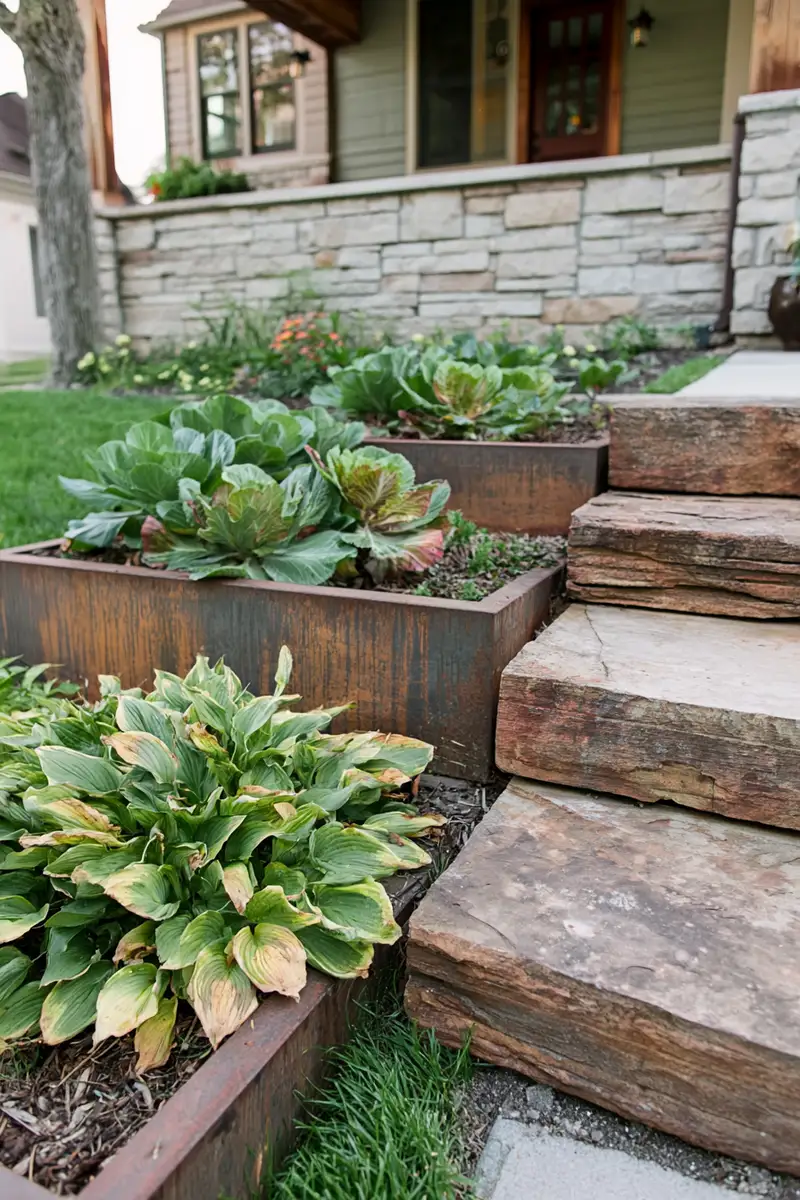
Sloped front walkways often look messy when soil washes down during heavy autumn rains. Corten steel retaining planters step up the grade perfectly to solve this. The rust finish embraces the fall aesthetic naturally. Packing them with hardy ornamental cabbage handles the early frost effortlessly. It stops soil erosion dead in its tracks.
2. Break harsh architectural lines
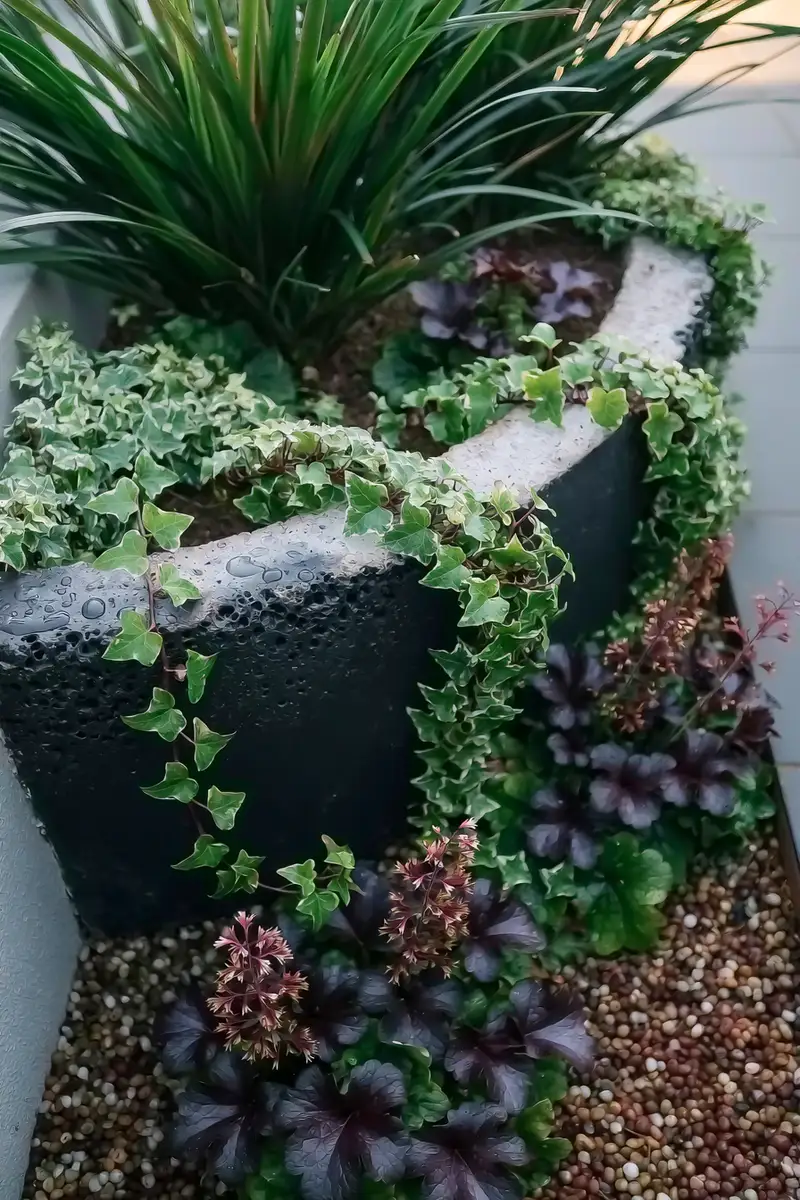
Small porch corners feel flat and easily get overlooked. A textured porous concrete vessel changes the focal point entirely. Letting English ivy spill over the rough edge breaks up rigid wall lines. The dark purple heuchera adds massive visual depth as summer blooms fade. Zero pruning is required.
3. The instant foundation screen
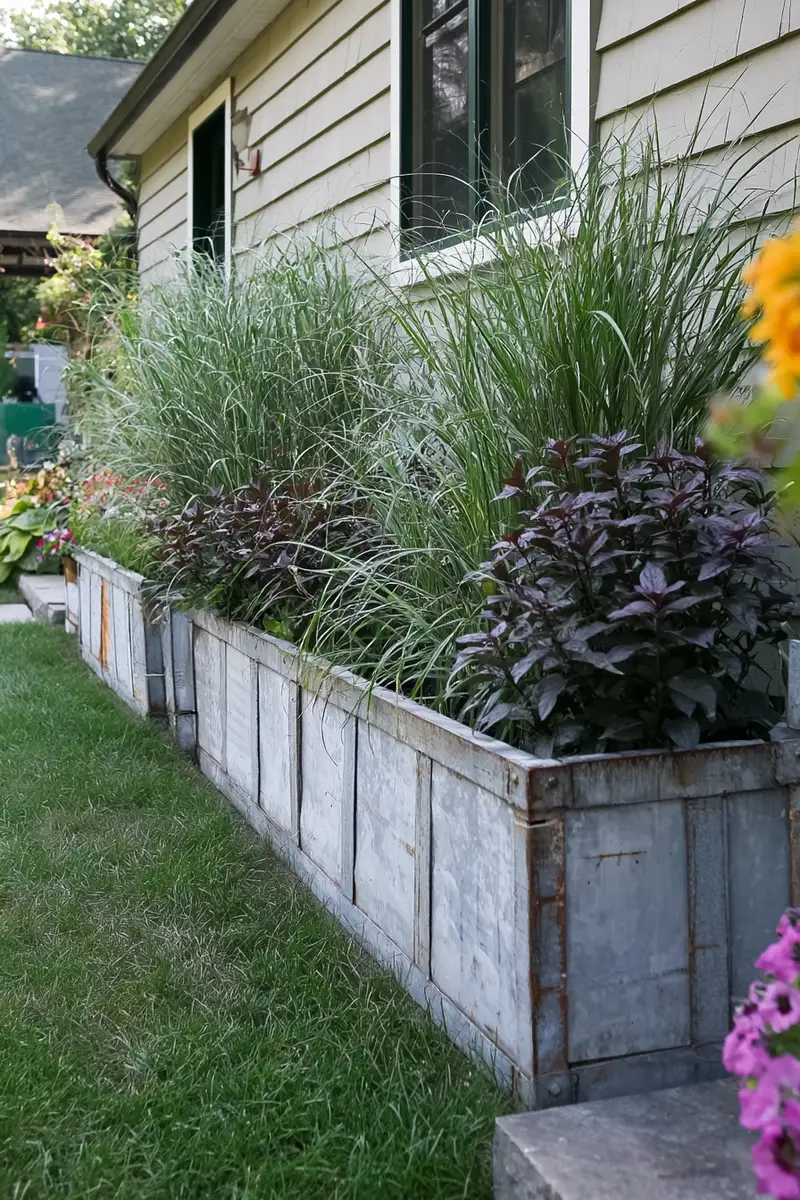
Exposed concrete foundation walls are a massive eyesore for any home exterior. Waiting for standard shrubs to grow tall enough to hide them takes years. Dropping a long galvanized metal trough against the siding offers an instant architectural screen. Tall ornamental grasses shoot up fast to hide the ugly block. Mixing in dark moody foliage creates a dense, living wall that thrives well into late November. It is a brilliant, quick fix for bare house fronts.
4. Modular squares anchor the grid
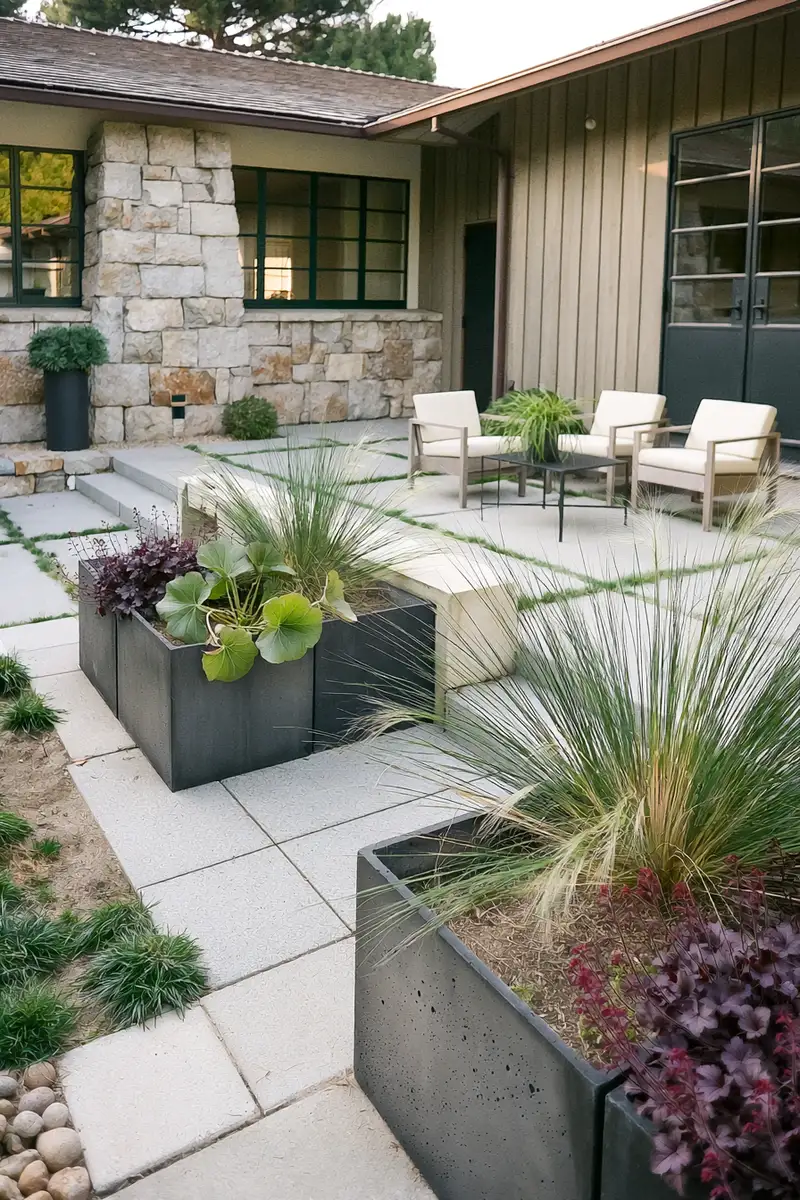
Transitioning between modern grid patios and soft lawns can feel abrupt and sterile. Dropping modular dark concrete squares directly onto the hardscape bridges that gap seamlessly. The sharp edges respect the grid design. Meanwhile, the wild, spiky grasses blowing in the wind soften the heavy stone. It brings organic life right into the seating zone without planting directly in the ground.
5. Lighting the way
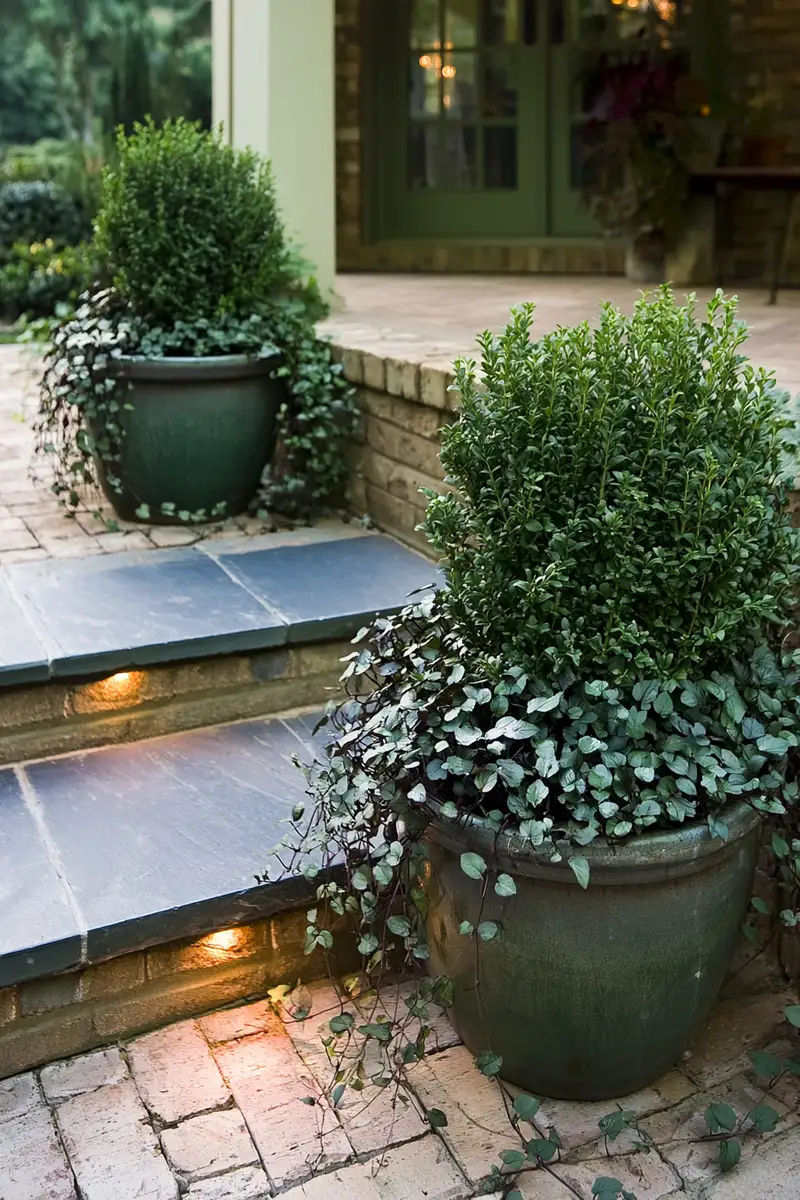
Front steps become invisible trip hazards when days get shorter in autumn. Glazed ceramic pots do more than just hold plants here. They anchor the edges of the stairs visually. Pairing them with low-voltage step lights ensures safe navigation.
6. A forest fragment on concrete
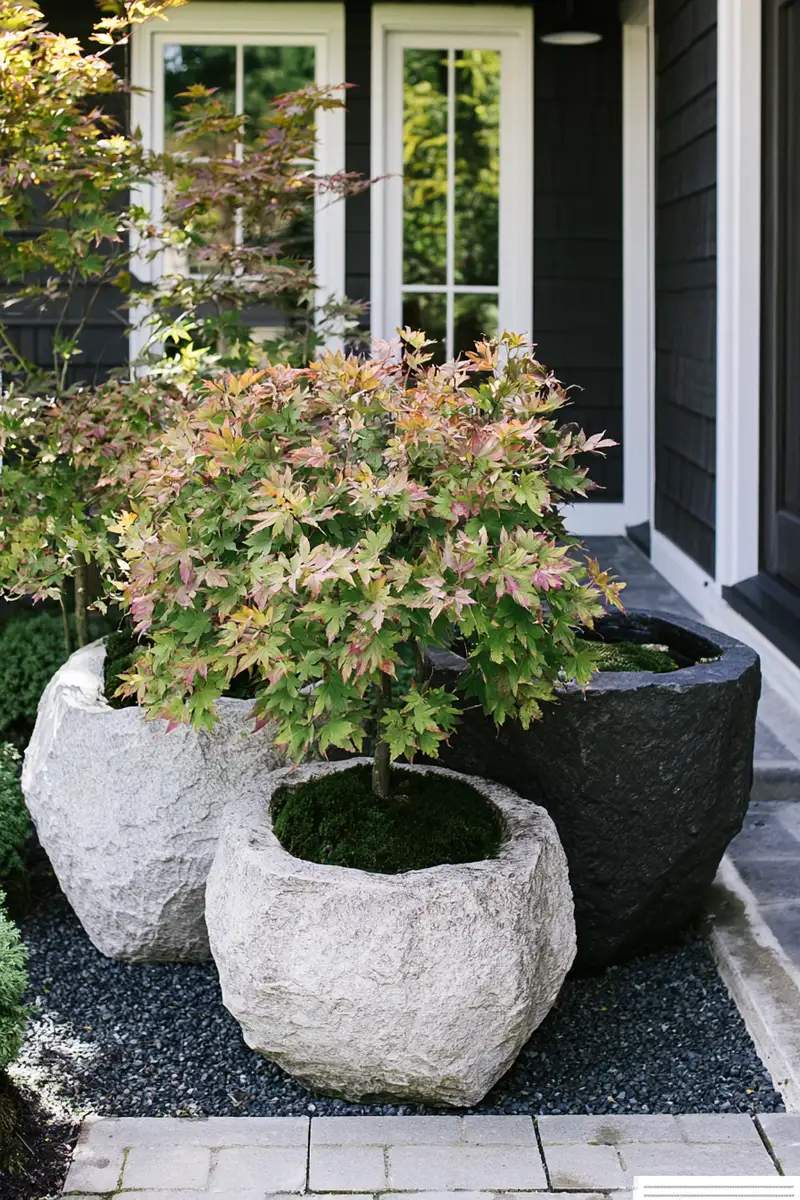
Finding space for trees on a small concrete landing is usually impossible without doing major demolition. Use hollowed-out faux stone boulders instead. They give you the root depth needed for a dwarf Japanese maple without ripping up the patio. The rough stone texture looks incredibly established. As the maple leaves transition to crisp fall colors, the whole setup feels like a natural forest fragment dropped right at the front door.
7. Stop the rot
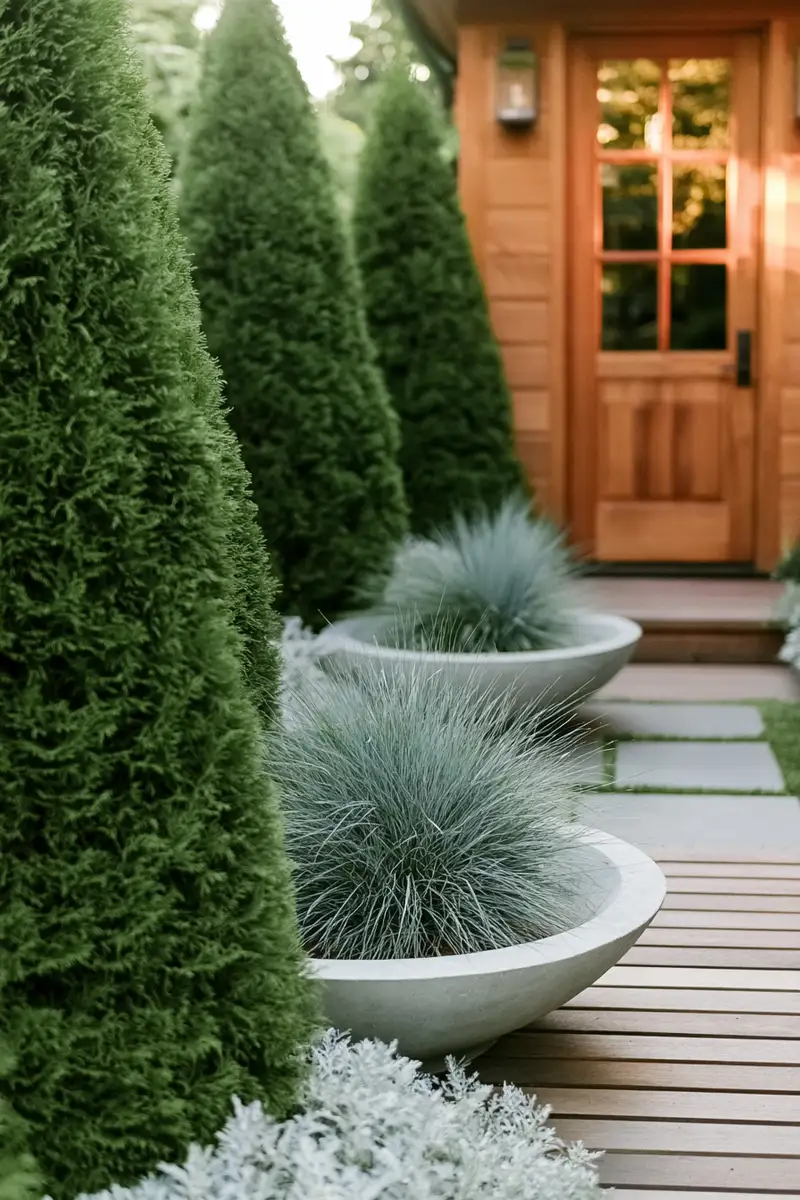
Wooden decks often look flat, but putting large soil-filled planters directly on them causes wood rot fast. Shallow concrete bowls elevate the dirt. This prevents moisture damage instantly. Filling them with low-maintenance blue fescue grass adds a striking pop of icy color against the warm cedar siding.
8. Matching the architectural weight at the entry
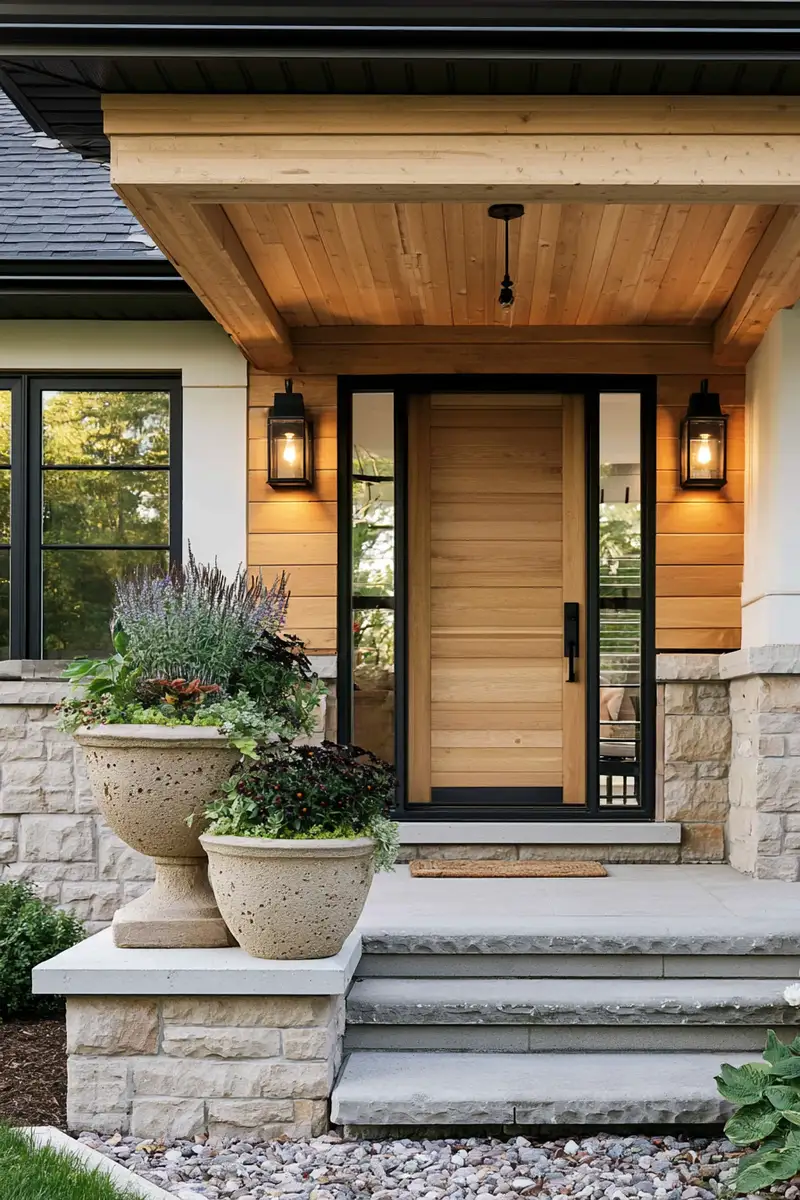
Flanking a modern front door with tiny, cheap plastic pots just looks out of scale. You have to go big. Massive, heavily textured stone urns match the visual weight of the modern wood door and heavy stone pillars. Planting cold-tolerant purple sage and dark ornamental peppers bridges the gap between late summer heat and early frost. It commands attention from the street.
9. The ultimate mower strip defense
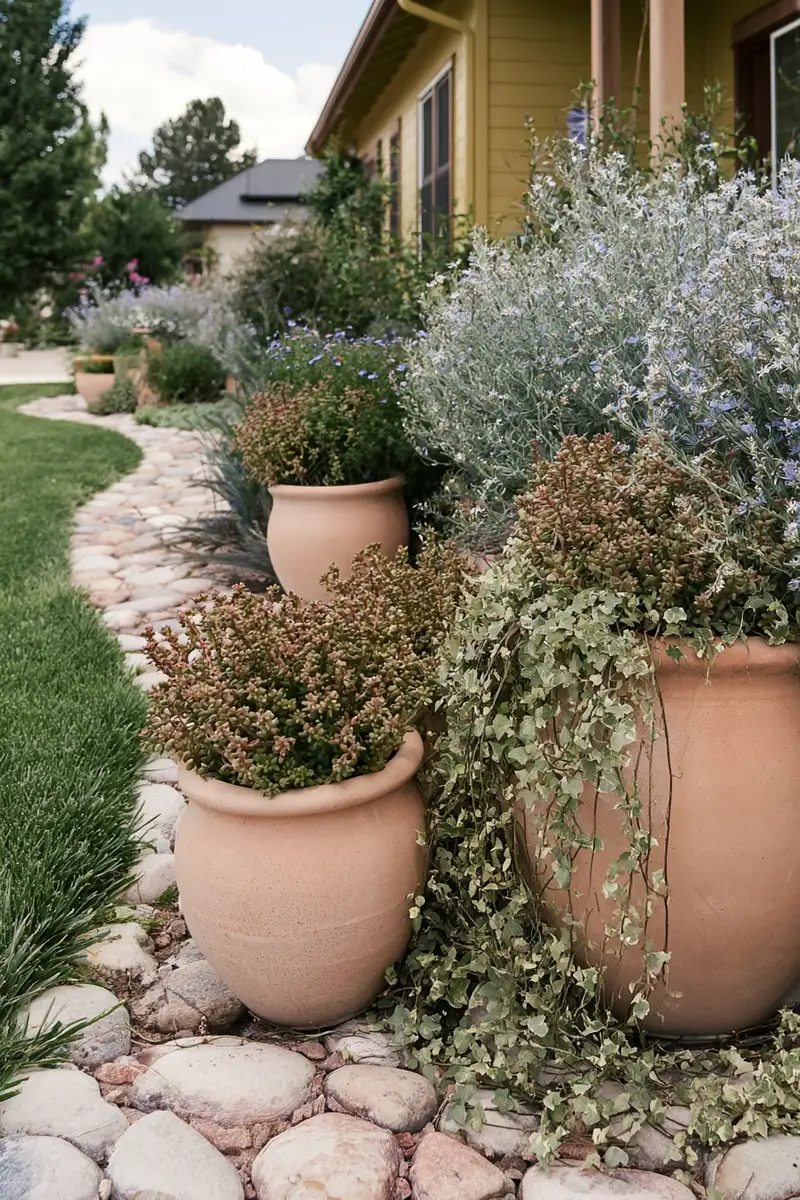
Mowing right up against messy garden beds is a frustrating weekend chore. A wide river rock border acts as a flawless mower strip. Stacking classic terracotta pots directly on the stones keeps the grass perfectly separated from the trailing vines. Autumn-blooming sedum thrives in these specific containers. It handles the changing temperatures easily. The entire edge stays completely sharp and mud-free all season long.
10. Keep it strictly structural
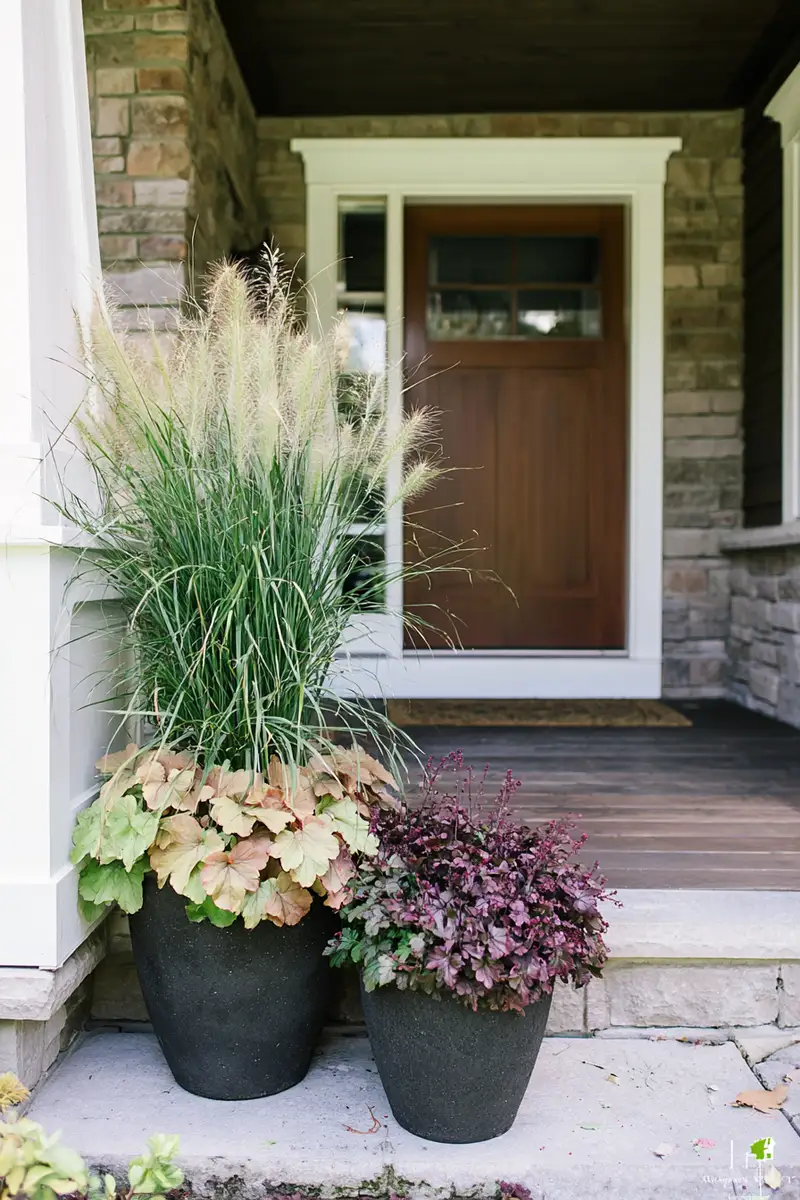
Traditional seasonal displays often clash with modern home exteriors. Keep it strictly structural instead. Sleek matte black pots disappear into the background. The tall fountain grass does all the heavy lifting. It is totally fuss-free.
11. Blurring the heavy masonry line
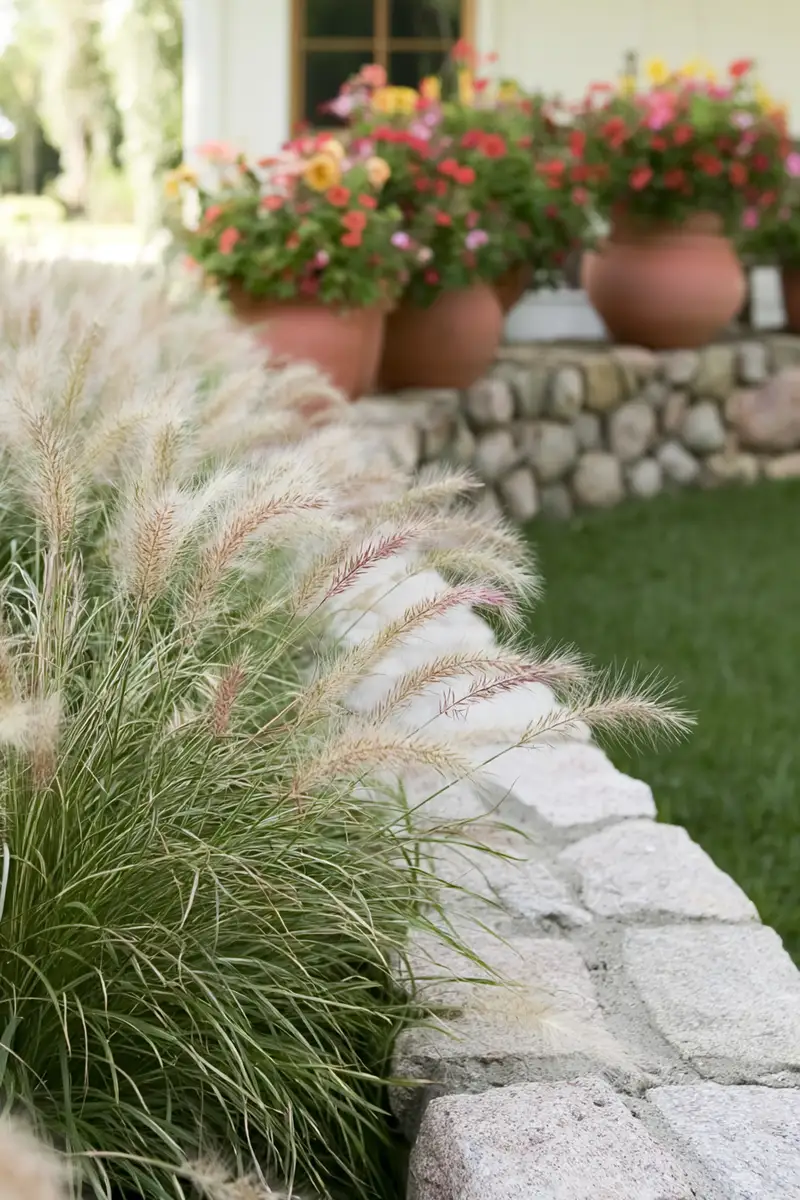
Hard stone retaining walls easily look harsh and separate the yard from the porch too abruptly. Planting soft, feathery grasses directly behind the stone edge blurs that rigid line. The wheat-colored grass heads catch the wind and the low autumn sunlight. It softens the heavy masonry while bridging the seasonal gap between summer blooms and winter dormancy perfectly.
12. Building a living privacy screen on open porches
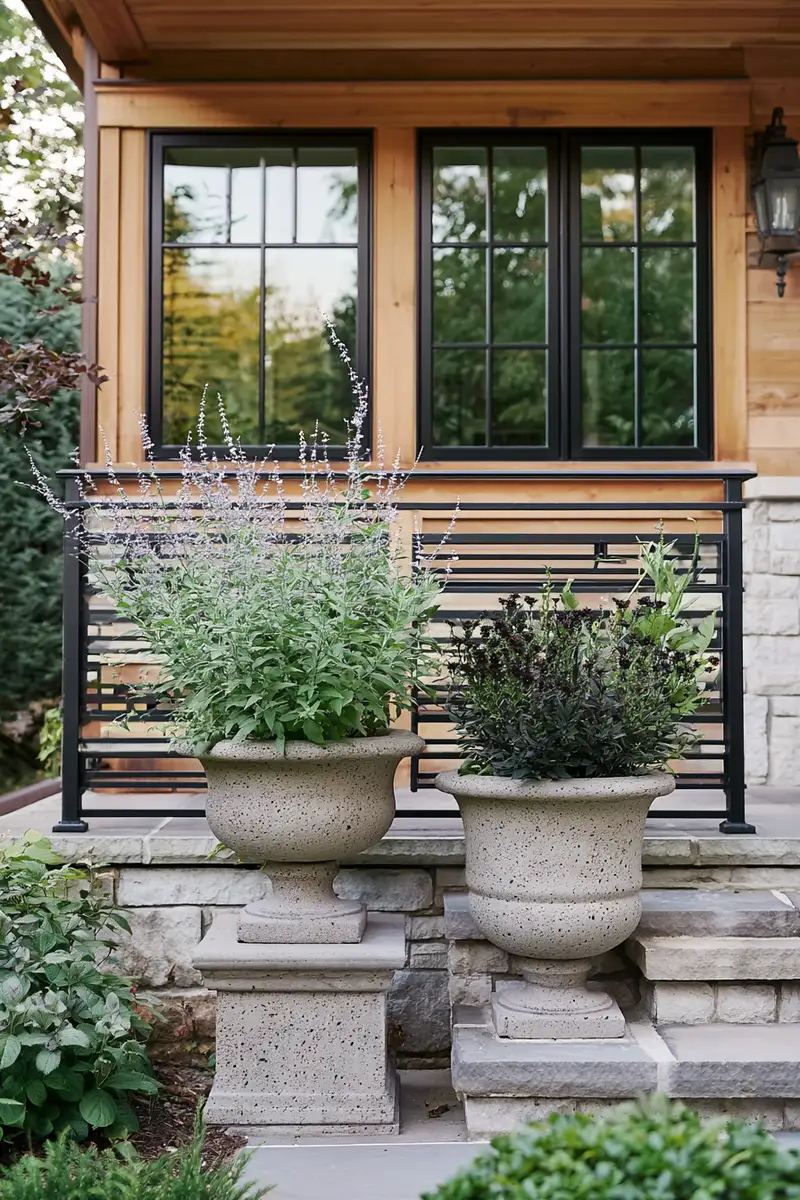
Open porches with basic metal railings often feel completely exposed. They lack privacy from the street. Elevating massive cast-stone urns on pedestals creates an immediate, structural visual barrier. Packing them with tall, airy Russian sage and dense dark foliage provides serious privacy without blocking the natural light. It anchors the entryway with heavy architectural weight. The cool purple and black tones handle the transition into cooler weather flawlessly.
13. The ultimate weed defense
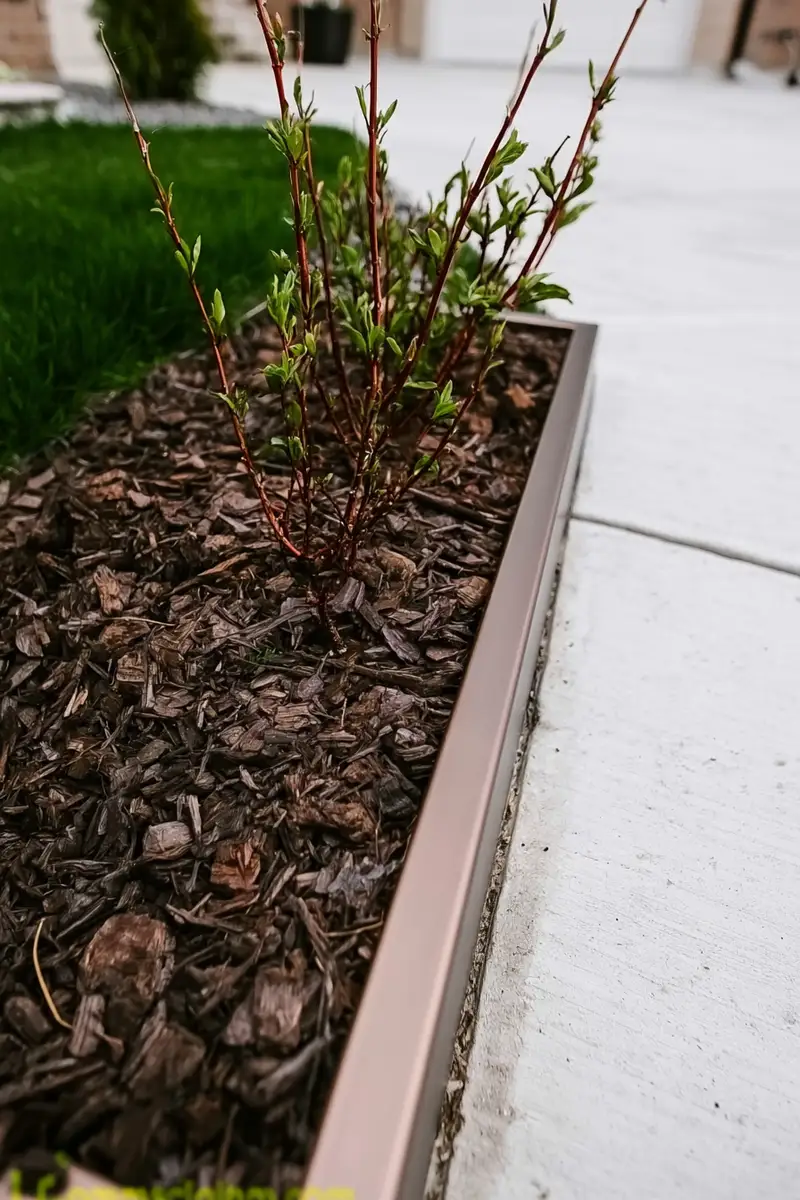
That narrow gap between a concrete walkway and the lawn is a notorious weed trap. Slipping a sleek metal planter trough into that tight space eliminates the issue entirely. It clearly defines the pavement edge. The dark mulch and dormant red-twigged shrubs handle freezing temperatures easily.
14. Managing elevation changes affordably
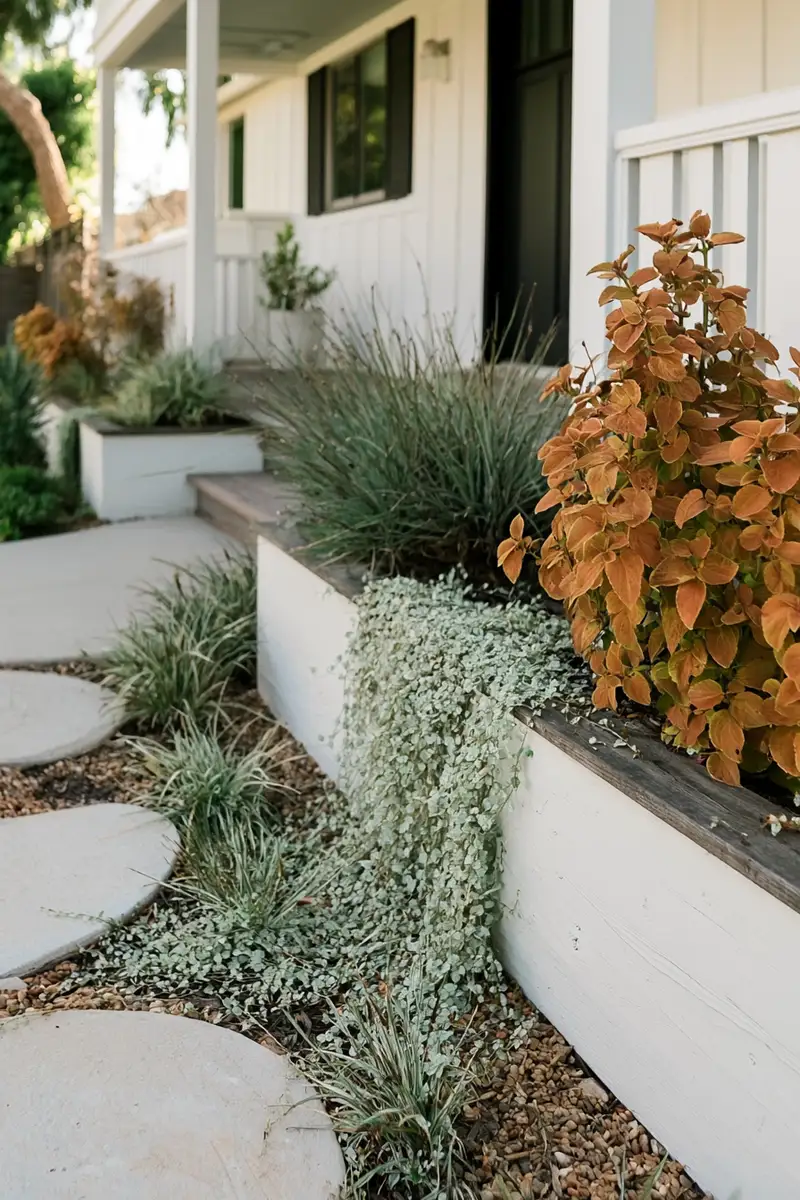
Front yard elevation changes usually require expensive concrete terracing. Stepping down the slope with simple painted wooden planter boxes handles the grade change affordably. It forces visual structure. Trailing silver foliage spills over the stark white edges, softening the physical drop. Sticking a massive rust-colored coleus in the center injects instant autumn energy into the arrangement without needing complex, high-maintenance floral setups.
15. Breaking up the concrete expanse
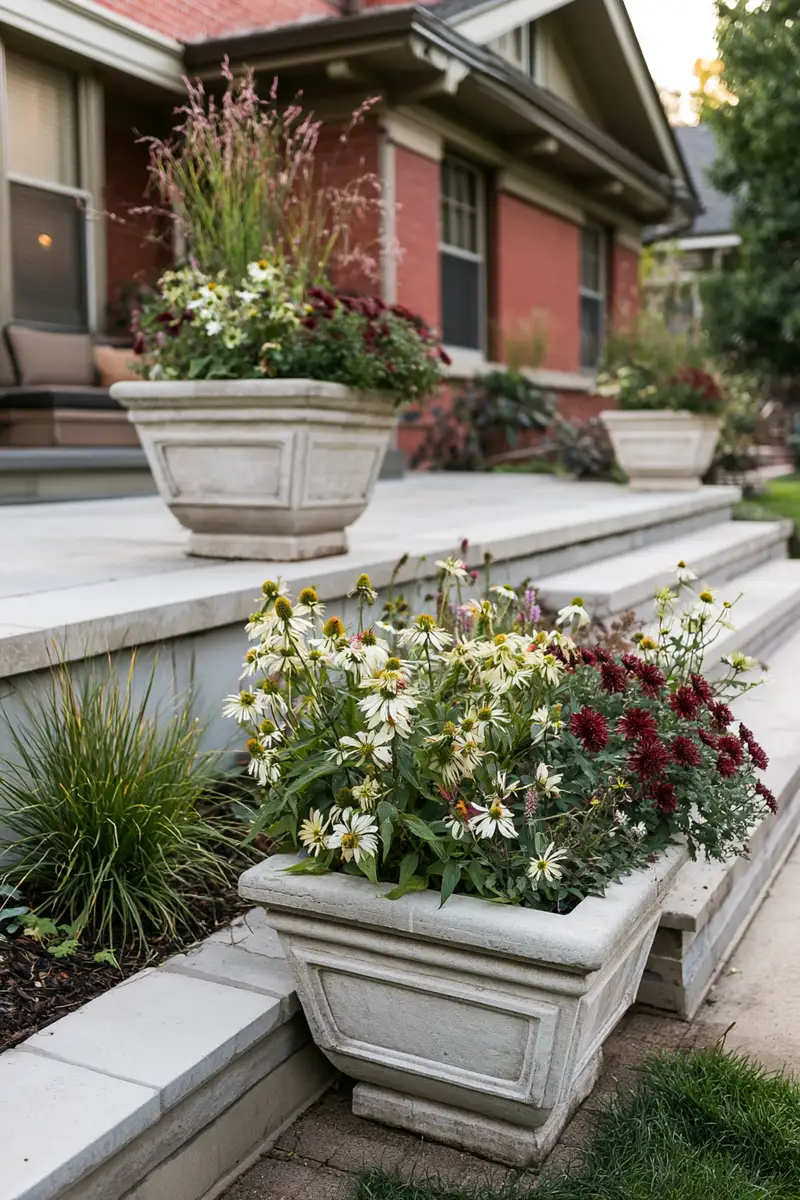
Extra-wide concrete front steps look incredibly stark and commercial. Placing heavy cast-stone troughs directly on the tread ends fixes this quickly. It breaks up the massive gray expanse and guides the foot traffic. Leaving the dried brown seed heads on the summer coneflowers and mixing them with dark autumn mums creates a brilliant late-season texture. It requires absolutely zero deadheading.
16. Calming the rustic chaos
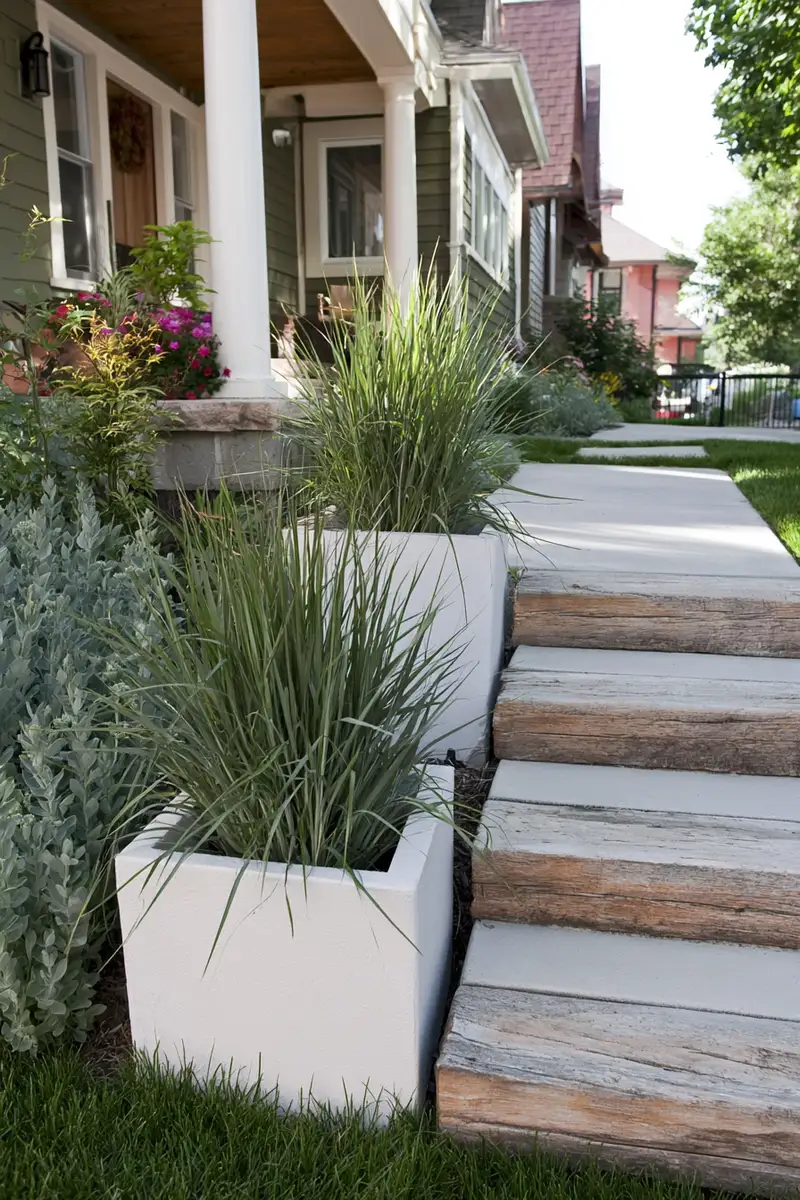
Highly textured rustic timber steps easily look chaotic. Sharp white cube planters provide the ultimate visual contrast. Using a single type of upright grass keeps the look totally controlled and modern.
17. Absorbing the foundation glare
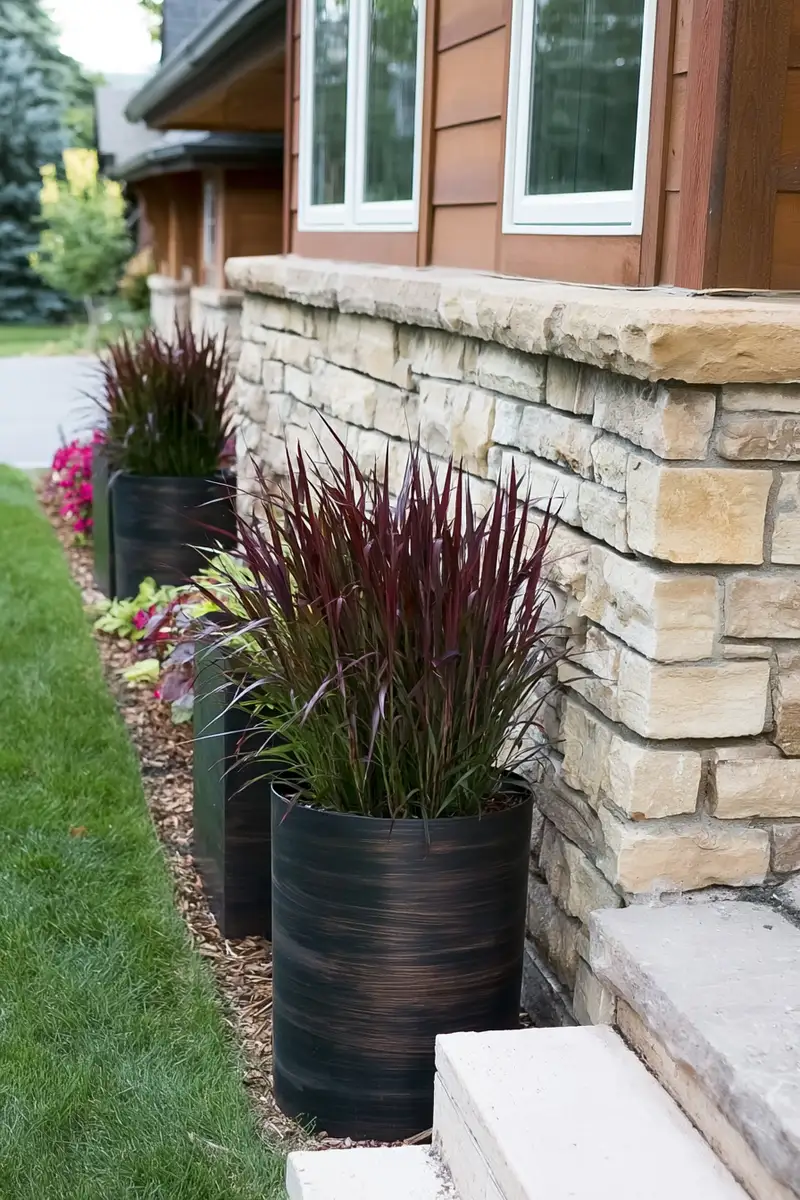
Pale stone foundations can glare harshly in the low autumn sun. Lining the wall with matte black cylindrical pots absorbs that excess light immediately. The deep burgundy grass creates a sharp, moody contrast against the light stone block. It is a striking seasonal shift that requires almost zero watering as the weather cools.