Flat, dead garden beds are the depressing reality of late November. Most homeowners watch their colorful summer yards turn into a muddy brown mess as the temperatures drop. It does not have to be that way. Swapping out high-maintenance perennials for structural ornamental grasses completely changes the late-season dynamic. These tough plants thrive when everything else is dying back. They catch the low autumn sun and bring kinetic movement to stiff, frozen landscapes. You get a highly textured, established look that requires almost zero pruning before the snow hits.
1. Softening the harsh driveway edge

Long gravel driveways usually look stark and commercial. Planting a continuous, sweeping line of tall ornamental grass solves this instantly. It creates a thick living border that requires almost zero pruning. The golden stalks catch the autumn light while neatly containing the loose gravel. It is a highly effective, low-maintenance screen for residential entryways.
2. Anchoring the stone patio

Huge slate patios often feel cold and exposed. Using heavy, established clumps of warm-toned grasses around the perimeter softens the entire space. It immediately grounds the wooden seating arrangement and breaks up the rigid grid of the paving stones.
3. Crisp transitions with solid steel edging

Keeping thick garden beds from creeping into a manicured lawn is a constant weekend battle. Without a proper barrier, the transition line turns into a muddy, overgrown mess. Installing a heavy-duty steel edge solves the soil migration issue completely. The sharp metal line enforces strict visual order. It keeps the wild, tall ornamental grasses neatly contained on one side while maintaining a flawless, easily mowed turf on the other. It looks incredibly established and deliberate.
4. Terracing the steep slope

Sloped front yards are a nightmare for soil erosion. Massive stone blocks build a permanent structural terrace. Dropping tough, low-growing grasses into the gravel pockets stops runoff completely and requires zero mowing.
5. High-visibility foundation planting

Planting boring evergreen shrubs right against the house foundation feels heavy and outdated. Swapping them out for tall, variegated grasses brings instant vertical lift. The striped leaves lighten up the dark wall surface. They provide a dense, established look without the aggressive root systems that threaten residential foundations.
6. Locking down the drainage channel

Backyard water features and drainage swales frequently suffer from muddy, unstable banks. Heavy rain just washes the soil right into the rocks. Lining the edges with a strict row of uniform, low-growing grasses fixes the erosion issue elegantly. The dense root systems lock the surrounding dirt in place. The bright yellow foliage provides a sharp contrast against the dark, wet river stones. This ensures the water channel stays clean, structural, and visually striking all season long.
7. Capturing the low autumn sun

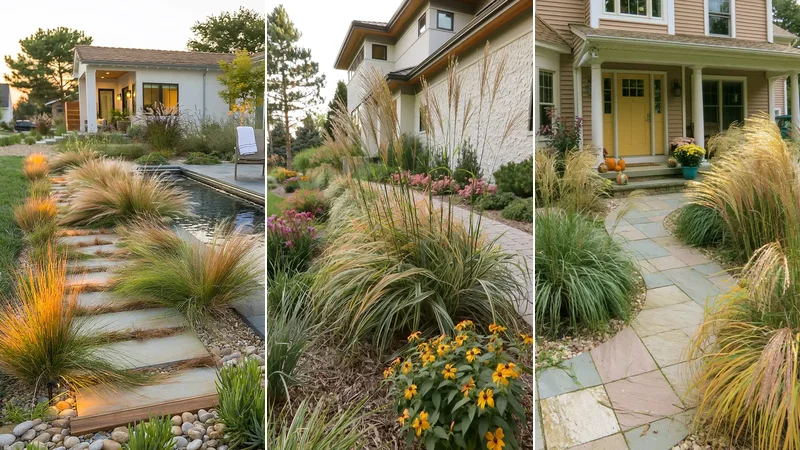
Flat garden beds look dead by November. Adding tall grasses with feathery pink plumes introduces kinetic movement. They catch the low autumn sunlight, making the entire planting bed look alive and highly textured.
8. Softening the concrete fire pit bunker

Sunken fire pit lounges easily end up looking like harsh concrete bunkers. Layering deep purple and black ornamental grasses on the surrounding retaining walls completely changes the atmosphere. The dark foliage softens the heavy stone blocks. It provides a thick, wind-blocking perimeter that makes the seating area feel private, warm, and distinctly residential.
9. Grounding the property line

A bare wooden fence running along a property line looks totally disconnected from the landscape. Building a deep, gravel-mulched bed at the base fixes this. Mixing rust-colored grasses with late-season perennials visually anchors the posts to the ground, creating a very established boundary.
10. The narrow side yard privacy screen

Tight side yards are usually neglected dirt paths with zero privacy from neighbors. Using a straight gravel walkway and flanking it with tall, upright grasses turns a dead zone into a deliberate corridor. The grass acts as a fast-growing, low-maintenance visual screen. It softens the hard wooden fence and the house siding simultaneously. You get a highly maintained, modern walkway without dealing with the hassle of trimming formal hedges in a cramped space.
11. Vertical screening for narrow footprints

Bare exterior walls easily make a house look unfinished. Dropping in a tight row of tall, red-stemmed grasses provides instant architectural height. You get a dense, established screen that requires a tiny planting footprint. It completely hides the foundation block without invasive roots.
12. Softening the modern desert grid

Transitioning between artificial turf, gravel beds, and poured concrete paths is visually jarring if not handled correctly. The sharp angles often feel too harsh. Placing soft, mounding grasses right at the intersections completely changes the dynamic. The feathery texture spills slightly over the rigid concrete edges. It breaks up the strict geometry while physically preventing the loose gravel from kicking up onto the walking path. The whole setup maintains a highly maintained, deliberate look that handles drought perfectly.
13. Lighting up the shade

Dark woodland steps quickly become muddy erosion hazards. Cascading yellow grasses lock down the slope entirely. Their bright foliage acts like natural pathway lighting in heavy shade.
14. Creating a secluded entry sequence

Wide front walkways easily feel exposed to the street. Flanking a curved stone path with massive, sweeping grass plumes changes the approach. The tall stalks lean in, forming a living tunnel that moves with the wind. It transforms a standard yard into a deeply private residential entry.
15. Warming up the poolside slabs

Water features surrounded by massive stone pavers easily read as cold and stark. Floating heavy stone steps over the water looks great, but the hard edges need balancing. Tucking small clumps of grass between the slabs solves this. The foliage catches the low-voltage landscape lighting brilliantly at night. More importantly, these specific grasses stay intact. They soften the hardscape without constantly shedding messy leaves into the clean pool water. It is a brilliant way to keep luxury hardscaping feeling warm.