
1. The sunken cobblestone mower strip
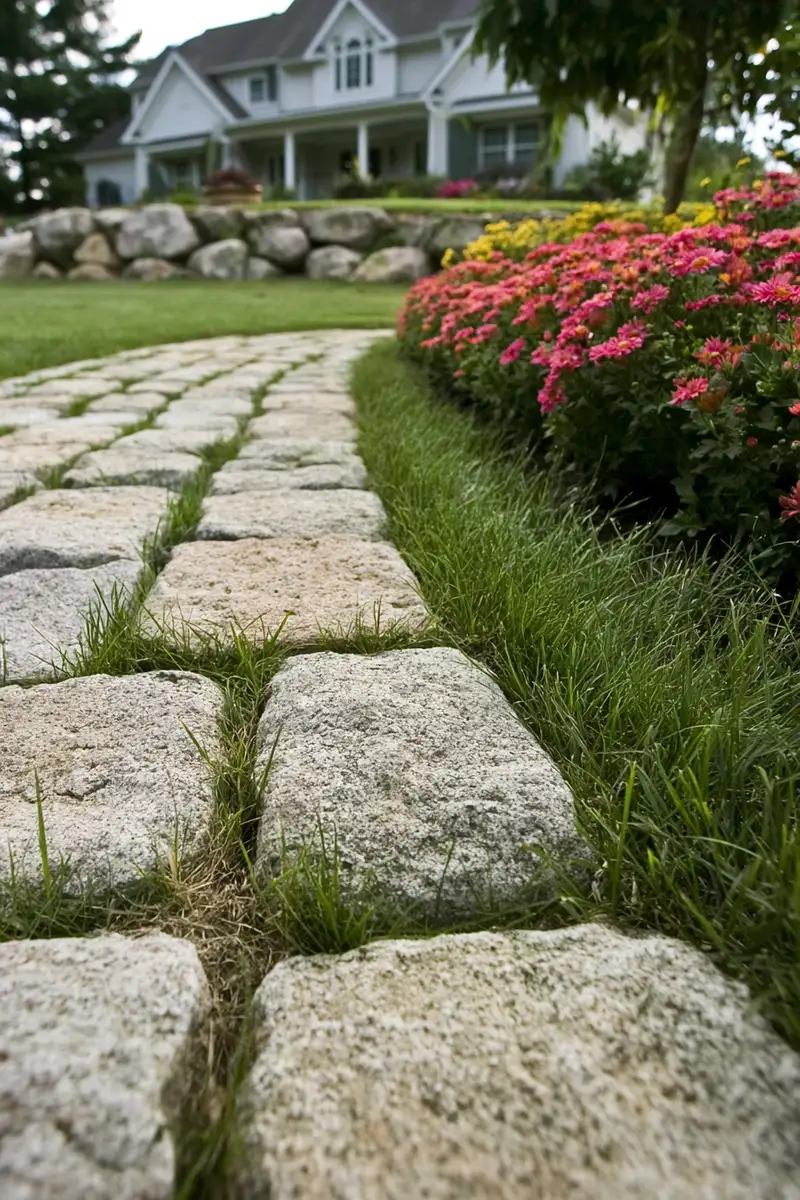
Mowing around pathways usually requires tedious string trimming. Sinking cobblestones perfectly flush with the turf solves this completely. The mower wheel rolls right over the stone. You get a crisp, clean border without extra weekend work.
2. Staggered timber blocks for slope control
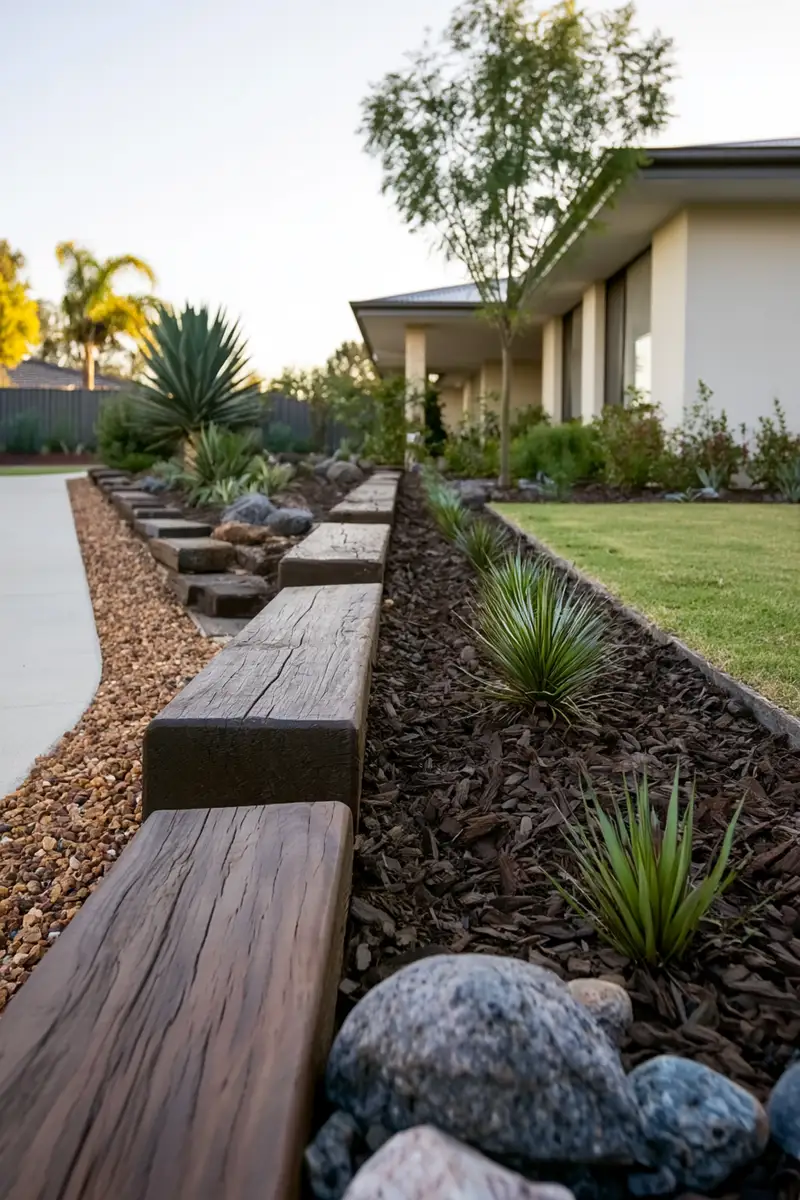
Heavy rain easily washes dark mulch right onto clean concrete pathways. Building a staggered border with thick, structural timber blocks stops this migration instantly. The heavy wood acts as a rigid mini-retaining wall along the curve. It locks the soil in place and keeps the sharp landscaping rocks neatly contained. It is a highly deliberate, structured solution.
3. Vertical bamboo defense
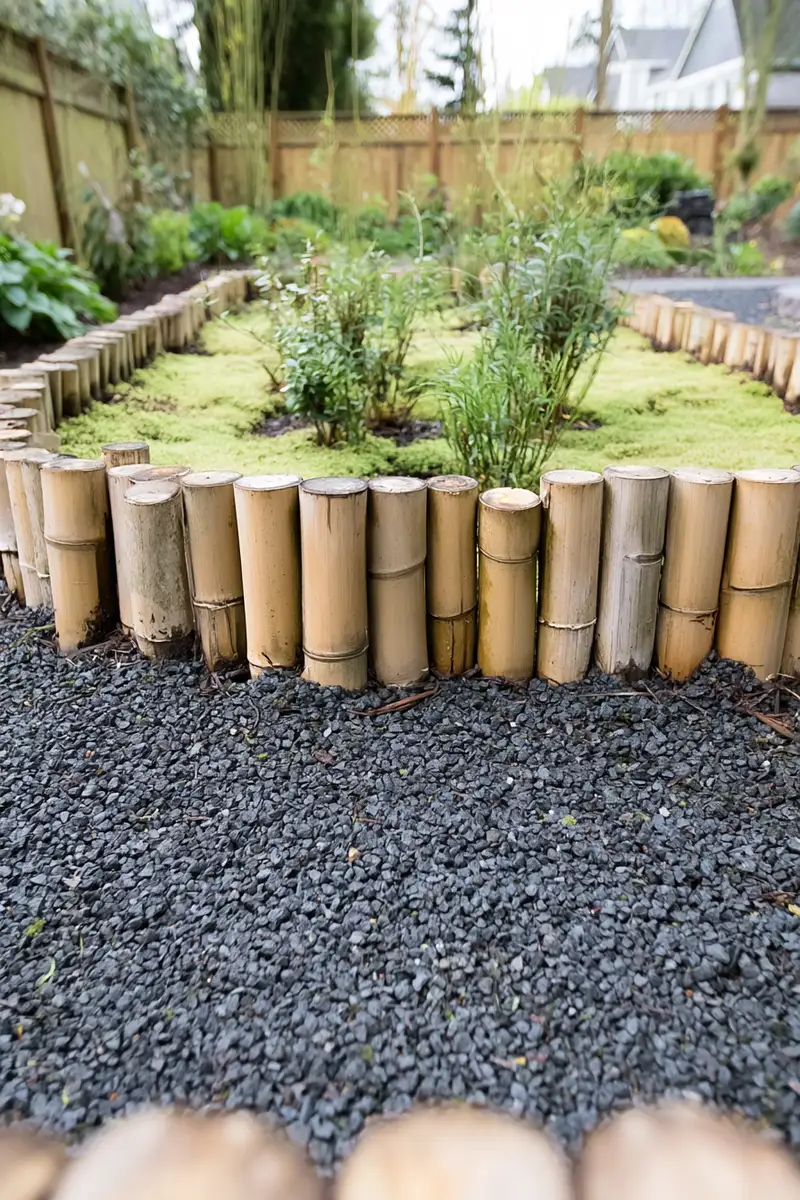
Loose gravel always finds its way into soft planting soil. Tightly packing uniform bamboo poles creates a solid, upright wall. It keeps the tiny stones totally separated from the delicate moss.
4. Gabion walls for heavy drainage
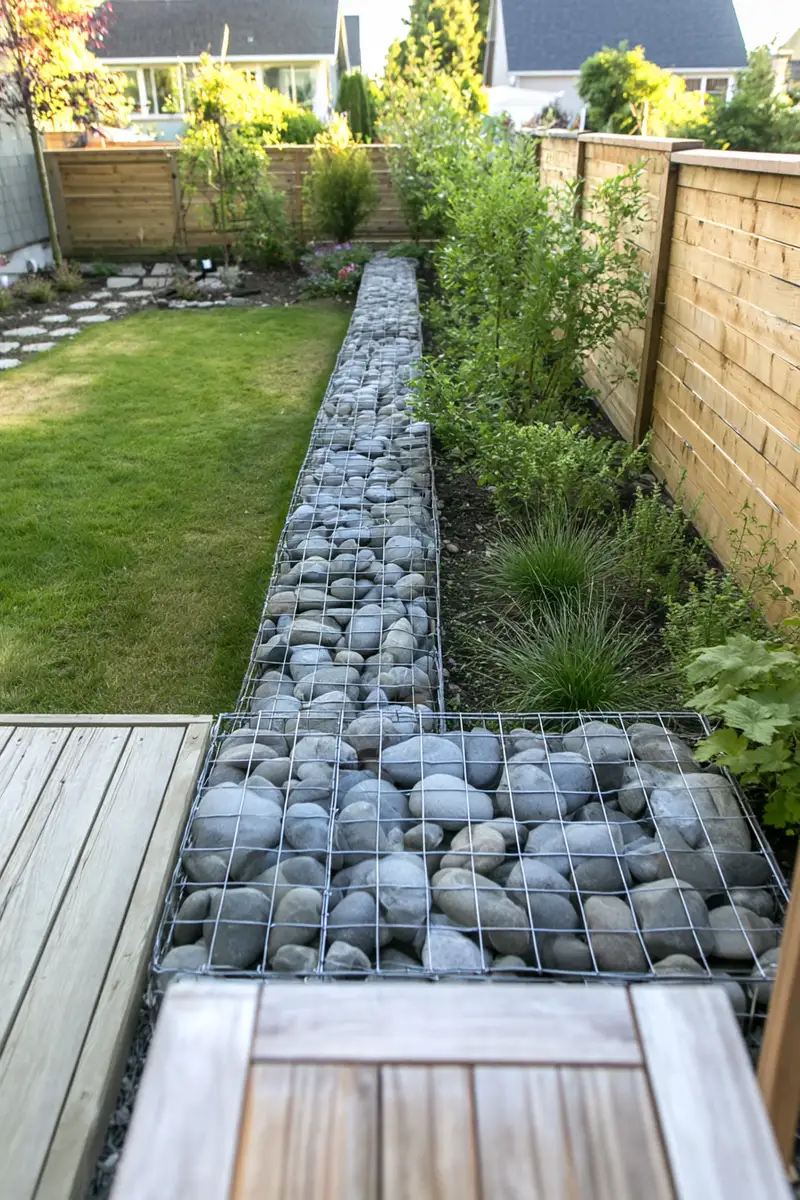
Managing soil runoff on a slope usually requires pouring solid concrete walls. That blocks natural water flow entirely. A wire gabion basket packed with smooth river rocks fixes the drainage issue brilliantly. The sheer weight of the stones holds the upper garden bed firm. Meanwhile, excess rainwater filters straight through the rocks without causing any structural damage.
5. Raised stone boundaries
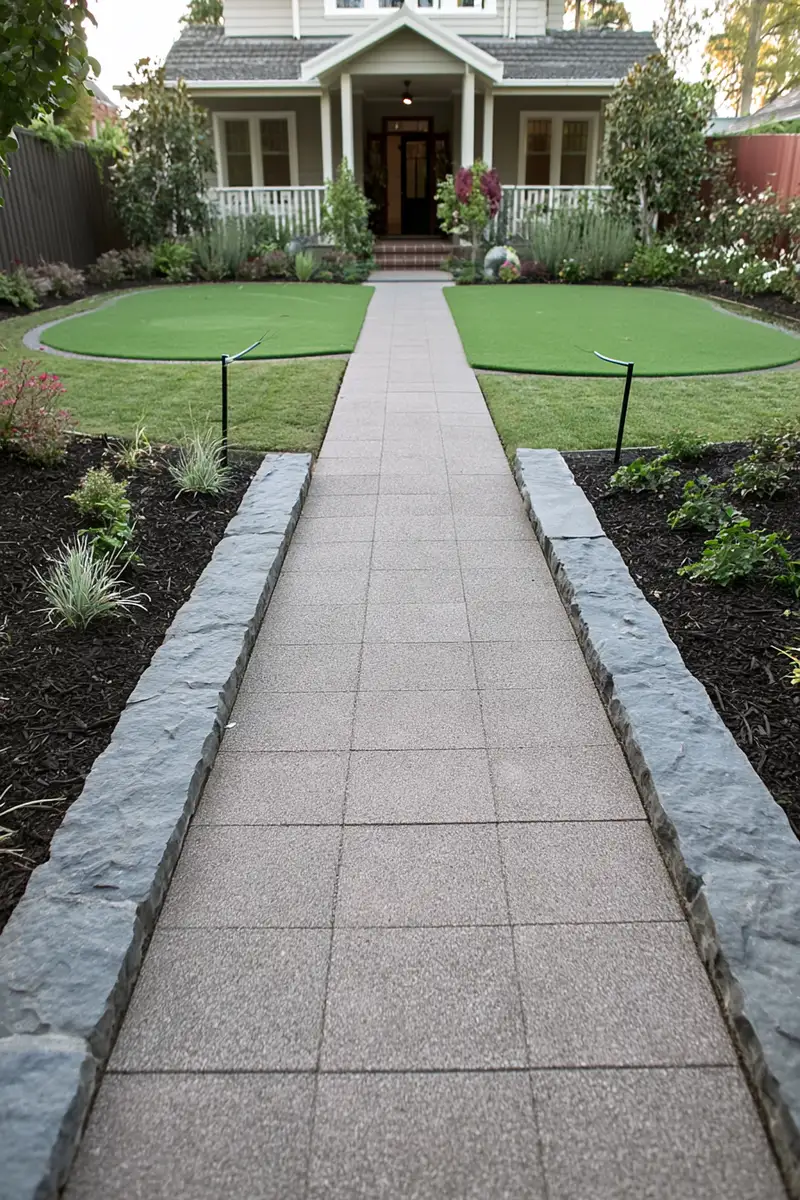
Wind constantly blows light bark and debris right onto pristine walkways. Installing raised, heavy slate blocks forces a strict boundary. The sharp geometry acts as a physical lip that keeps the main path spotless.
6. Sharp angles with vertical stone
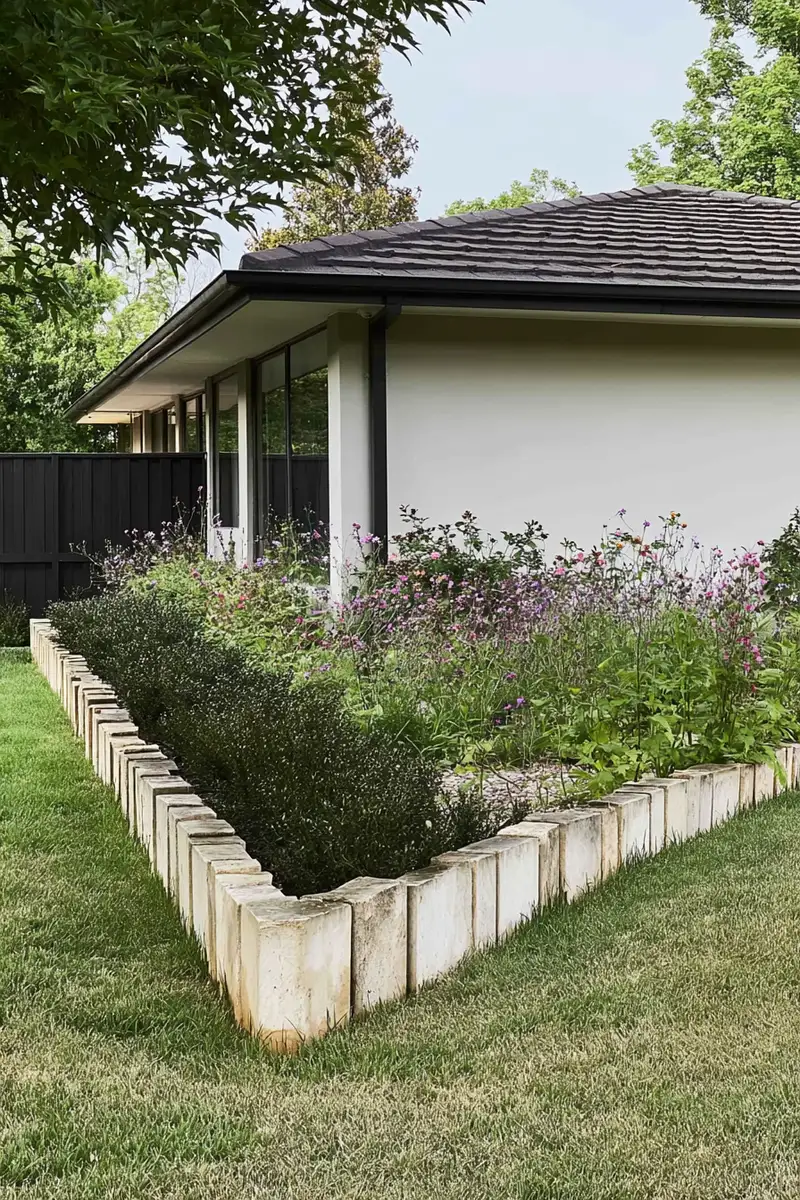
Flat modern yards often struggle with poorly defined planting zones. Aggressive ground covers easily creep onto the lawn. Setting pale, uniform stone blocks vertically builds a precise architectural edge. It cleanly separates the wild, tall flowers from the manicured turf. The structured line brings instant visual order.
7. Massive boulder armor
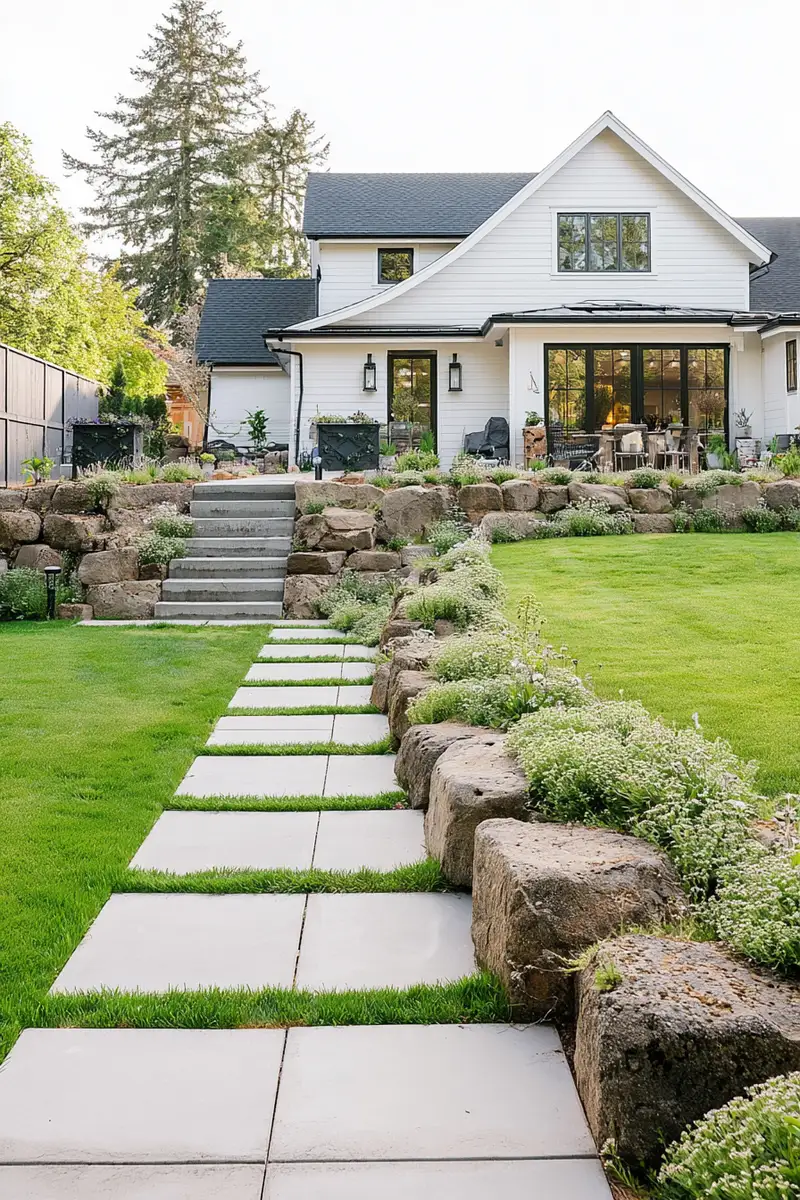
Dealing with a sharp grade drop next to a flat walking path is a major landscaping headache. You need serious weight to stop the soil from sliding down. Using massive, heavy-cut stone boulders acts as permanent armor for the upper lawn tier. They secure the earth effortlessly without the complex engineering of a formal masonry wall. It provides a clean, highly structural boundary.
8. The invisible metal shield
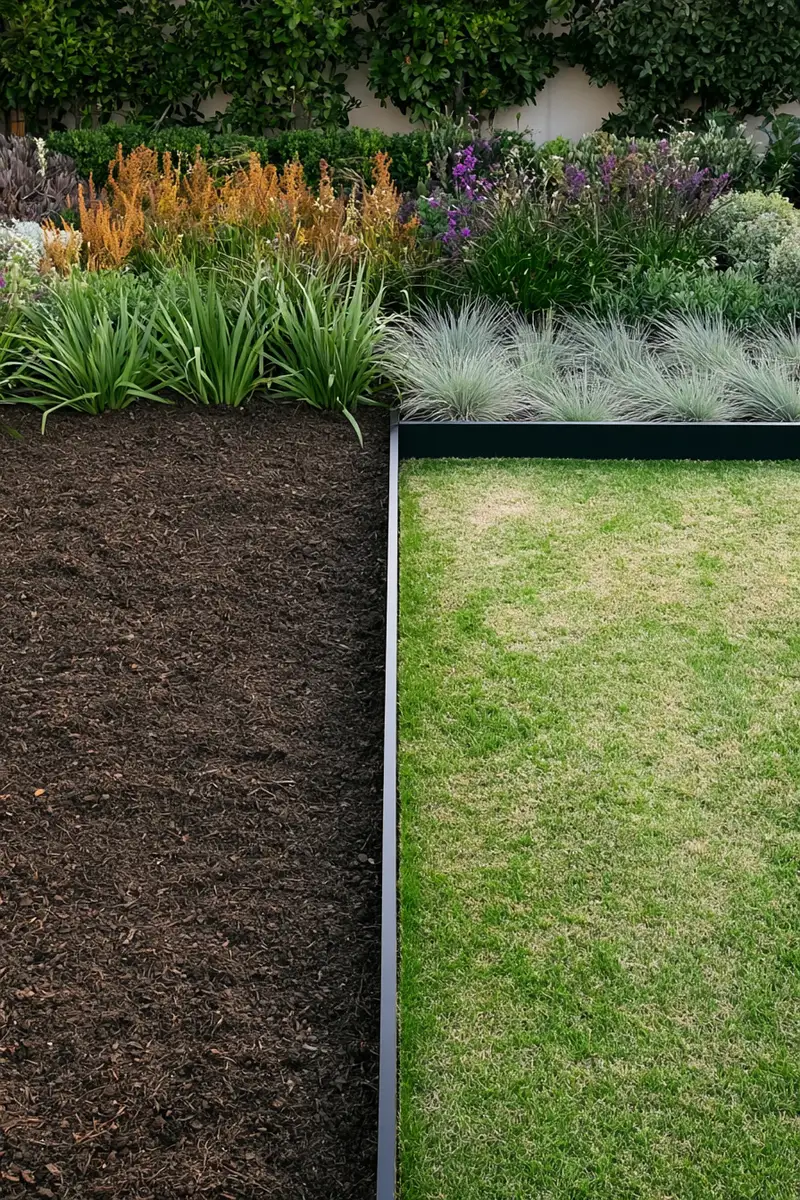
Bulky stone borders easily ruin the sleek aesthetic of a minimalist yard. Driving a razor-thin metal strip deep into the dirt offers maximum protection with zero visual clutter. It completely stops grass roots from invading the dark soil.
9. Angled slate trenching
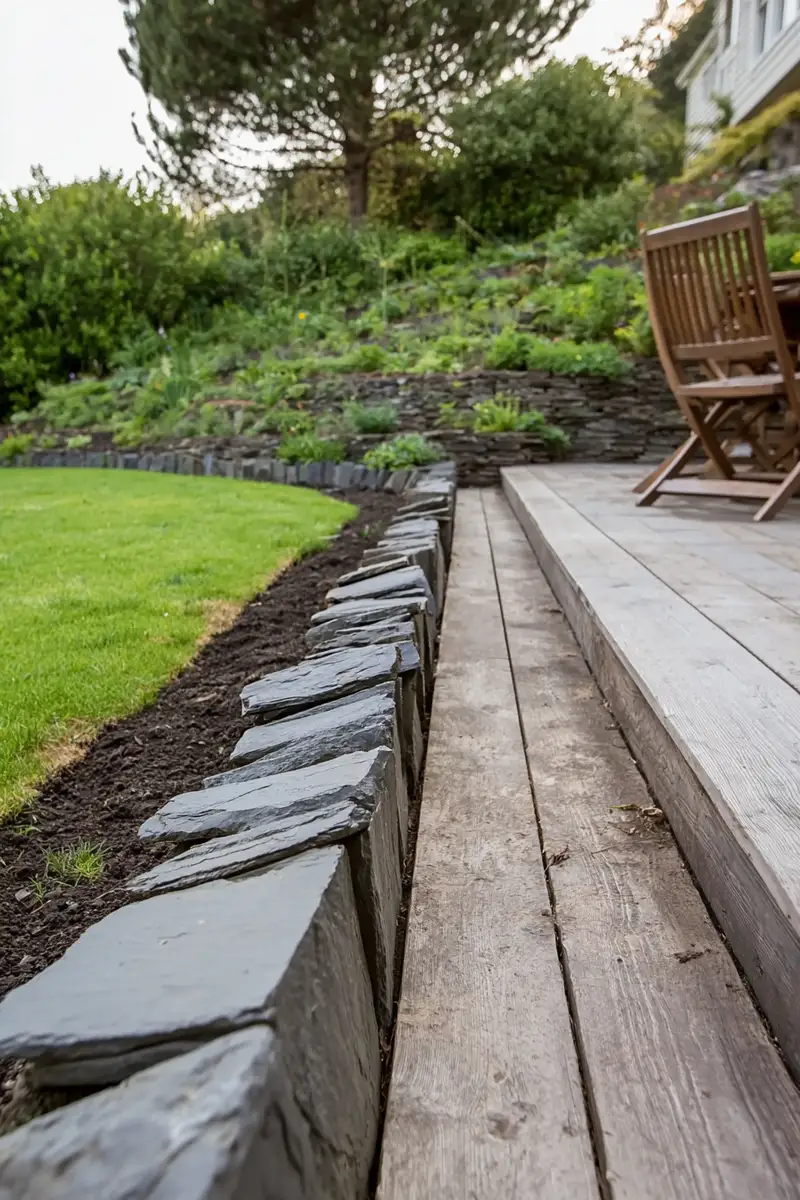
Wet garden soil resting directly against expensive wooden decks causes rapid rot. Creating an angled border with stacked dark slate fixes the moisture problem immediately. It physically isolates the damp earth from the timber. It also provides a tough, solid edge for mower wheels to bump against safely.
10. Flexible woven structure
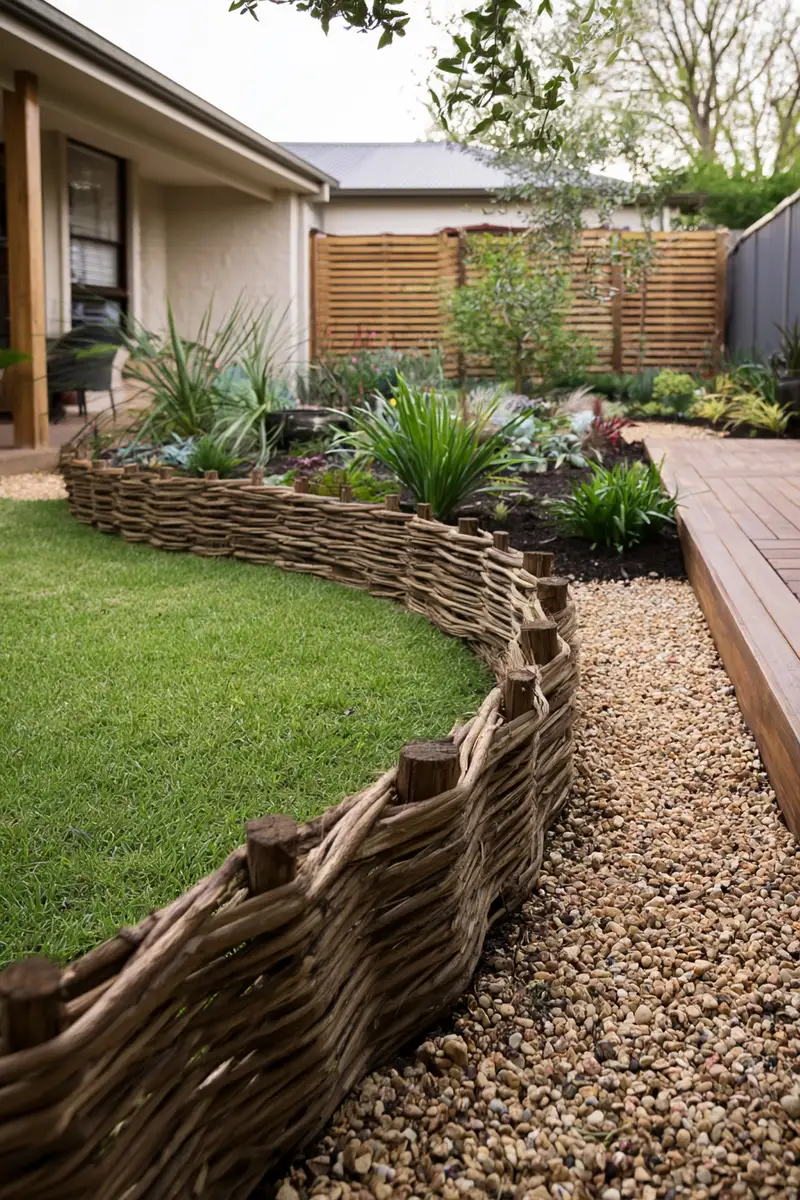
Rigid metal or stone borders fail on complex, sweeping curves. A tightly woven branch structure bends smoothly. It traps the loose gravel and enforces a sharp, tidy line without cracking.
11. Bending steel for sharp curves
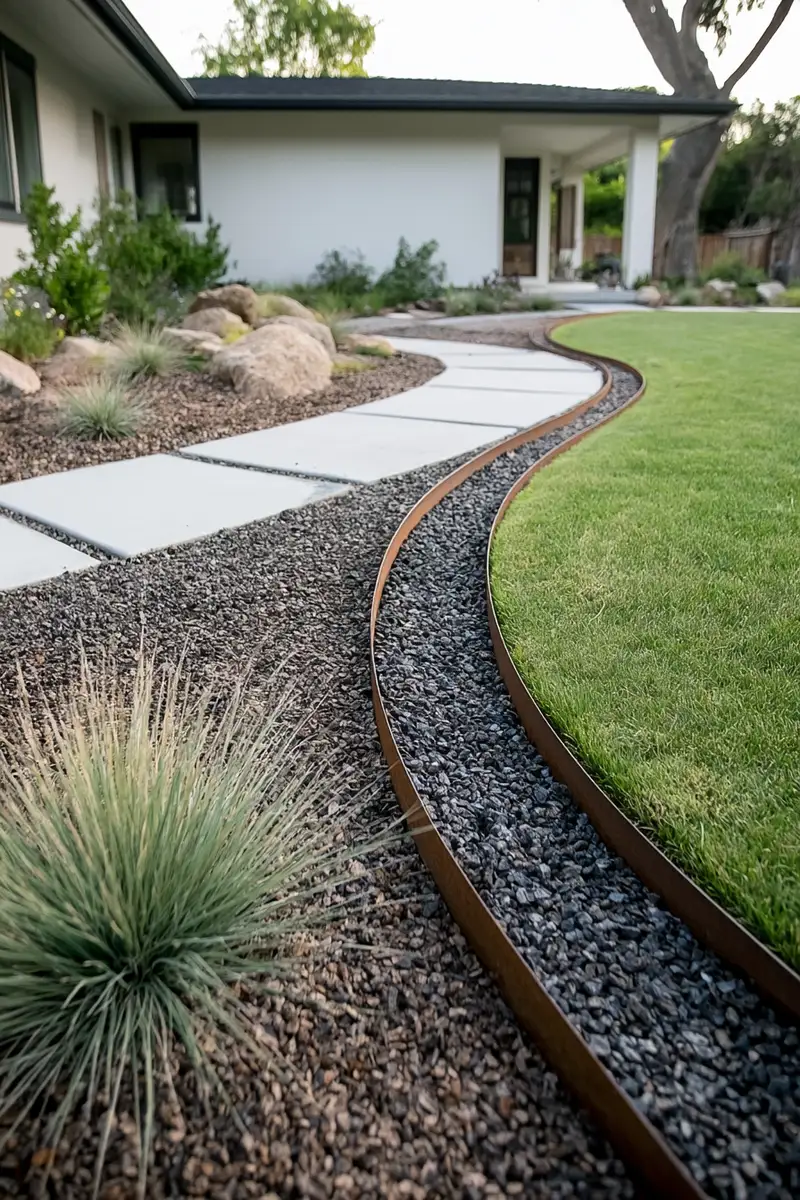
Sweeping curves in modern landscaping are notoriously difficult to keep crisp. Loose gravel inevitably kicks up onto the lawn. Sinking a thick band of corten steel solves this instantly. It bends smoothly along the concrete path. The rusted finish brings a warm, industrial edge while physically blocking the dark stones from migrating. It requires zero maintenance and weathers beautifully over time.
12. Immovable timber barriers
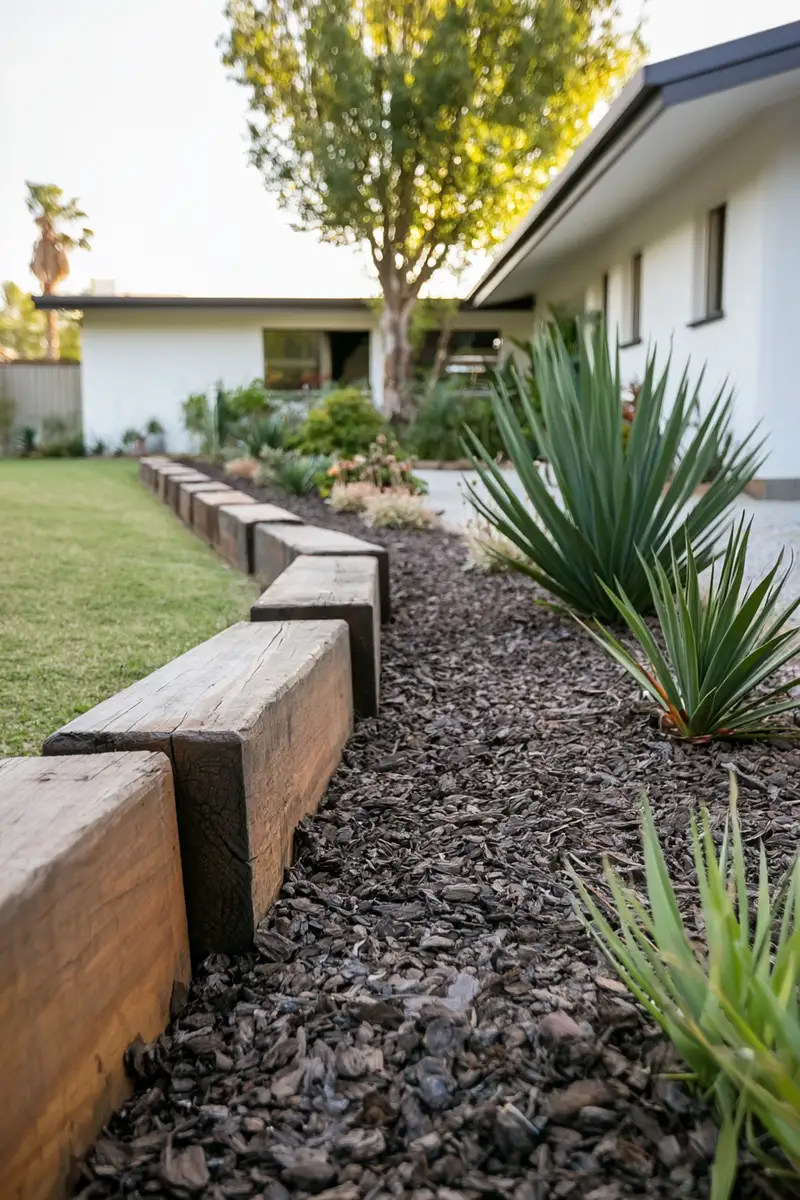
Flimsy plastic borders crack easily under lawnmowers. Dropping heavy, squared timber blocks creates an immovable barrier. It secures the dark wood chips perfectly. The chunky wood adds serious architectural weight to the flat yard.
13. A rugged natural defense
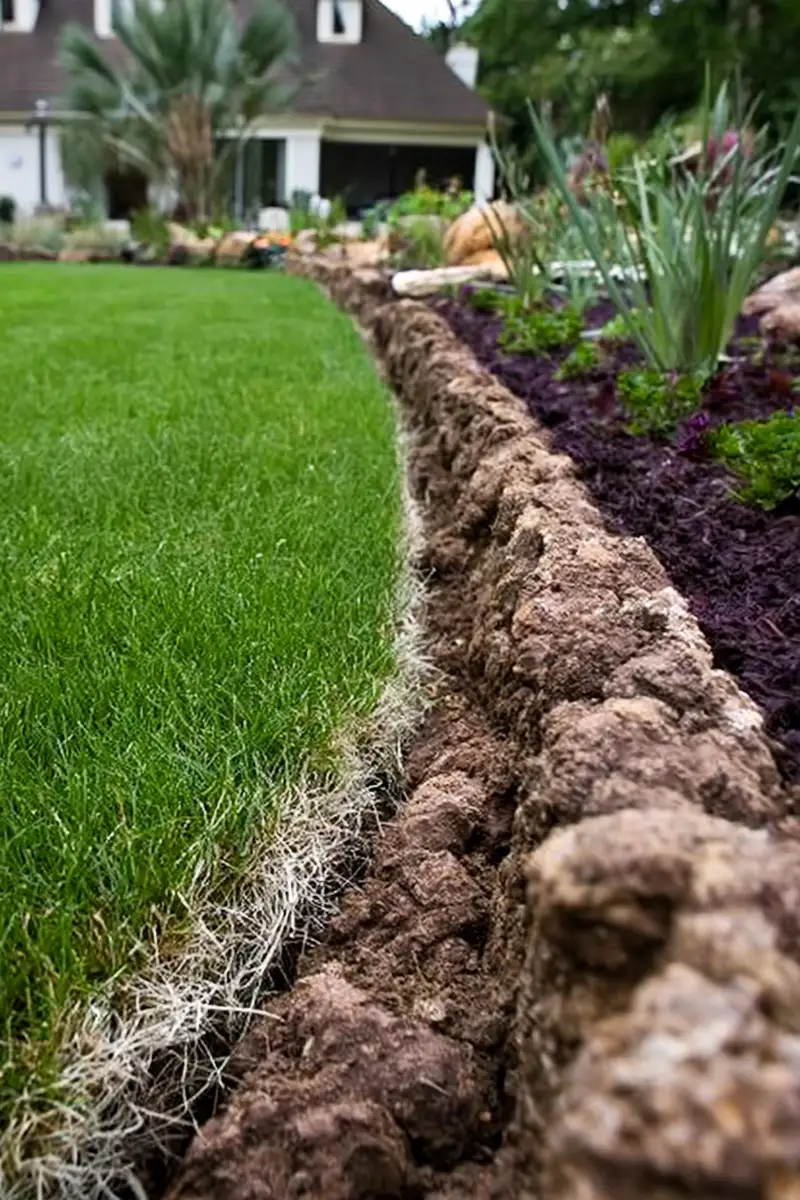
Soft garden beds next to lawns are constantly under threat from weed whackers. A continuous line of rough, natural rocks builds a rugged defense. It catches soil runoff during heavy storms. The irregular stones lock together naturally, keeping the dark mulch strictly separated from the manicured grass.
14. The flat concrete track
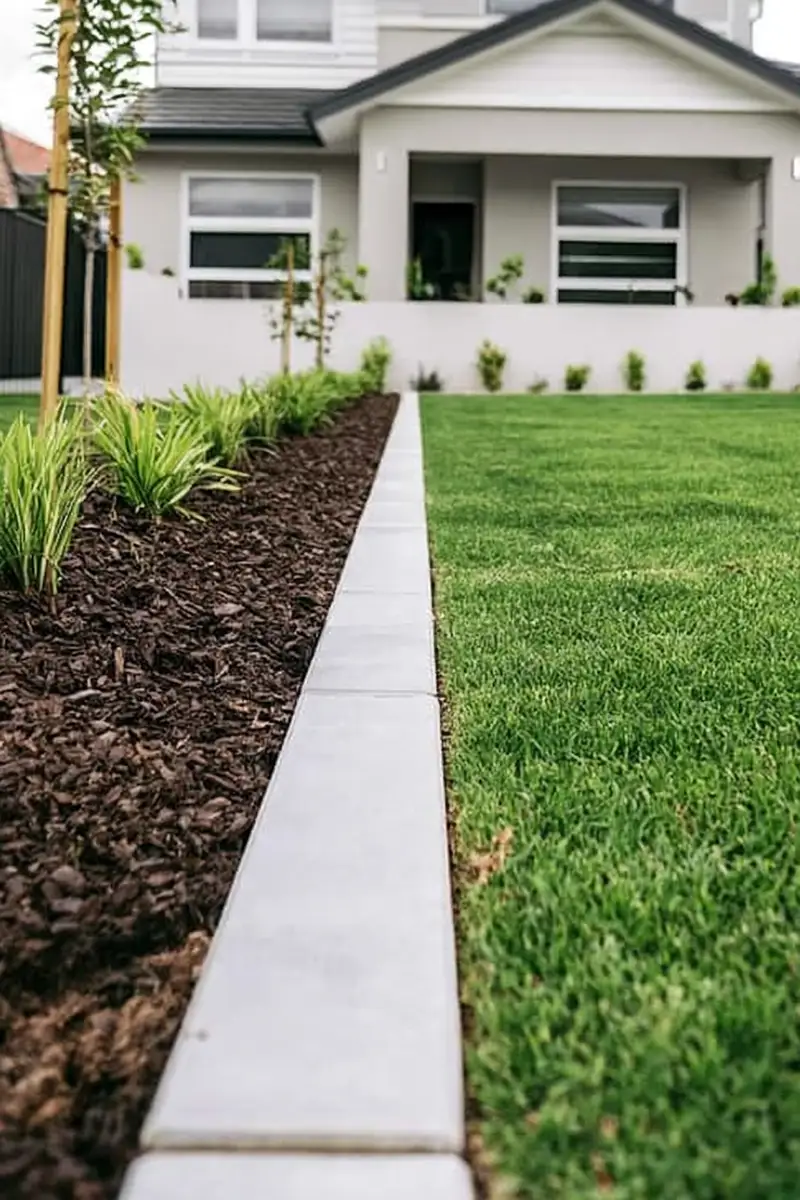
Edging grass weekly is exhausting. Laying smooth concrete pavers totally flat creates a perfect mower wheel track. You get a razor-sharp geometric line with absolutely zero string trimming required.
15. Vertical bricks for steep slopes
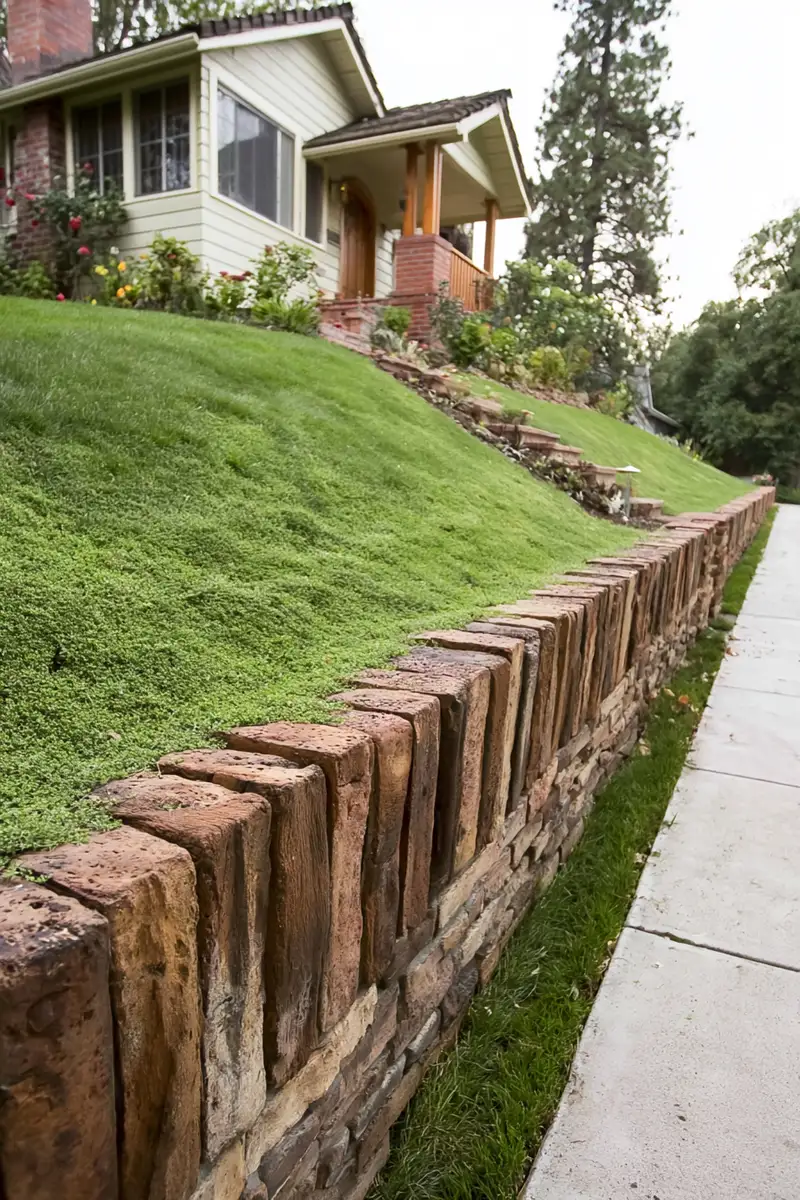
Steep front yards turning into mudslides across the main sidewalk is a common neighborhood headache. Traditional retaining walls are expensive and complex to engineer. Standing rustic bricks vertically builds a simple, heavy-duty barrier. It holds back the thick groundcover easily. The jagged, uneven tops of the bricks add incredible texture while acting as a functional dam against heavy rain runoff. It keeps the pavement totally clear.
16. Raised limestone framing
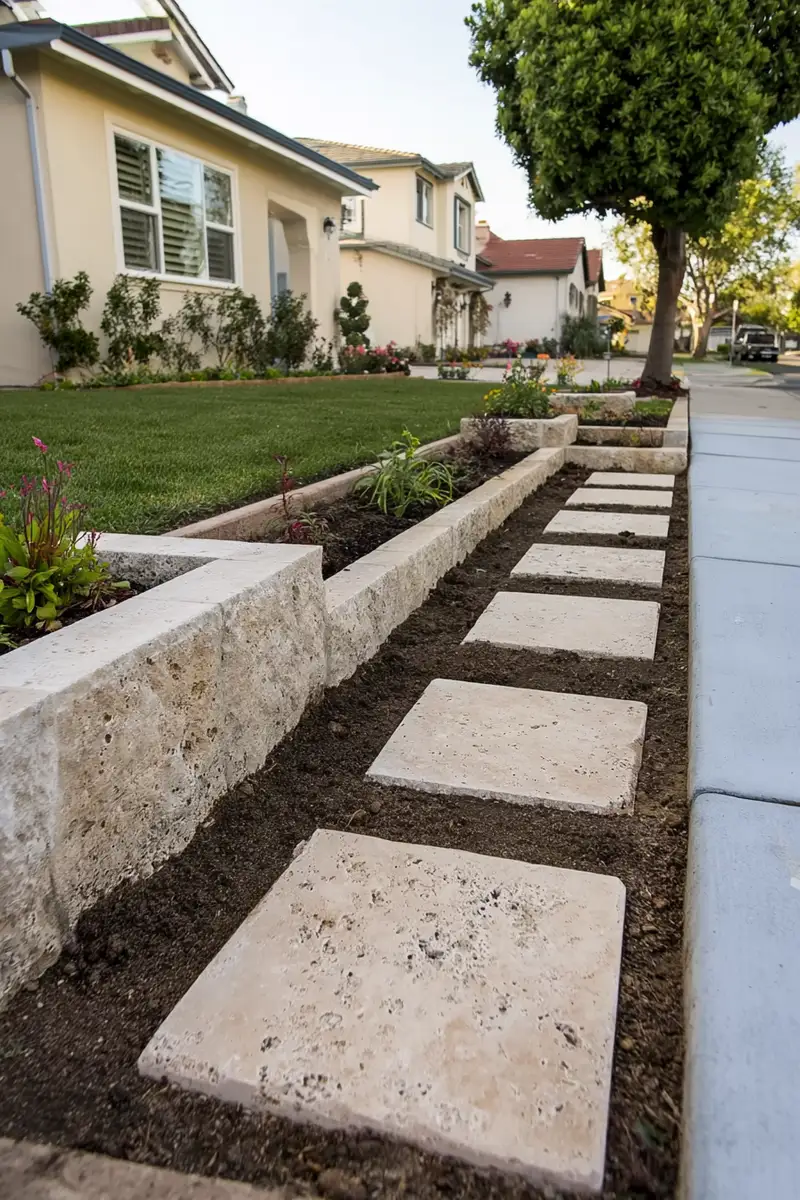
Transitioning from a solid concrete path to raw dirt always looks unfinished. Stacking smooth limestone blocks builds a clean, raised tier. It forces visual structure. The raised edge stops muddy splashing during storms and sharply frames the walking path.
17. Stacking heavy flagstone
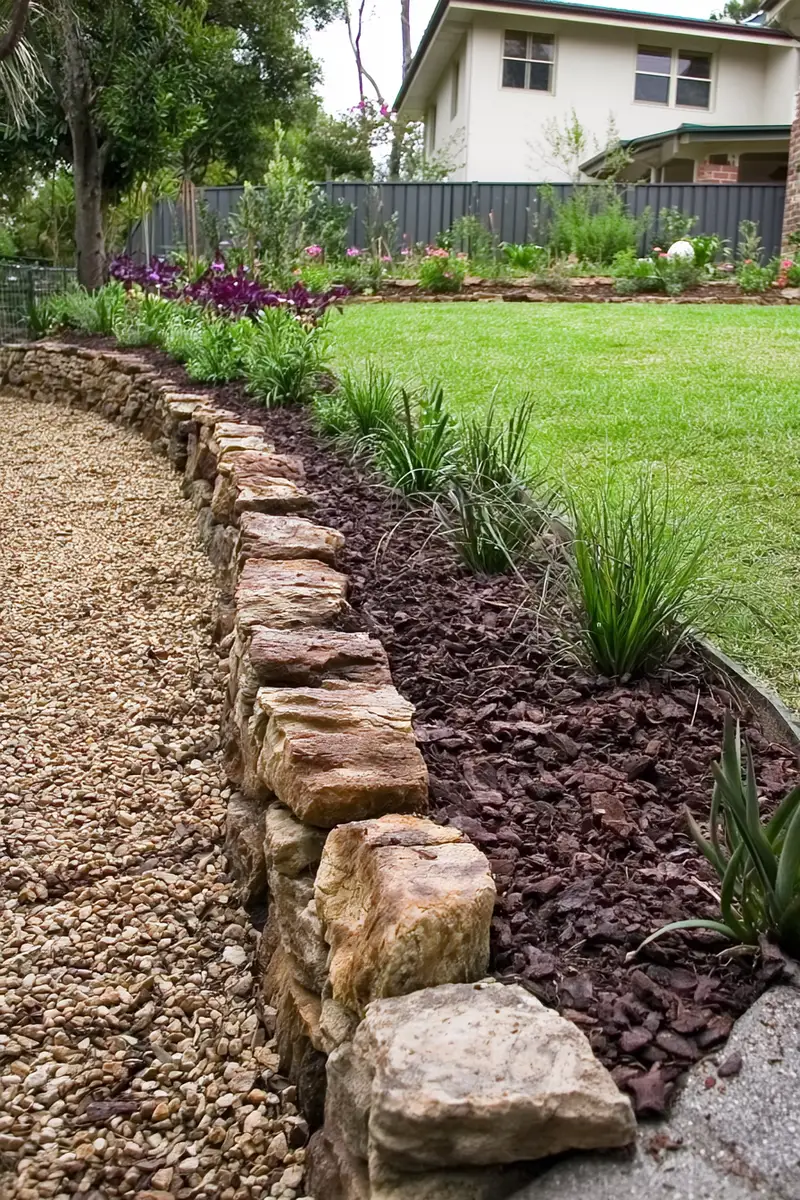
Loose gravel paths spread and thin out over time. Stacking thick pieces of flagstone builds a rigid, heavy trench. It forces the stones to stay packed tight while clearly defining the garden boundary.
18. Managing deck runoff with river rocks
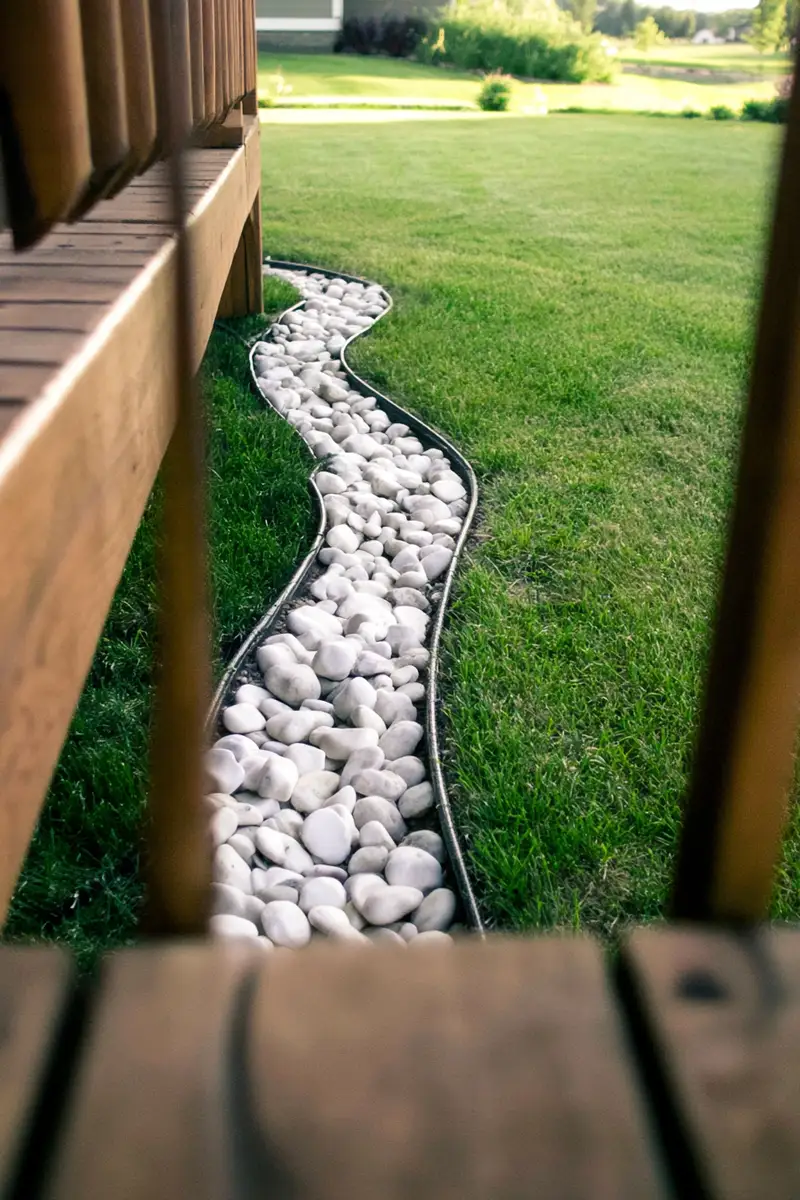
Rainwater dumping directly off a wooden deck destroys the grass below. It carves an ugly mud trench. Digging a curved channel and filling it with heavy white river rocks solves the drainage problem elegantly. A thin hidden edge keeps the grass roots out. It catches the roof runoff and turns a soggy nightmare into a deliberate landscape feature.
19. The double cobble barricade
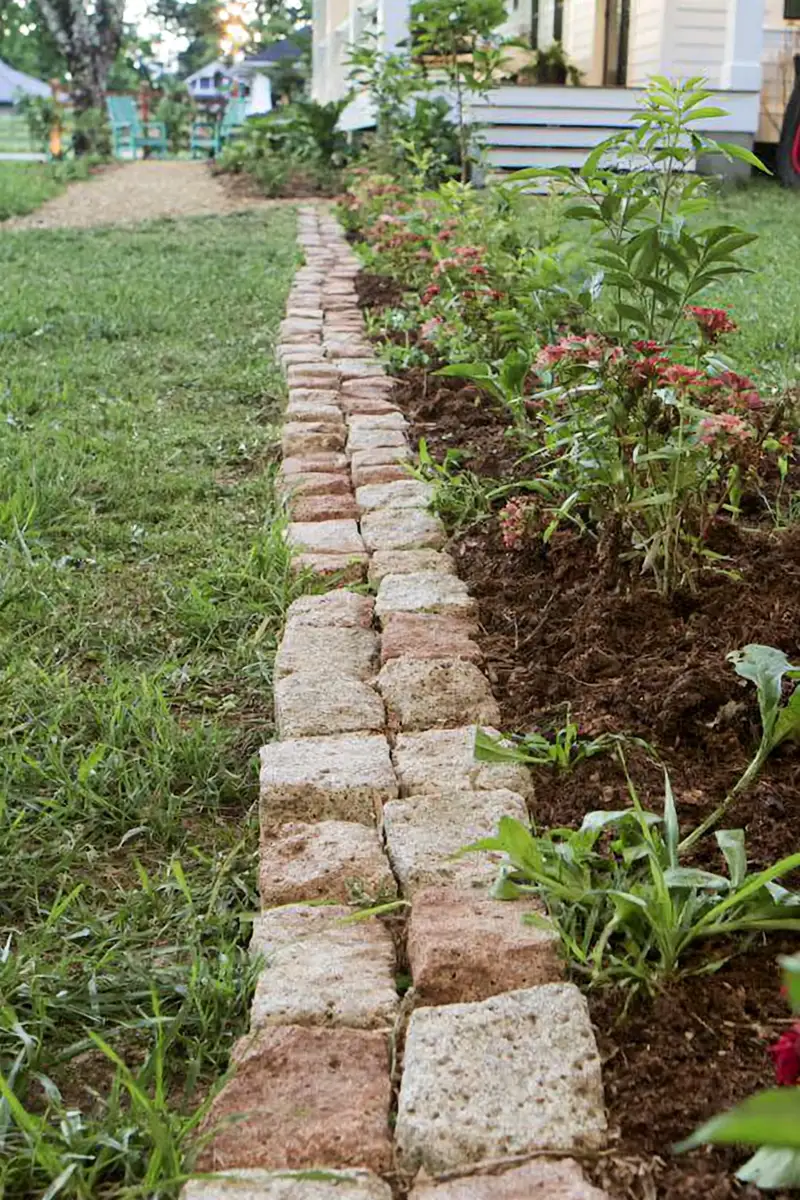
Single stone borders often sink or shift out of alignment. Laying a double row of rough cobbles creates a wider, heavier barricade. It stops the aggressive lawn grass from invading the soft planting soil entirely.