
Bald, dusty dirt patches always plague the shaded edges of floating decks. Grass simply refuses to grow there. Do not fight the heavy shade. Sweeping a thick bed of oversized river stones across that dead zone provides instant structure and stops brutal soil erosion entirely.
1. Disguising the awkward low gap
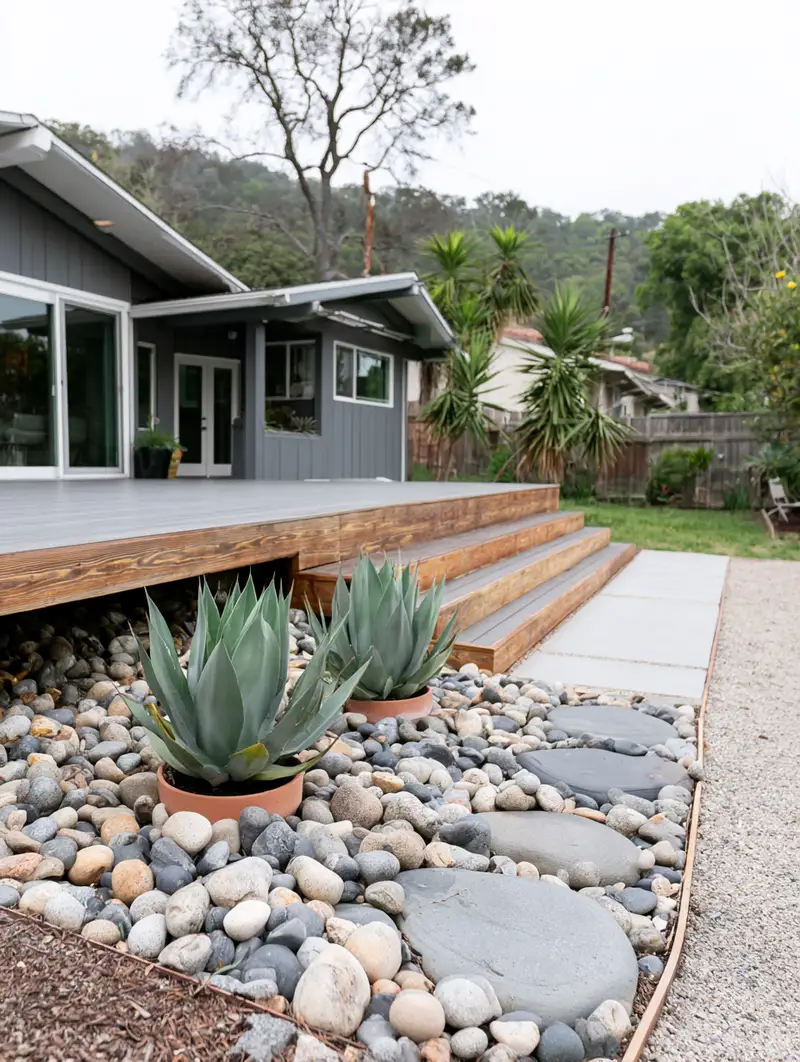
The narrow void under a low floating deck often becomes a trap for dead leaves and trash. Trying to grow grass there usually fails due to the heavy shade. Sweeping oversized river rocks right up to the timber solves this problem completely. It acts as a breathable barrier that hides the ugly gap while allowing ground moisture to escape easily. Dropping potted agaves directly on the stones adds instant architectural height. You avoid digging into the hard, compacted soil next to the foundation entirely.
2. Steel barrier
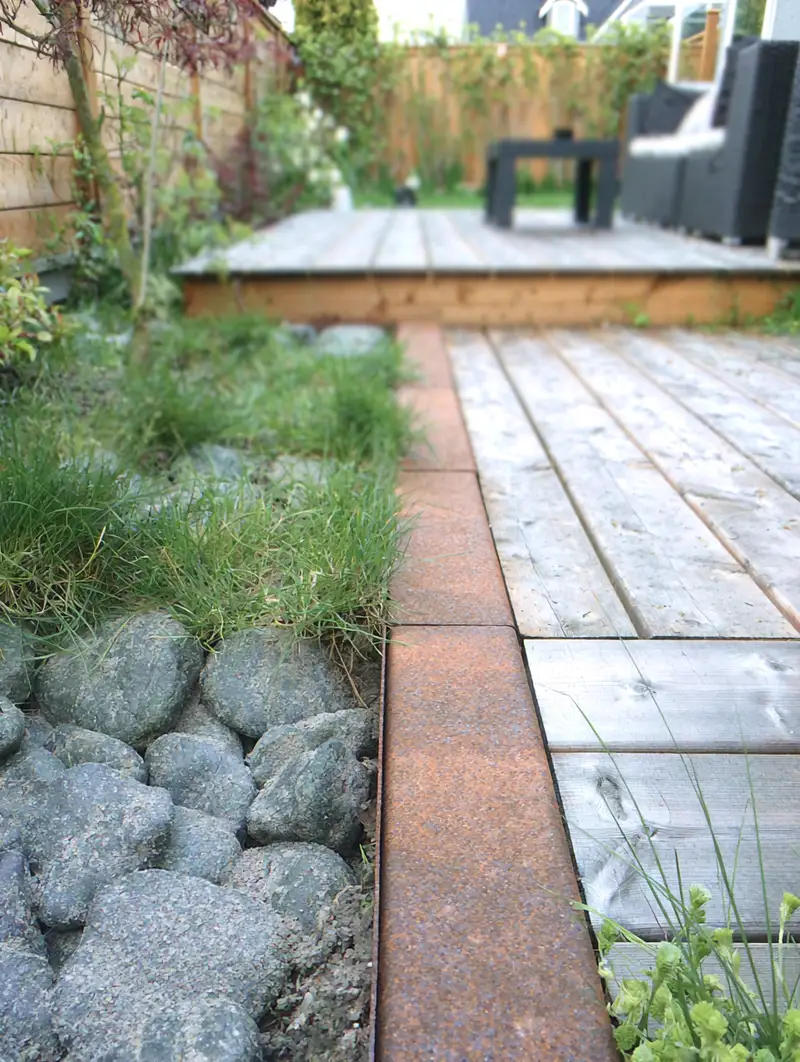
Damp grass resting against timber guarantees rapid rot. A sharp corten steel edge creates a strict physical gap. It isolates the deck from wet soil effortlessly.
3. The solid landing pad
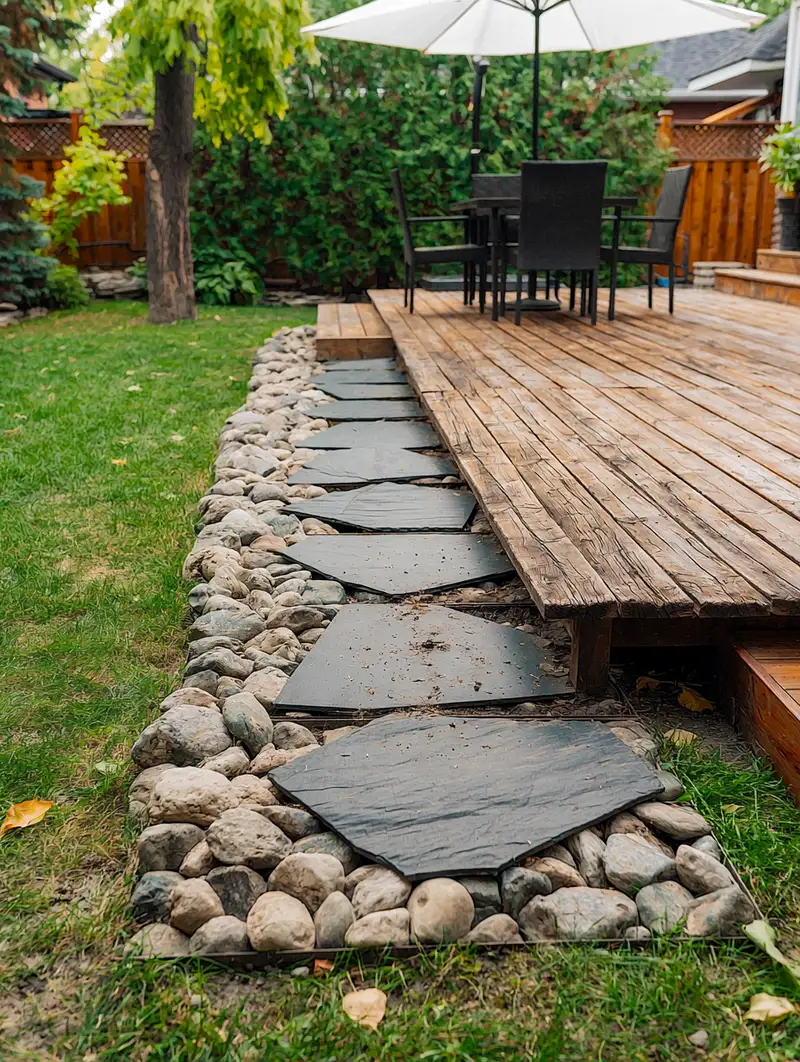
Stepping off a deck straight onto a soft lawn creates a muddy, worn-out patch very quickly. Sinking large, flat slate pieces into a bed of river rocks builds a bulletproof landing zone. It handles heavy foot traffic smoothly. The surrounding rocks ensure rapid drainage during summer storms.
4. Integrated perimeter lighting
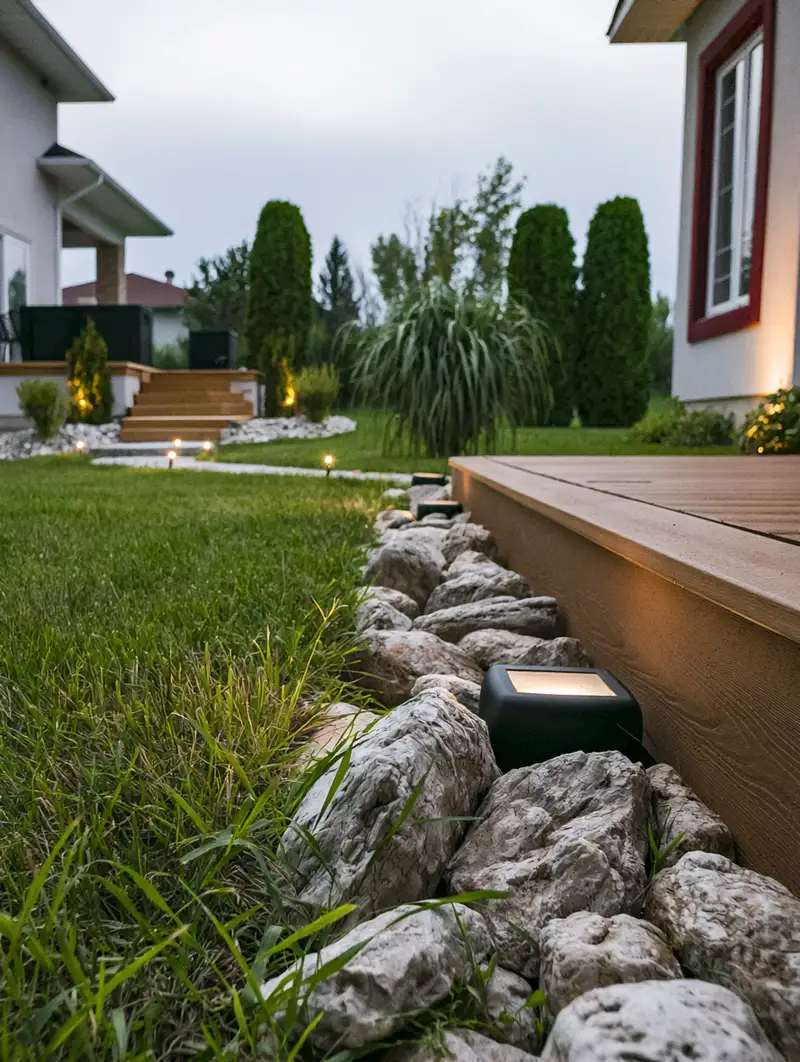
Invisible deck drop-offs are a massive tripping hazard at night. Standard solar spike lights easily get kicked or knocked over by the lawnmower. Nestling heavy-duty square uplights directly into a chunky rock border fixes this. The rocks protect the expensive fixtures from accidental damage. It sharply defines the transition between the wooden steps and the lawn. You get a safe, well-lit perimeter without cluttering the yard with flimsy plastic poles.
5. Locking the stones down
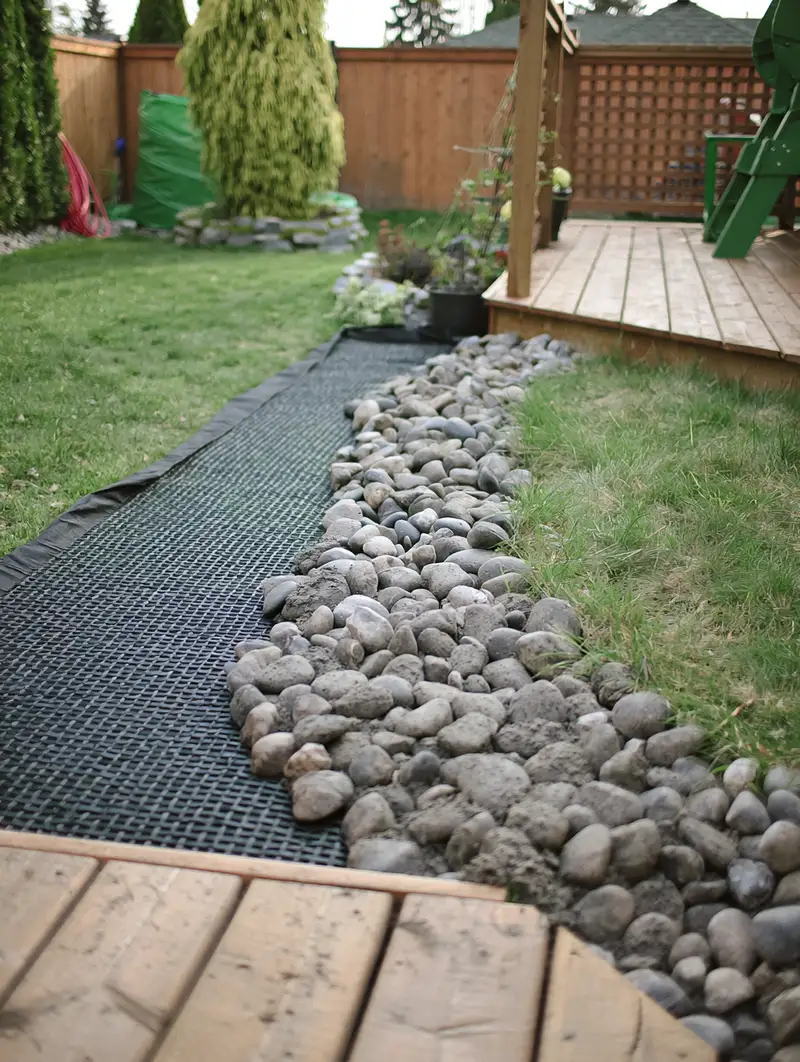
Loose gravel borders slowly sink into the mud over time. Laying a heavy-duty drainage grid underneath stops that migration. It keeps the stones totally level and blocks aggressive weeds from pushing through.
6. Crisp crushed stone transitions
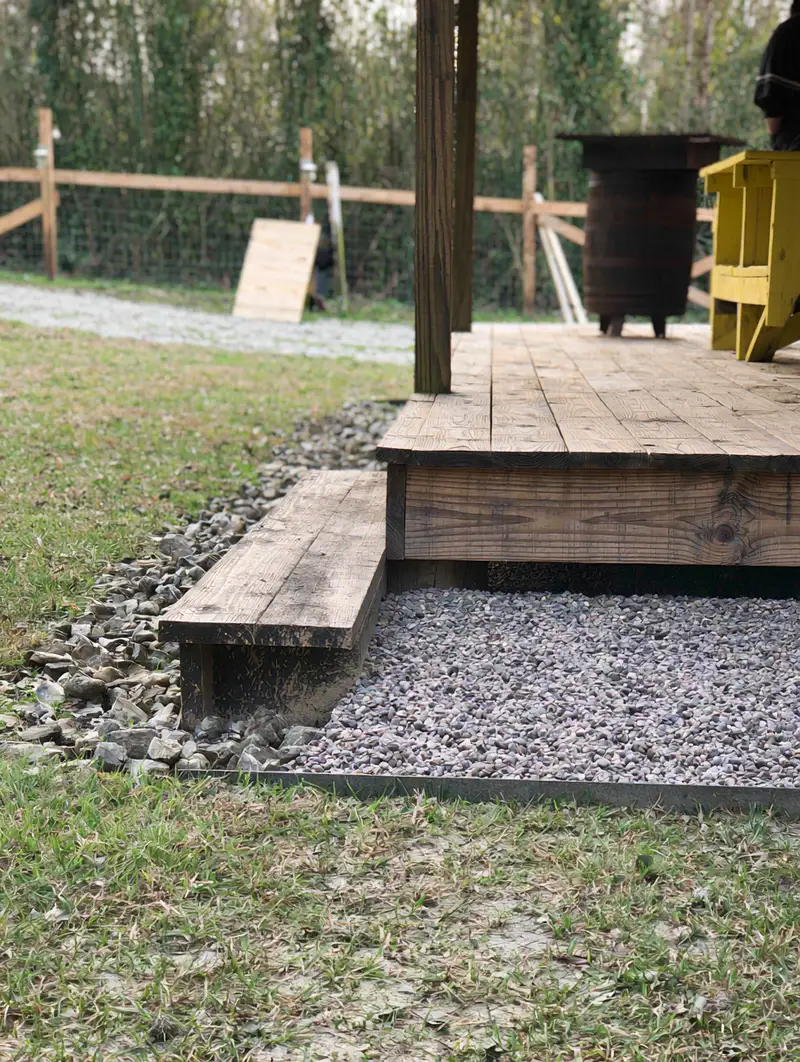
The dusty dirt strip immediately surrounding a deck is usually too dry for plants to survive. Filling that dead zone with angular, crushed gravel brings instant visual order. A razor-thin metal edge keeps the tiny stones strictly separated from the grass. It forms a clean, sharp transition.
7. Total slope control
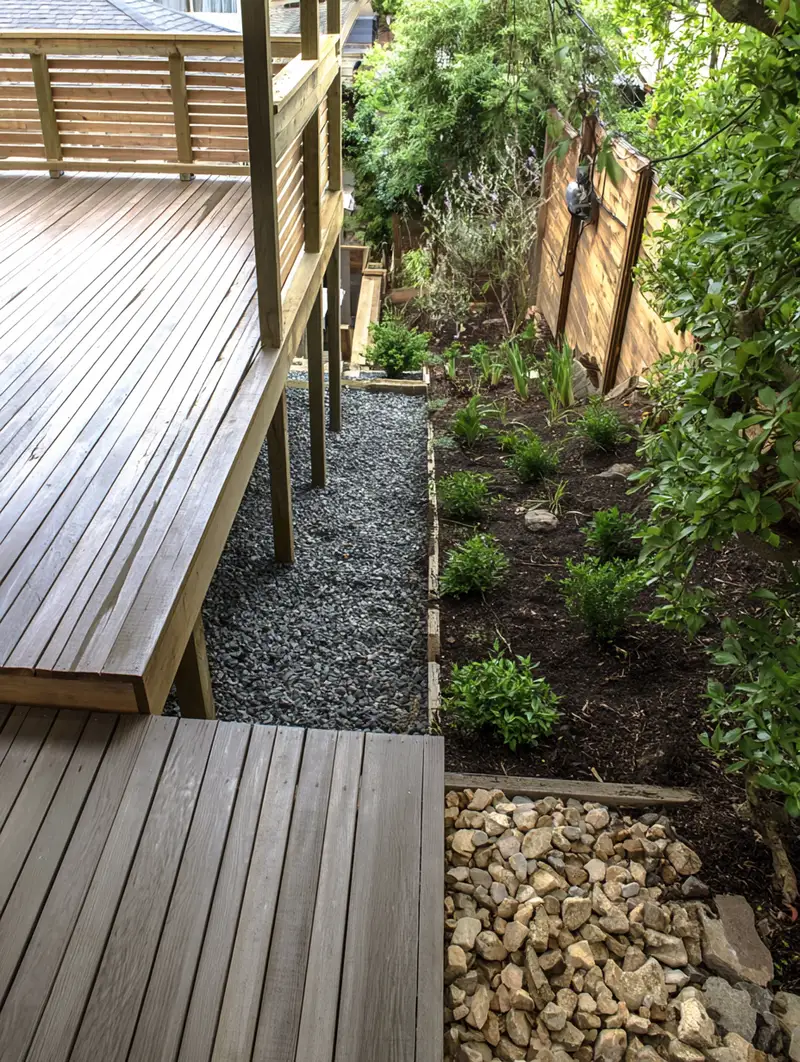
Steep, shaded dirt patches under elevated decks just wash away in the rain. A thick layer of heavy crushed stone locks the unstable earth down completely.
8. Surviving the heat reflection
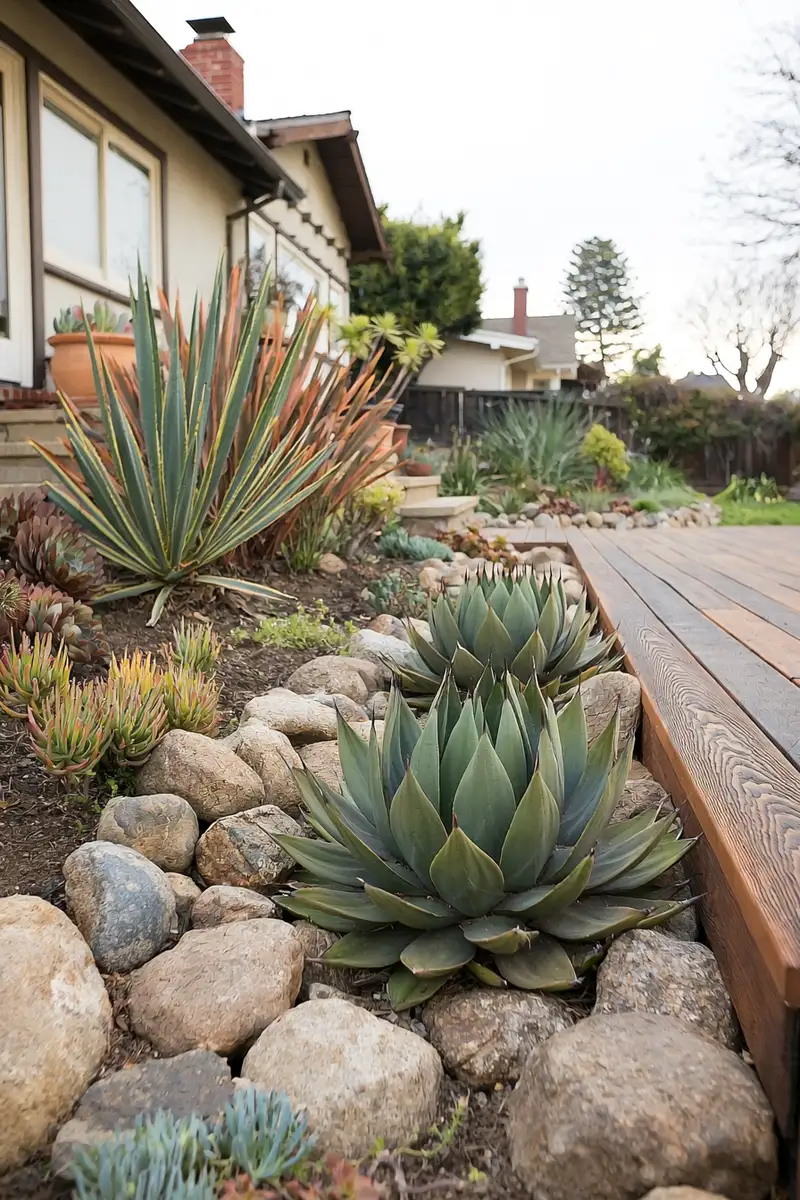
The perimeter of a wooden deck often acts like an oven. The sun reflects off the boards, baking delicate garden beds to a crisp. You have to adapt the materials. Swapping dark mulch for giant river stones creates a heavy, durable thermal layer. Pairing that stone base with tough, sculptural agaves builds a striking border. The setup actually thrives in punishing, dry heat. It requires zero watering and looks incredibly established.
9. The crucial drainage trench
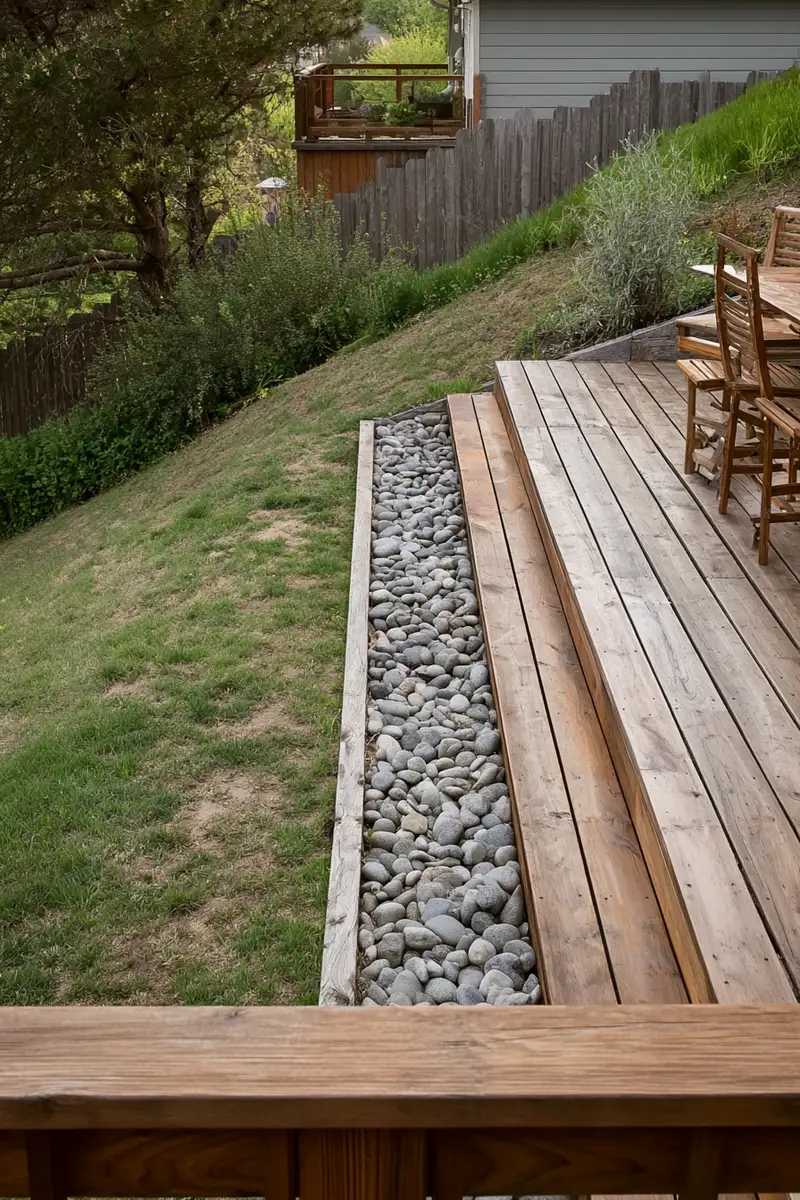
A sloped lawn draining directly onto wooden deck stairs is a recipe for disaster. The constant moisture destroys the timber quickly. Carving out a narrow trench and packing it with smooth river rocks acts as a functional French drain. It intercepts the runoff safely.
10. Armoring the under-deck hill
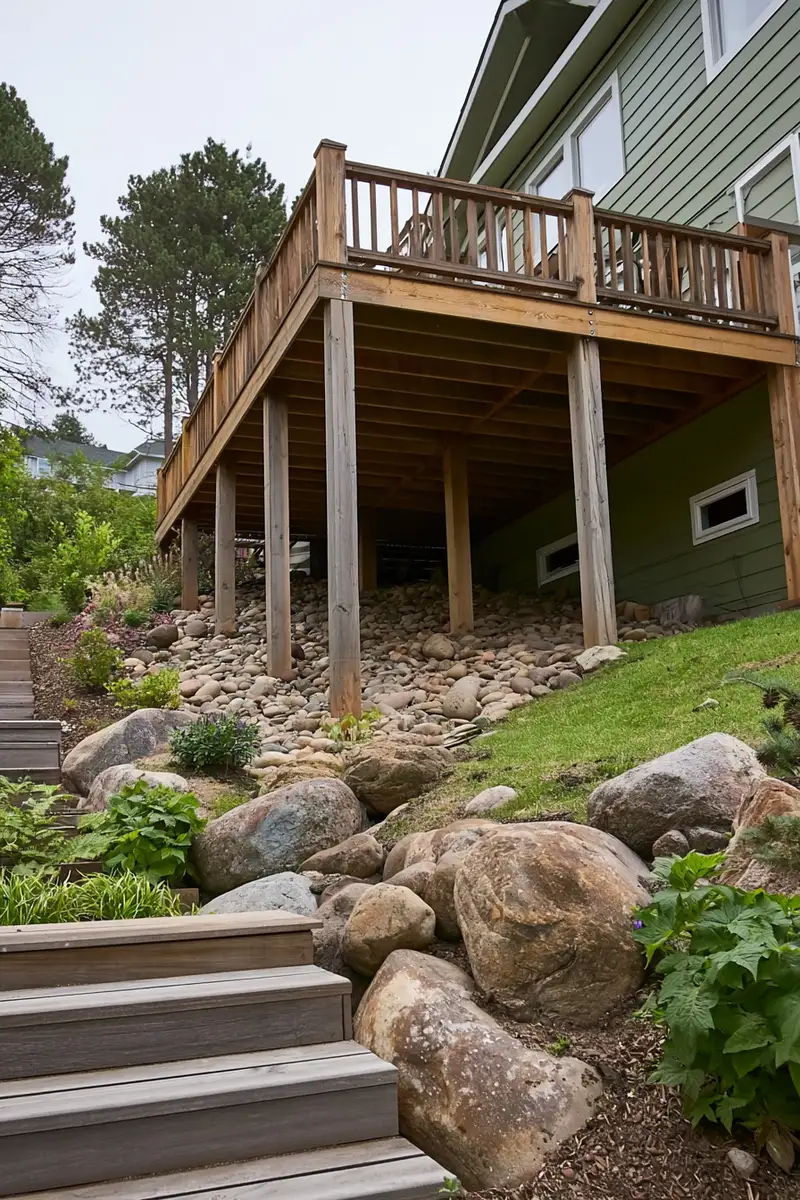
Dragging a string trimmer up a steep, shaded hill under a tall deck is dangerous and exhausting. Armoring the entire slope with massive boulders stops erosion cold. The heavy stones handle the structural load perfectly.
11. The built-in planter defense
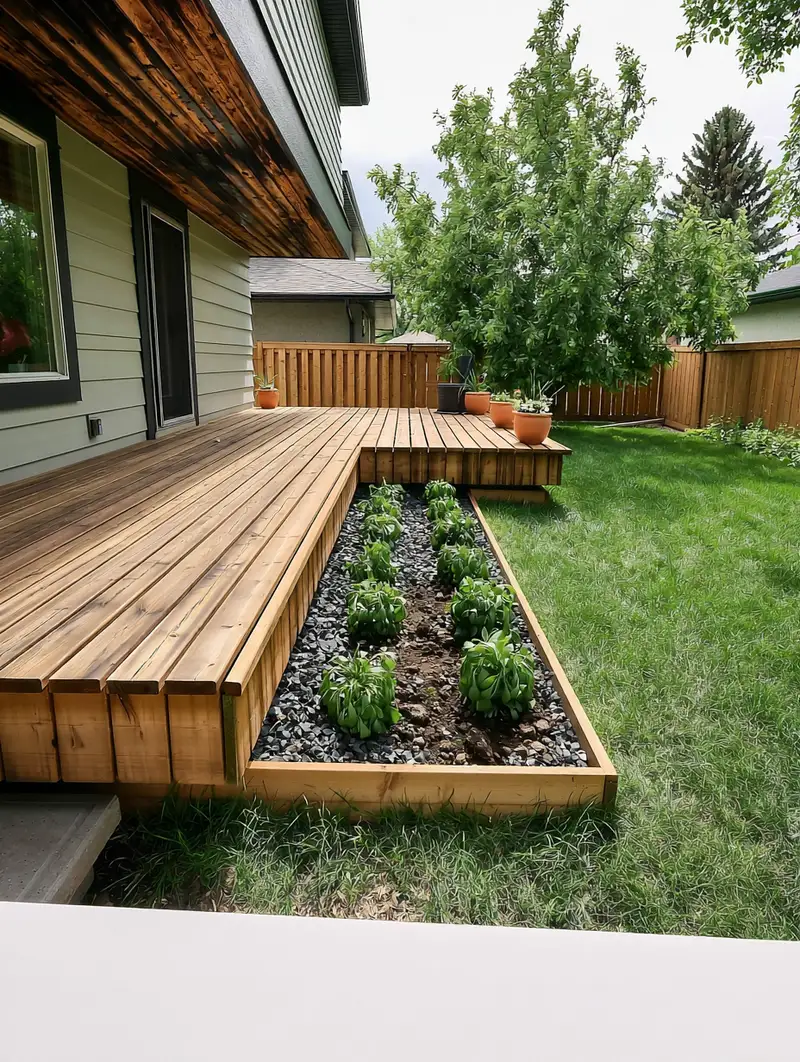
Wood rot from wet garden soil destroys built-in deck planters fast. Swapping the topsoil layer for thick, dark gravel solves the moisture problem entirely. It traps the dirt below and prevents muddy splashing on the clean wooden boards. The whole transition stays sharp.
12. The curved mower buffer zone
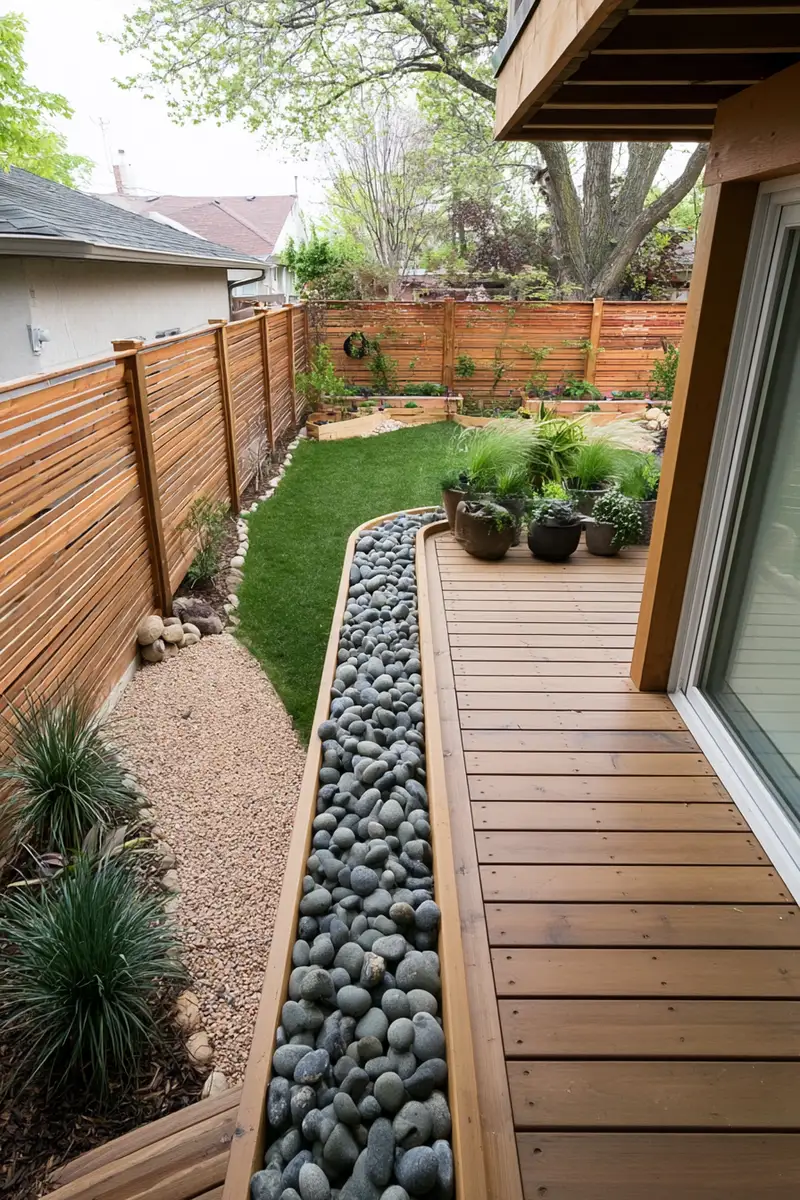
Running a lawnmower right against the edge of your low deck usually scuffs the timber and leaves a messy, uncut fringe of grass. Building a dedicated river rock trench completely eliminates this weekly hassle. The smooth stones form a protective physical buffer. They also catch roof runoff before it drowns the lawn. The curved wooden frame keeps the rocks tightly contained. It is a highly deliberate, damage-proof boundary that makes weekend yard work significantly faster.
13. Anchoring with massive boulders
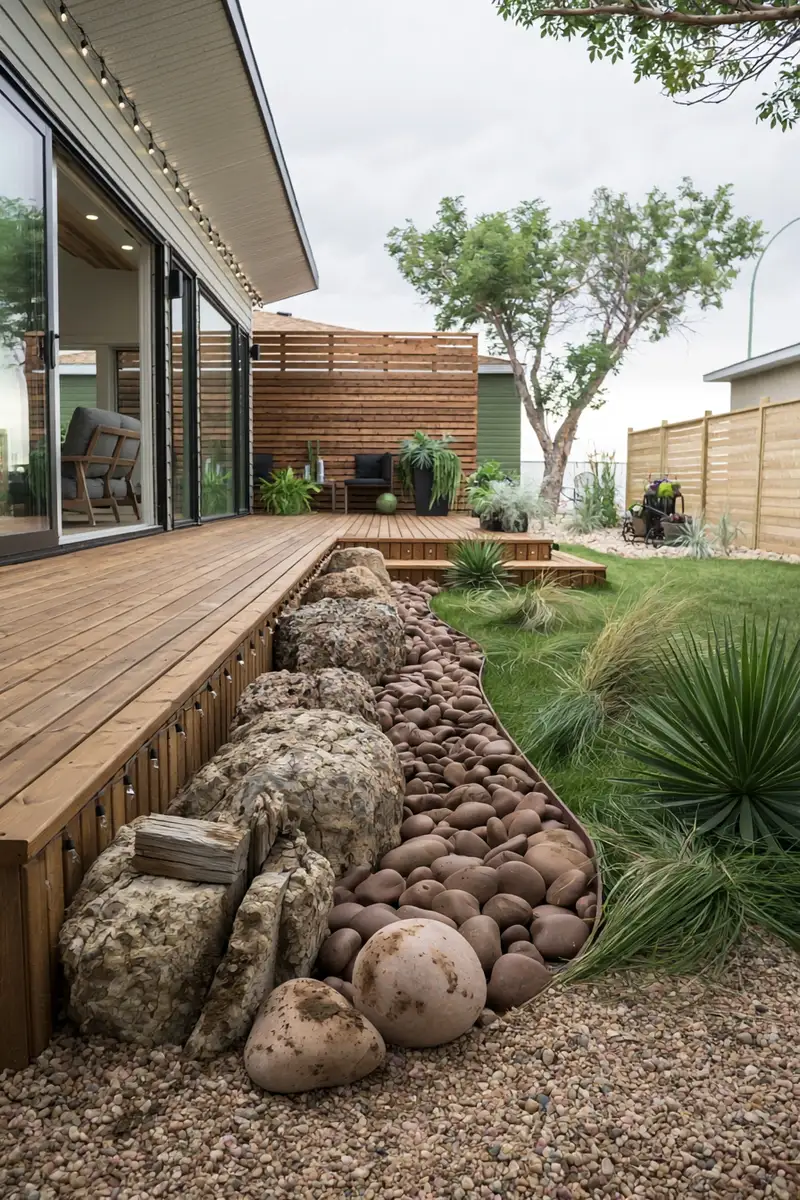
Floating decks often look totally disconnected from the yard. Heavy boulders fix the scale issue immediately. They provide raw structural weight that anchors the timber to the earth.
14. Managing the drip line cleanly
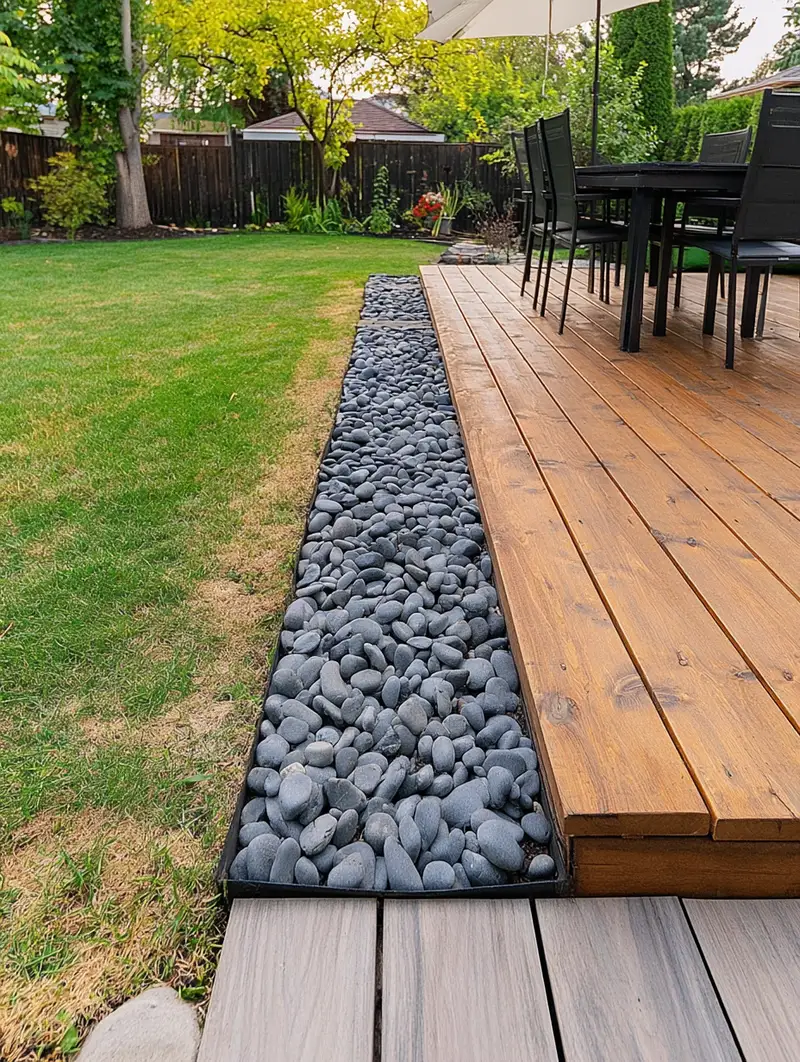
Rain pouring off the edge of an un-guttered deck carves an ugly mud trench right into the grass. A strict, narrow channel of dark grey river stones intercepts the falling water perfectly. It acts as a sleek, functional splash guard. The dark stones hide dirt and create a sharp modern contrast against the warm wood grain.
15. Swallowing the awkward foundation dead zone completely
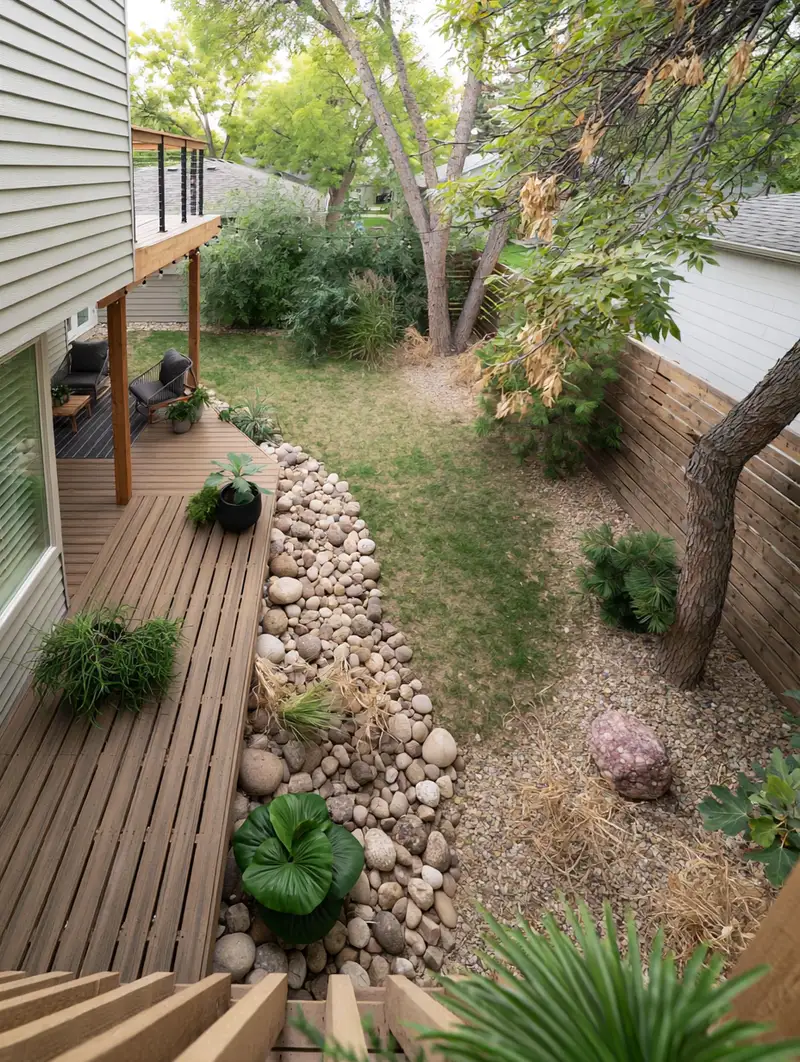
The ground space immediately surrounding elevated deck footings is a notorious maintenance trap. Grass refuses to grow in the heavy shade, and dragging a string trimmer between the posts is incredibly frustrating. Sweeping an extra-wide bed of large river rocks across this entire area solves the landscaping headache entirely. The organic, wavy curve softens the rigid architecture of the house. It turns a dusty, forgotten under-deck space into a deliberate, weed-free rock garden.
16. The jagged lock
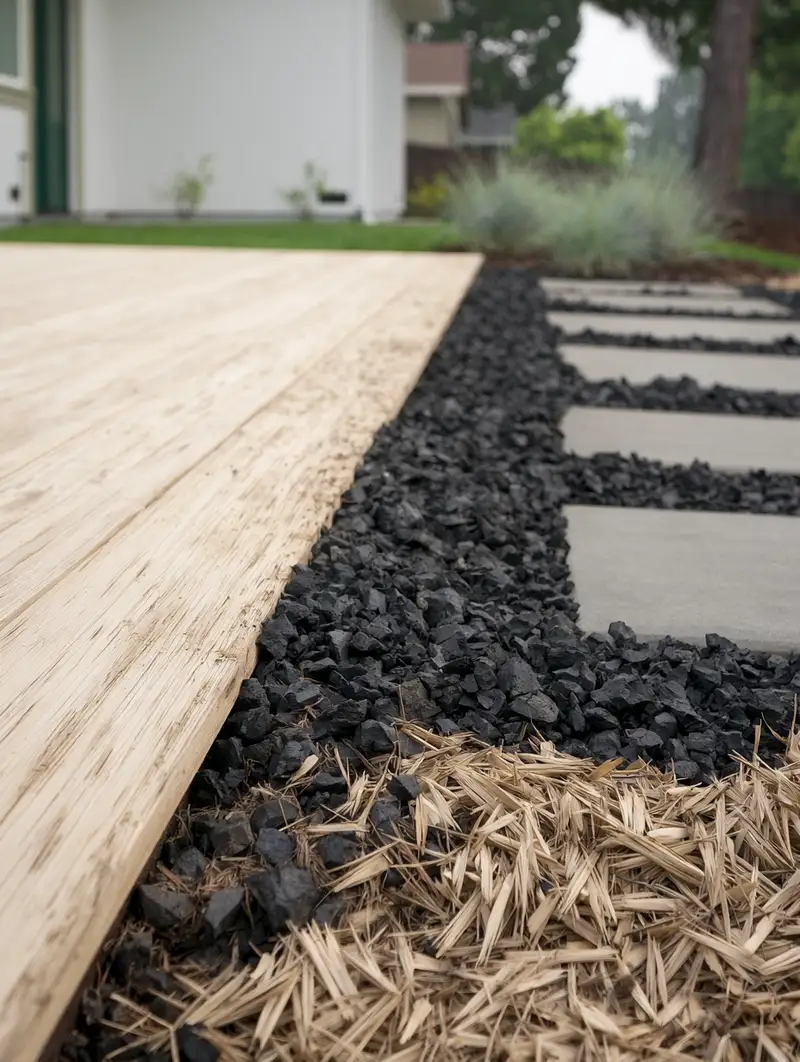
Smooth stones kick out onto the patio easily. Angular black gravel locks together under pressure. It forms a rigid, high-contrast line that stays exactly in place.