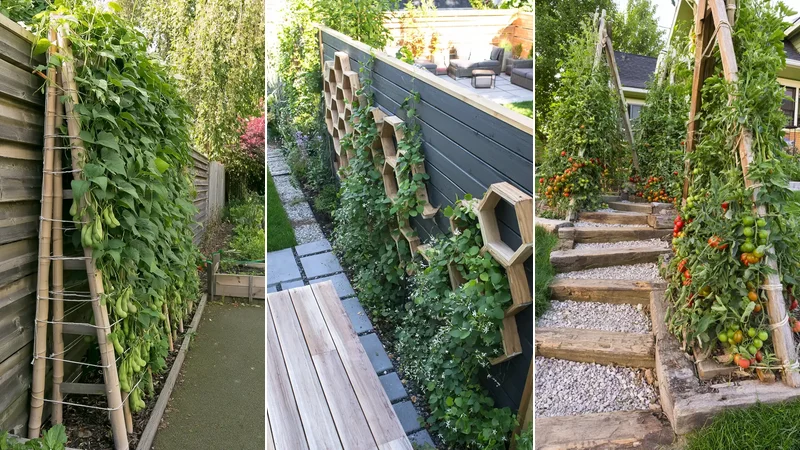
A chaotic, overgrown garden bed looks messy and invites rapid disease spread. Establish strict visual order before autumn hits. Modular wooden grids frame wild foliage beautifully while maintaining perfect airflow.
1. Heavy-duty A-frames for sloped terrain
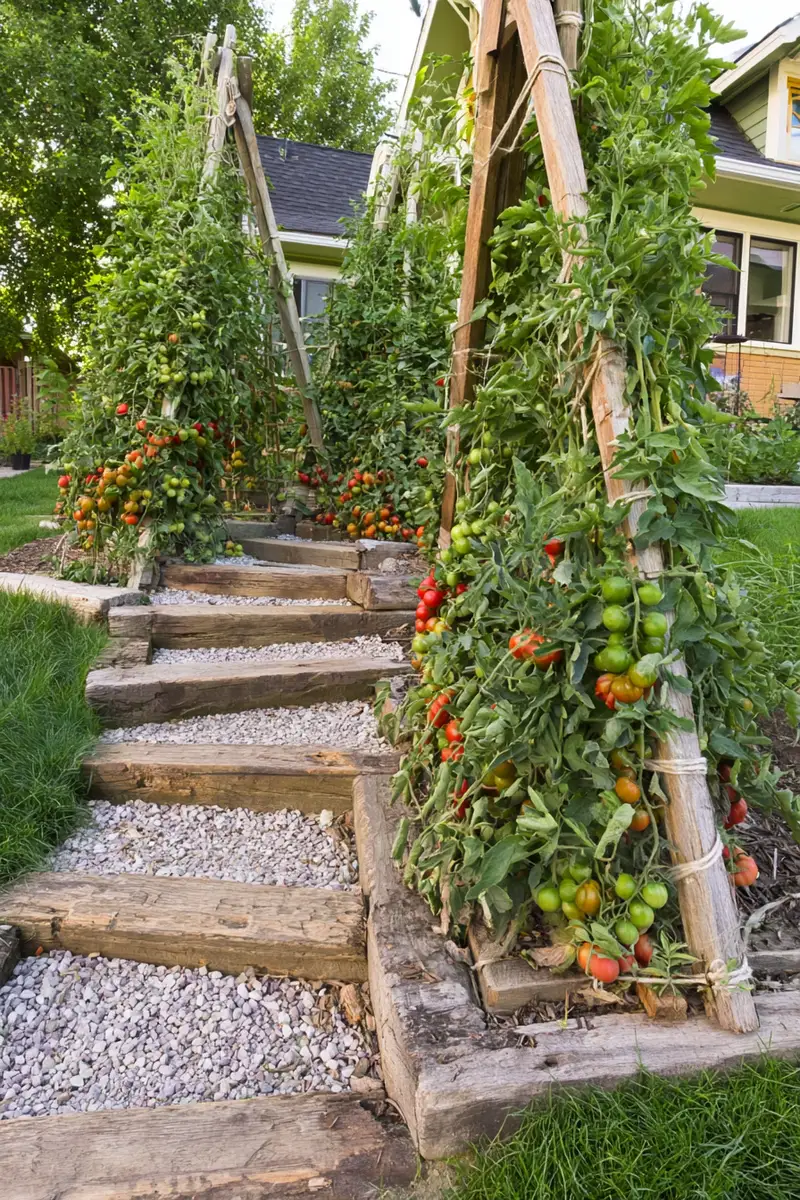
Late summer tomato plants easily snap flimsy wire cages. Their sprawling weight creates a chaotic mess, especially on an angled garden path. Building thick, structural A-frames out of rough timber solves this entirely. The wide base handles massive fruit loads without tipping. It also acts as a natural, highly functional guardrail for the gravel steps.
2. The metal transition arch
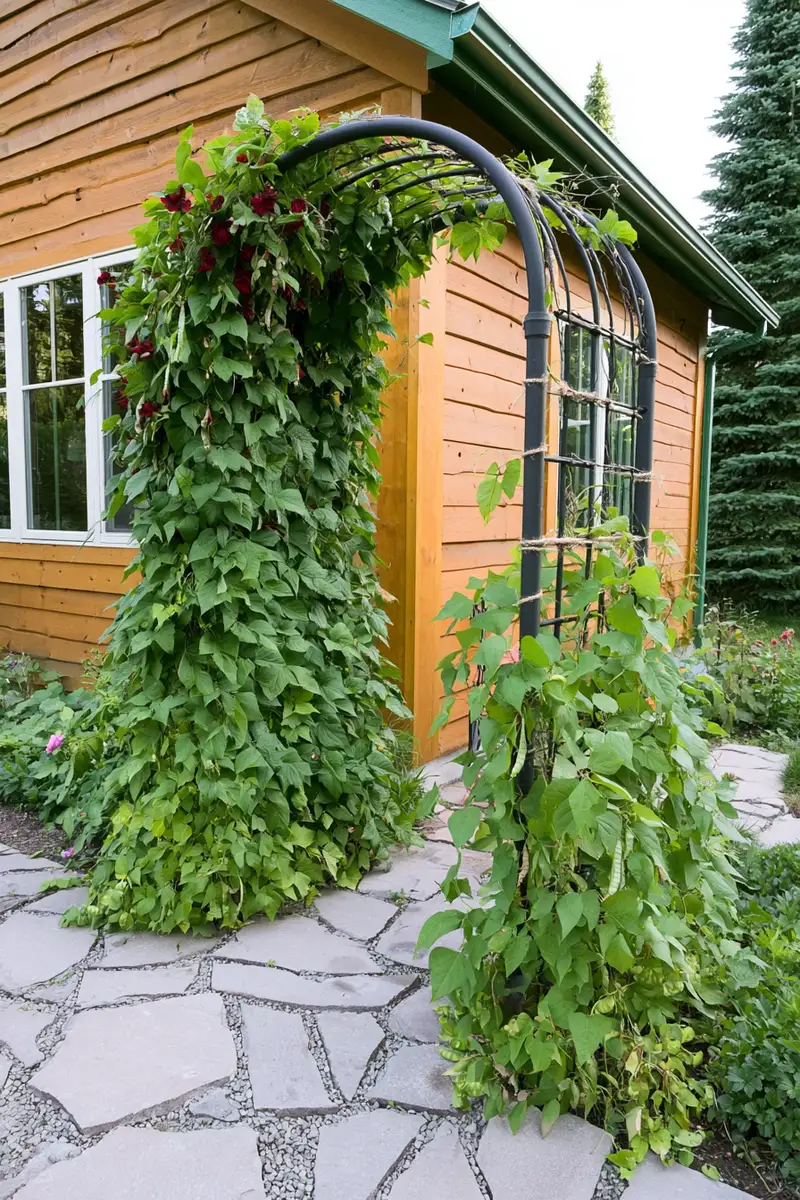
Aggressive vining crops constantly threaten to overtake narrow walking paths. Dropping a rigid metal arch directly over the walkway forces strict vertical growth. It completely clears the stepping stones and instantly builds a shaded, deliberate transition zone between the garden beds.
3. Locking into metal planters
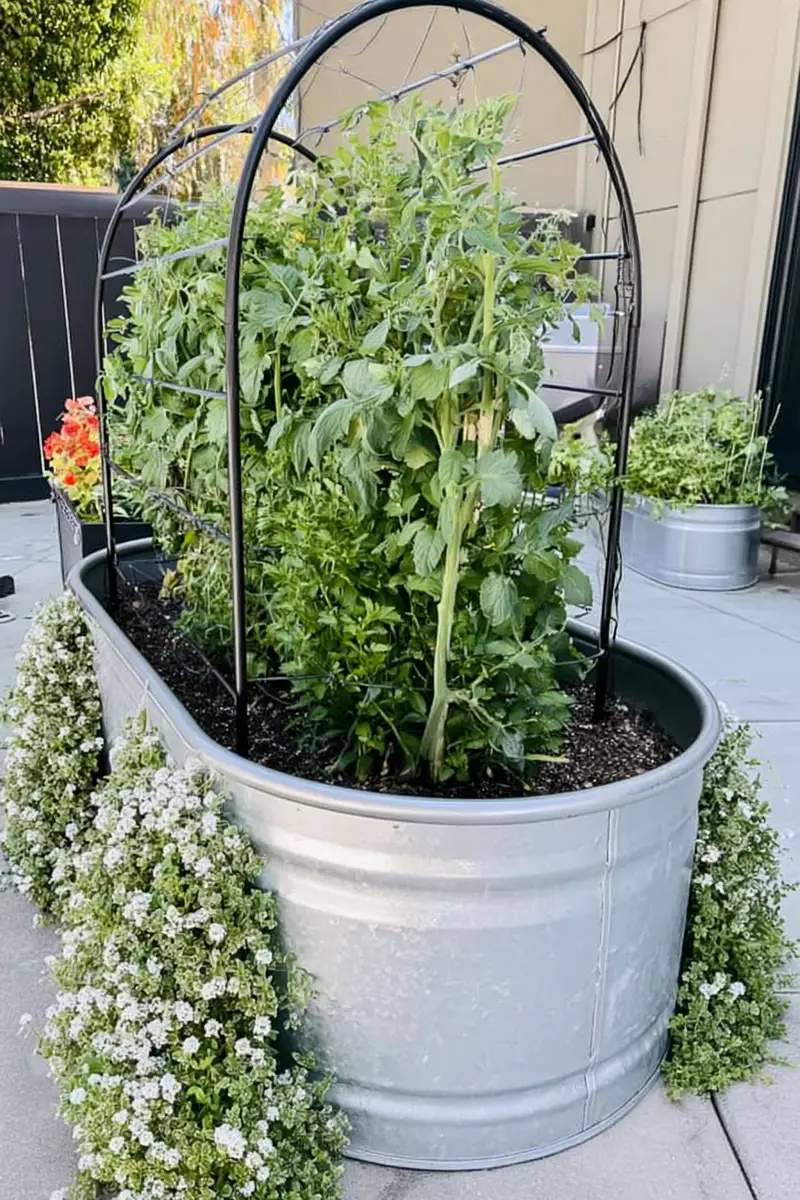
Standard bamboo stakes always tip over in loose potting soil. This custom wire frame fits perfectly against the galvanized trough walls. It provides a rigid, immovable spine for heavy late-season growth.
4. Freestanding ladders protect the siding
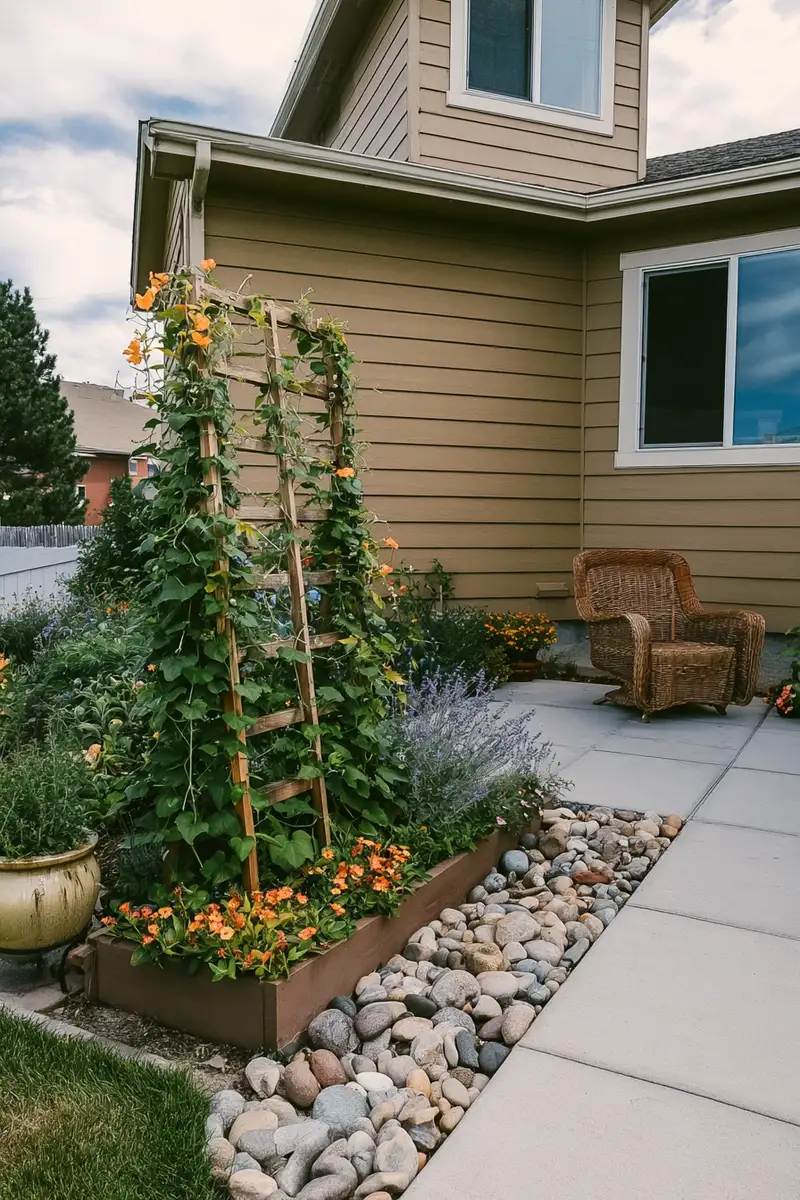
Blank exterior walls feel stark. However, drilling trellises directly into wooden siding invites moisture damage and rapid rot. Placing a tall, freestanding ladder trellis inside a raised perimeter bed offers the perfect compromise. It brings massive vertical scale and softens the architecture with climbing foliage, all without ever touching the actual house.
5. The walk-through tunnel
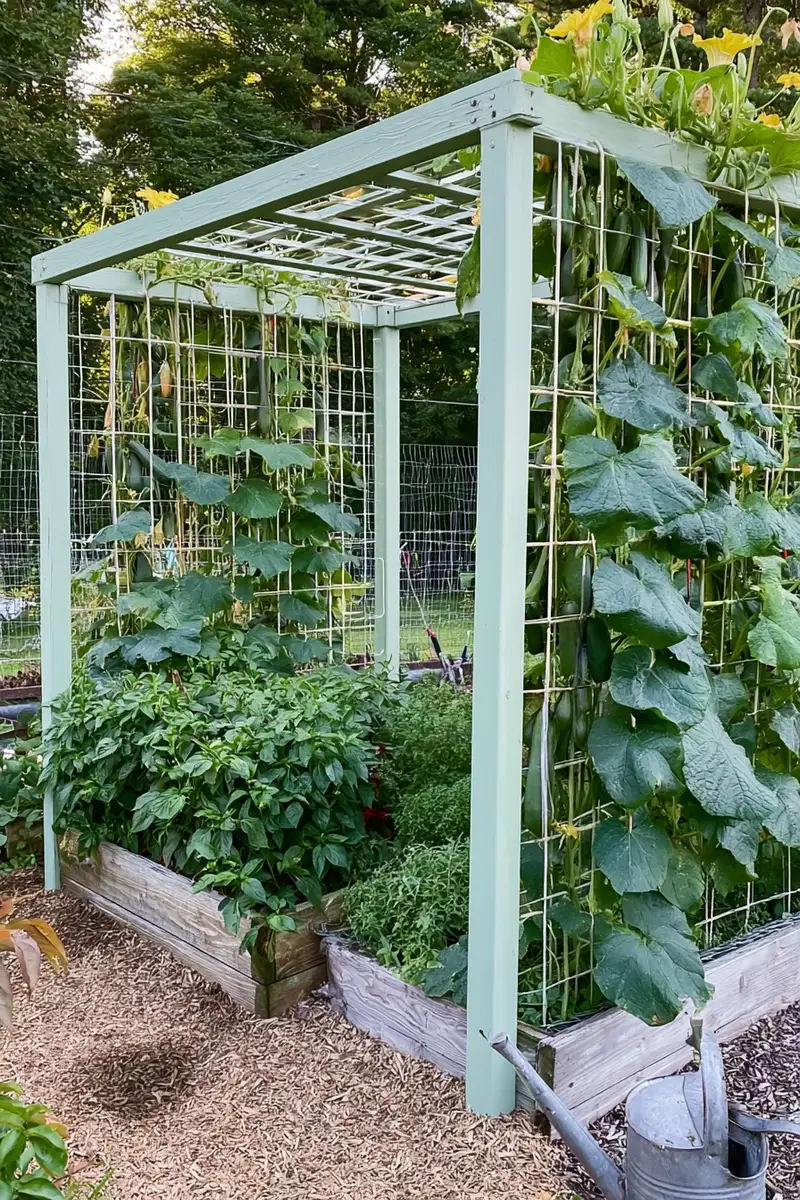
Dense squash and cucumbers rot quickly when left sitting on damp late-summer soil. A walk-through timber structure wrapped in wire mesh gets everything off the ground. The heavy vegetables hang safely for incredibly easy harvesting.
6. Geometric screens for breathable privacy
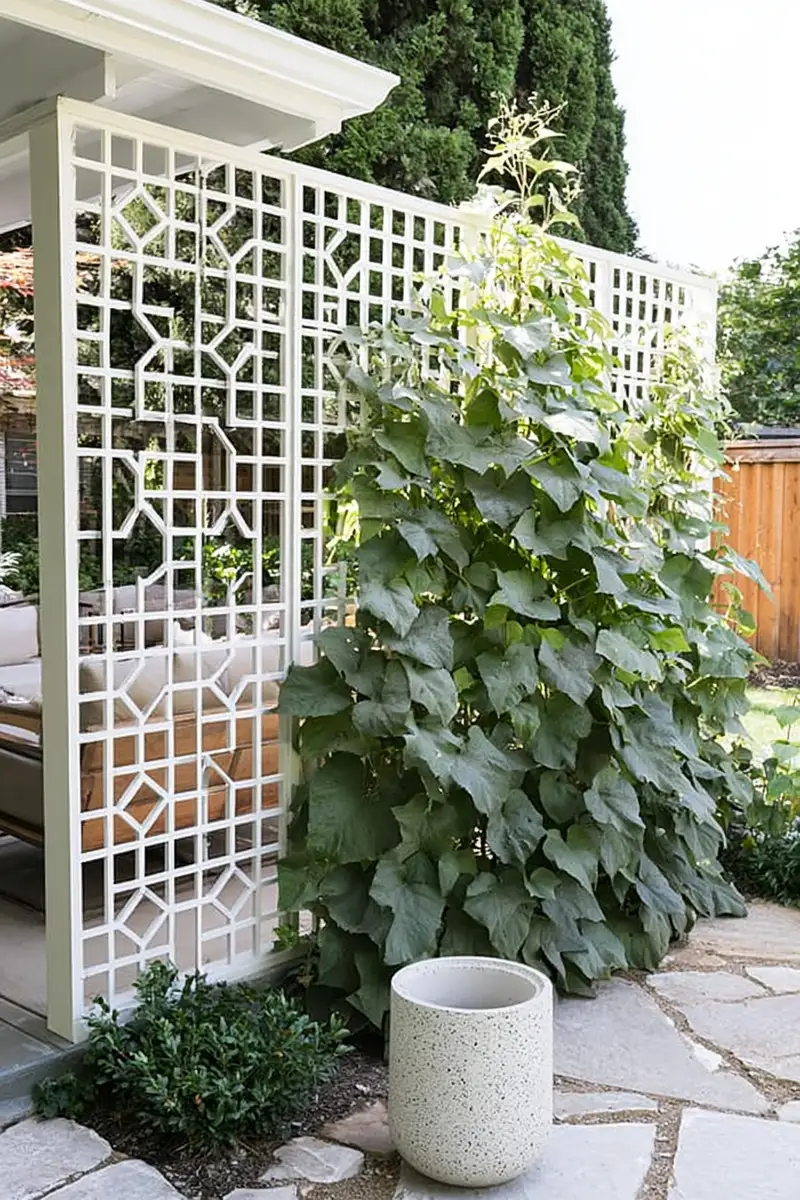
Solid patio walls block crucial summer breezes. A thick geometric screen acts as a heavy-duty support for aggressive climbers. The vines fill the voids to create natural privacy while keeping the air flowing beautifully.
7. Modular honeycomb mounts
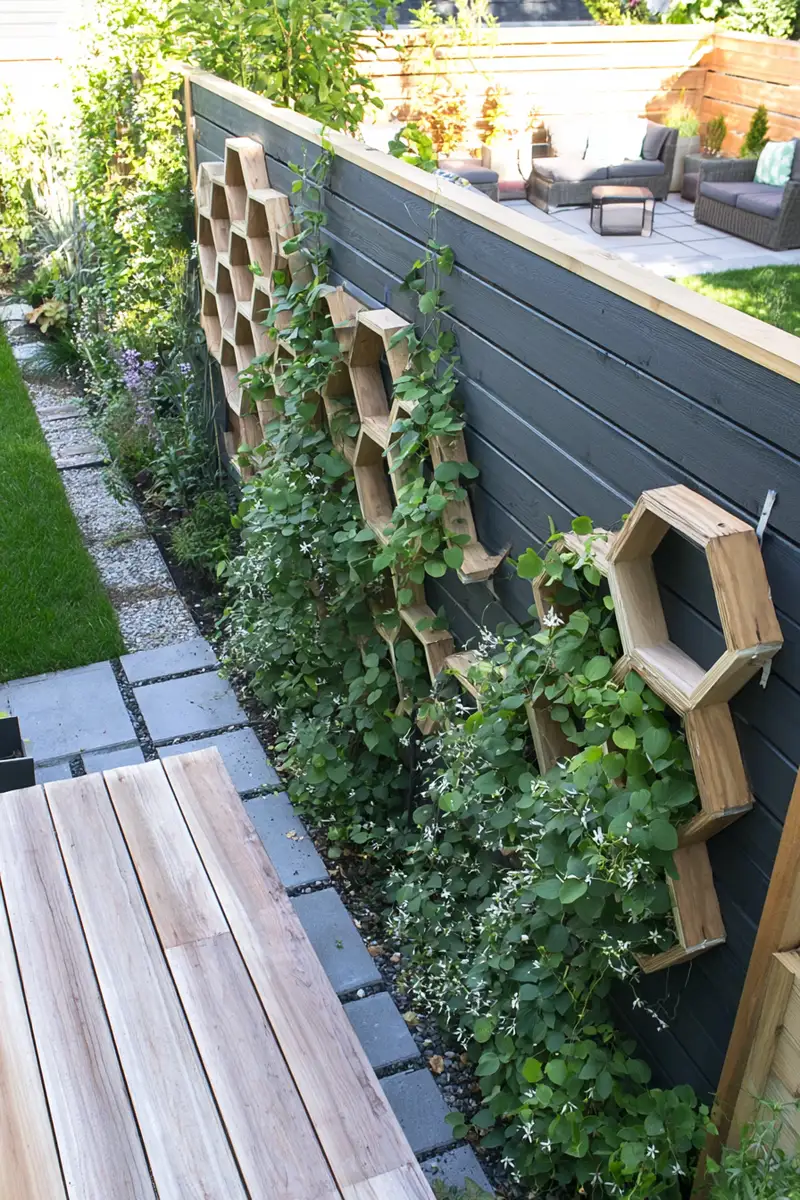
Flat modern fences often look oppressively stark by August. Mounting modular wooden honeycombs directly to the boards breaks up the dark facade immediately. It gives delicate vines a strict, architectural path to weave through. This turns a boring boundary wall into structured living art.
8. Living shade roofs
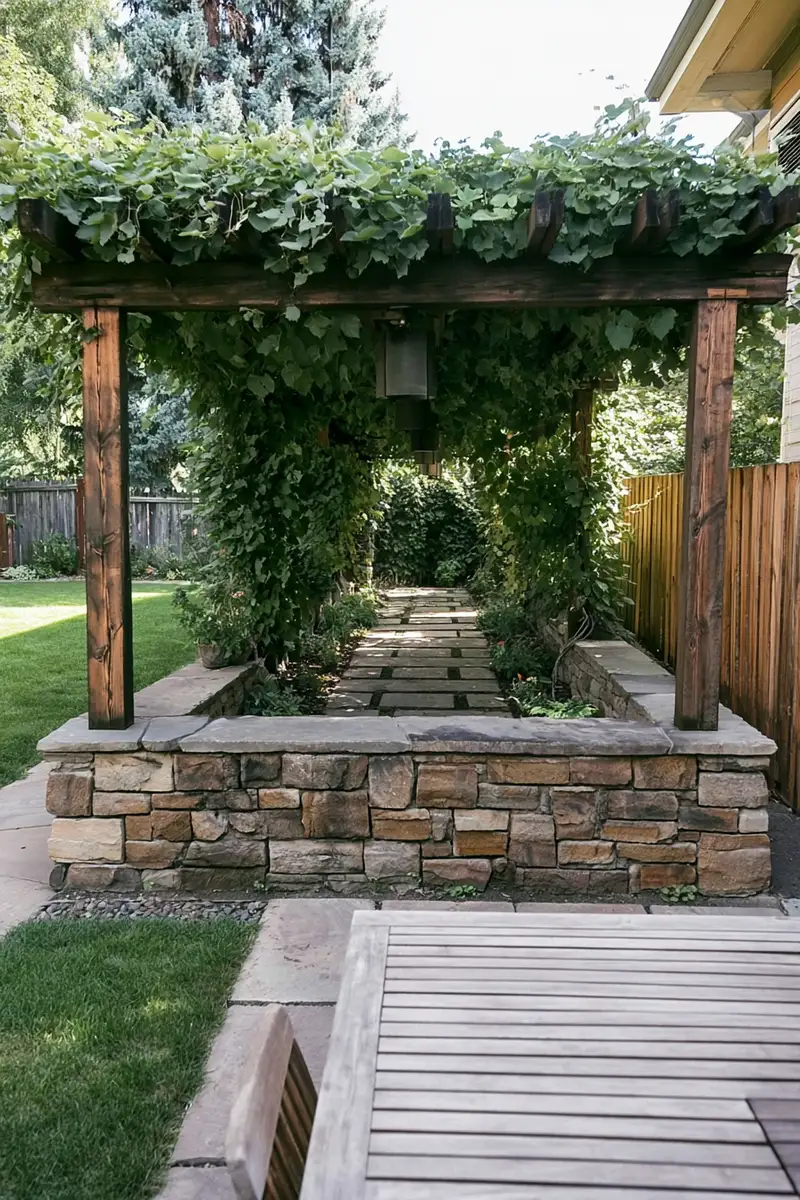
Building a solid roof structure for deep shade is highly expensive. A heavy timber pergola designed specifically for aggressive grapevines handles the job naturally. By late summer, the dense foliage creates a massive, cooling canopy over the stone patio. It requires zero engineering for snow loads and looks totally established.
9. Framing the long corridor
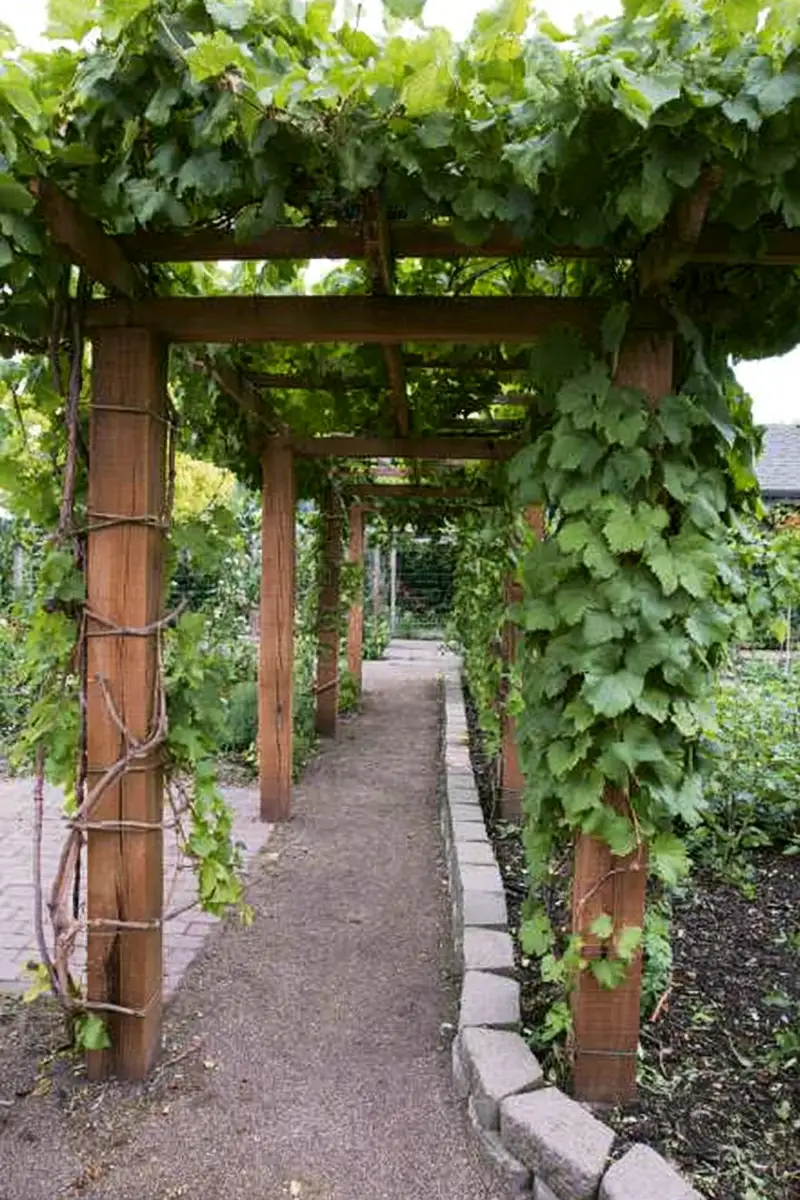
Long, straight dirt paths lack definition and feel exposed. Wrapping continuous timber posts in thick vines forces a strong visual perspective. It turns a simple walkway into a highly immersive green tunnel.
10. Hiding the downspout cleverly
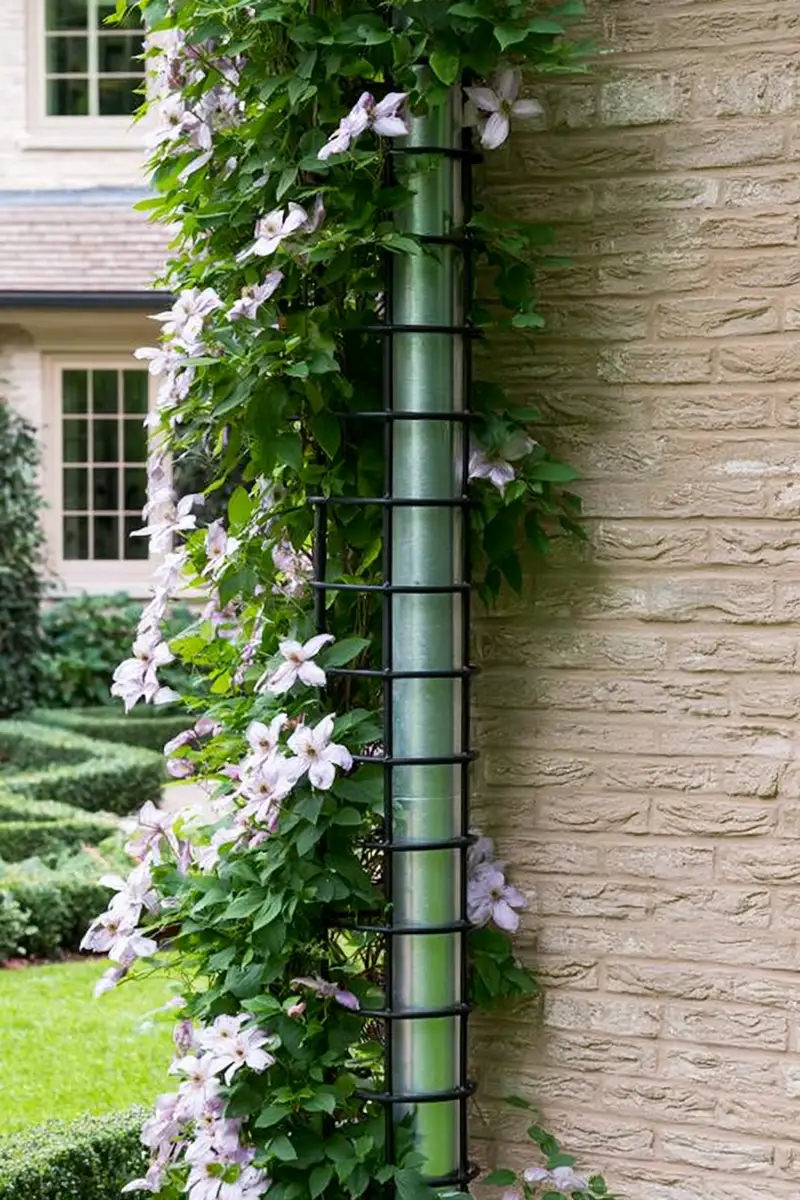
Exposed aluminum downspouts ruin the historic look of a textured brick facade. A semi-circular iron cage hugging the pipe intercepts the visual clutter completely. It allows late-blooming clematis to swallow the utilitarian metal without ever obstructing the actual drainage flow.
11. The freestanding bamboo lean-to

Heavy late-summer bean yields easily snap flimsy netting. Tying the crop directly to a wooden privacy fence traps moisture and rots the boards fast. Leaning a thick, structured bamboo ladder just slightly away from the wood solves both problems perfectly. The heavy pods hang straight down in the isolated gap for an incredibly clean, fast harvest.
12. Anchoring the turf transition
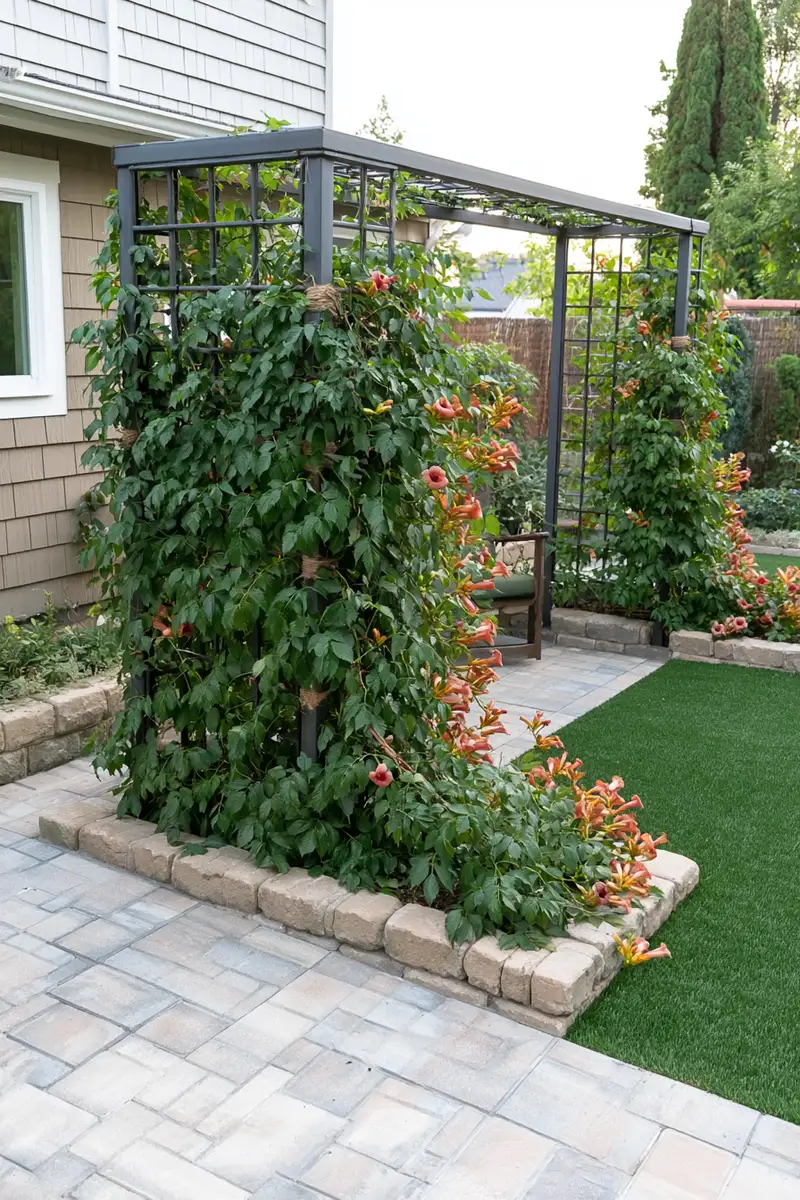
The shift from rigid stone pavers to artificial turf often feels painfully abrupt. Dropping a heavy-duty metal arbor right on that boundary line builds an instant vertical anchor. It handles the chaotic weight of aggressive late-summer bloomers with total ease. The dark metal structure forces the vines upward, stopping them from creeping over and ruining the pristine synthetic grass edge.
13. Timber frames for living shade
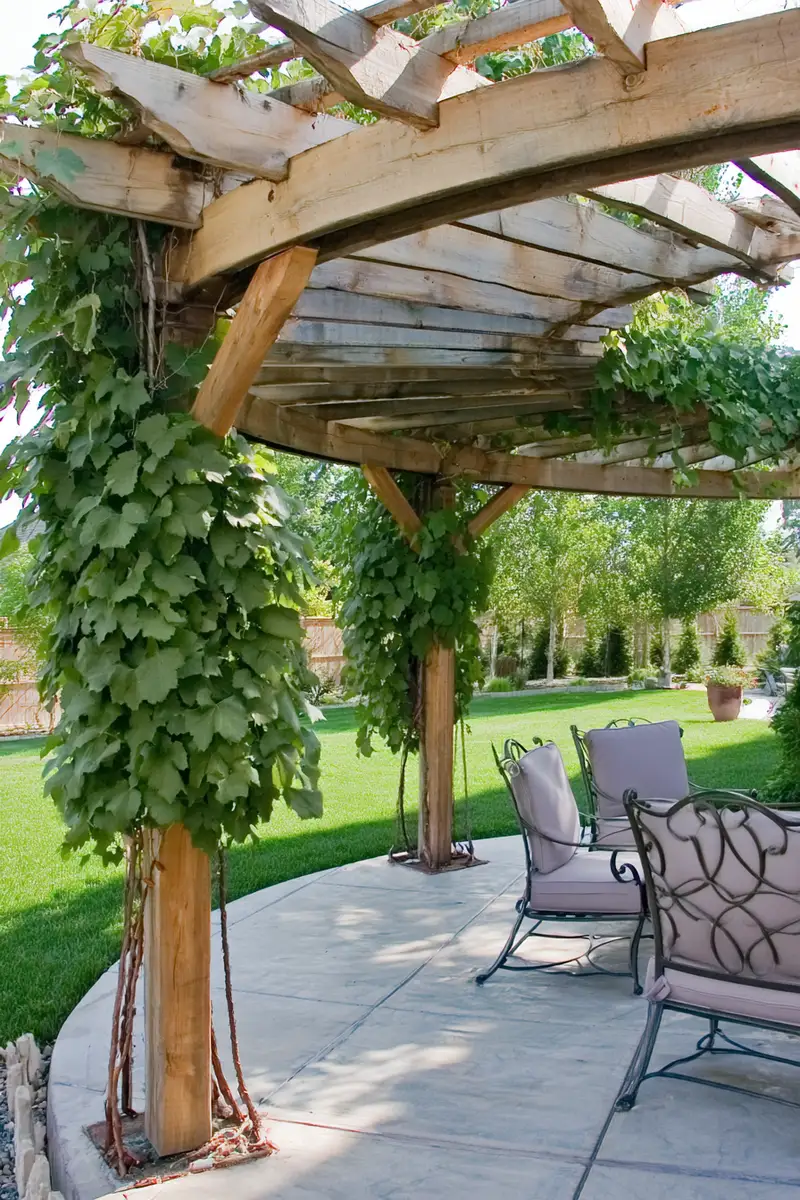
Uncovered patio seating bakes uselessly in the brutal August sun. A massive raw timber frame wrapped in mature grapevines delivers a thick, cooling canopy exactly when the heat peaks. It completely eliminates the need for expensive structural roofing.
14. Industrial steel on heavy masonry
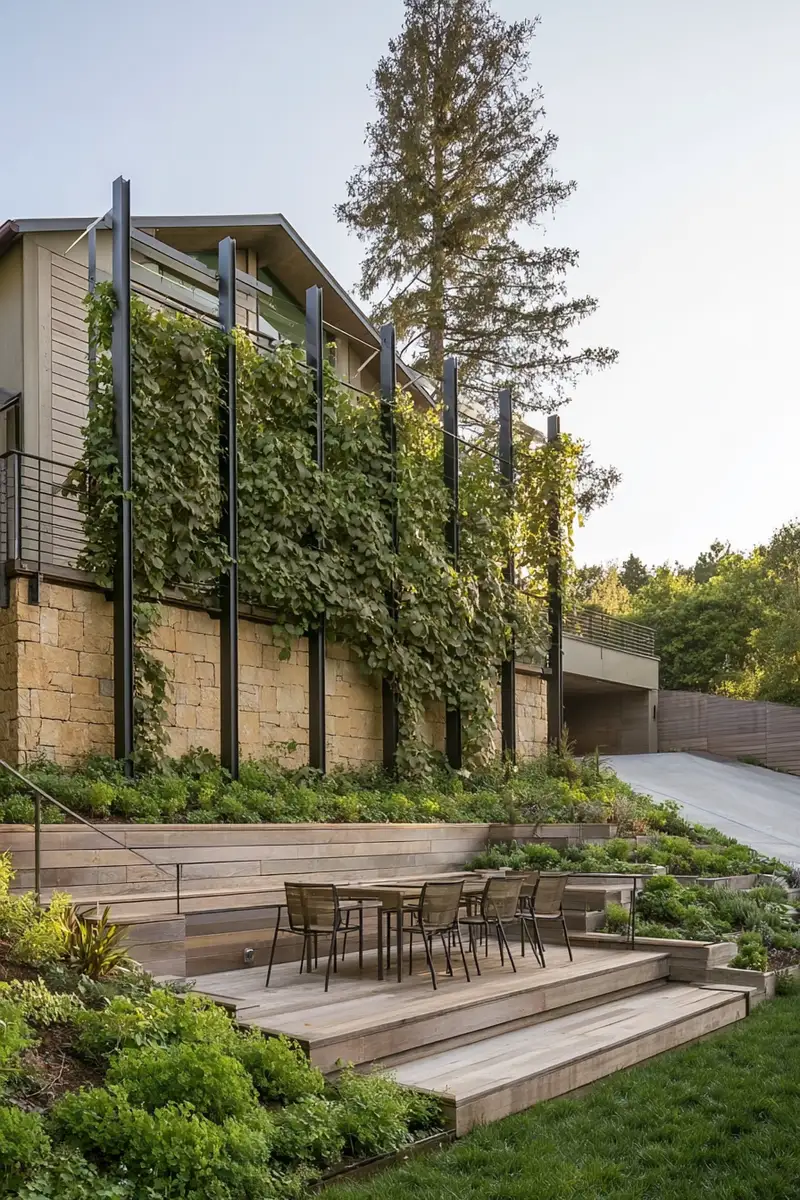
Towering stone retaining walls behind a patio easily feel oppressive and visually heavy. Bolting massive industrial steel I-beams directly to the stone shifts the dynamic completely. This gives aggressive climbers a strict, architectural track to follow. The cascading late-summer greenery breaks up the endless masonry while maintaining a razor-sharp modern edge. It is a highly engineered solution to a common landscaping scale problem.
15. Integrated fence grids
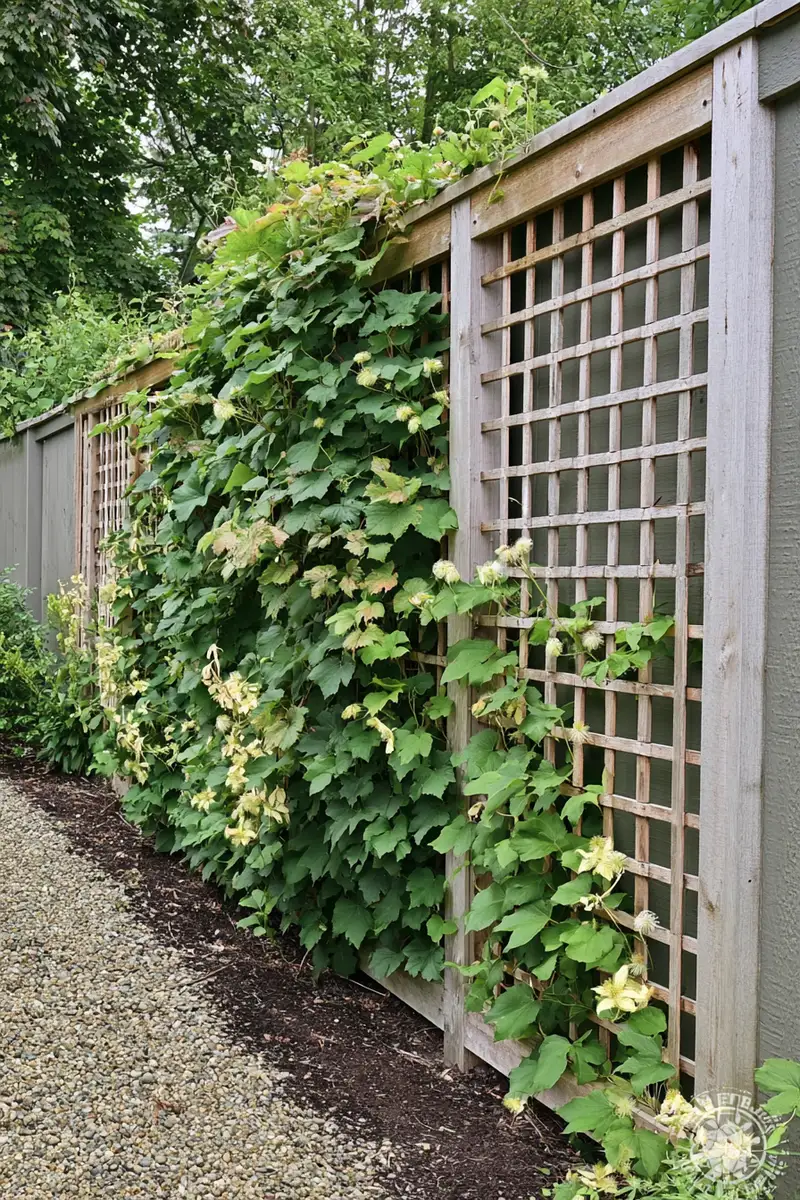
Long stretches of solid privacy fencing look flat and monotonous by the end of the season. Swapping random sections for open wooden lattice fixes the visual fatigue instantly. It gives sprawling vines a dedicated climbing zone right on the boundary without sacrificing yard security.
16. The vertical pumpkin obelisk
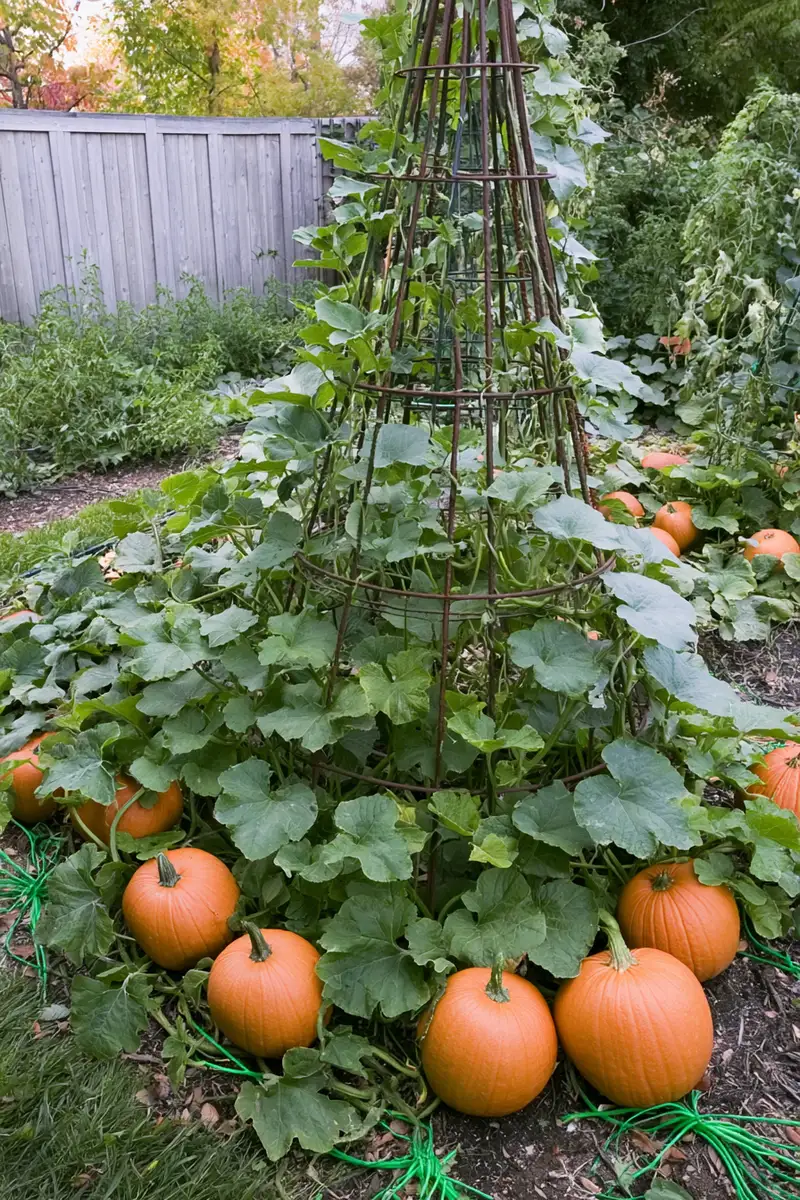
Sprawling squash vines easily choke out adjacent garden beds by late August. Dropping a heavy rusted iron obelisk in the center forces the core foliage up. It maximizes ground space and drastically improves airflow to prevent powdery mildew.
17. The wire greenhouse tunnel
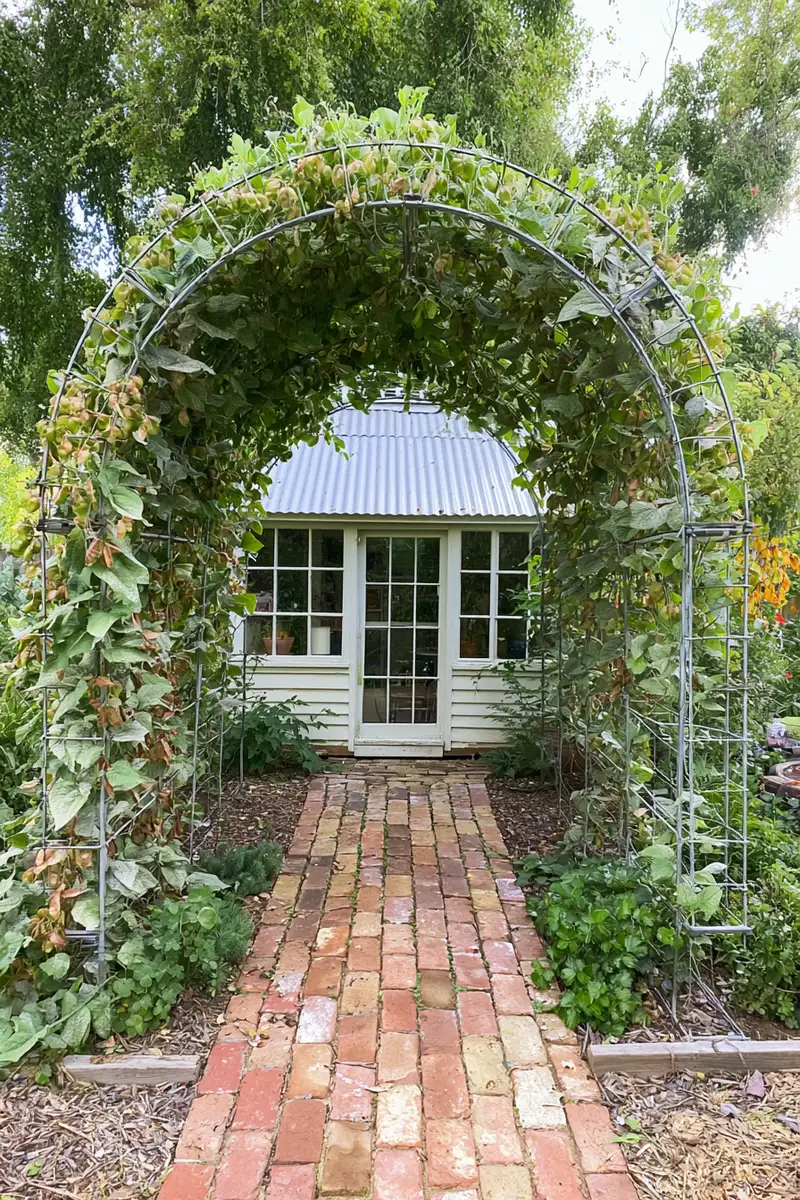
The walk to a backyard shed is usually just a flat, utilitarian chore. Spanning the brick approach with a wide wire arch turns that simple path into an immersive architectural tunnel. It handles massive late-season vine weight effortlessly without ever shrinking the actual walking clearance.
18. Repetitive arches in the side yard alley
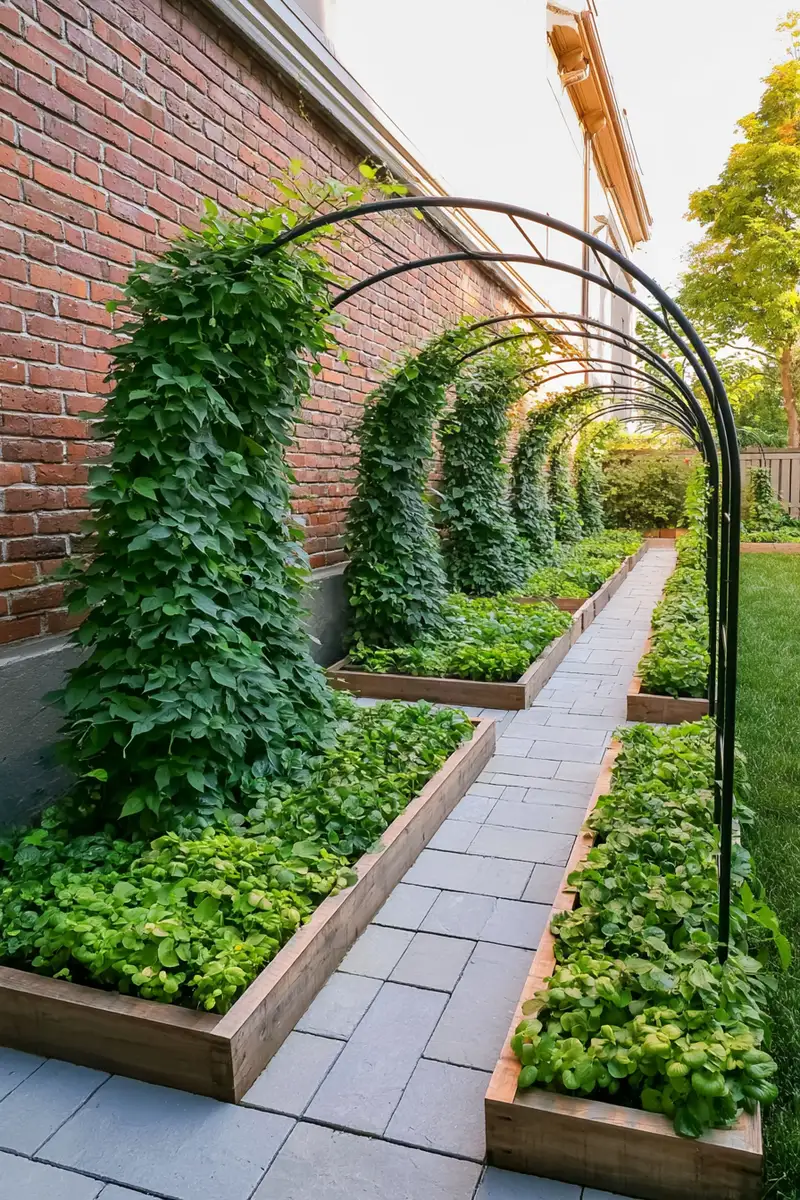
Narrow side yards trapped next to a towering brick house usually end up completely abandoned. Installing a strict rhythm of repeating black metal arches directly into long raised beds transforms the corridor entirely. This setup forces chaotic climbing crops into a disciplined vertical pattern against the warm brick. The repetitive geometry pulls the eye forward and maximizes yield in a notoriously difficult, cramped footprint.