
Watching your expensive topsoil wash away after every summer storm is incredibly frustrating. Steep yards are notoriously difficult and pricey to tame. However, using clever structural tricks and natural materials flips the script, turning that messy dirt slope into a beautifully structured, highly functional retreat.
1. Colorful DIY planter boxes for steep stairs

A severe grass bank right next to a daily walkway is impossible to mow safely. Building tiered wooden planter boxes directly into the incline solves this hazard perfectly. Using cheap, salvaged lumber painted in bright pastel shades turns an awkward dirt hill into a highly organized, vibrant flower display. It stops soil washout entirely.
2. Raw stone slabs
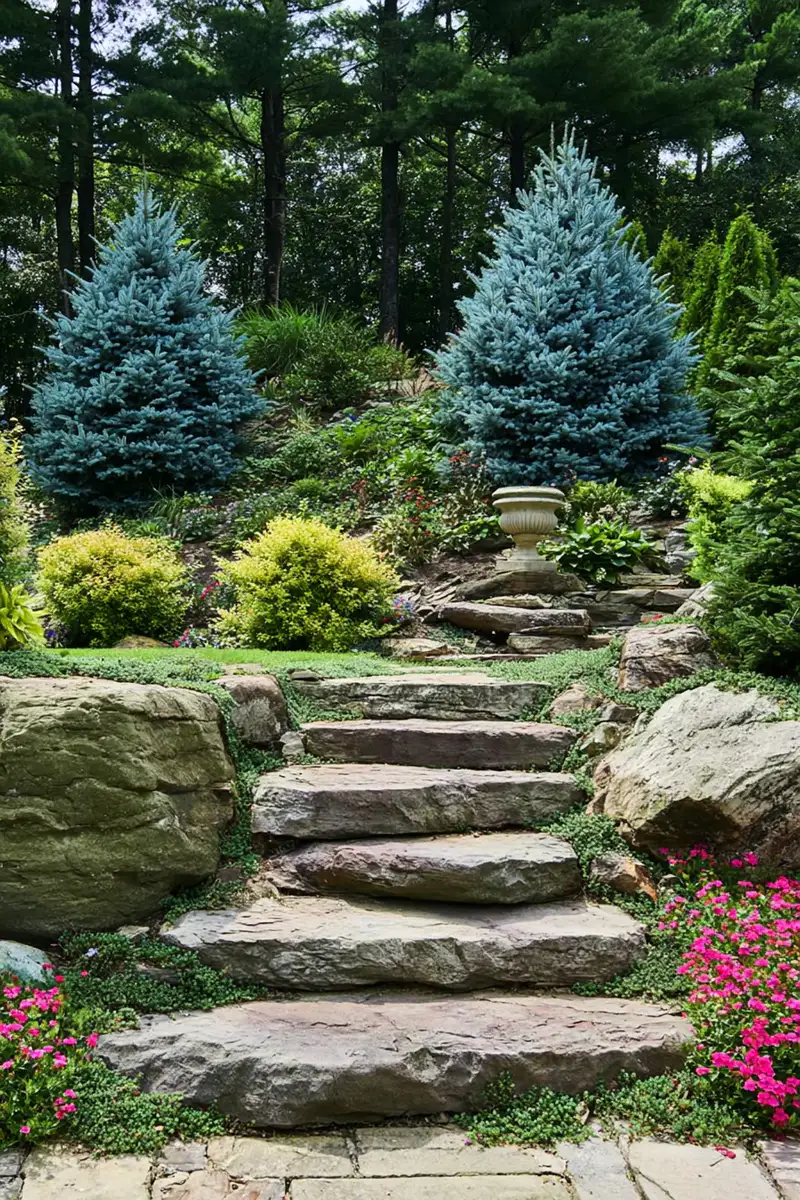
Paving a winding path up a forested hill drains the budget fast. Utilizing oversized, unrefined natural stones creates a permanent, indestructible staircase. The heavy rocks anchor the soil while low-growing groundcover naturally fills the gaps. Zero mortar required.
3. Dry-stacked fieldstone for terraced seating
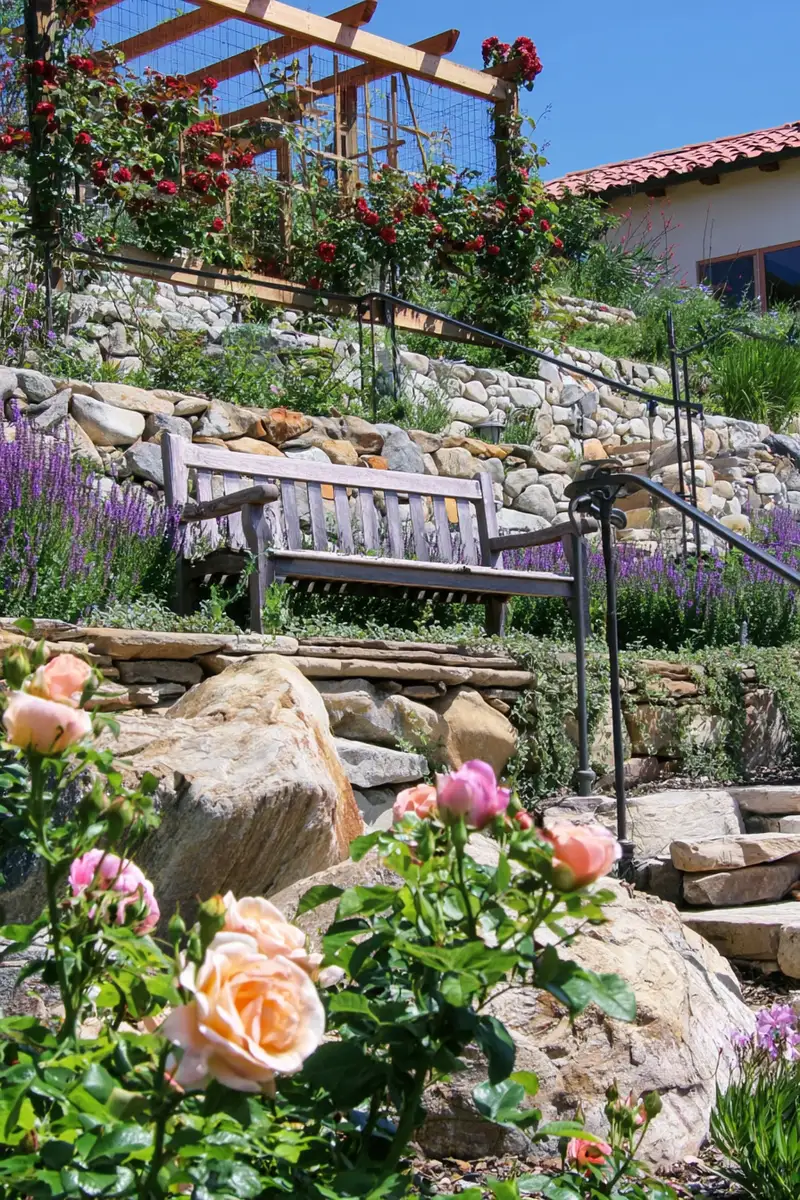
Severe backyard slopes turn into mudslides during heavy spring rains. Hiring crews to pour massive concrete retaining walls is incredibly expensive. The smarter approach relies on dry-stacked natural fieldstone. Stacking these rocks without mortar allows groundwater to seep through naturally, completely eliminating the hydrostatic pressure that ruins solid walls. It creates stable, flat tiers. Dropping a simple weathered bench onto one of these new levels instantly transforms an unusable cliff into a quiet, structured resting spot.
4. Channelling runoff with a rock stream
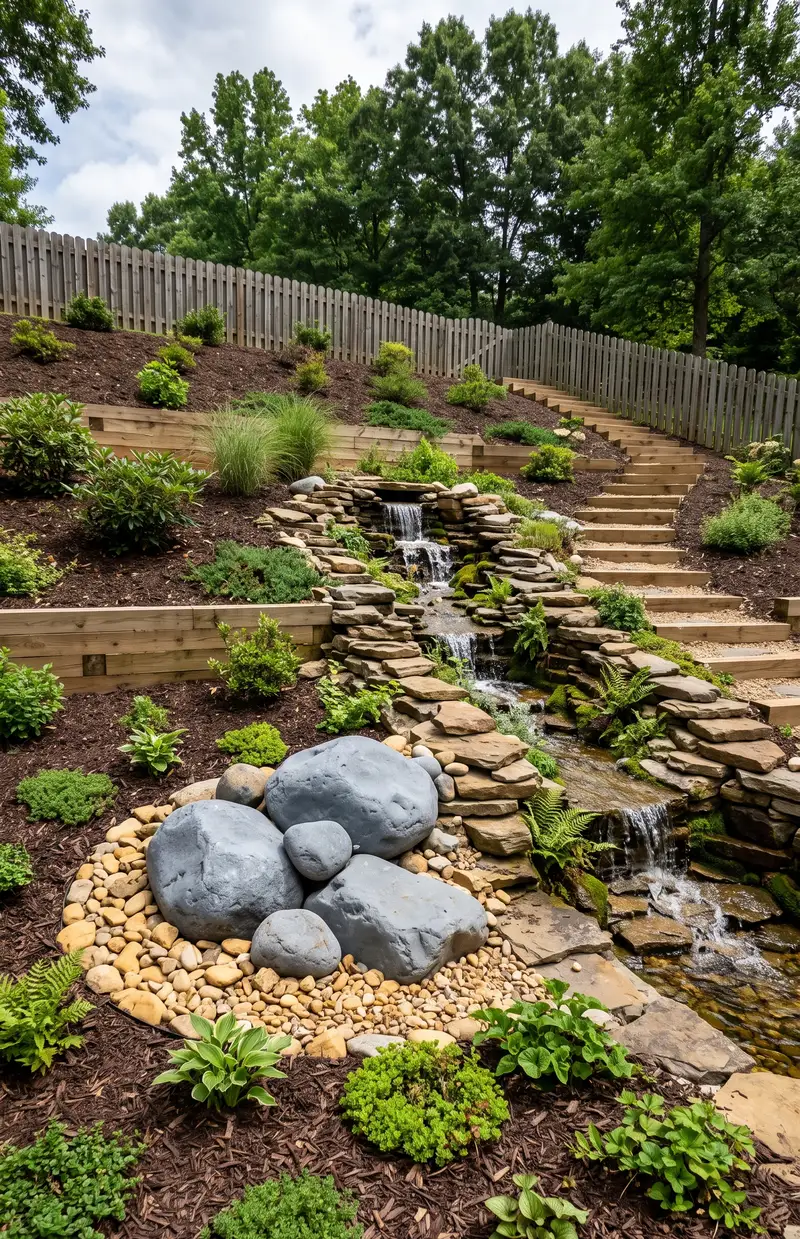
Heavy storms always carve ugly trenches into bare hillsides. Instead of fighting the inevitable runoff, you can guide it. Digging a shallow channel and filling it with smooth river rocks creates an intentional drainage path that looks like a natural creek. Flanking the sides with basic pressure-treated landscaping timber terraces the surrounding mulch beds cheaply and effectively.
5. Carpet the hill in creeping blooms
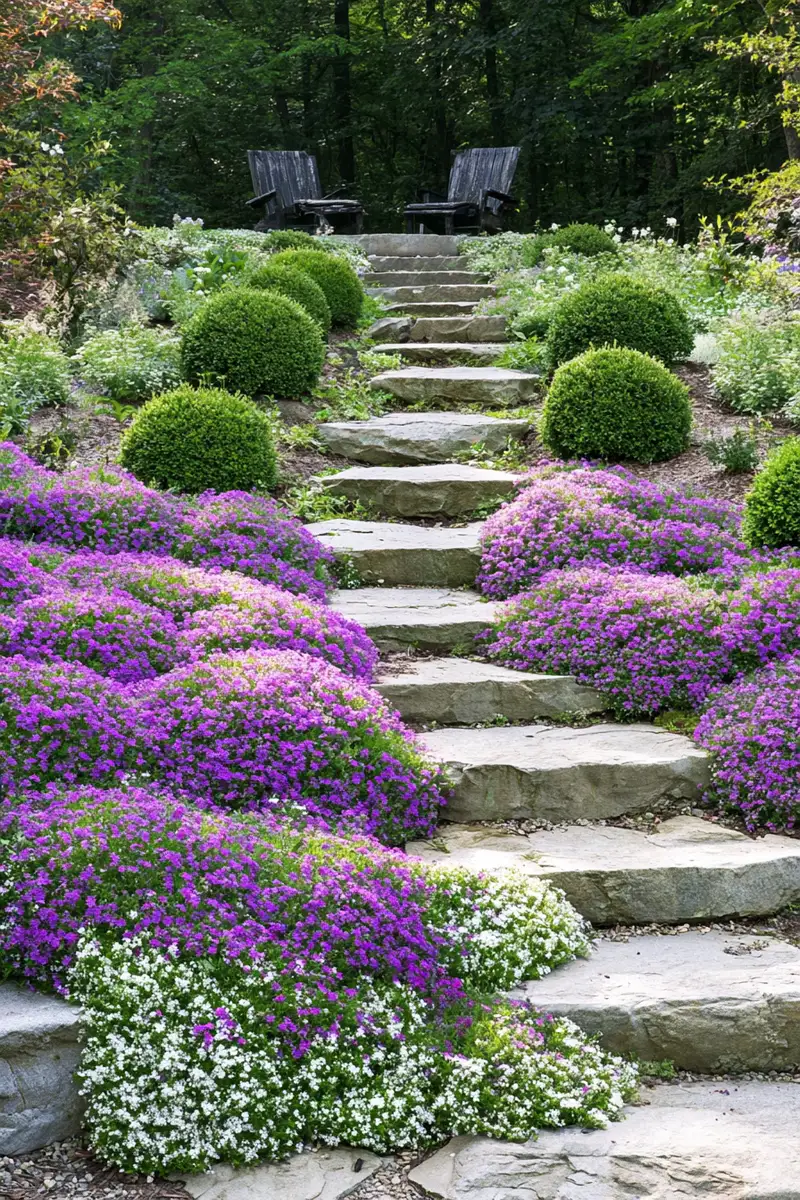
Pushing a mower up a steep incline is dangerous. Blanketing the entire slope in aggressive groundcovers like creeping phlox eliminates the grass problem completely. The dense roots lock the dirt in place.
6. Timber sleepers and crushed gravel
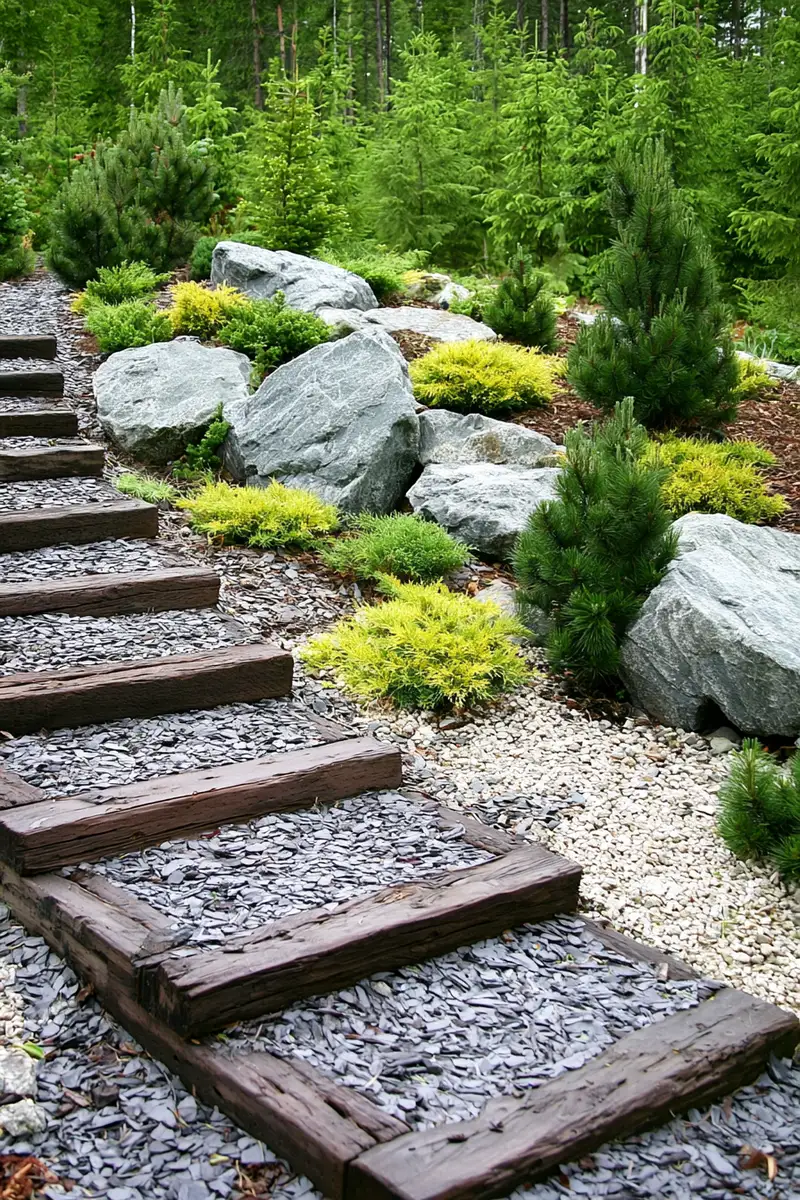
Traditional concrete steps crack easily on shifting dirt hills. Using salvaged railroad ties or heavy landscape timber to frame the steps offers crucial flexibility. Packing the treads with cheap, crushed gray stone provides excellent drainage and high traction. It is a rugged, highly practical solution for wooded properties.
7. Boulders as natural retaining anchors
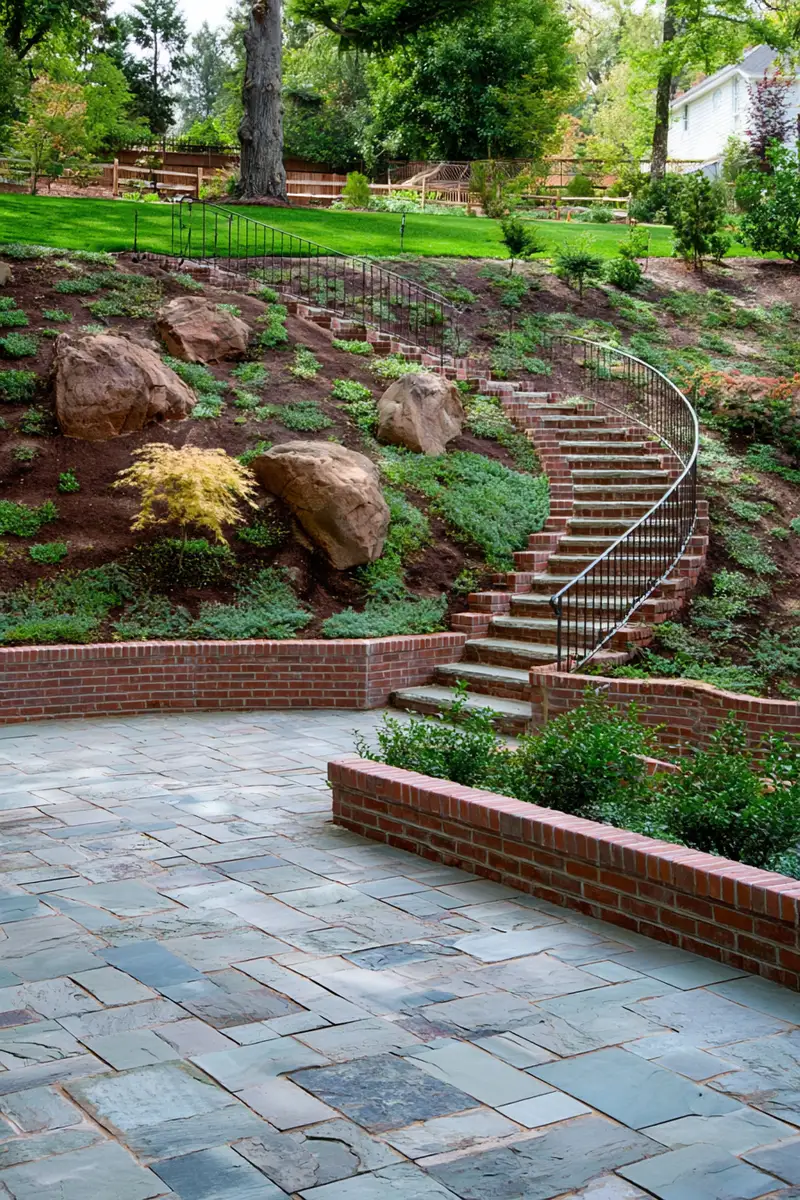
Taming a massive, steep dirt hill normally requires serious engineering. A highly effective budget
8. Simple lumber stairs with integrated lighting
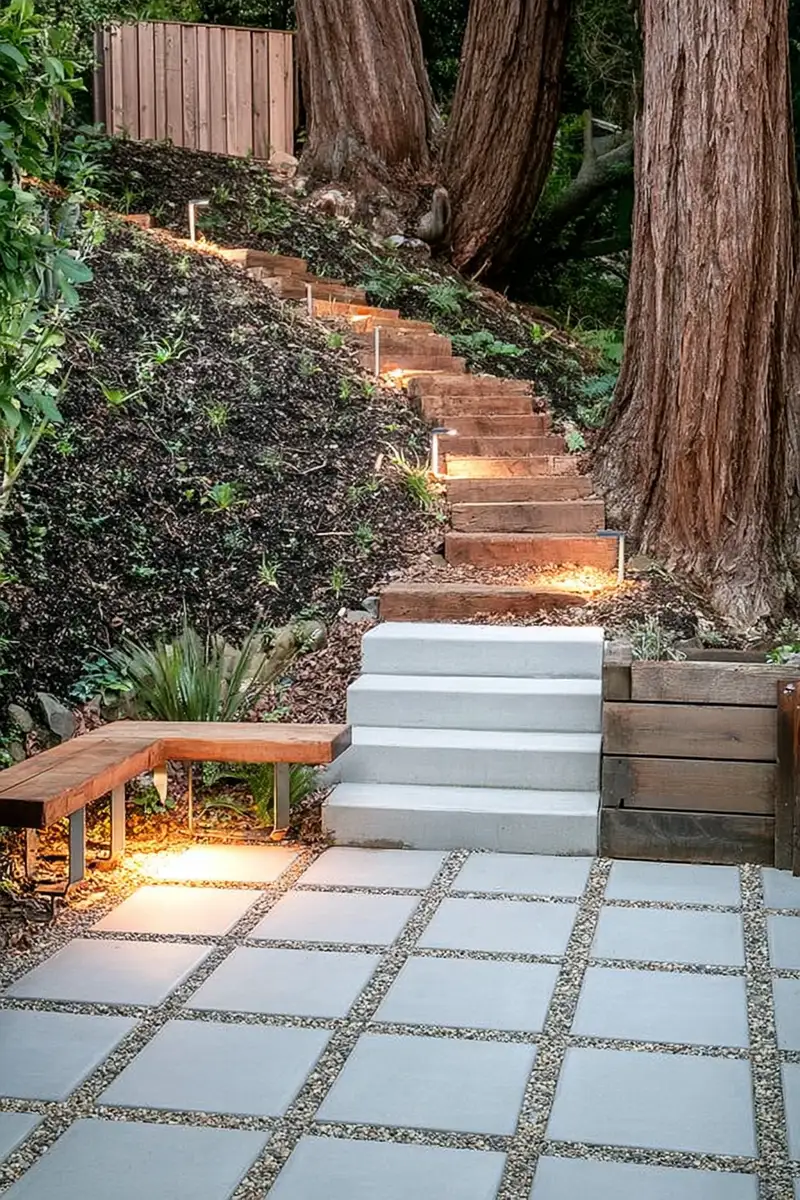
Connecting a modern, flat patio to a steep upper yard is a common structural challenge. Elaborate masonry stairs often clash with the natural forest edge. Constructing a basic, straight staircase out of thick treated lumber offers a clean, low-cost transition. The real trick here is the lighting. Sinking affordable low-voltage path lights right next to the wooden treads ensures safe navigation at night. It adds a premium, high-end feel to a very basic structural build.
9. Low stone walls for minor elevation changes
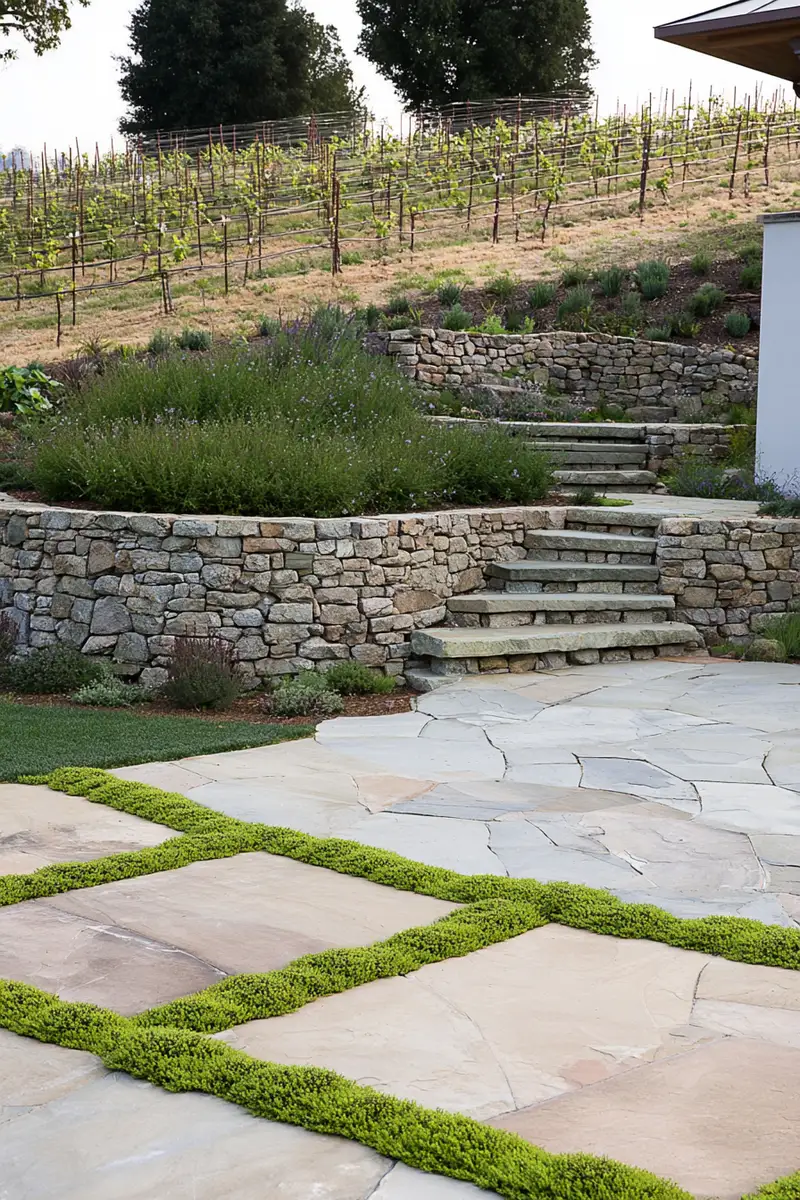
Transitioning from a flat outdoor living space to a rising garden bed can feel abrupt. Building a very low, curved retaining wall out of rough-cut stone smooths out this elevation change gracefully. It defines the patio edge while holding back the hillside soil. Leaving wide gaps between the patio flagstones for creeping groundcover softens the massive amount of hardscaping effortlessly.
10. Foraged fieldstone micro-terraces
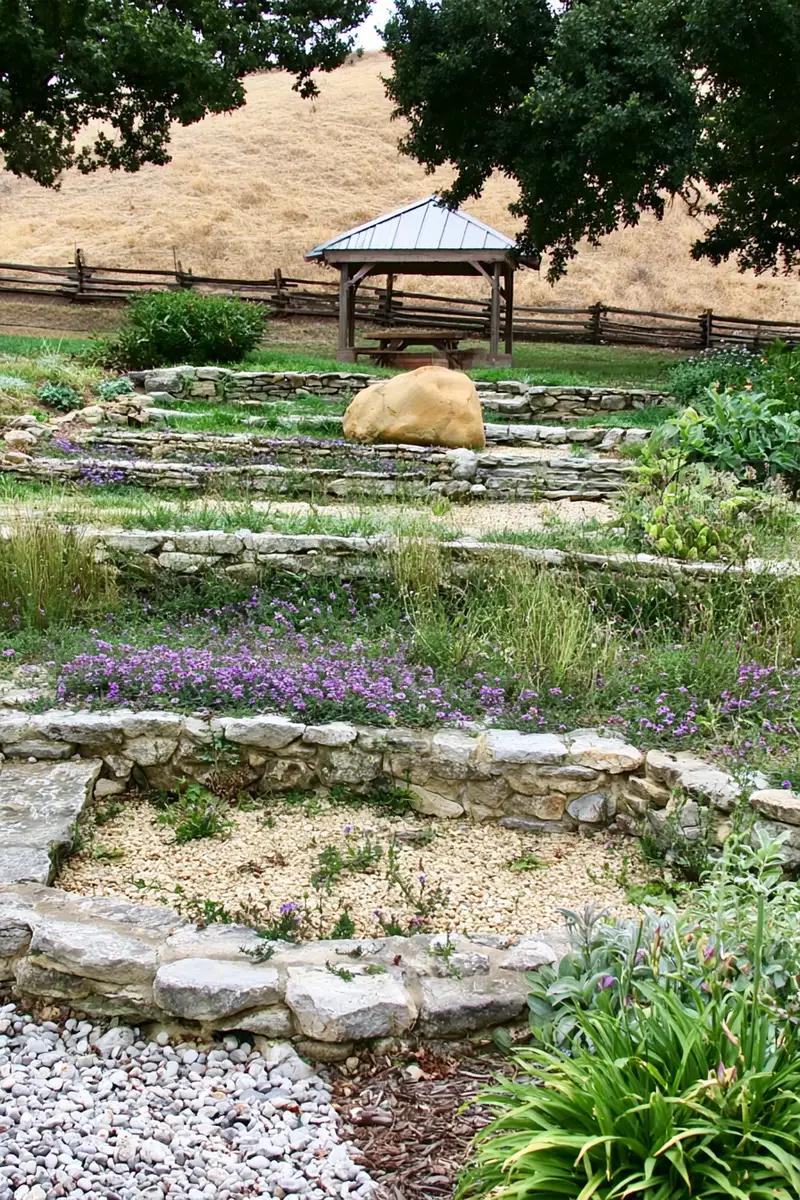
Large, arid slopes wash away quickly. Gathering loose, local fieldstones to build small, curved berms creates dozens of tiny terraces. This simple barrier method traps rainwater exactly where the plants need it. It costs almost nothing in materials.
11. Tiered brick walls and dense hydrangeas
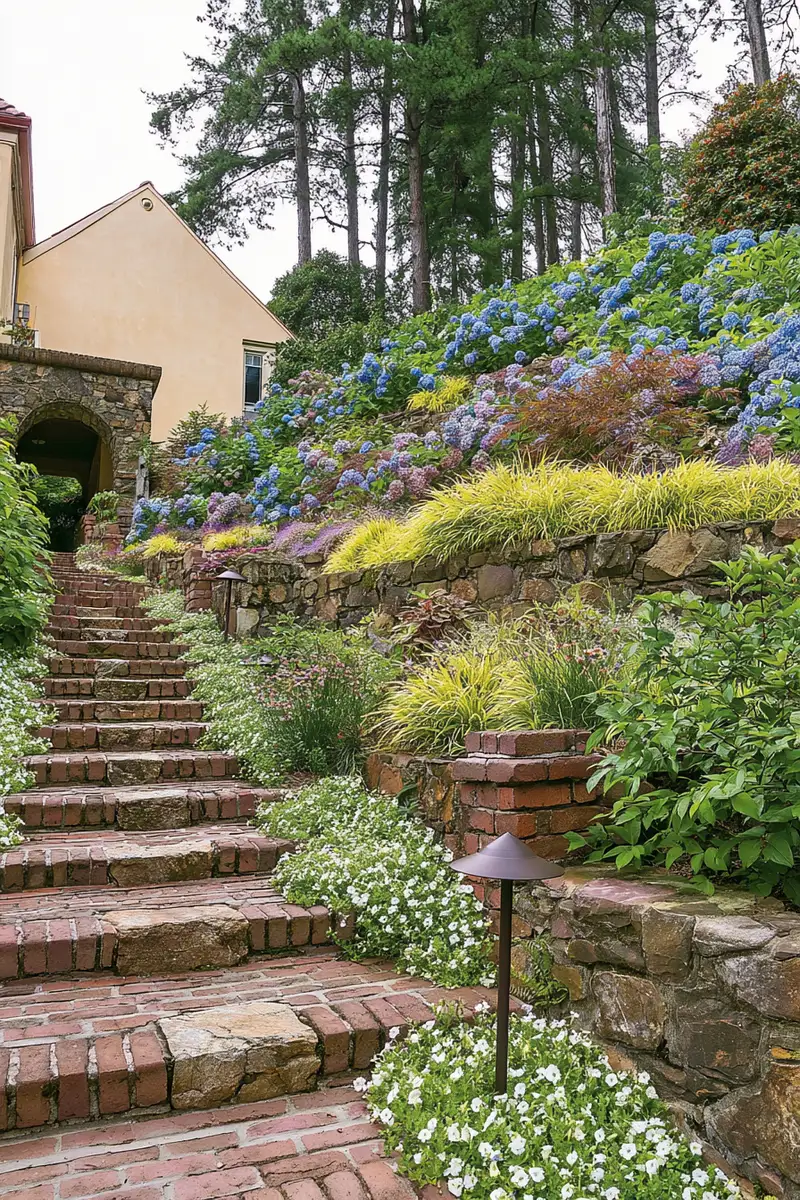
Steep banks next to a main entryway often suffer from severe soil erosion and look highly imposing. Constructing stepped brick retaining walls tackles the structural drop effectively. Filling those deep pockets with massive hydrangea bushes softens the harsh masonry. Their dense root systems lock the remaining dirt firmly in place.
12. Spaced flagstone for natural drainage
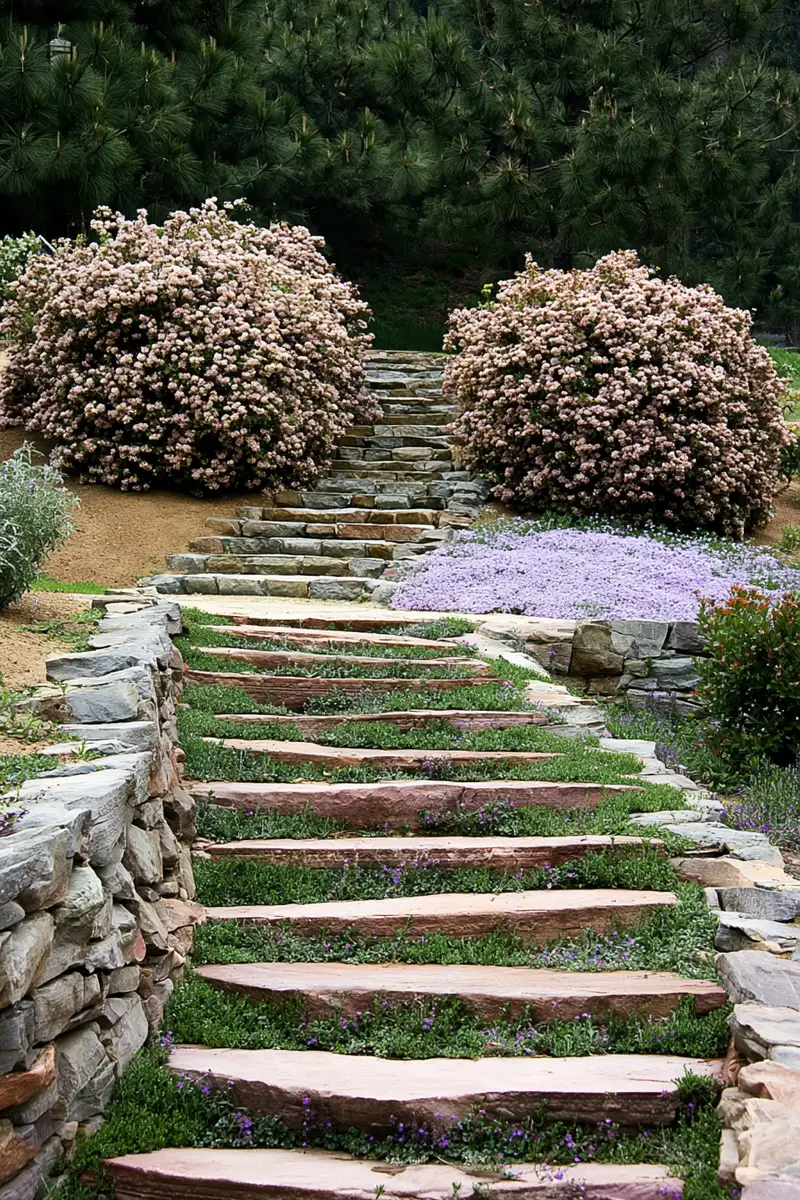
Pouring solid concrete stairs on a long, sloping hill is a massive expense. It also creates major water runoff problems during heavy storms. The smarter method uses long, shallow slabs of natural stone spaced out deliberately. Planting tough, creeping groundcovers in those wide gaps acts like a living sponge. The green joints absorb rainwater immediately, entirely bypassing the need for complex underground drainage pipes. It blends the hardscaping directly into the hillside.
13. Raw boulder retaining walls
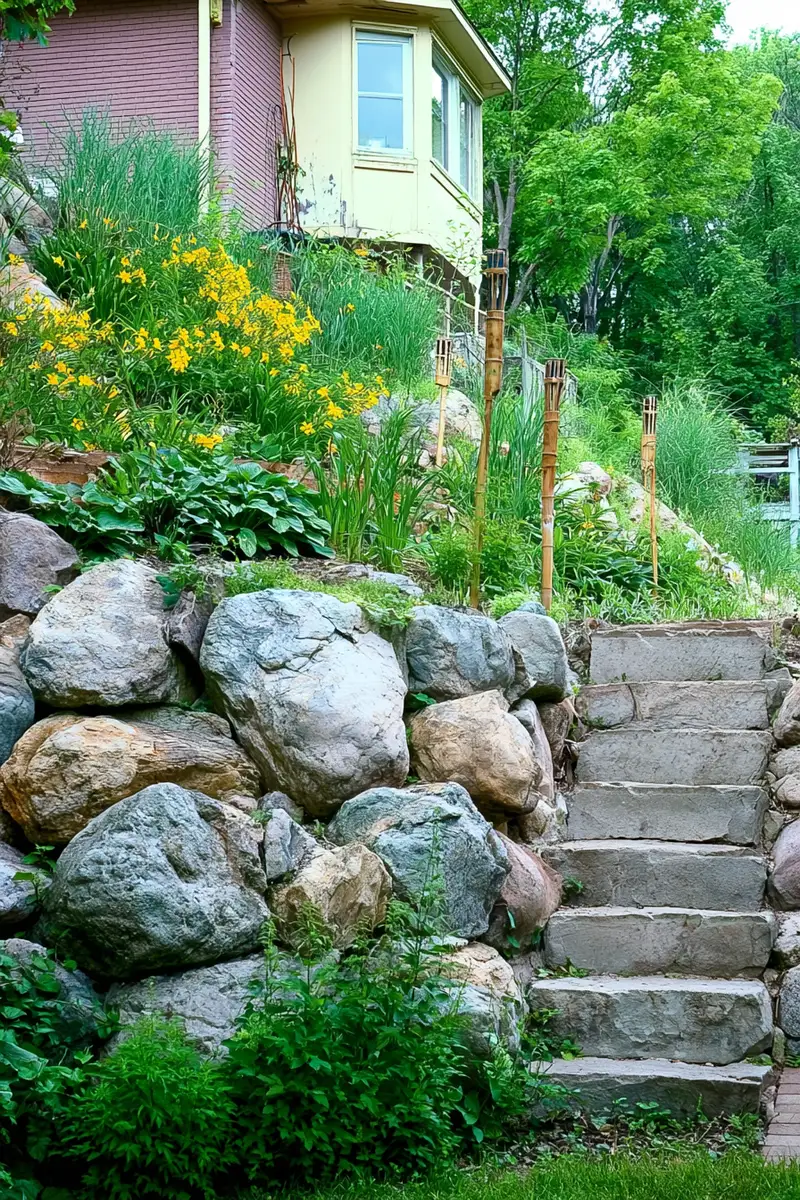
Holding back a vertical dirt drop usually means paying for poured concrete walls. Stacking oversized, unrefined boulders does the same structural job for a fraction of the cost while creating natural planting pockets.
14. A wide transition path
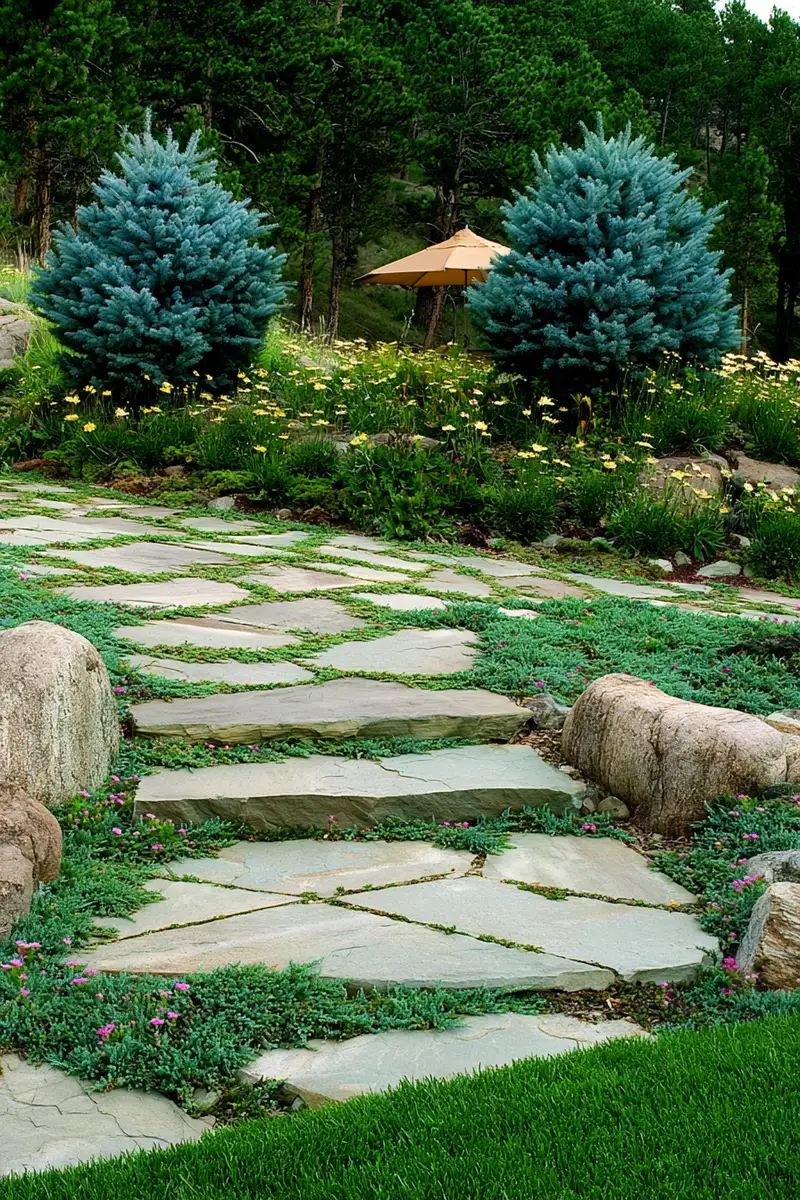
Paving a massive sloped transition zone creates an ugly, stark runway. Staggering large flagstones directly into the dirt breaks up that visual monotony. The creeping thyme handles daily foot traffic well and stops the exposed hillside soil from turning into a mud pit.
15. The mid-hill gravel landing
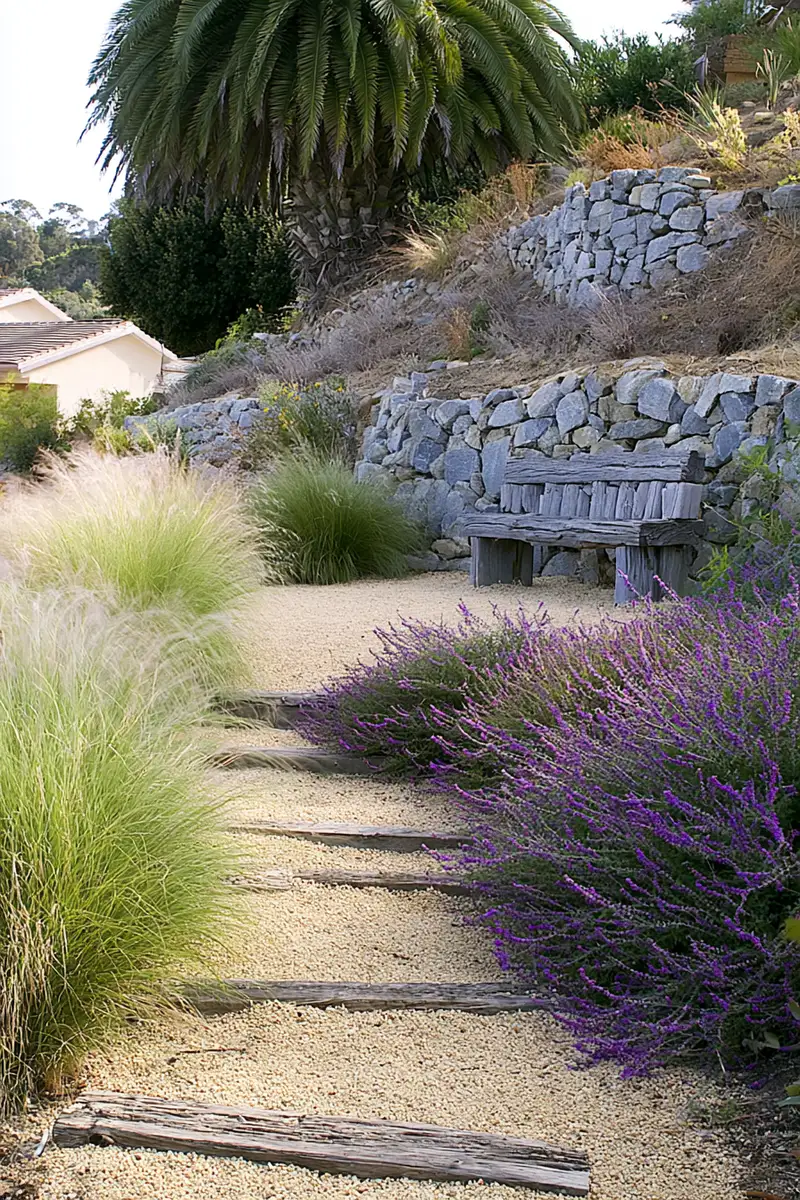
Steep yards lack usable flat zones for resting. Carving out a single mid-hill gravel landing backed by a low rock wall provides a highly functional seating area without the heavy cost of a full deck build.
16. Simple timber vegetable terraces
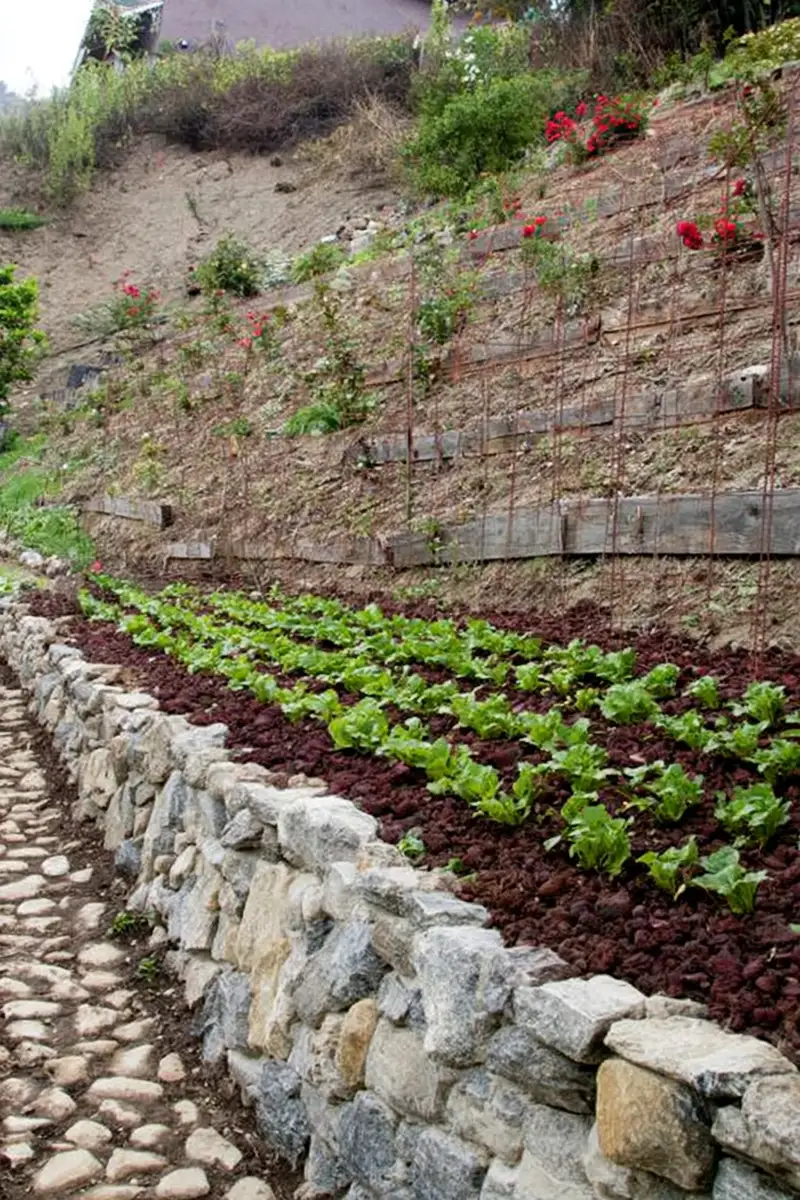
Growing an edible garden on an incline usually leads to uneven watering and serious nutrient loss. Pinning basic wooden planks horizontally across the slope creates level planting rows instantly. This intercepts the water flow, keeping the moisture and rich topsoil exactly where the crop roots need it most.
17. Smooth concrete and a smart rock trench
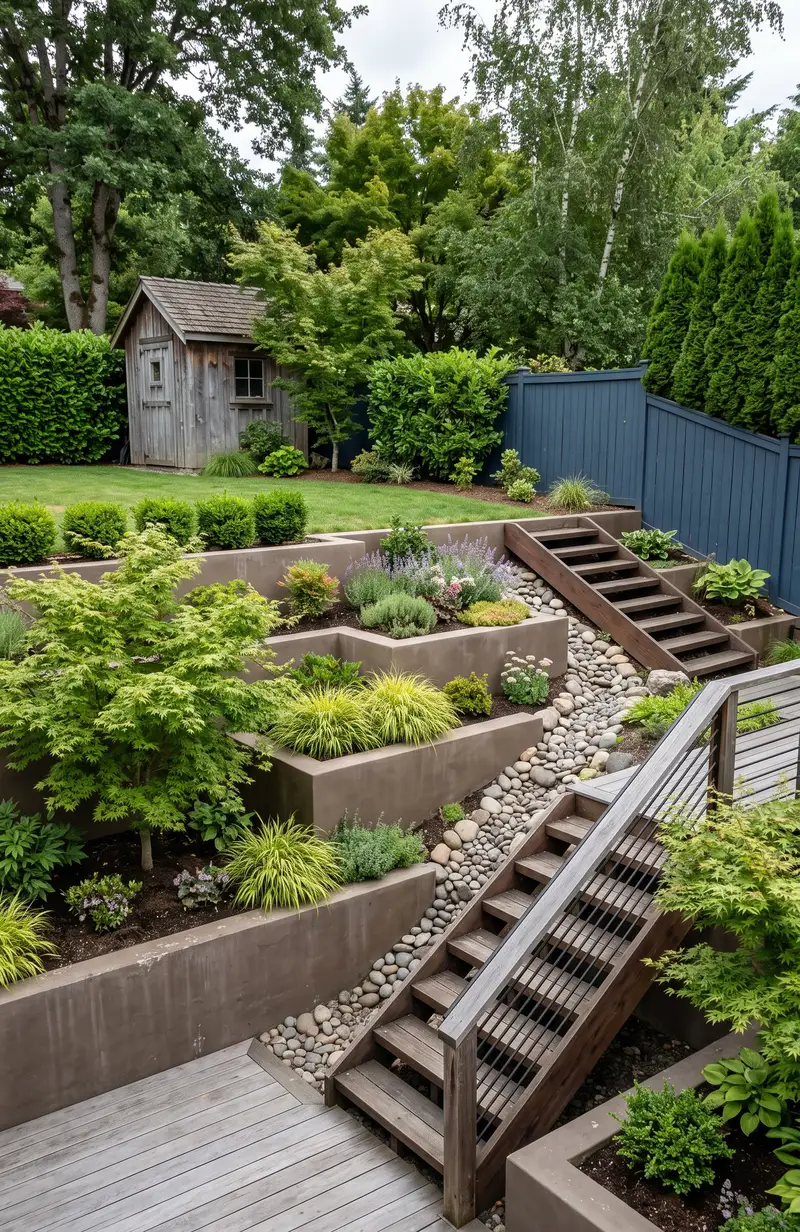
Modern residential homes struggle with messy, eroding hillsides that completely ruin their sleek exterior aesthetic. Stepping down the slope with smooth, rigid concrete planter boxes imposes strict architectural order on a wild hill. The real genius here is the dedicated river rock trench running parallel to the wooden stairs. It acts as an open drain. It captures all the heavy hillside runoff and directs it safely away from the wooden steps, preventing wood rot and maintaining the pristine vibe.
18. The cinder block garden trick
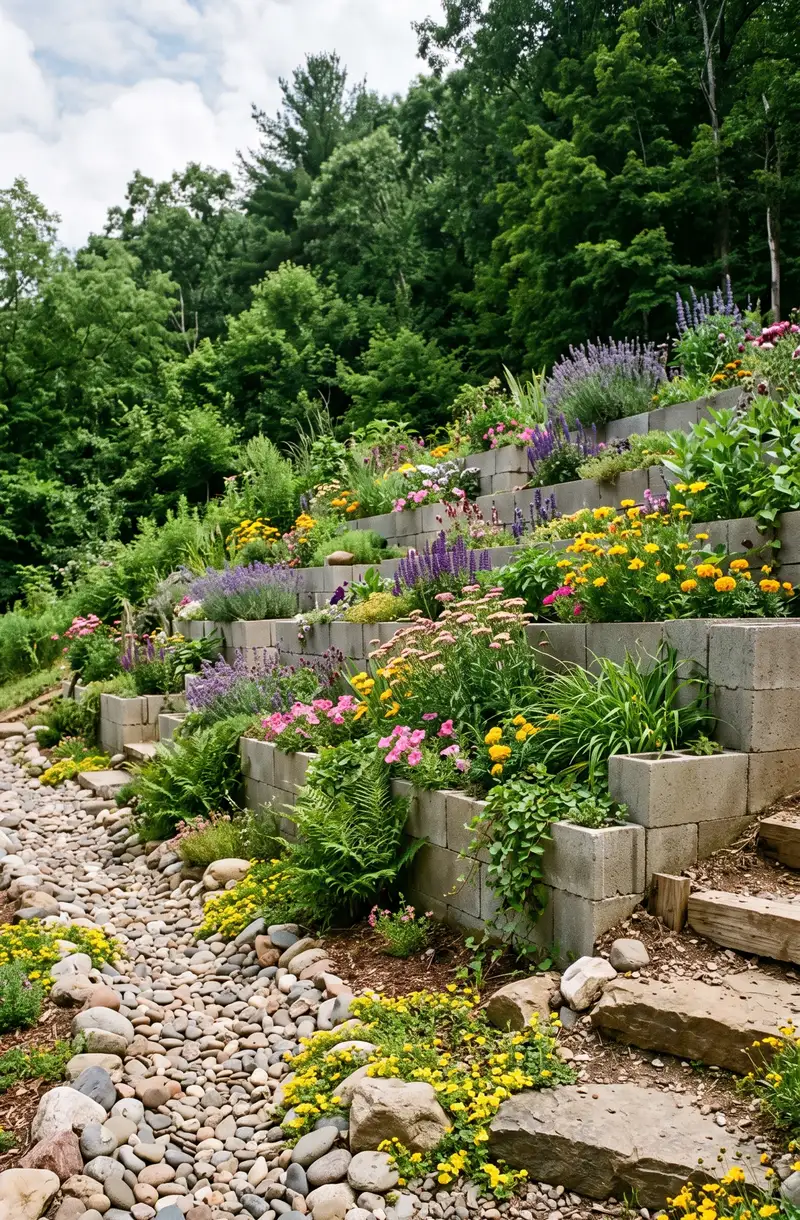
Building multi-tier retaining walls often requires specialized hardscaping blocks that destroy a tight budget. Utilizing standard, cheap cinder blocks stacked directly into the hill builds an incredibly stable tiered structure. The hollow concrete cores provide perfect, ready-made planter pockets for trailing vines and bright perennials.
19. A protective stone barrier
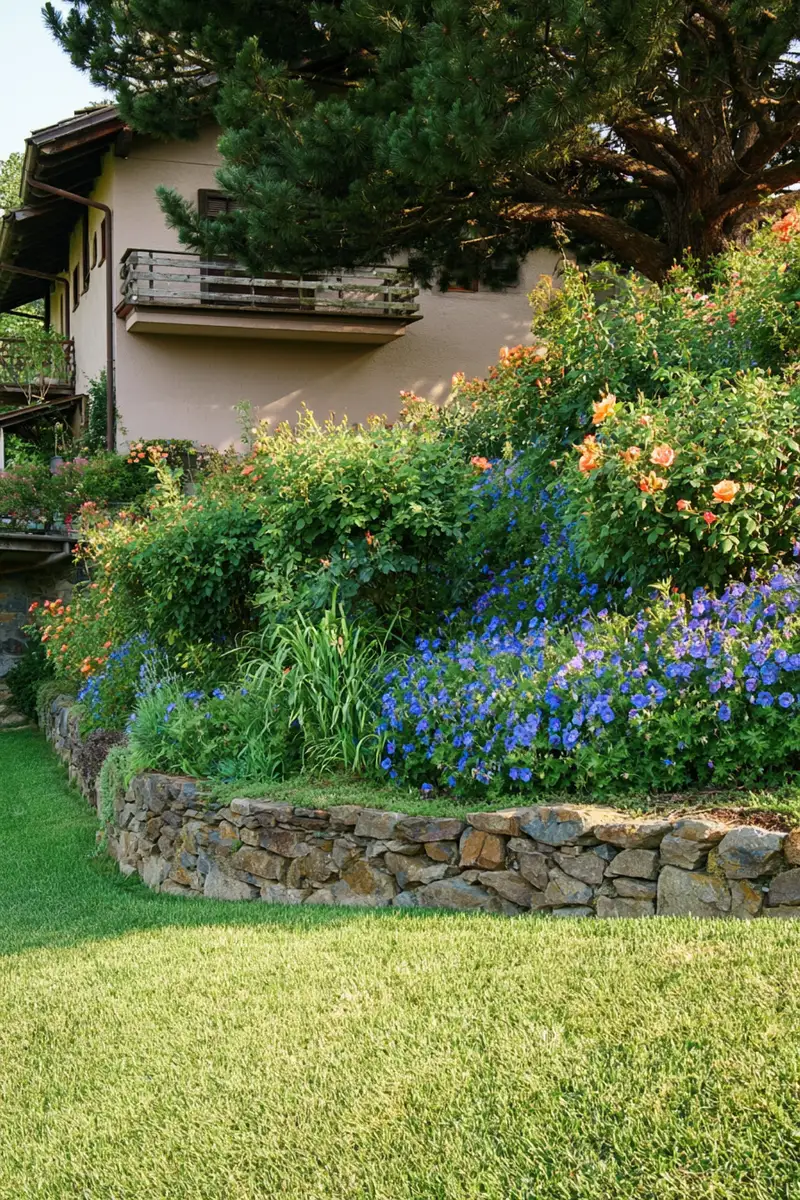
Turf grass creeping directly up a foundation slope traps moisture against the house. A low stone barrier physically separates the lawn from the incline, offering a clear line for the mower.
20. Wide block platforms for safety
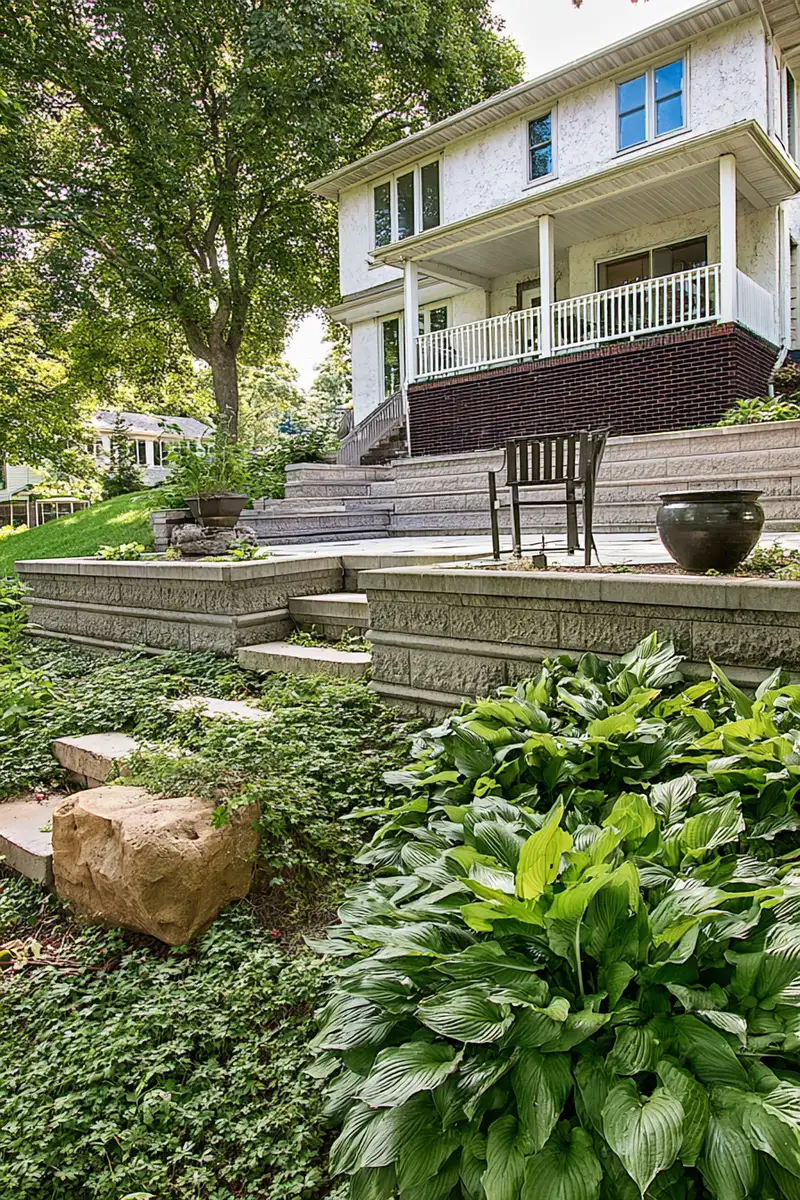
Negotiating a steep front yard elevation usually results in a narrow, dangerous concrete walkway. Constructing wide, stepped platforms from basic retaining blocks forces a much safer, deliberate approach. The deep landings offer necessary structural stability and plenty of room for tough, shade-loving hostas to multiply.
21. Neat rows for an arid slope
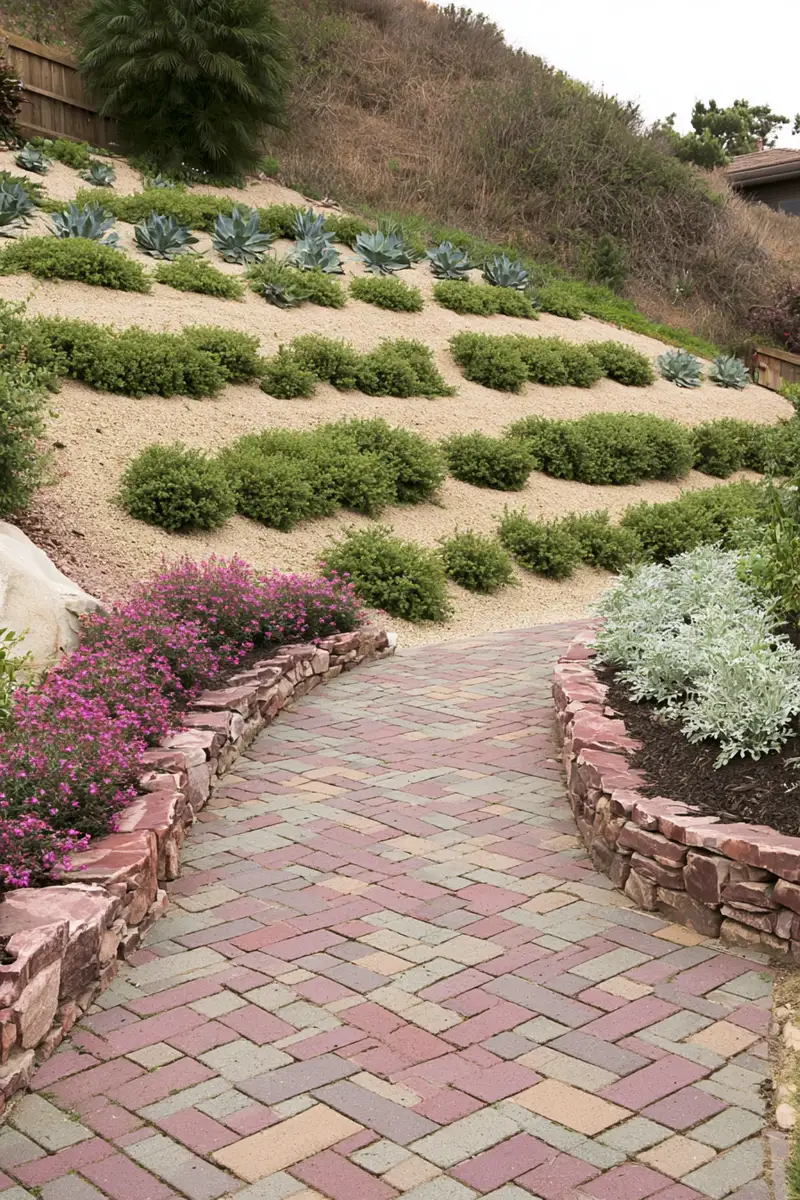
A towering dry slope like this is a nightmare to irrigate. It usually just erodes right onto the driveway. Instead of fighting the arid soil, planting neat rows of drought-tolerant agaves and hardy shrubs works with the harsh environment. It requires almost zero water. The real budget trick here is focusing the spending on a solid, clean paver walkway at the base. This keeps the loose hillside sand completely off your shoes.
22. Stone slabs and creeping cover
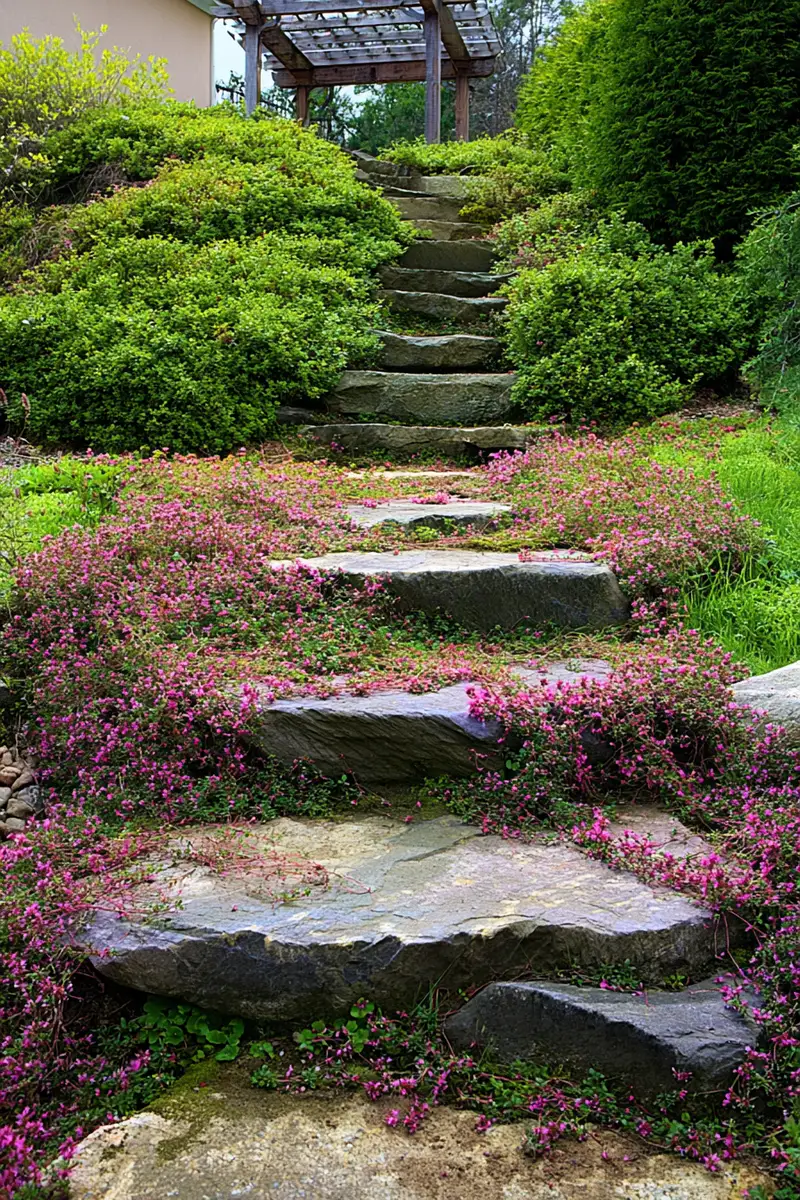
Bare dirt paths quickly turn into muddy, weed-filled slides after a storm. Dropping heavy, raw stone slabs directly into the earth builds an instant, rugged staircase. Letting a creeping groundcover fill the gaps naturally blocks out weeds and locks the loose soil firmly in place.
23. Mulch paths under mature trees
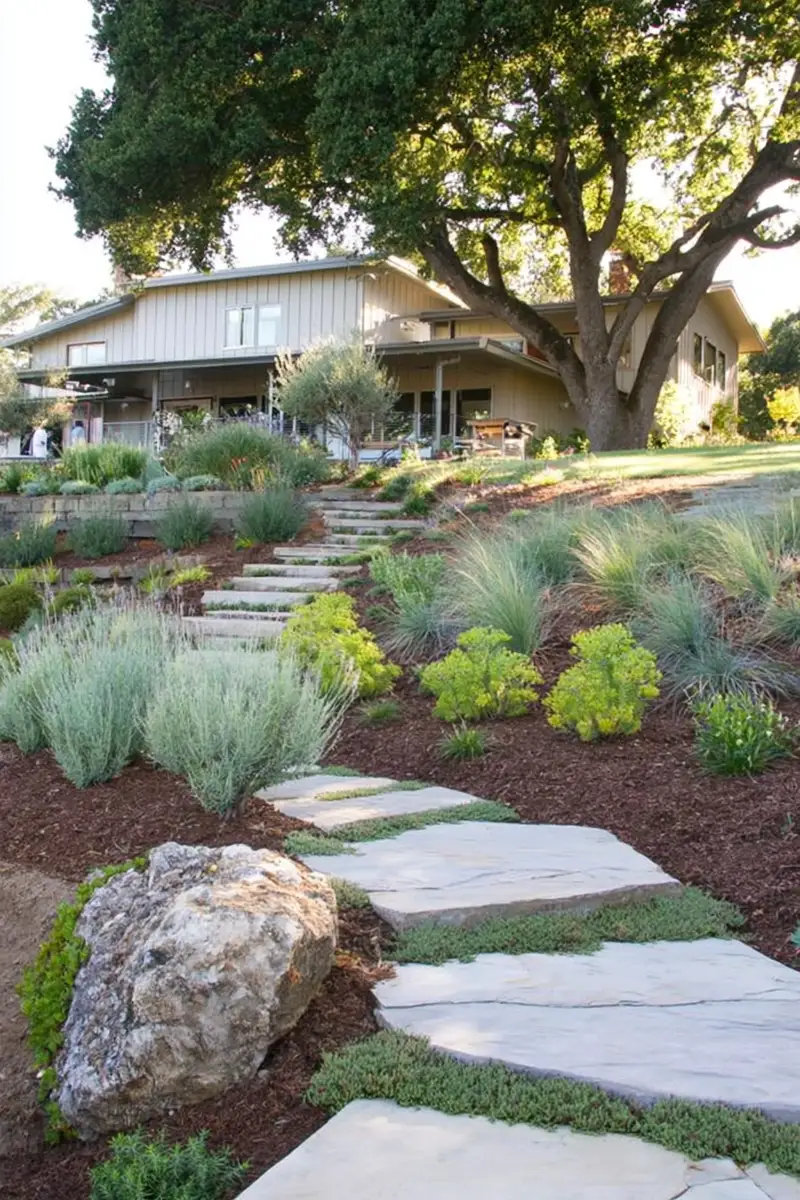
Trying to grow a pristine lawn on a slope directly beneath a massive shade tree is a losing battle. The deep roots steal all the water, and the heavy canopy blocks the sun. This setup abandons the grass entirely. Laying oversized, irregular stone slabs over a thick bed of dark mulch provides a solid walking surface without requiring any deep excavation that might damage the tree. The budget is saved by using simple native grasses instead of fussy ornamental flowers. It looks highly intentional and requires zero weekend mowing.
24. Instant privacy with ornamental grass
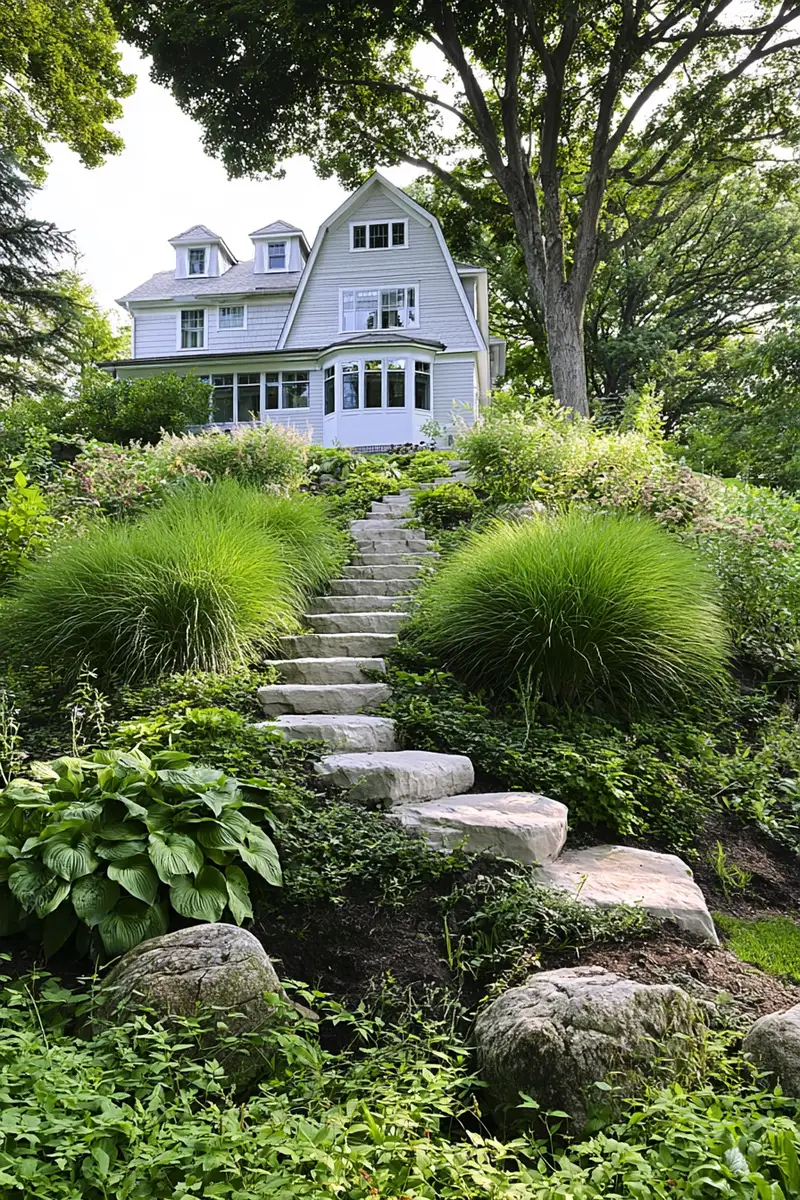
A steep, empty bank often leaves a house feeling totally exposed to the street below. Flanking simple stone steps with massive, fast-growing ornamental grasses builds instant privacy and enormous visual volume for very little money.
25. Curved brick switchbacks
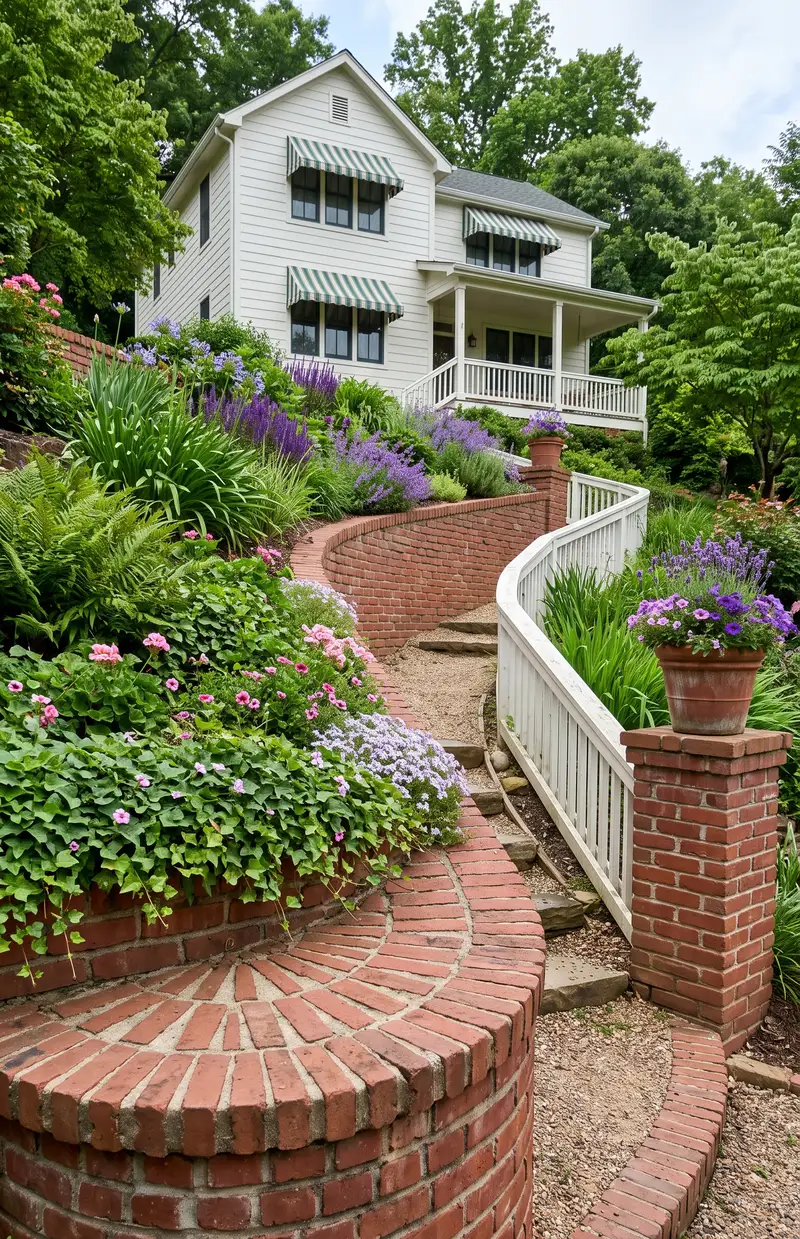
Marching straight up a severe hill is physically exhausting. It also looks incredibly rigid. Building a curved, switchback pathway using low brick retaining walls softens the entire ascent. The gentle curves ease the climb, while the deep brick planters allow for dense, colorful floral borders that distract from the sheer vertical drop.
26. A hard boundary for pristine turf
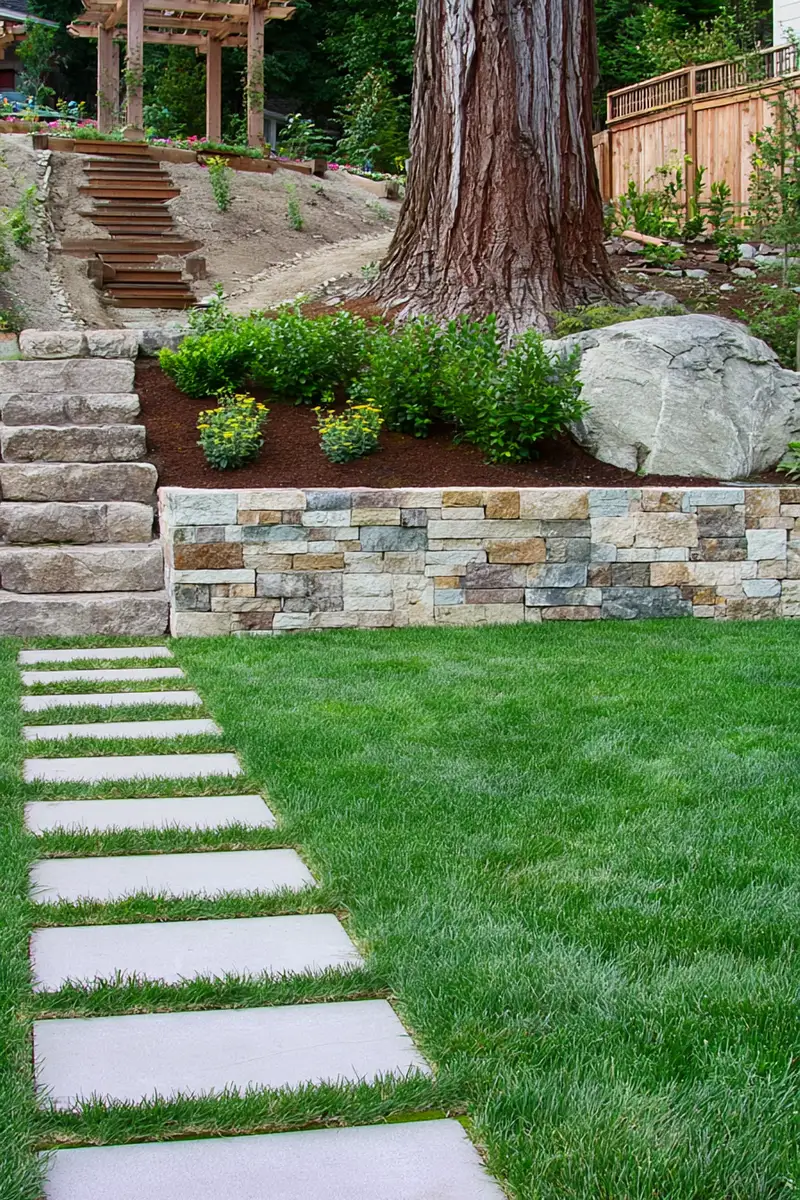
Loose dirt bleeding onto a flat lawn completely ruins a clean, modern aesthetic. Constructing a tight, mortarless stone block wall creates a hard boundary. It definitively separates the wild upper hill from the pristine turf below.
27. DIY timber planter terraces
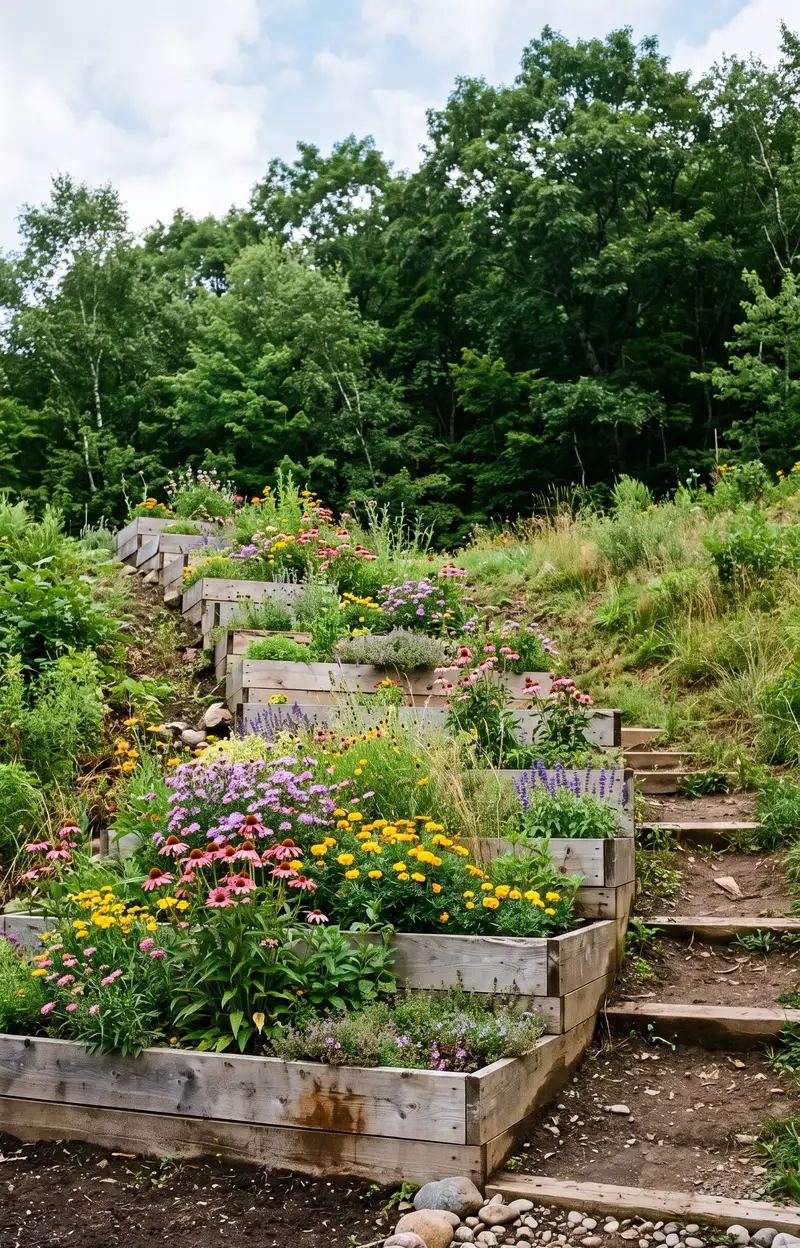
Fully terracing a large slope with professional masonry will quickly drain a landscaping budget. This approach uses inexpensive, untreated lumber boxes stacked directly into the dirt to create dozens of micro-terraces. It is a highly pragmatic DIY solution. The wooden borders hold the rich topsoil in place and stop heavy rain from washing the seeds away. As the dense coneflowers and salvias mature, they completely hide the cheap timber frames, leaving a massive, cascading floral display that looks surprisingly high-end.
28. Gravity-fed stone water features
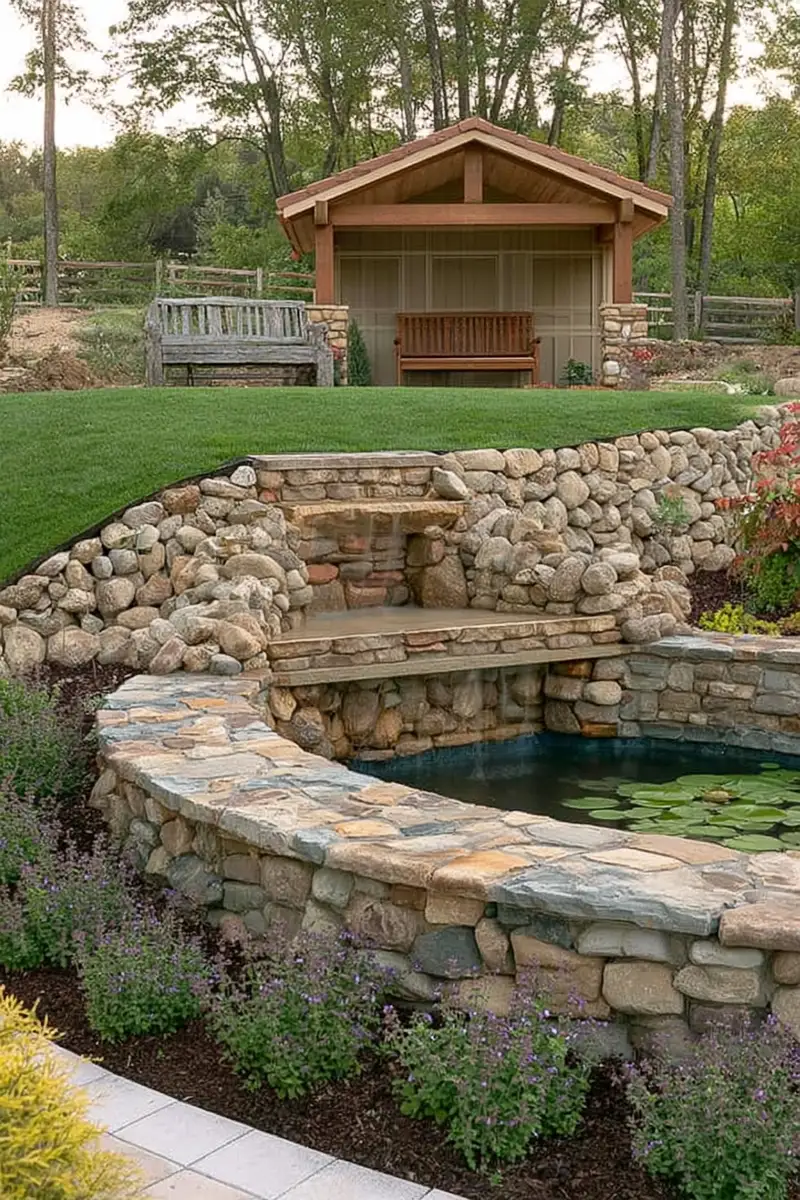
Managing a severe elevation change near a seating area usually requires an ugly, imposing concrete wall. Integrating a small, stone-lined water feature right into the retaining blocks flips the script. It uses the natural gravity of the hill to create a small waterfall. This turns a necessary structural barrier into a clever visual asset.