Tripping over a tangled green hose totally ruins a relaxing afternoon on the patio. Leaving heavy rubber coils directly on the lawn kills your expensive turf and creates a muddy disaster zone. Most standard plastic reels look incredibly cheap against nice landscaping. You need a setup that hides the utility gear while adding actual value to the architecture. Swapping flimsy plastic for heavy steel posts, custom concrete slots, or woven baskets completely shifts the visual focus. It turns a boring plumbing necessity into a highly intentional backyard detail.
1. Heavy-duty galvanized reels for rustic fences
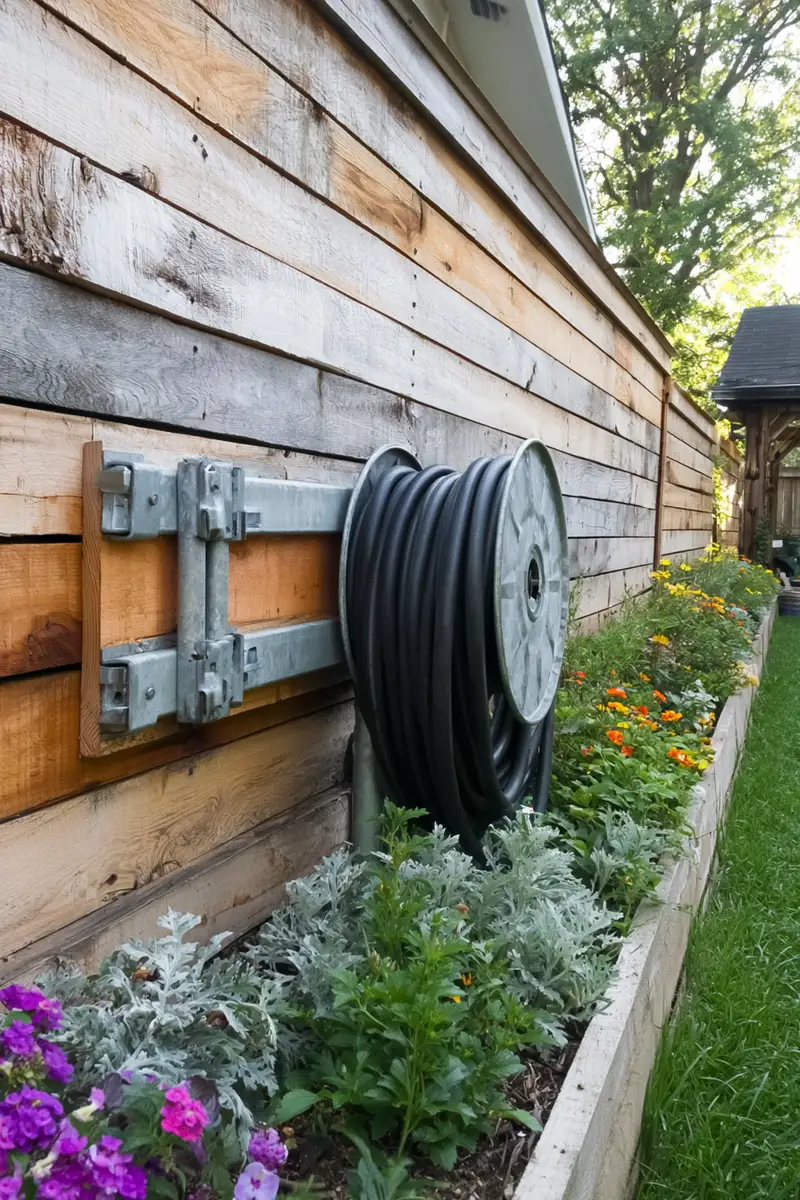
Dragging a heavy rubber hose through a flower bed inevitably crushes delicate plants. Mounting a solid galvanized steel reel high on a wooden fence solves this immediately. It keeps the hose elevated and out of the dirt, while the raw metal seamlessly matches the rough-sawn timber aesthetic.
2. Floating planters hide the mess
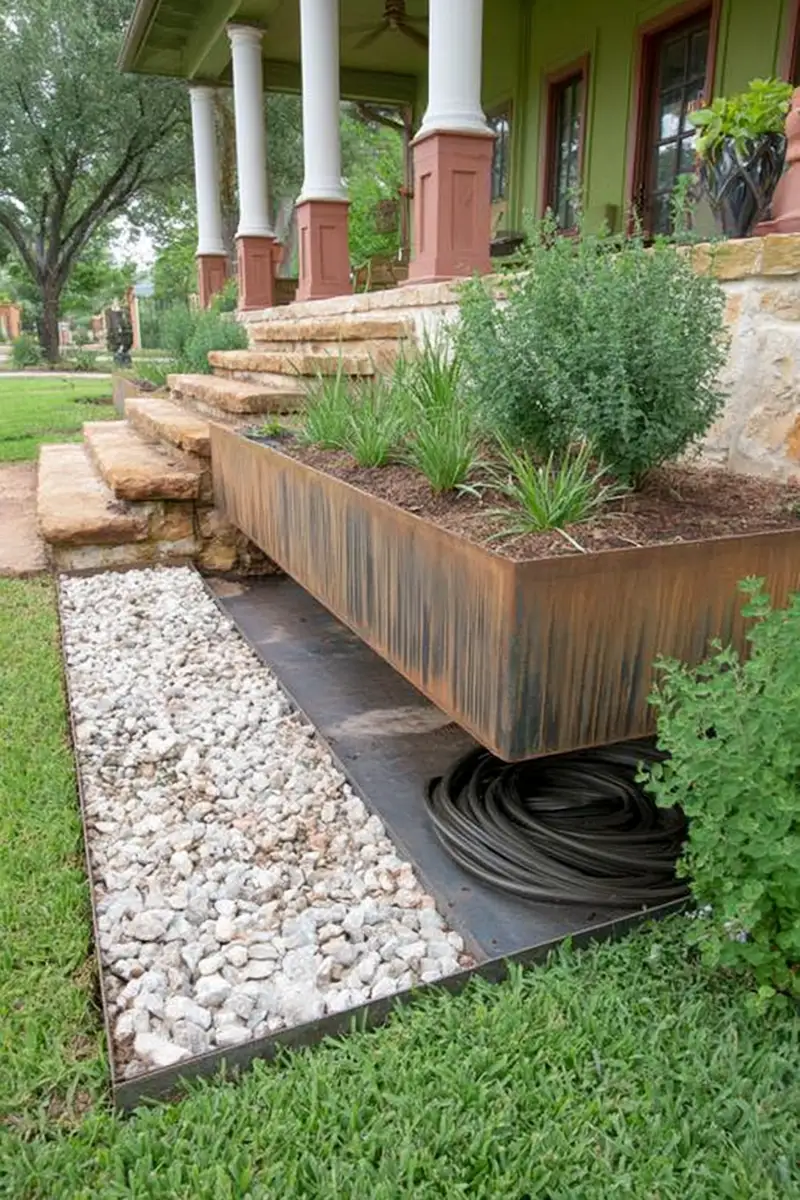
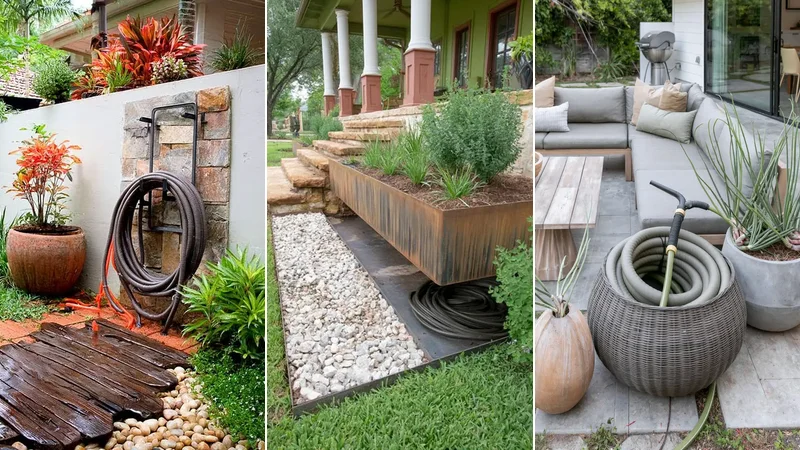
Yards lacking blank wall space often leave hoses completely exposed on the lawn, which looks messy and kills the grass. A cantilevered weathering steel planter box fixes this beautifully. It creates a deep, shaded ground-level cubby underneath. Coiling the hose on a flat metal base plate beneath the floating rust-toned steel keeps it perfectly hidden from the main viewing angle. It also shields the rubber from harsh sun damage.
3. The recessed masonry niche
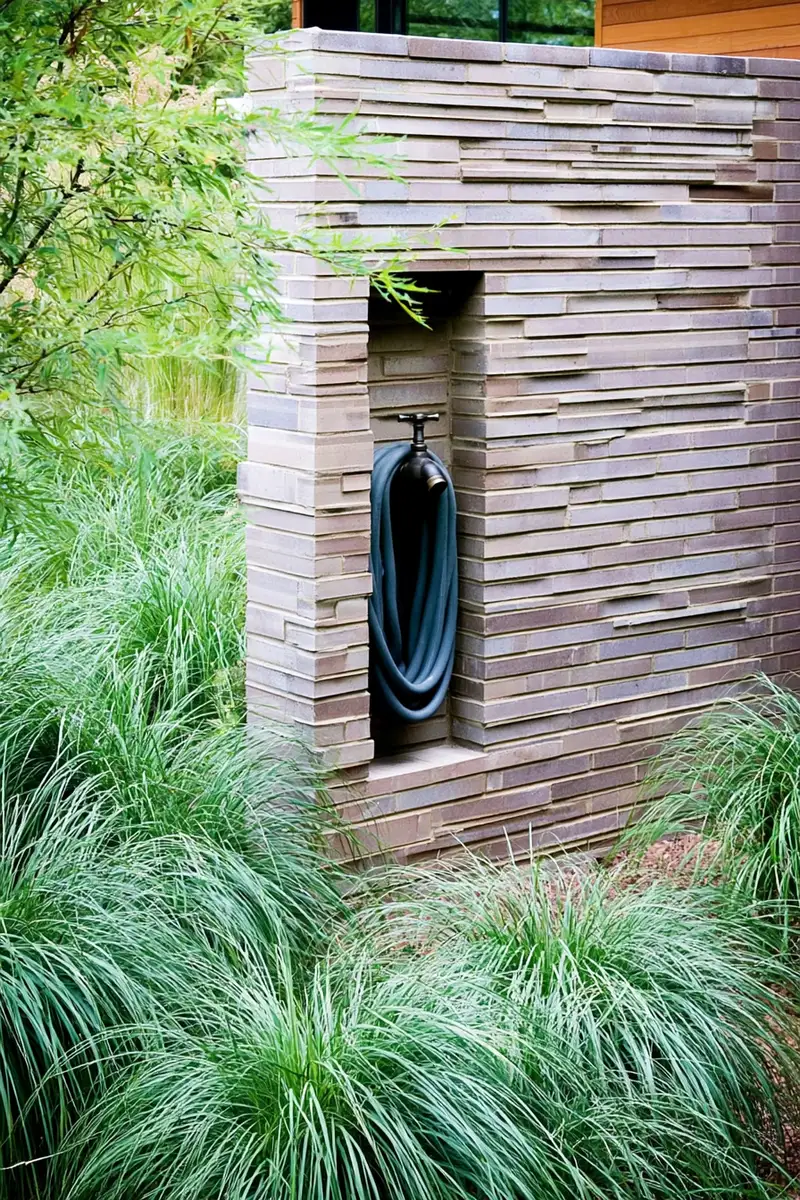
Exposed spigots and wall-mounted racks stick out awkwardly. Building a deep architectural niche right into the brickwork creates a permanent, flush storage zone. It turns basic plumbing into a deliberate masonry detail.
4. Geometric boxes for modern facades
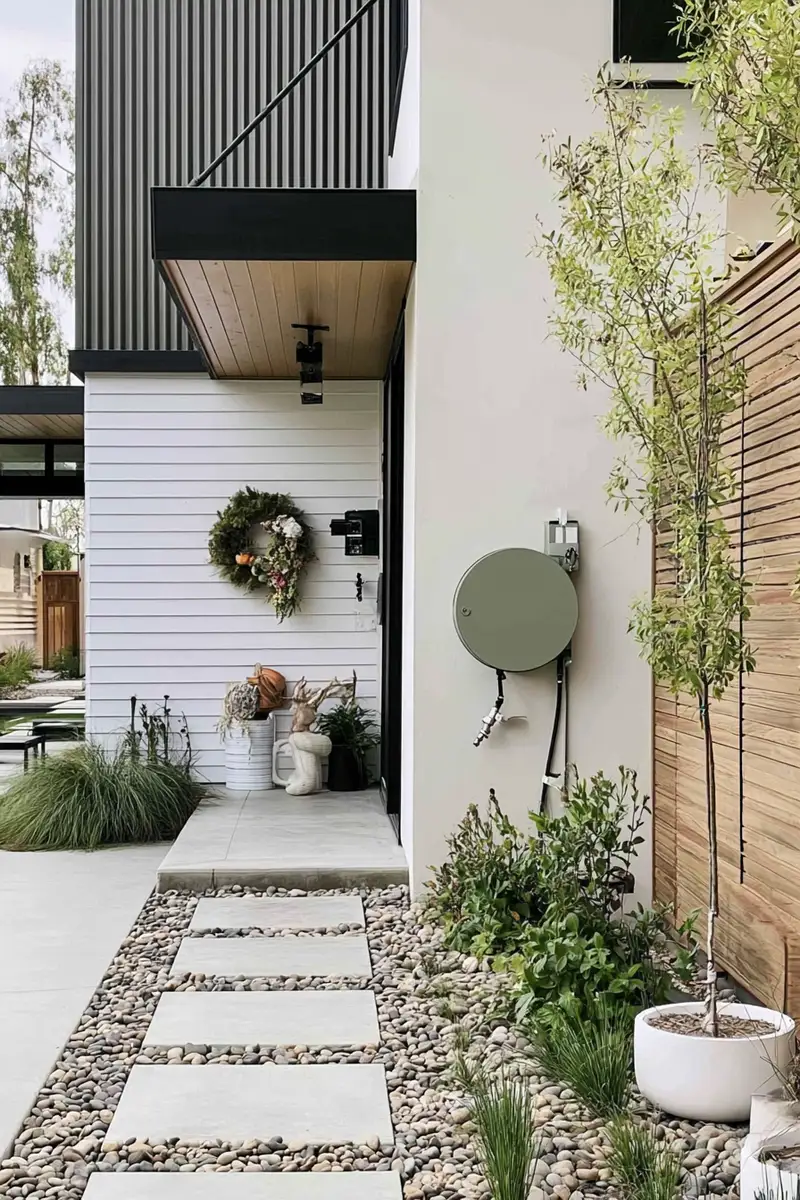
Standard open hose reels completely ruin the clean lines of an ultra-modern exterior. Using a sleek, enclosed circular box conceals the visual chaos entirely. The matte sage finish mimics high-end architectural hardware, keeping the entryway looking pristine and highly organized.
5. Wrought iron
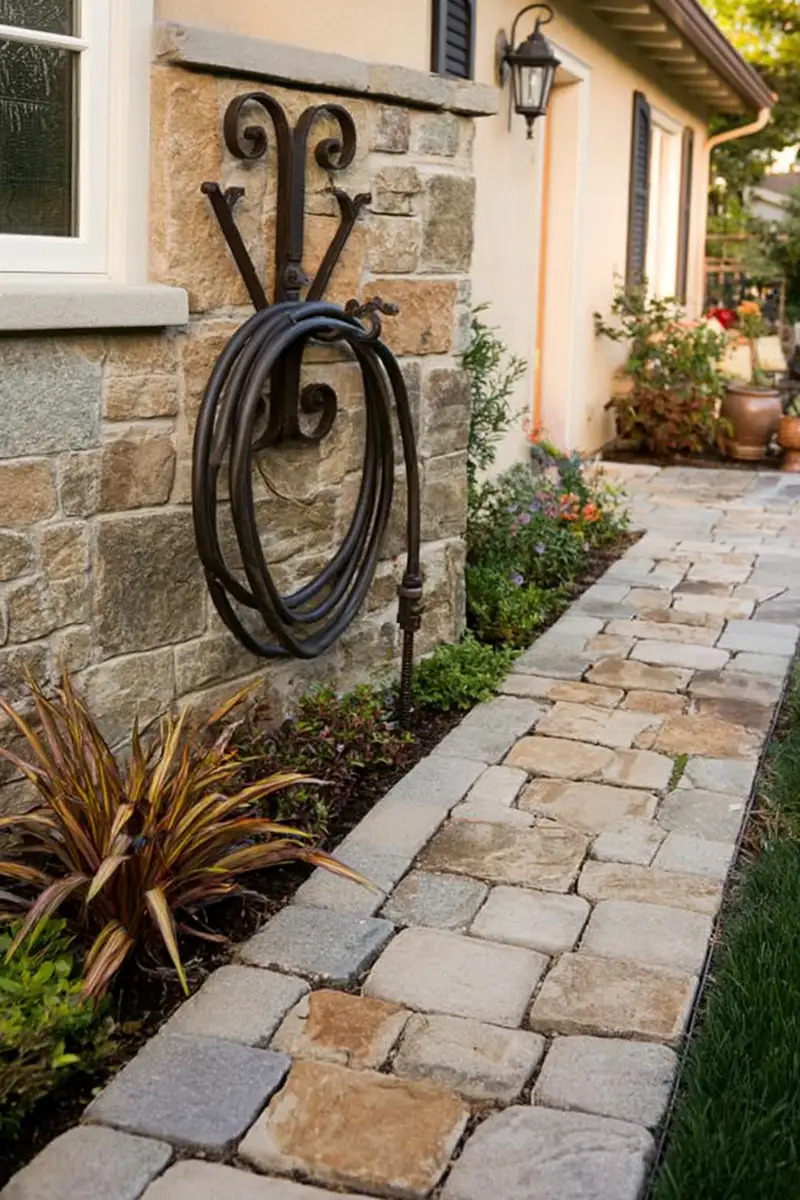
Flimsy plastic racks degrade fast and look terrible against classic stone. Heavy wrought iron provides massive structural support and ages beautifully.
6. Disguising utility as patio decor
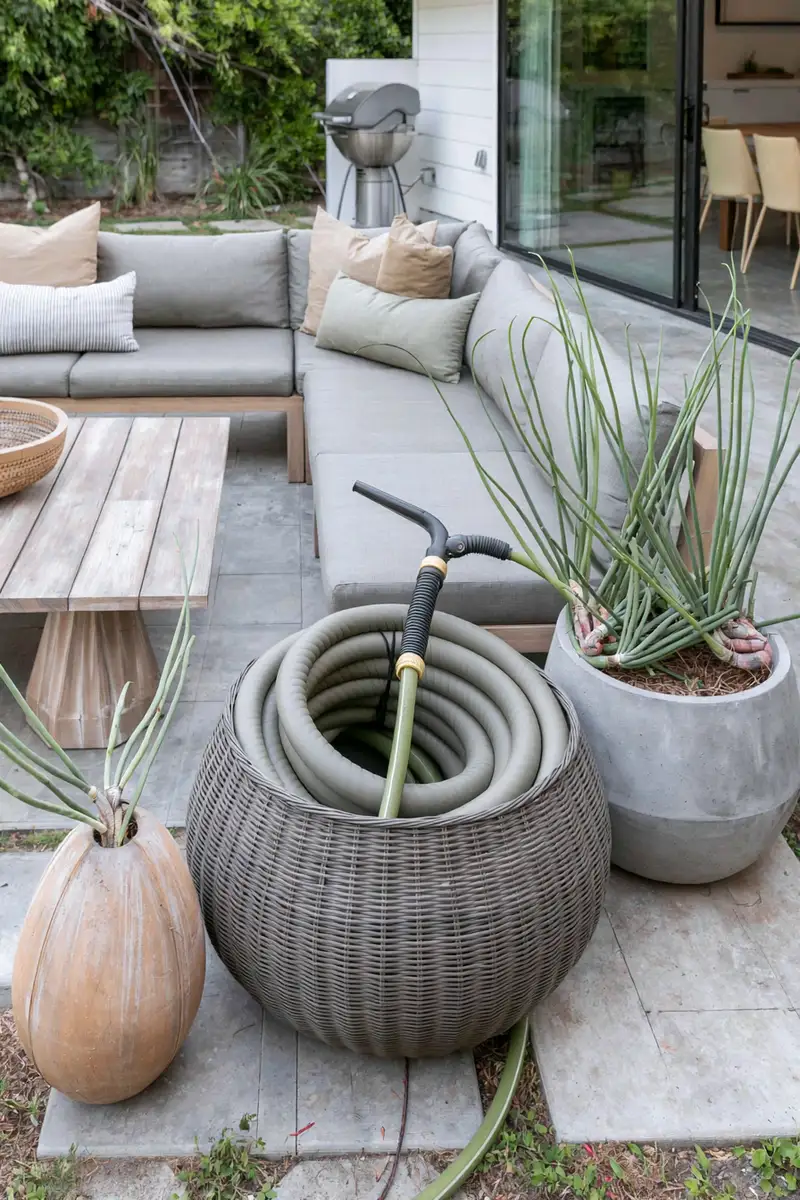
Bringing a dirty, bright green garden hose onto a highly curated outdoor living space instantly kills the relaxing lounge vibe. Tossing it onto the floor is a massive trip hazard near expensive furniture. Hiding the coil inside a weather-resistant woven basket changes everything. It blends perfectly with the adjacent concrete planters and teak wood tables. You keep the water source exactly where you need it for washing the deck, but completely erase the visual clutter.
7. Custom concrete cavities
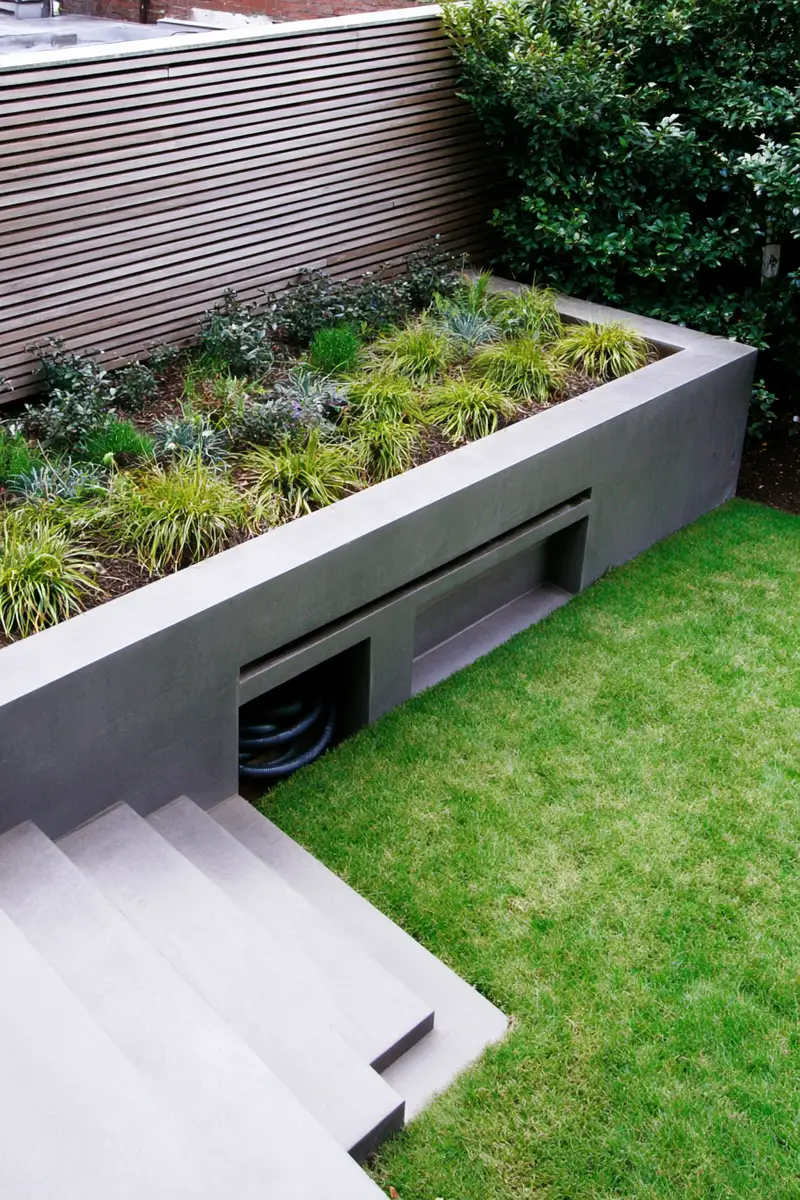
Leaving a hose near outdoor stairs is a serious tripping hazard. Pouring a custom horizontal slot directly into a concrete retaining wall completely removes the obstacle. It utilizes dead structural space perfectly.
8. Freestanding water posts for remote beds
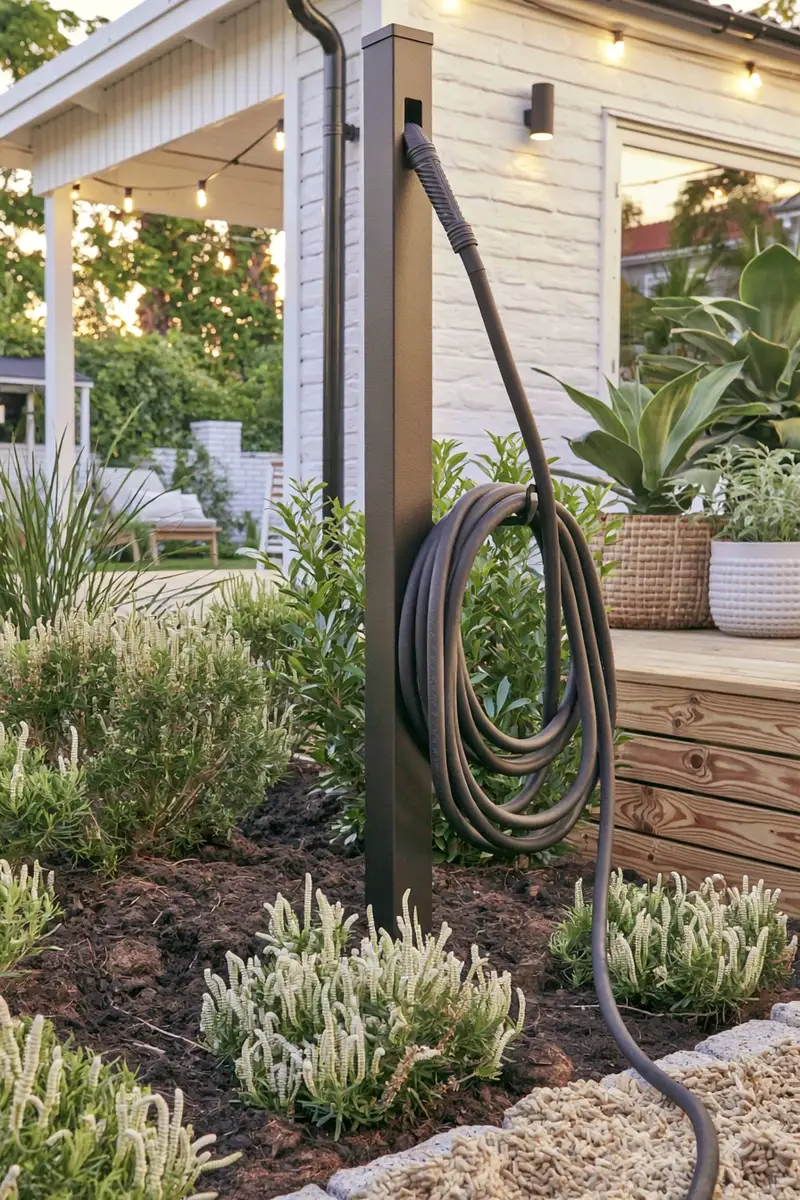
Pulling a hundred feet of hose across a large yard damages the turf and exhausts the gardener. Installing a sleek, freestanding black metal post brings the storage right to the planting zone. It acts as a minimal sculptural stake that fades into the background.
9. Vertical steel sculptures for drainage
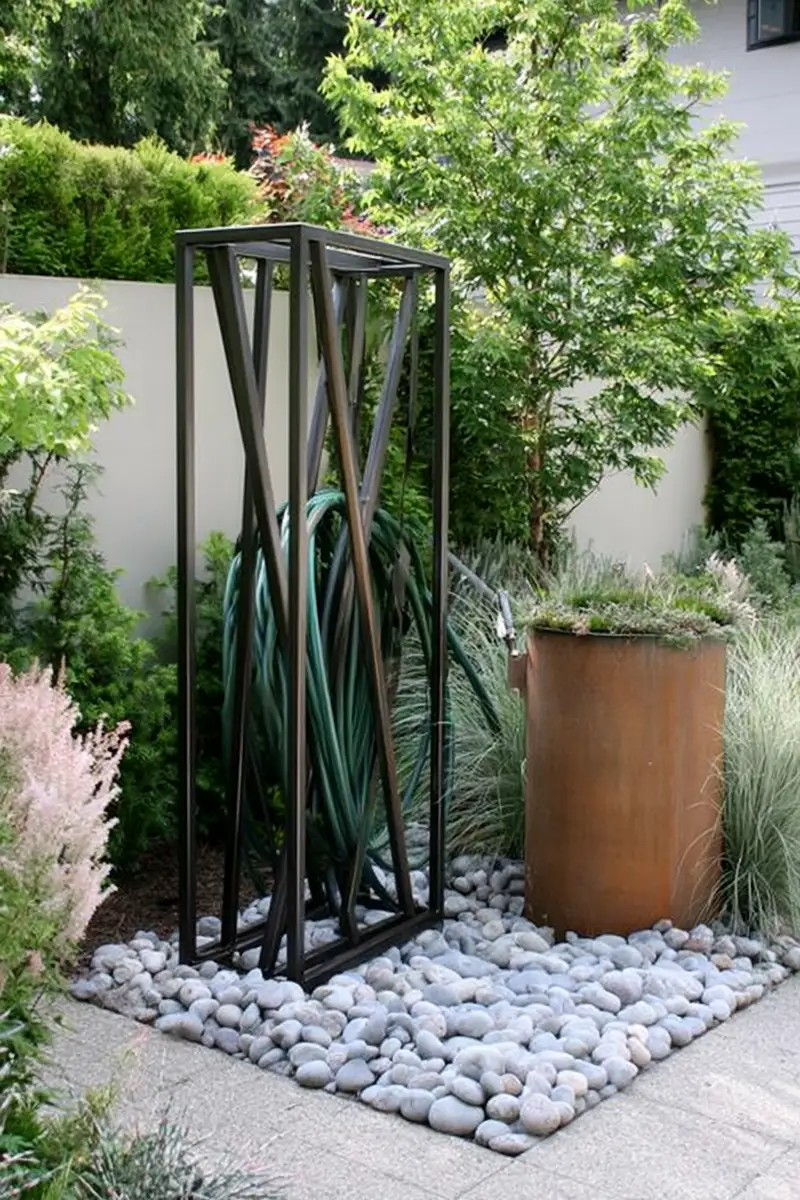
Coiling a wet hose directly on the ground creates a muddy mess and encourages mold growth. An airy, tall geometric steel frame provides the perfect vertical solution. It allows the heavy rubber to drip dry completely over a clean river rock bed. The open structure does not block the lush greenery behind it. Instead, it acts as a striking piece of modern garden art that happens to hold your watering gear.
10. Protective stone backplates
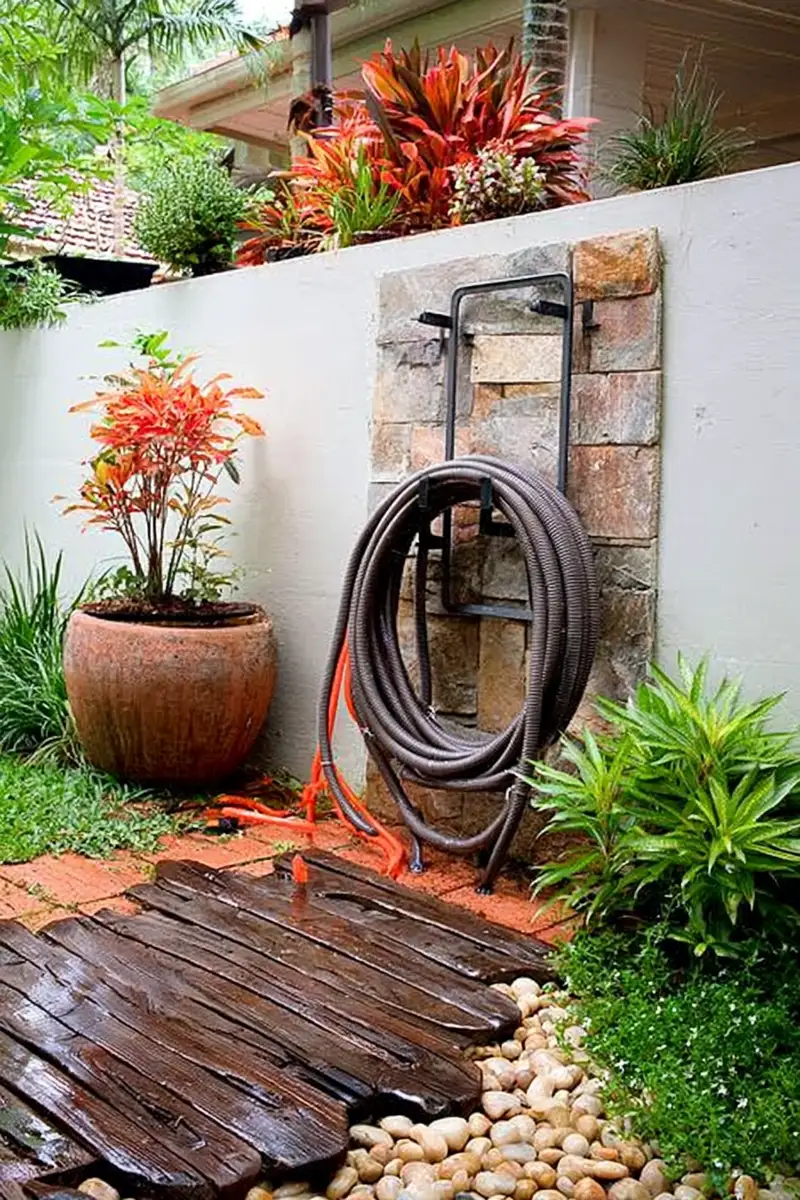
A wet hose dripping constantly against a plain painted wall will eventually cause water stains and stucco damage. Adding a dedicated natural stone veneer backplate behind the metal rack protects the architecture. It frames the utility zone neatly and ties into the nearby rustic pathway.
11. Dual-purpose deck seating
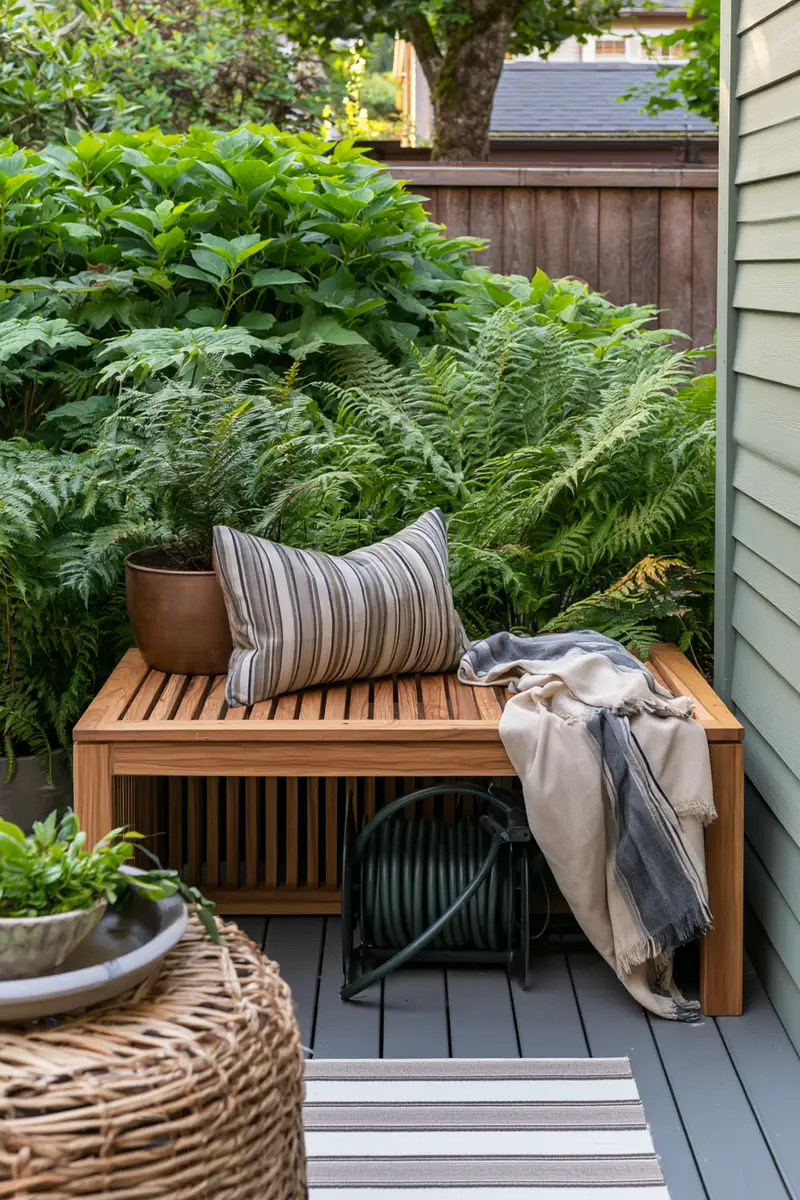
Small patios force a tough choice between lounging space and utility storage. Shoving a bulky reel in the corner usually ruins the relaxing vibe. Slipping a low-profile hose unit underneath a slatted wooden bench solves both problems instantly. You gain a solid seating area while keeping the utility gear completely out of the main walking path. The open wood slats ensure wet hoses dry out fast, preventing trapped moisture on your deck boards.
12. The ground-level basin
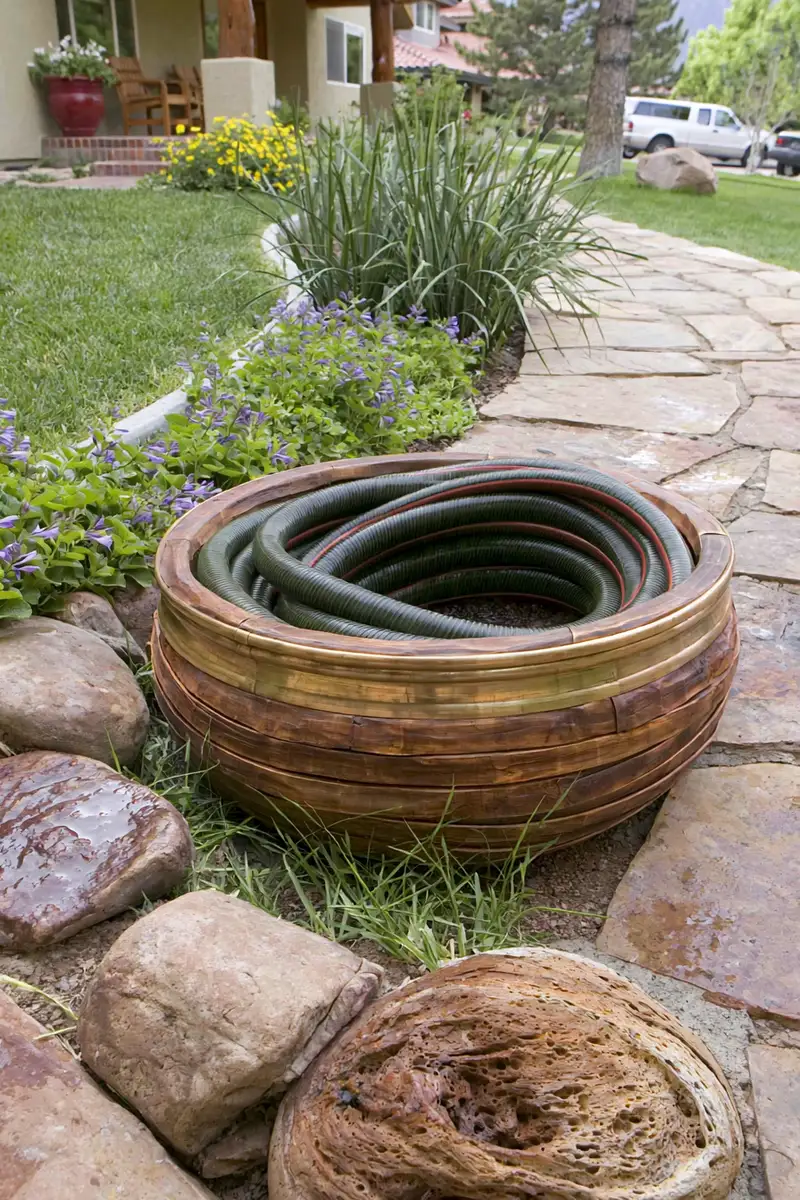
Heavy hoses left directly on the lawn kill the grass fast. Coiling them inside a wide, weather-resistant wooden bowl keeps your stone pathways totally clear. It acts as a rustic landscape feature rather than a messy pile of plastic.
13. Building a breathable utility closet right into the fence line
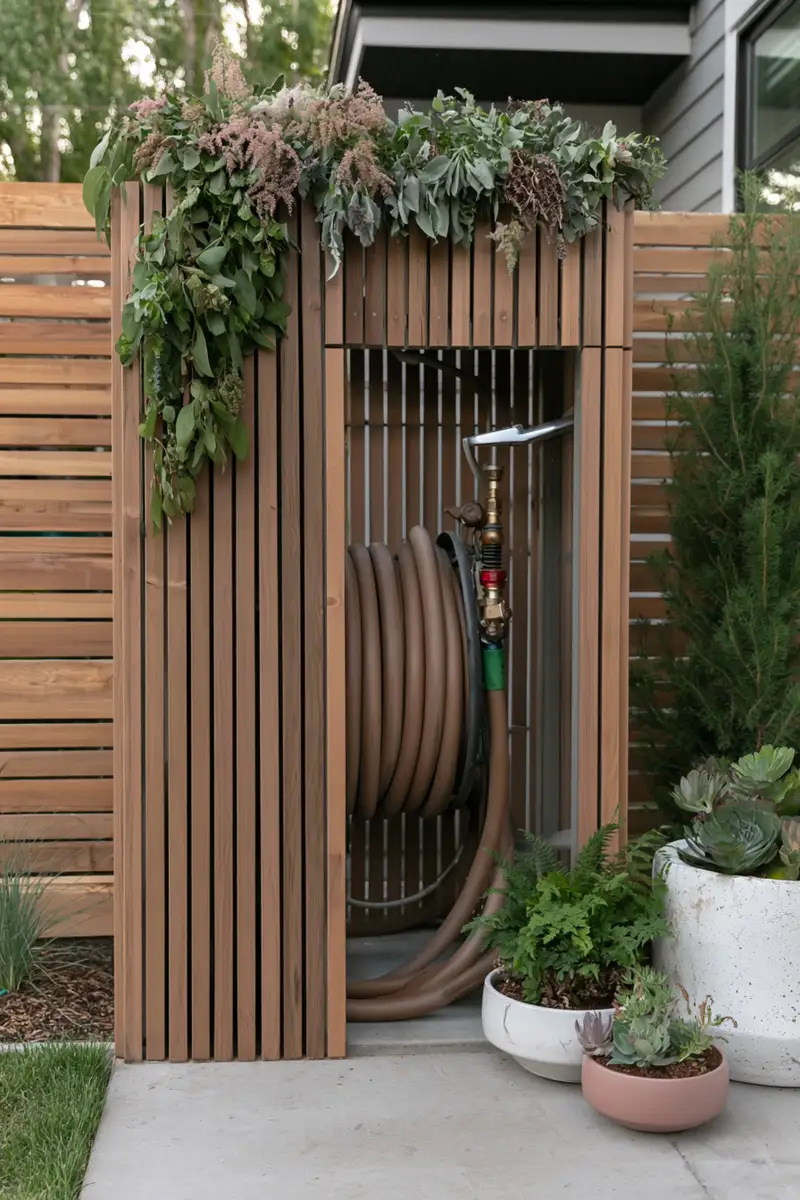
Leaving a massive plastic wall reel fully exposed on the side of a house is a major eyesore. It immediately drags down the architecture of the yard. Constructing a tall, dedicated slatted wooden enclosure directly around the spigot changes the entire visual narrative. It completely hides the heavy plumbing and the coiled rubber from the patio view. The vertical gaps in the timber ensure constant airflow, stopping mold growth on damp equipment inside. Topping the structure with a shallow built-in planter adds a lush layer of trailing greens. This setup turns a purely mechanical zone into a deliberate, highly architectural garden feature. You get total utility access without ever sacrificing the clean aesthetic of your modern fence line.
14. Classic urns for front yard spigots
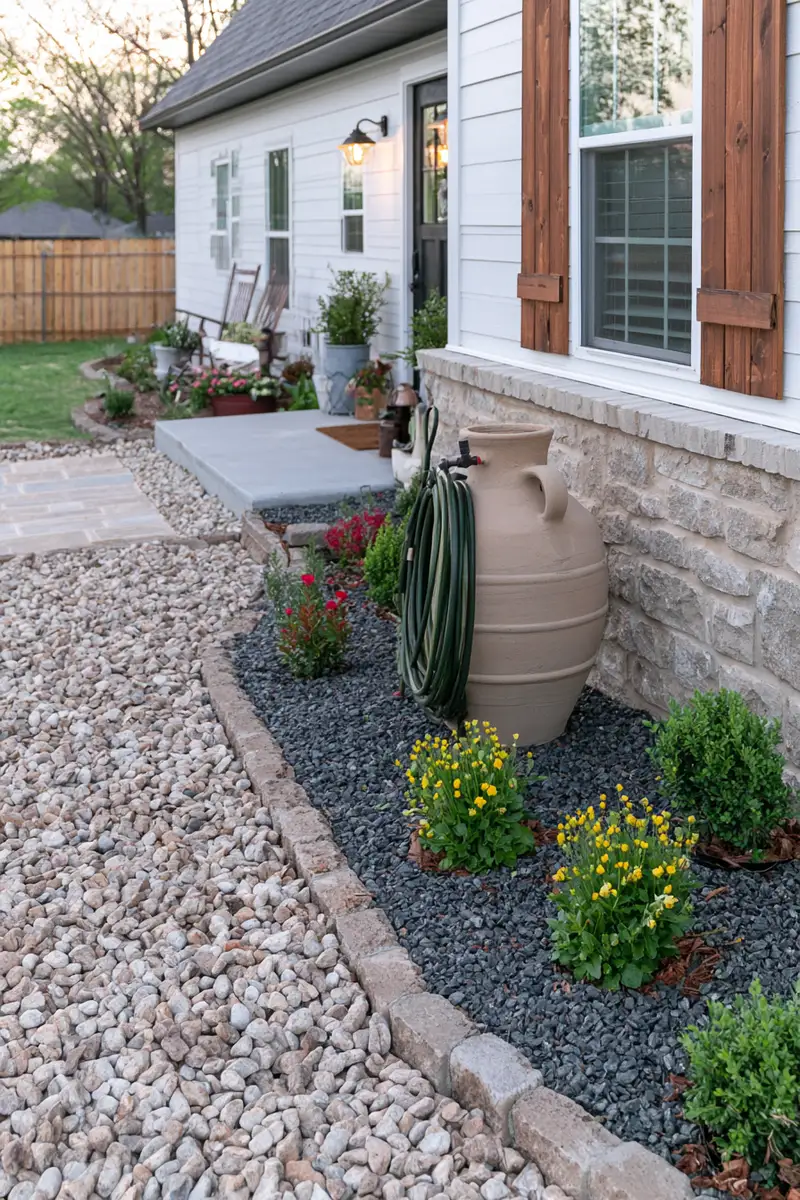
Front yard plumbing is notoriously tough to hide. Wrapping a dark hose around a large decorative stone urn instantly masks the utility connection. It blends right into the gravel beds like a traditional piece of garden pottery.