August heat turns standard lawns into crispy, brown dust bowls. Pumping endless water onto dying grass in late summer is a massive waste. Swapping that thirsty turf for smart gravel beds and structural desert plants fixes the curb appeal problem permanently, right when temperatures peak.
1. Strategic artificial turf zoning
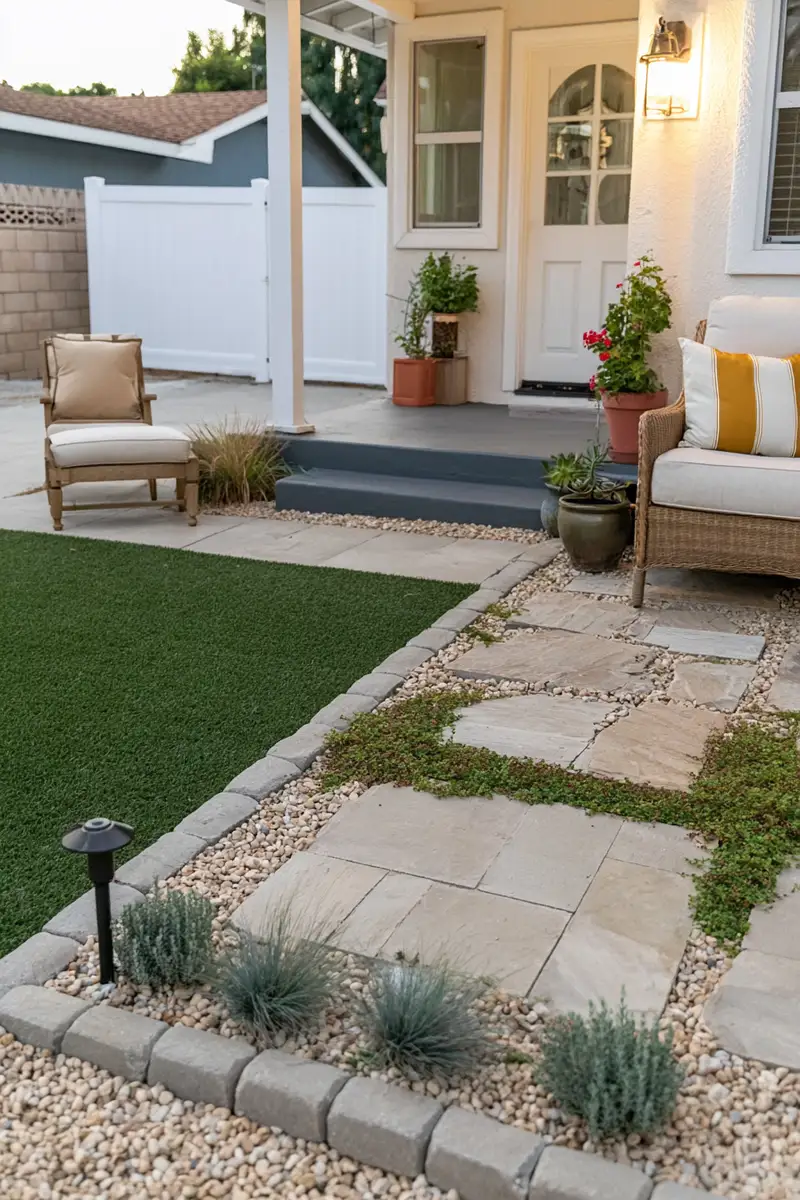
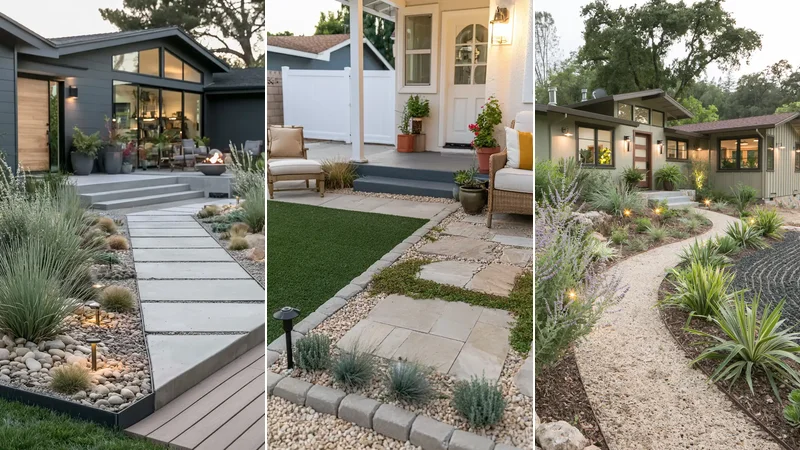
Front yards with tiny grass patches usually require excessive watering and awkward mowing for very little visual payoff. Replacing that thirsty lawn with a tight square of high-quality artificial turf stops the constant maintenance entirely. Bordering it with natural stone pavers and filling the gaps with creeping thyme provides a clever transition. It keeps the entry looking sharp and green even during a brutal late summer drought, without demanding a daily sprinkler schedule.
2. The dry riverbed boundary
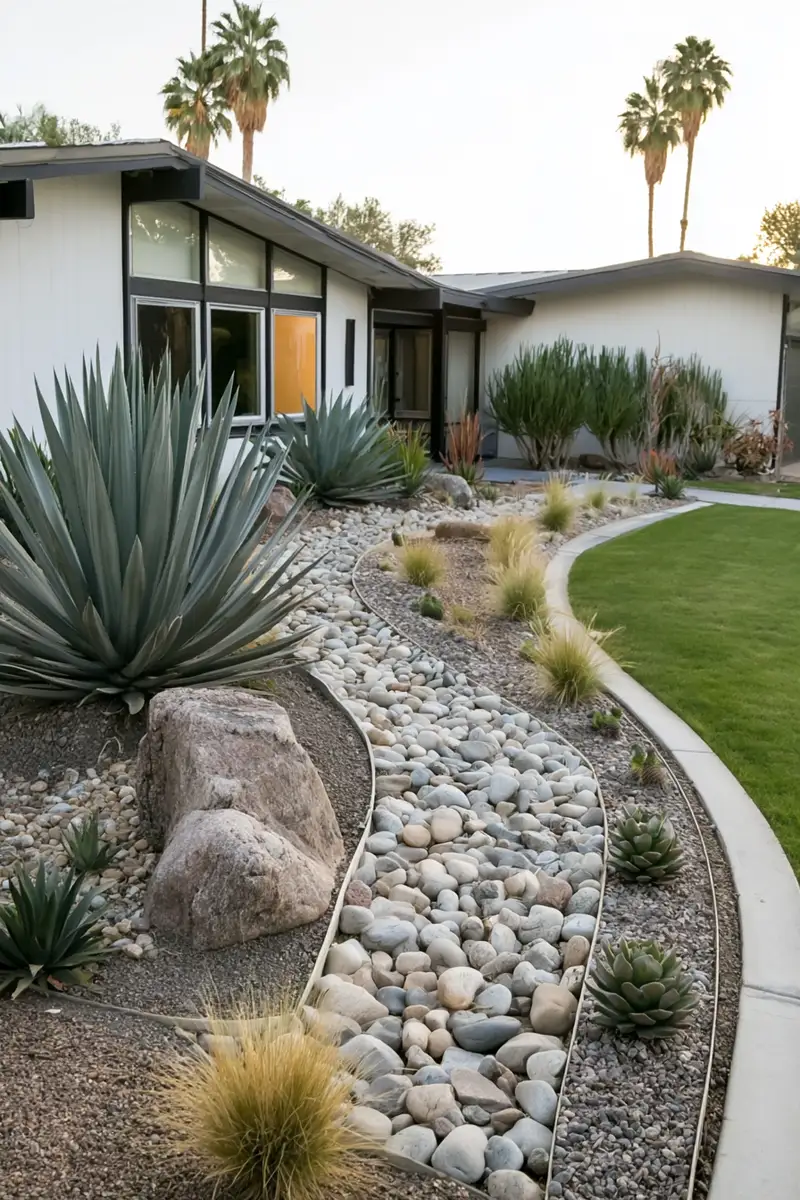
Transitioning from a traditional lawn to a heavy desertscape often looks messy or totally unfinished. Carving out a winding dry riverbed made of smooth stones creates a sharp, deliberate boundary line. The metal edging locks the gravel in place, preventing it from spilling into the remaining grass. Massive agave plants act as structural anchors on the dry side. You get the lushness of a small lawn patch but drastically cut down the actual watering zone.
3. Wood terracing for steep slopes

Steep property lines quickly turn into mudslides during heavy rain or barren dust bowls in August. Simple wood terracing levels the ground effortlessly. Covering the exposed dirt with thick pea gravel stops soil erosion completely. Potted olive trees add vertical height without the nightmare of digging deep holes into hard, dry clay.
4. Conquering extreme hillsides with corten steel
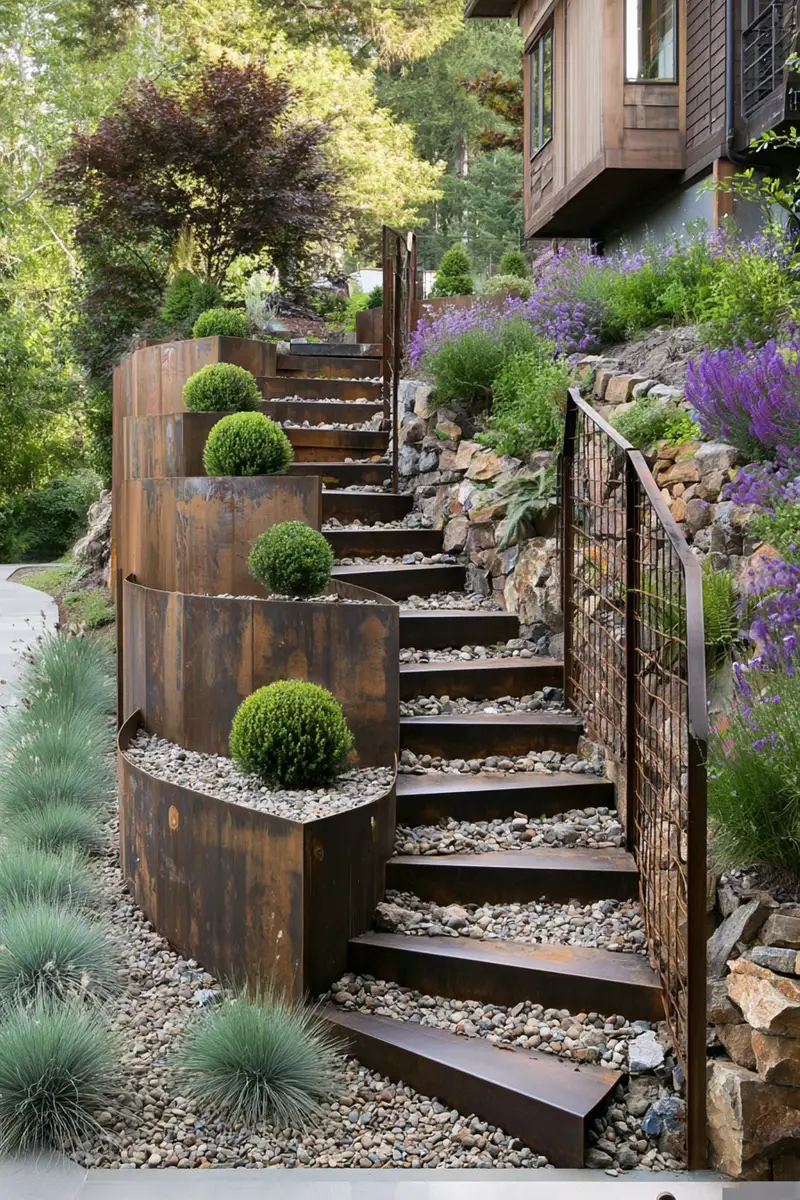
Managing a severe hillside entry usually means pouring ugly, cracking concrete steps that cost a fortune. Stepping rusted corten steel planters up the slope offers a brilliant architectural fix. The heavy metal holds back the loose soil perfectly, while filling the treads with coarse gravel ensures rapid drainage during sudden downpours. Planting tough, drought-resistant ornamental grasses and small structural shrubs inside the steel boxes softens the harsh industrial edges over time. It completely transforms a difficult, unmanageable climb into a modern, rugged focal point. The whole system requires almost zero water once those native roots are established.
5. Permeable concrete walkways
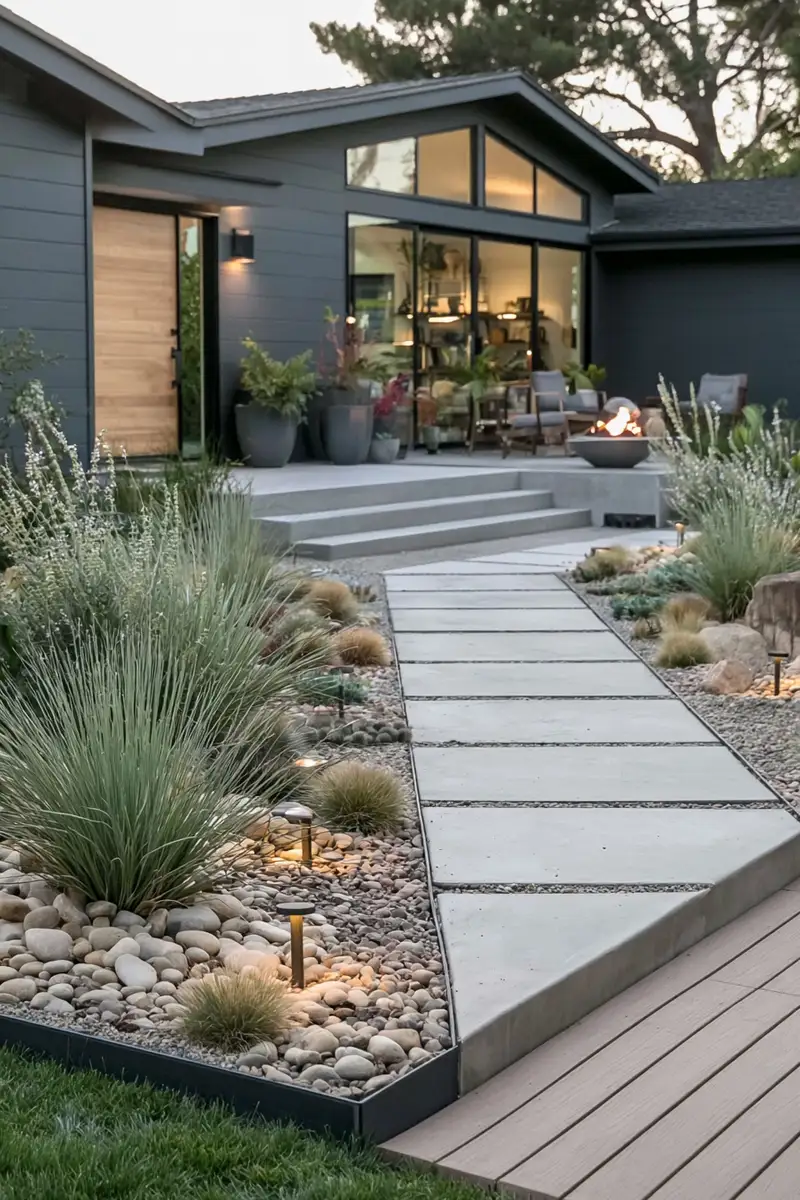
Wide concrete walkways crack easily and look like commercial sidewalks. Staggering large concrete slabs with loose river rock gaps allows rainwater to permeate directly into the soil instead of running off into the street. Structural native grasses border the path flawlessly.
6. Raised succulent beds along the street
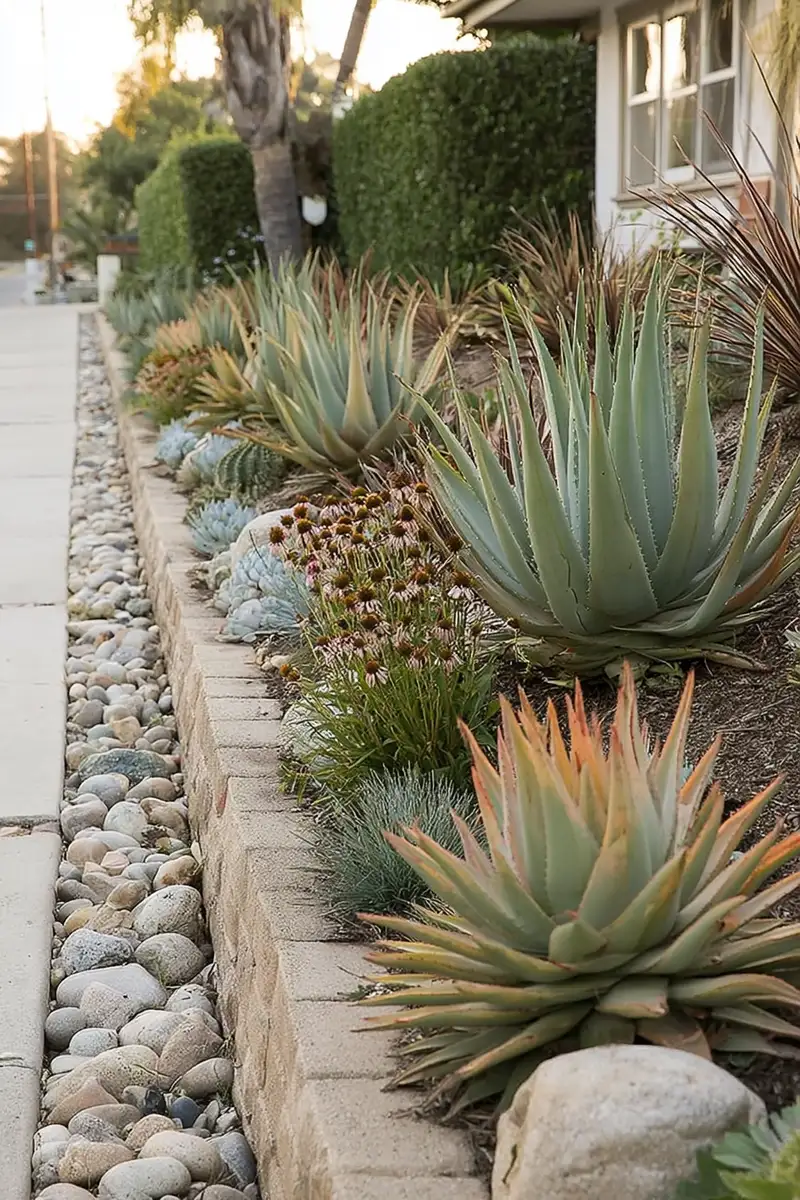
The narrow dirt strip between a public sidewalk and a house foundation is notoriously hard to keep alive. Building a low stone retaining wall elevates the entire planting bed. This simple move guarantees excellent soil drainage, which is mandatory for sensitive succulents and massive aloe vera plants. A thick border of oversized river rocks prevents dog damage and stops loose soil from washing onto the concrete. It provides massive curb appeal with minimal irrigation requirements.
7. Architectural geometry in the desert
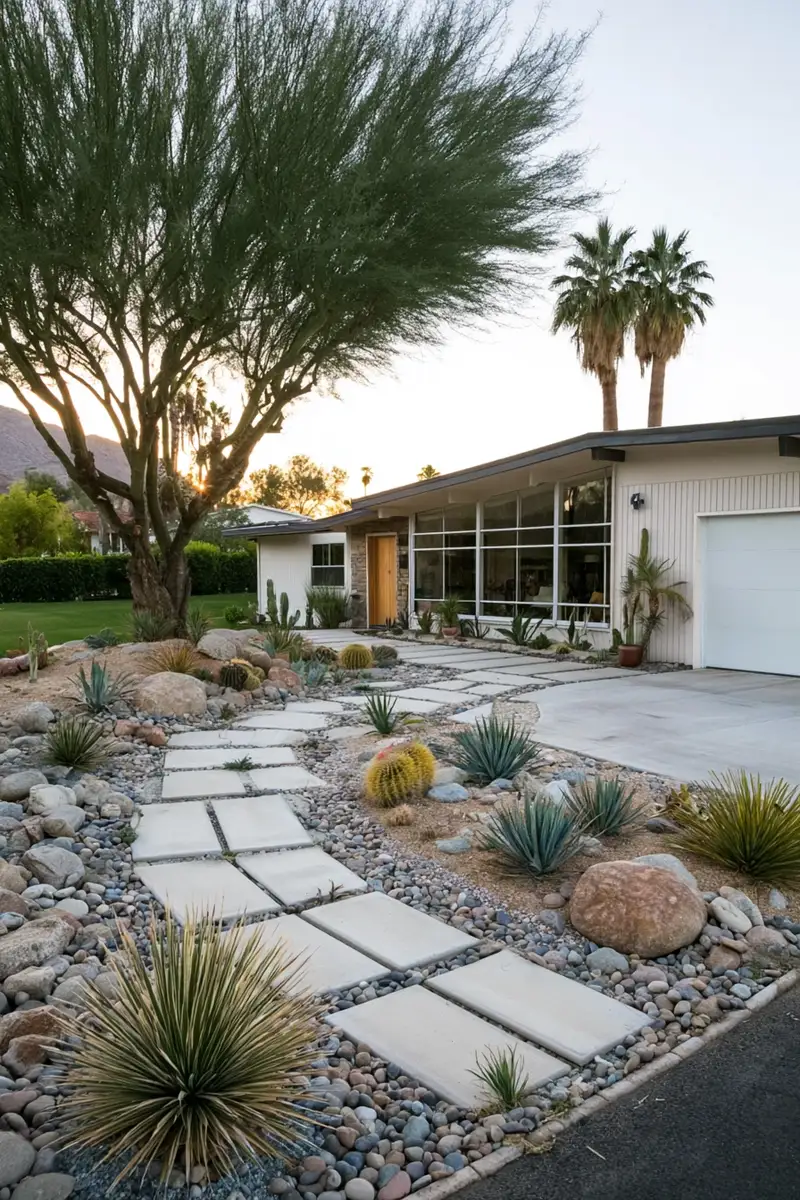
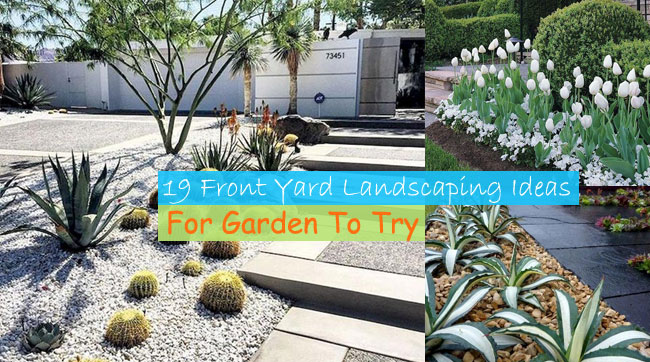
Desert landscaping easily looks sparse and unwelcoming if the layout lacks clear structure. Dropping down oversized, staggered concrete pads creates a highly deliberate walkway that guides foot traffic naturally. Grouping spiky yuccas and golden barrel cacti in intentional clusters adds serious visual weight to the yard. The heavy gravel mulch traps whatever tiny amount of moisture remains in the soil, keeping the plants resilient through late summer.
8. Taming the narrow side yard
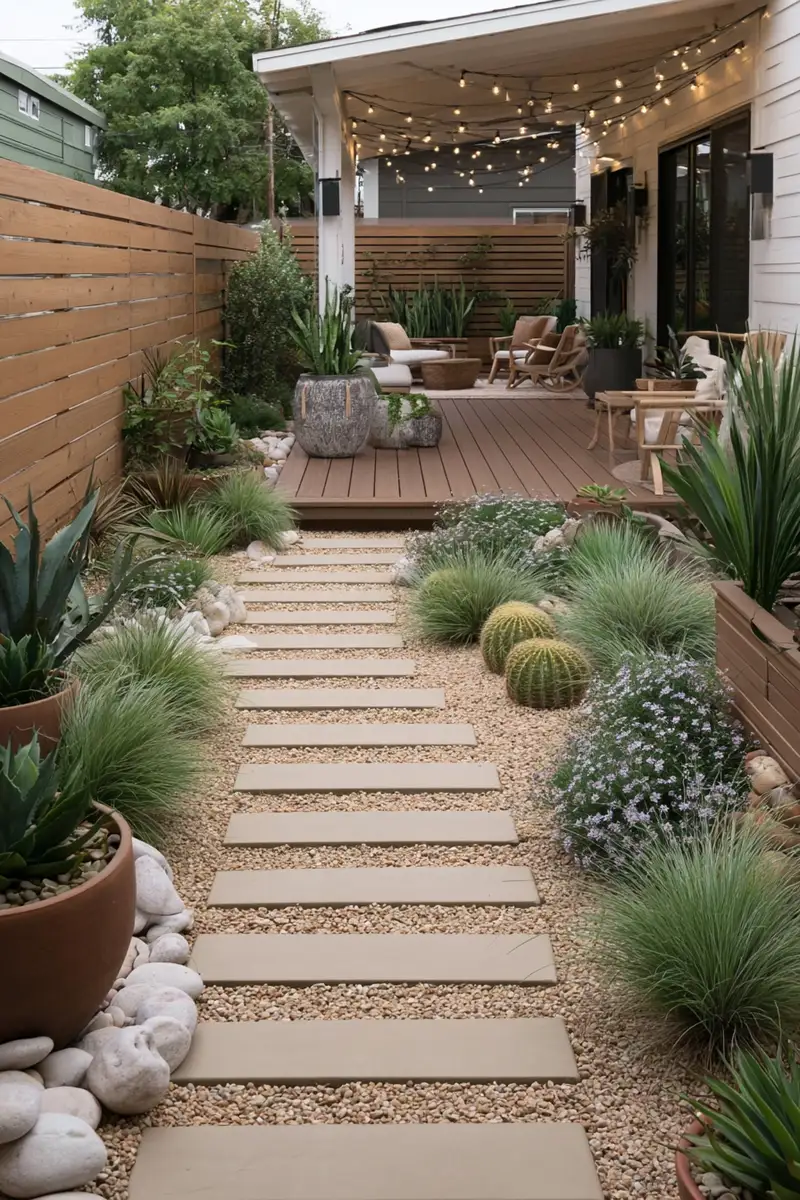
Narrow transition zones often devolve into neglected weed patches. Laying a straight path of rectangular pavers over a thick bed of gravel completely eliminates the need to drag a lawnmower back there. Fluffy, drought-tolerant native grasses spill slightly over the edges, cutting the harsh geometry of the masonry. The result is a clean, modern walkway that handles heavy foot traffic and survives dry spells gracefully.
9. Indestructible front yard seating
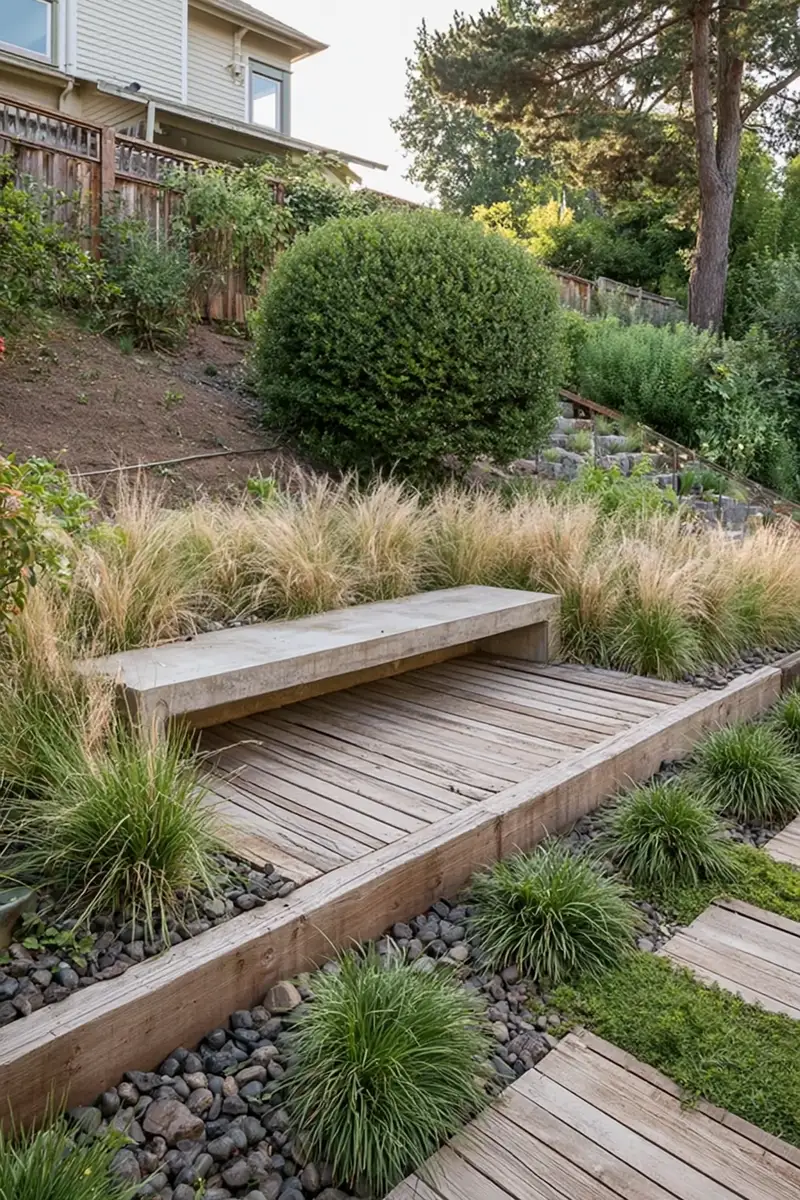
Outdoor furniture left in the front yard usually rots or blows away. A floating concrete bench integrated right into a heavy timber retaining wall is practically indestructible. Surrounding the seating area with tall, feathery grasses builds a natural privacy screen from the street.
10. Anchoring with a single monument plant
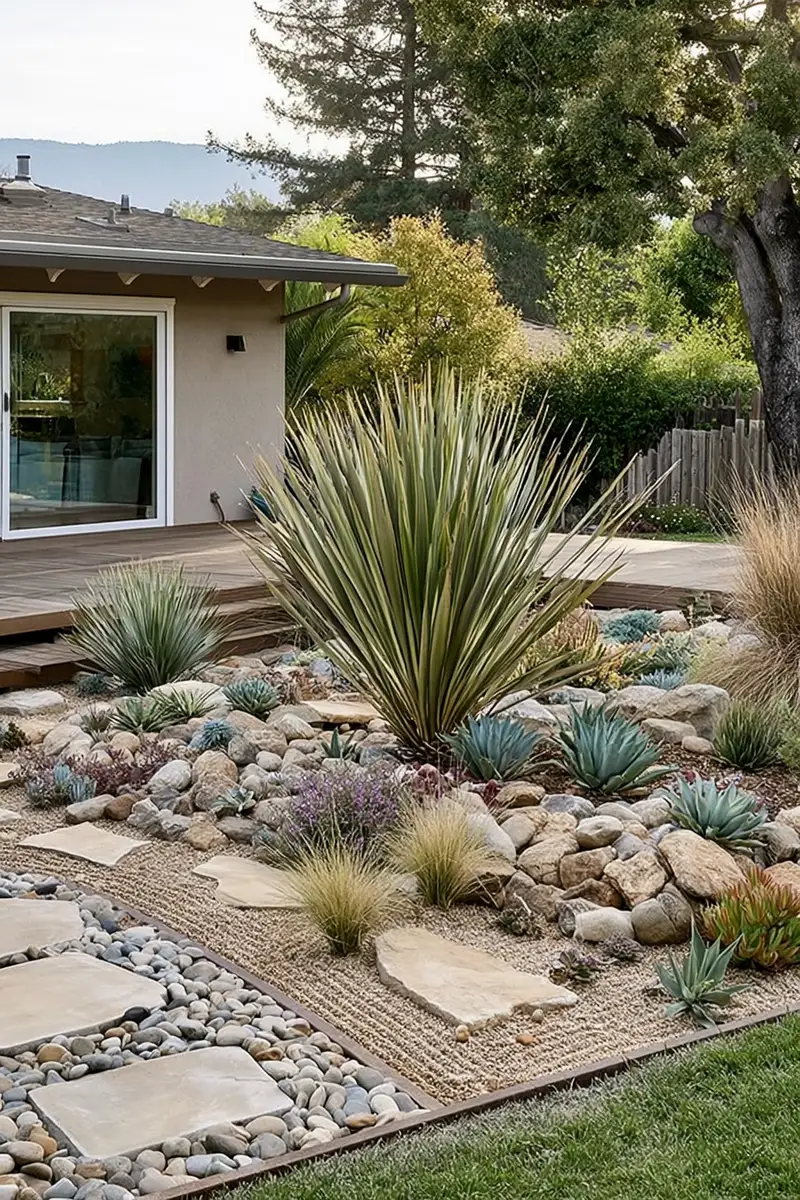
Replacing a front lawn entirely with gravel can make a property feel barren. Using one massive, architectural plant like a mature Yucca as a central monument instantly anchors the entire yard. Surrounding that focal point with heavy boulders and a tightly raked zen gravel bed adds deep layers of texture. Different sizes of rocks define the specific planting zones without relying on cheap plastic borders. It turns a dry, baked space into a curated botanical display that completely ignores the summer heat.
11. Concrete planters for clean indoor-outdoor flow
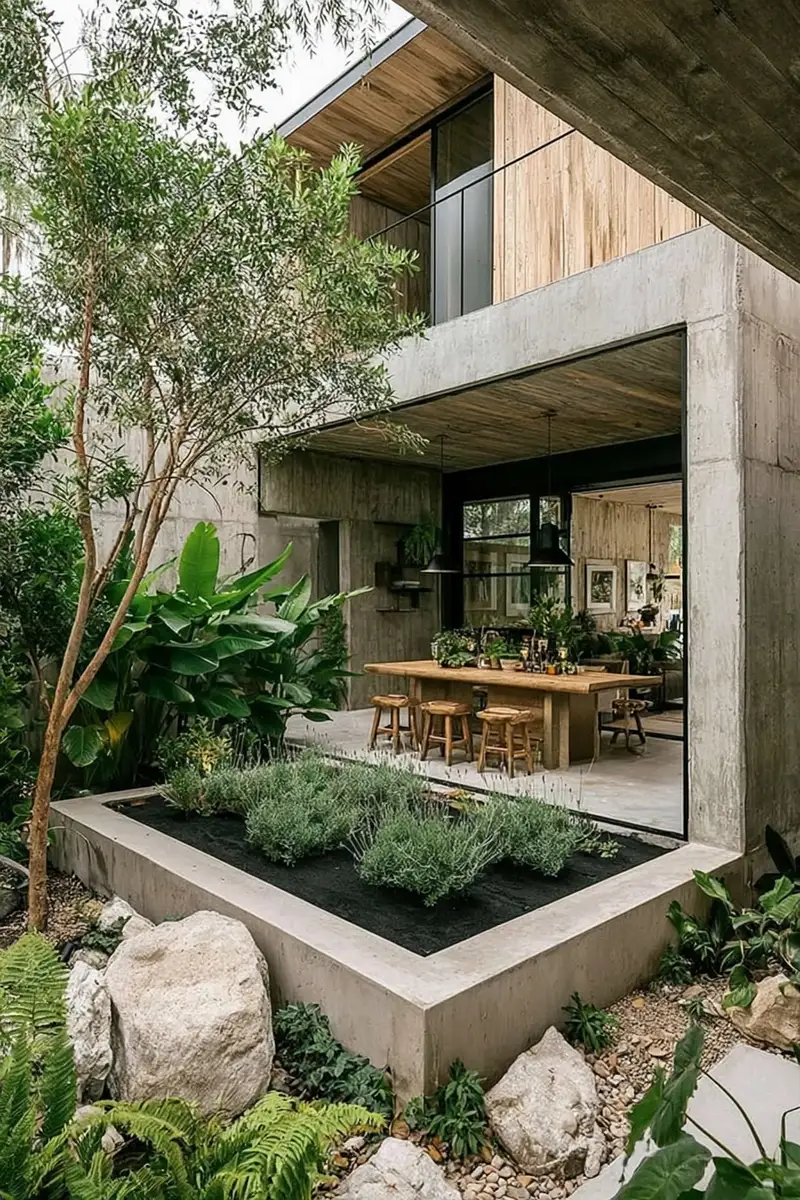
Connecting a dining room directly to the outside usually means dragging dirt across the floors. Casting a raw concrete planter right at the transition line acts as a heavy architectural barrier. It keeps the planting soil strictly contained. Using dark, moisture-locking mulch around hardy herbs reduces watering and looks incredibly sharp against the grey walls.
12. Preserving mature trees with low retaining walls
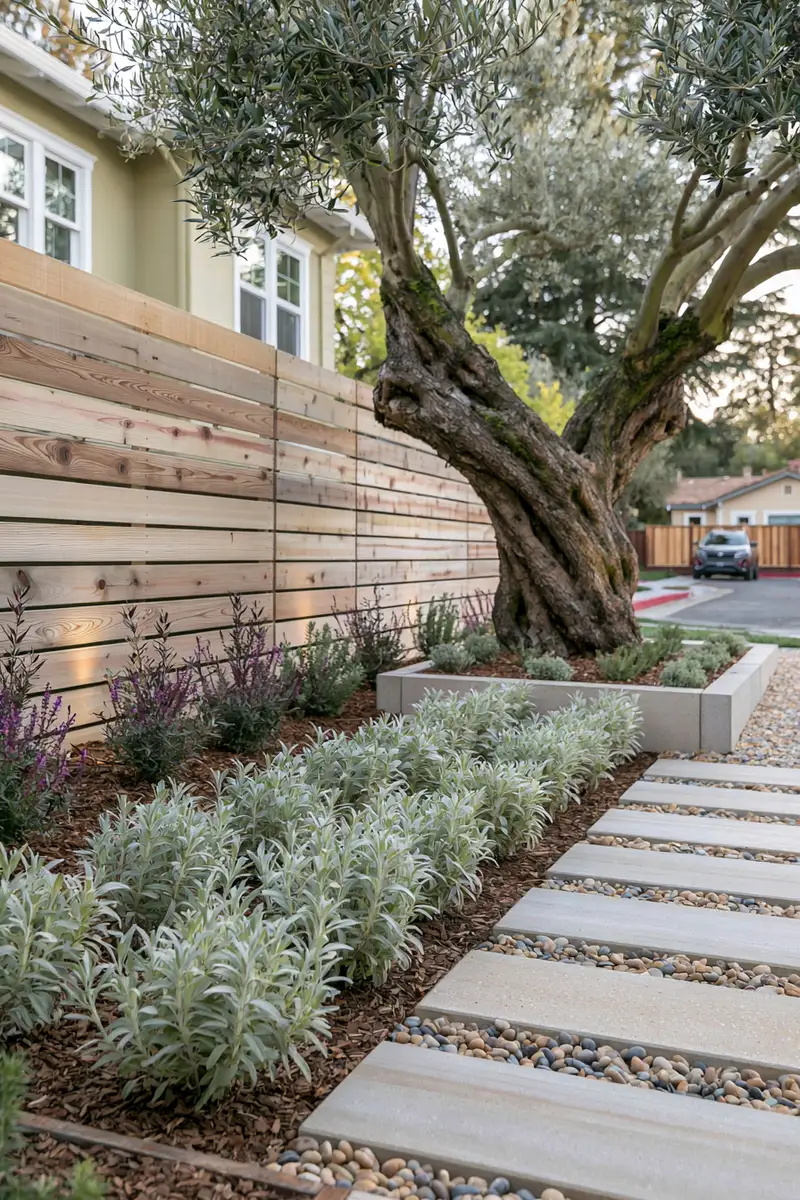
Upgrading a front yard hardscape often threatens the root systems of old, established trees. Changing the soil grade around a mature trunk will slowly kill it. Building a simple, low concrete perimeter wall right around the existing root zone solves this problem completely. It safely preserves the original soil level for the tree while allowing you to modernize the surrounding ground with clean concrete pavers and loose gravel. Planting silver-leafed, low-water shrubs in the heavy bark mulch finishes the space. The yard gets a total facelift without sacrificing decades of natural growth.
13. Tiered timber planters for sloped driveways
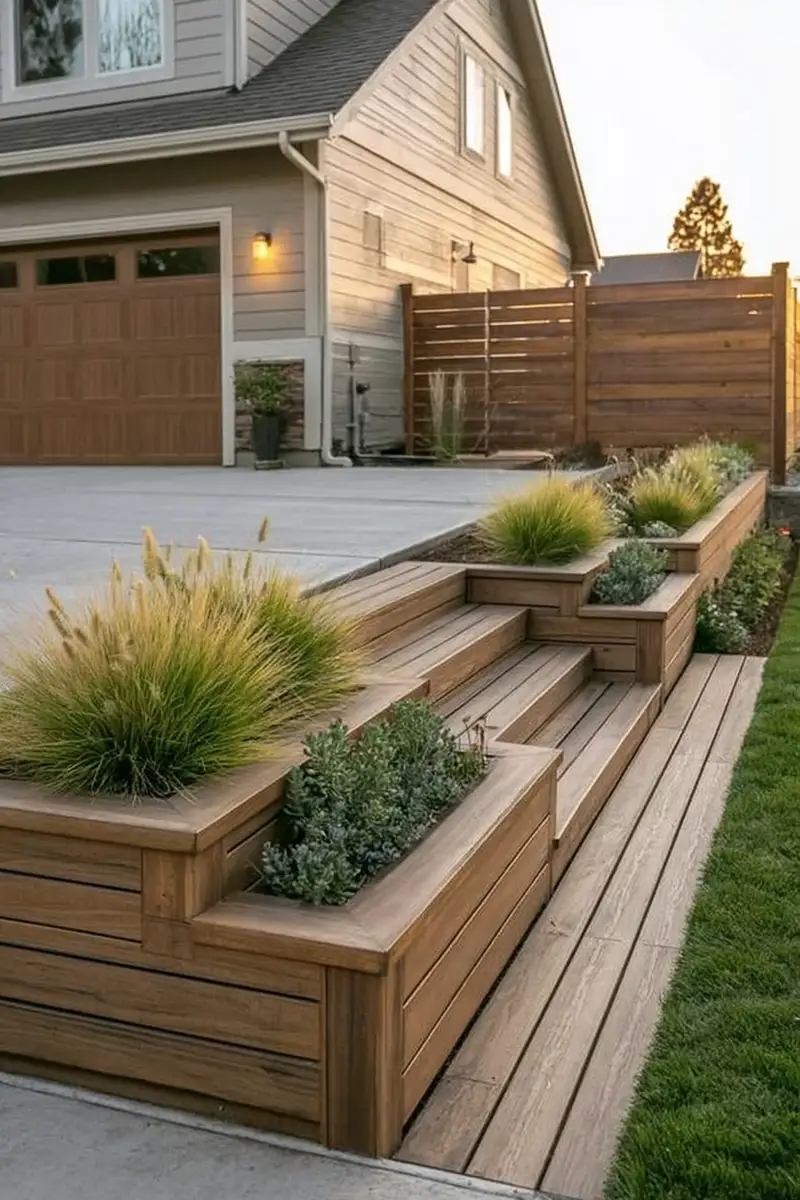
The awkward dirt strip beside a sloping driveway usually turns into a messy runoff zone. Stacking custom wood planters to match the exact incline stops the erosion instantly. It provides flat, contained pockets for tough ornamental grasses. The driveway edge stays completely clean.
14. Forcing a slow approach
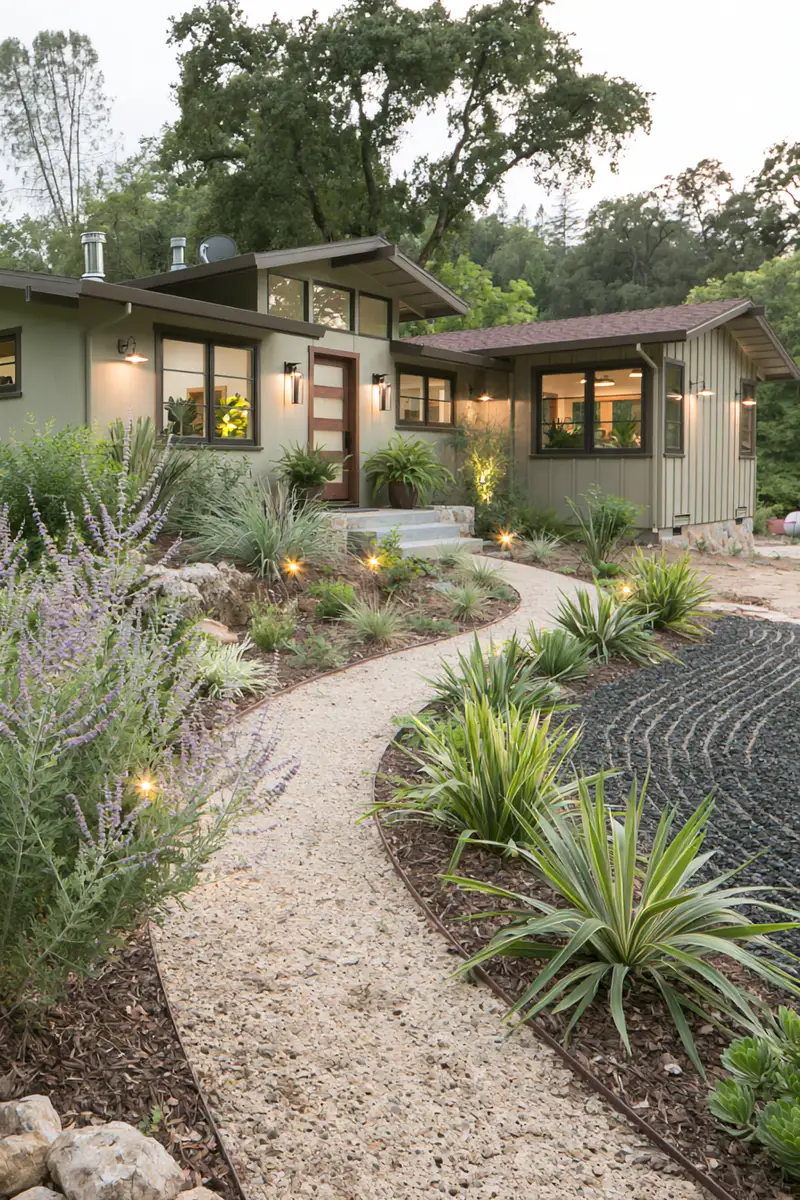
Straight concrete walkways feel entirely too fast and utilitarian. Laying a curving gravel path bordered by rusted metal forces foot traffic to slow down. The crunch of the stone creates an intentional transition from the street to the house.
15. Bringing strict order to the desertscape
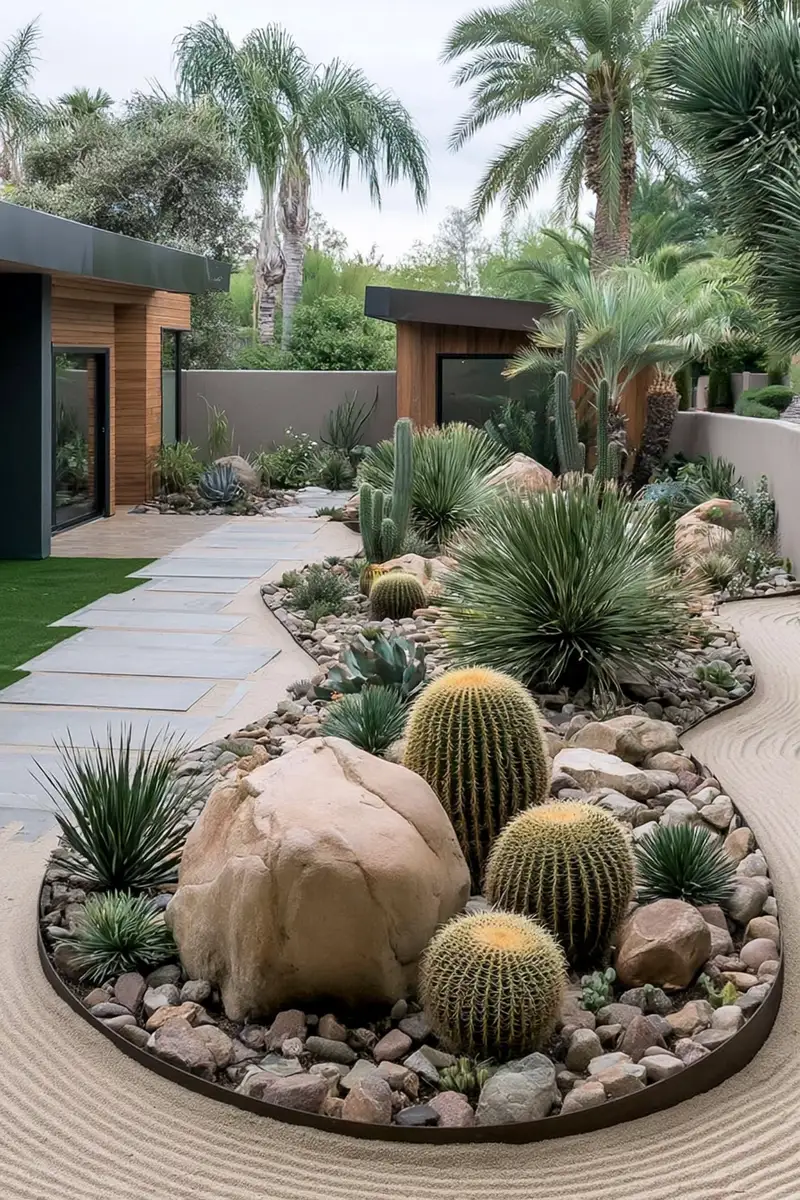
Front yards filled with assorted cacti easily look like haphazard weed patches if left unmanaged. Introducing sections of tightly raked sand gives the space a deliberate, high-end gallery feel. Wrapping those zones with dark metal edging prevents the surrounding river rocks from spilling in. Heavy boulders ground the round barrel cacti perfectly.
16. Softening massive concrete stairs and handling runoff
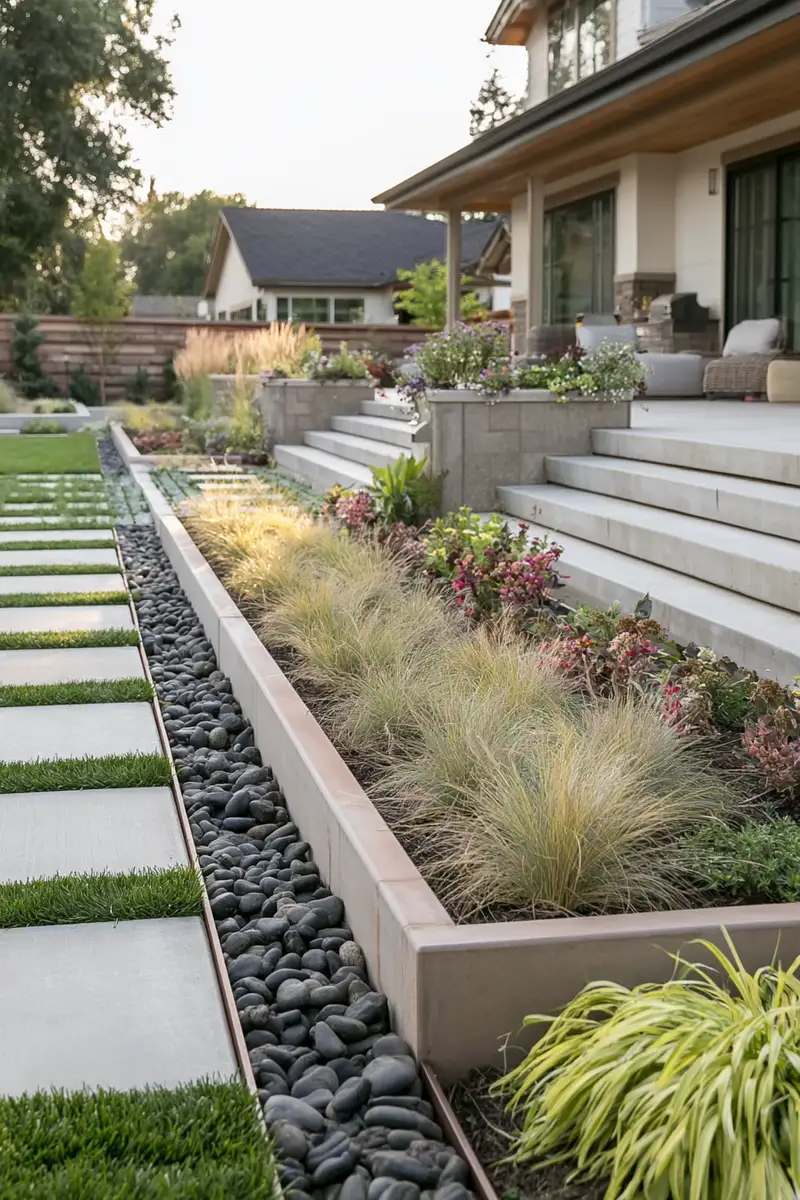
Pouring extra-wide concrete steps gives a home a grand entrance, but it also creates a harsh, commercial look. Running a long, low concrete planter parallel to the stairs is a highly effective way to cut that visual weight. Filling it entirely with wispy, soft grasses introduces constant movement that contrasts beautifully with the rigid masonry. Notice the deep trench of dark river rocks right next to the planter. This is a brilliant hidden drainage solution. It catches heavy roof runoff and allows it to percolate slowly into the ground, stopping it from flooding the adjacent paver walkway.
17. The protective gravel buffer
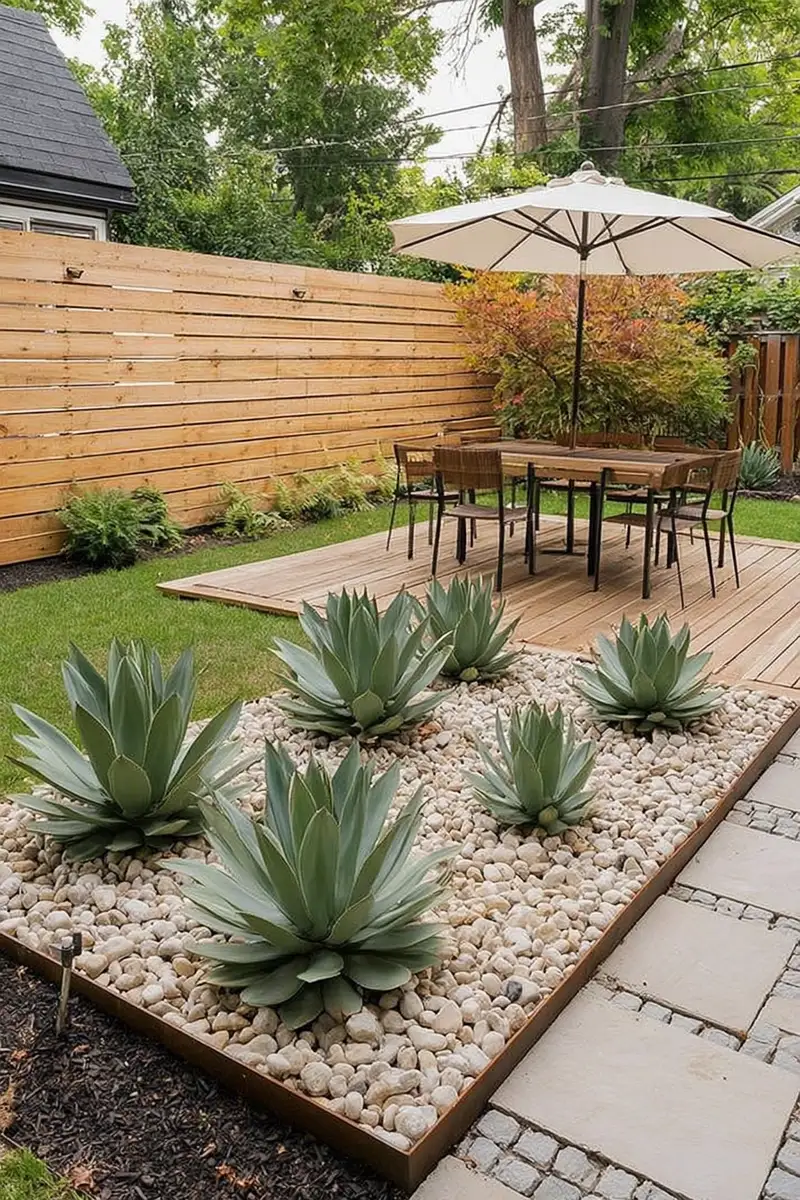
Building a wood deck flush with a lawn guarantees the timber will eventually rot from constant moisture. Sliding a rusted steel planter box between the deck and the grass acts as a hard barrier. Filling it with dry white gravel and sculptural agaves keeps water far away from the wood structure while defining the dining zone.
18. The gravel trench root barrier
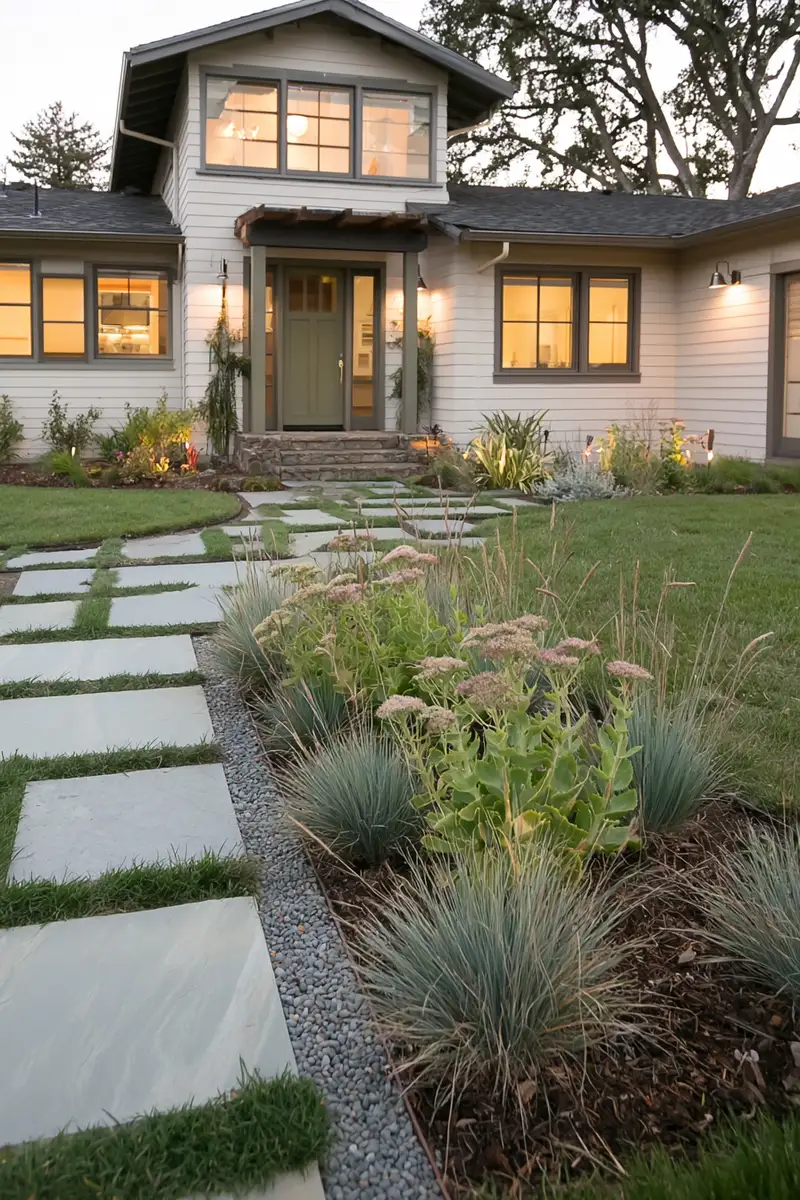
Lawn grass relentlessly invades adjacent garden beds. Digging a narrow trench and filling it with dense pea gravel creates an impassable root block. It keeps the drought-tolerant fescue neatly separated from the green pathway.