
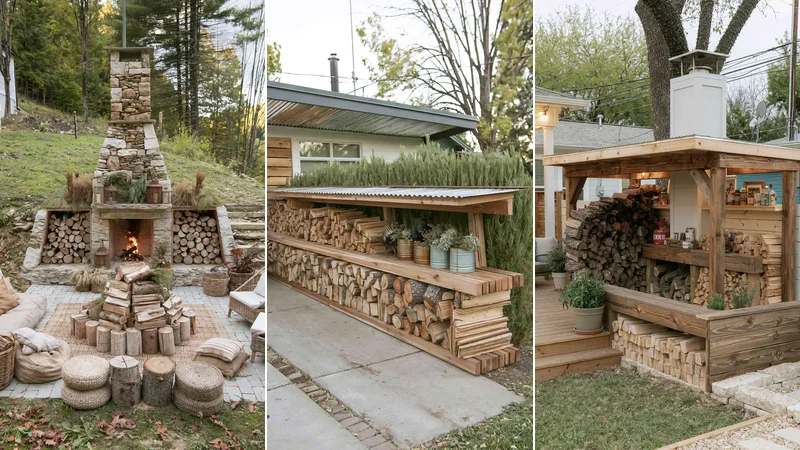
A chaotic pile of damp logs against your house is an absolute pest magnet. Wet wood completely ruins a crisp evening by the fire. Smart storage structures fix this instantly. They keep fuel dry, highly organized, and actually elevate your entire backyard hardscape.
1. The simple lean-to solution
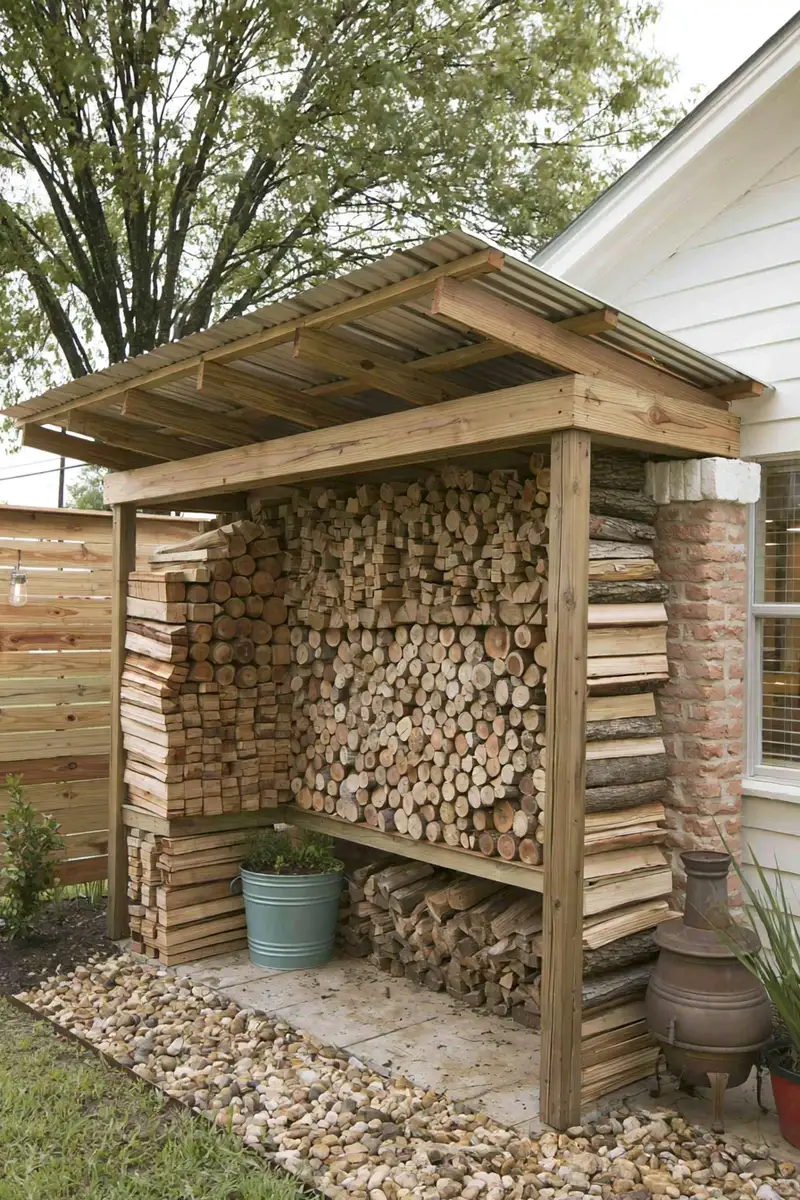
Rotting logs pushed directly against the house invite pests and moisture damage. This simple timber lean-to with a corrugated roof keeps wood elevated, dry, and neatly organized away from the fragile siding.
2. Reclaiming fence boundaries with low-profile racks
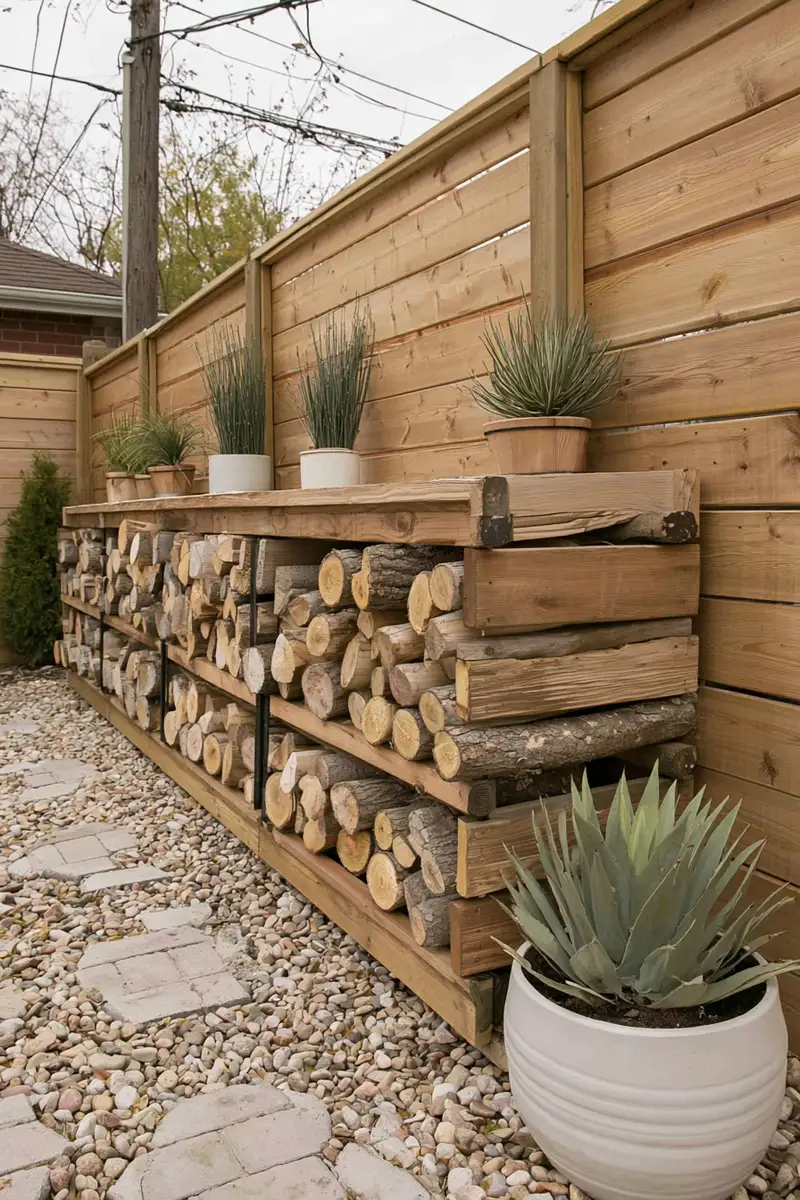
Bulky wood sheds easily consume valuable patio square footage. Building a low-profile storage rack directly along the fence boundary reclaims dead space while creating a sharp, functional display console for potted architectural plants.
3. Integrated masonry nooks
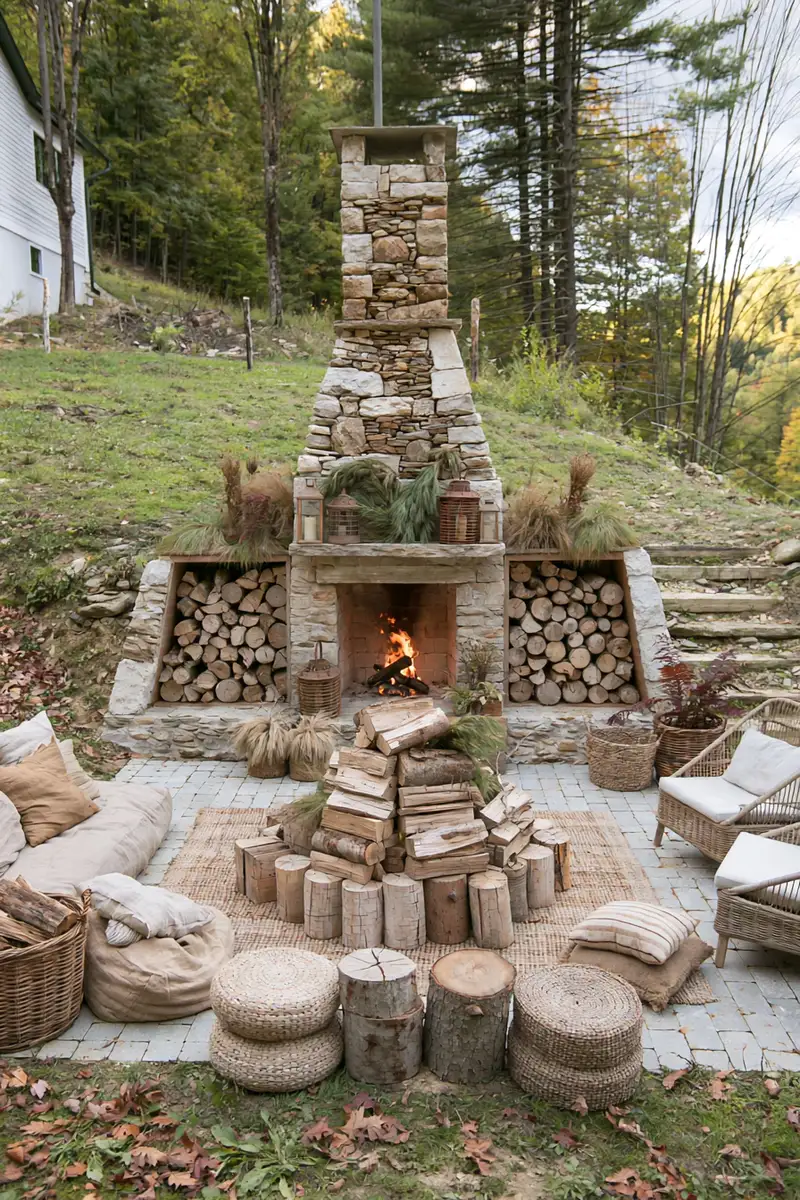
Constant trips to a distant shed interrupt the evening. Built-in masonry nooks keep dry logs immediately accessible.
4. Utilizing vertical wall space efficiently
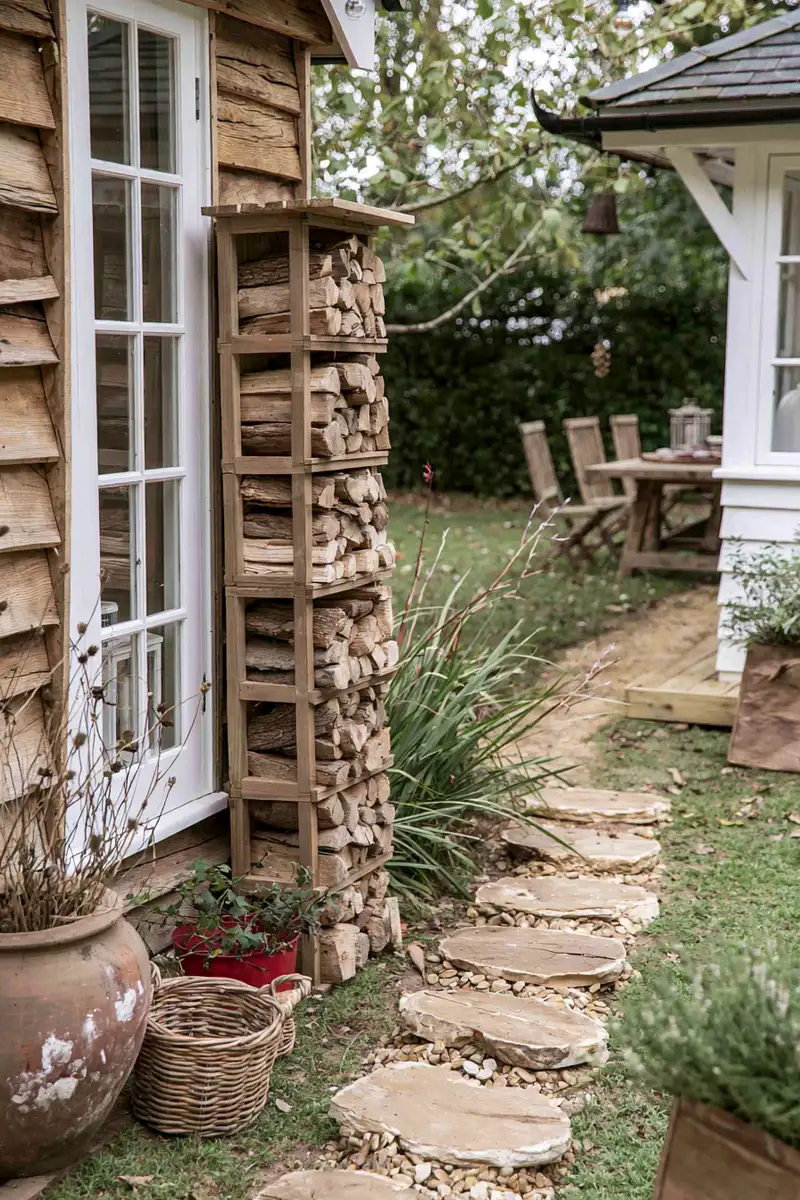
Tight side pathways leave zero footprint for horizontal stacking. A compartmentalized vertical tower utilizes blank exterior walls to store fuel efficiently without blocking foot traffic.
5. Deep architectural overhangs
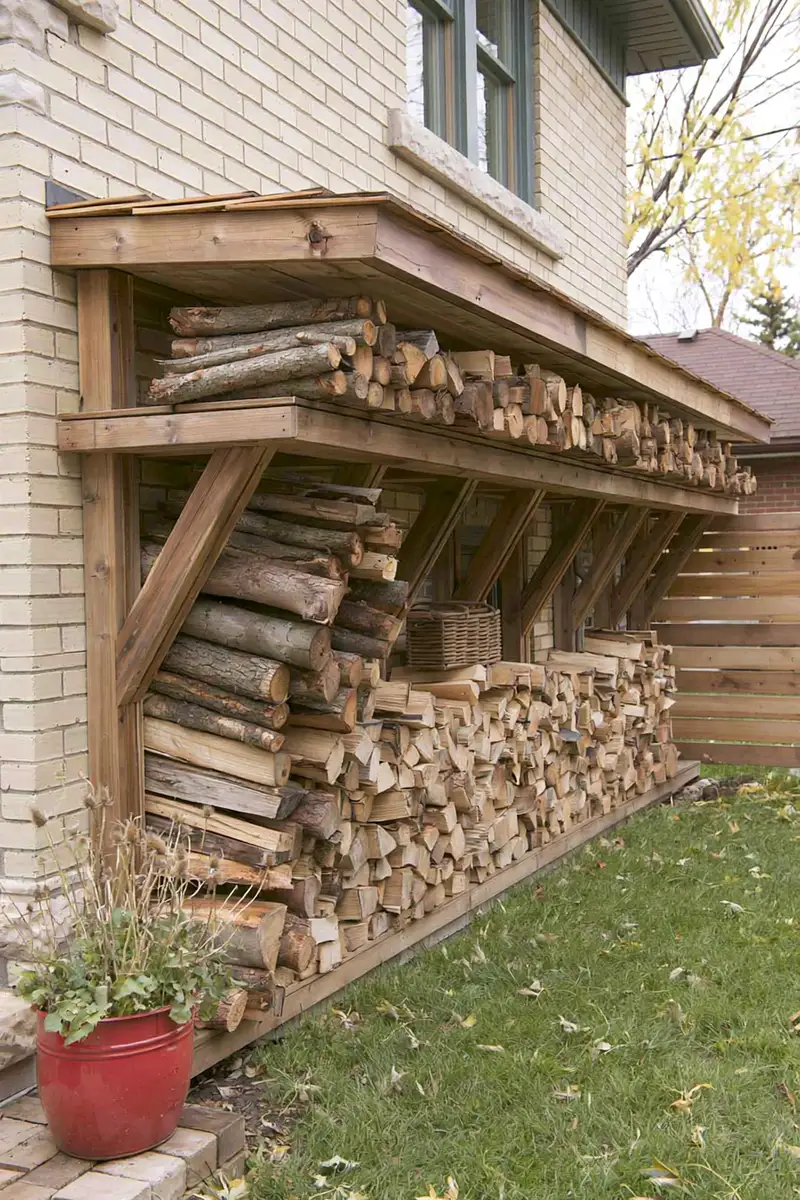
Skip building a separate structure entirely. A deep architectural roof extension protects a massive wood supply perfectly.
6. Sharp modern utility pavilions
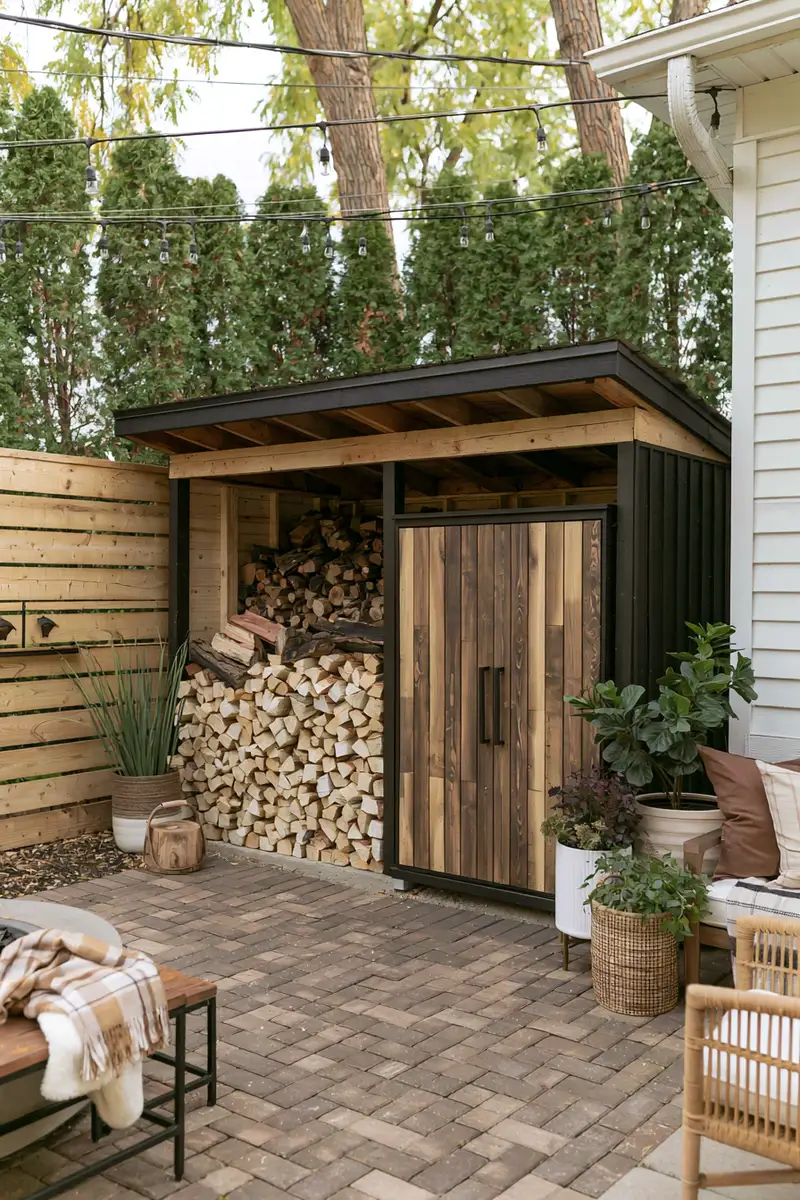
Sprawling log piles often ruin the sleek aesthetic of modern hardscaping. Pairing an open wood bay with closed utility doors inside a dark pavilion maintains incredibly sharp visual discipline.
7. Symmetrical facade storage
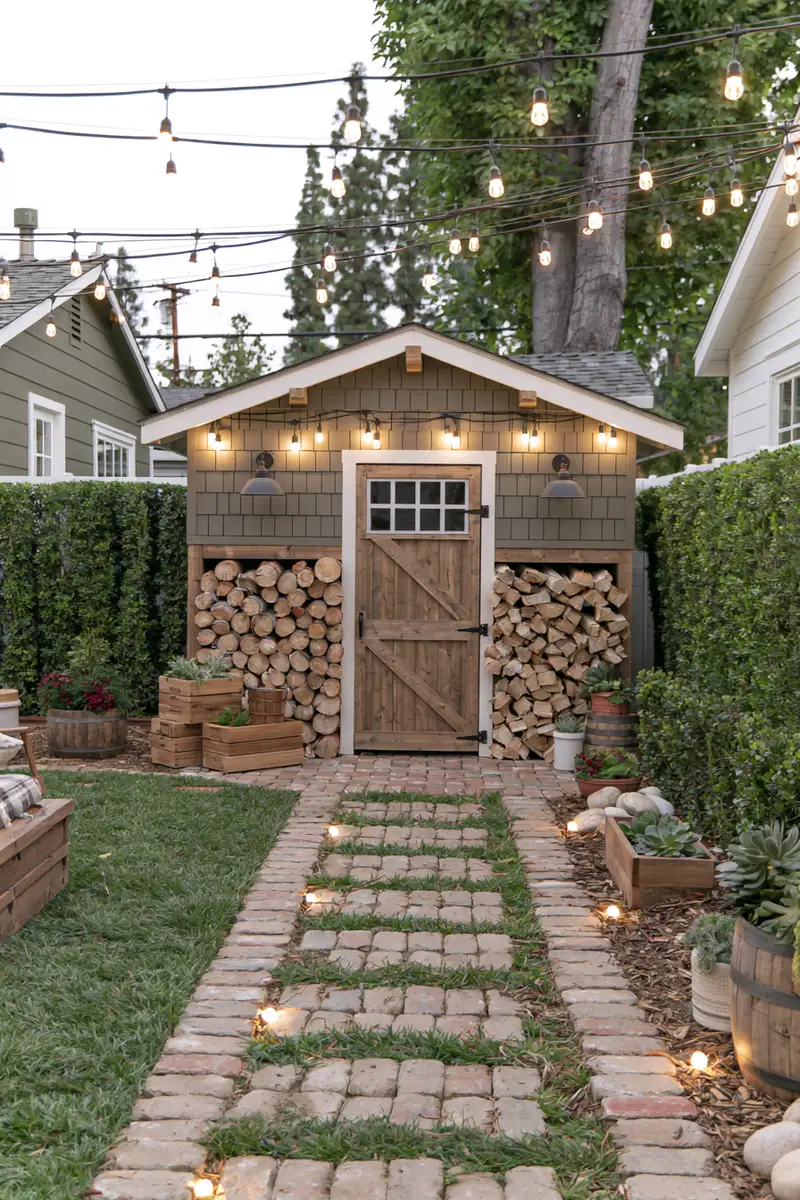
Scattered freestanding racks easily clutter a manicured garden. Recessing deep storage bays directly into the front facade of a classic shed forces total organization. The resulting symmetry turns a basic utility requirement into a strong landscape focal point.
8. The sculptural metal circle
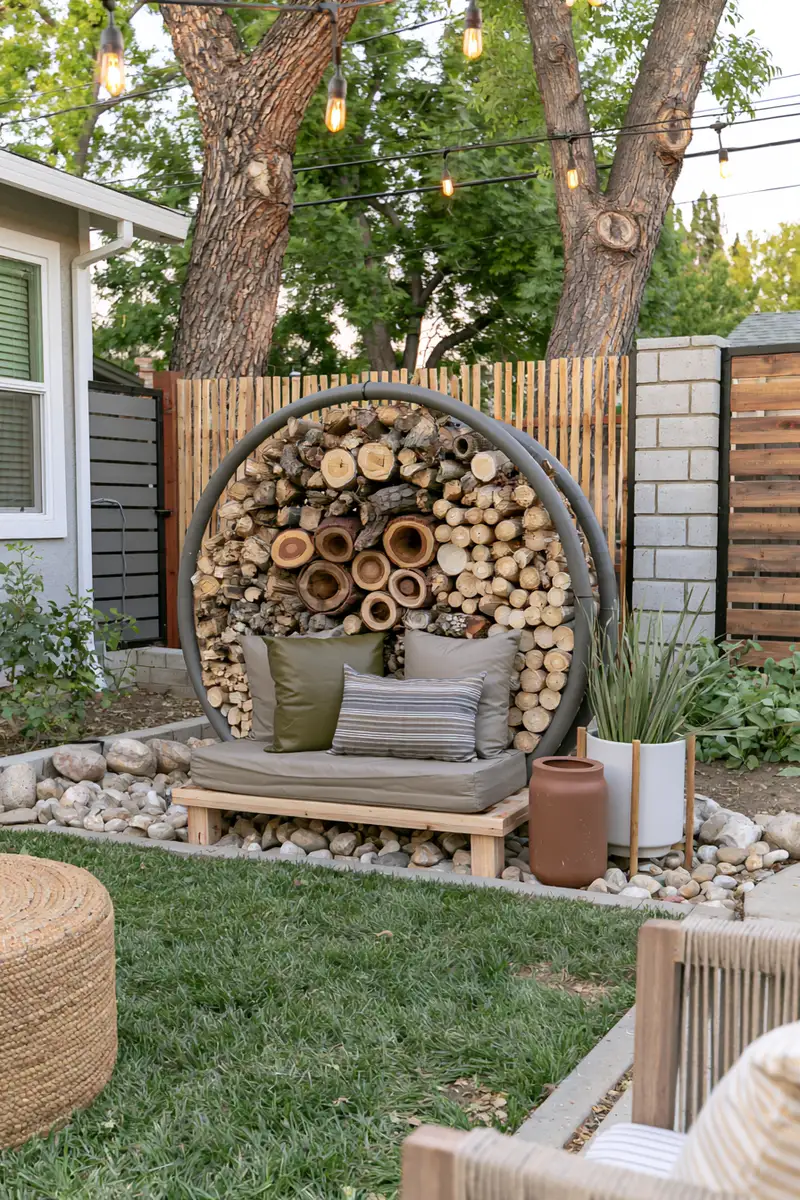
Utility storage usually gets hidden away. Framing logs within a heavy metal circle instantly transforms basic firewood into a functional, sculptural backdrop for outdoor seating.
9. Functional driveway partitions
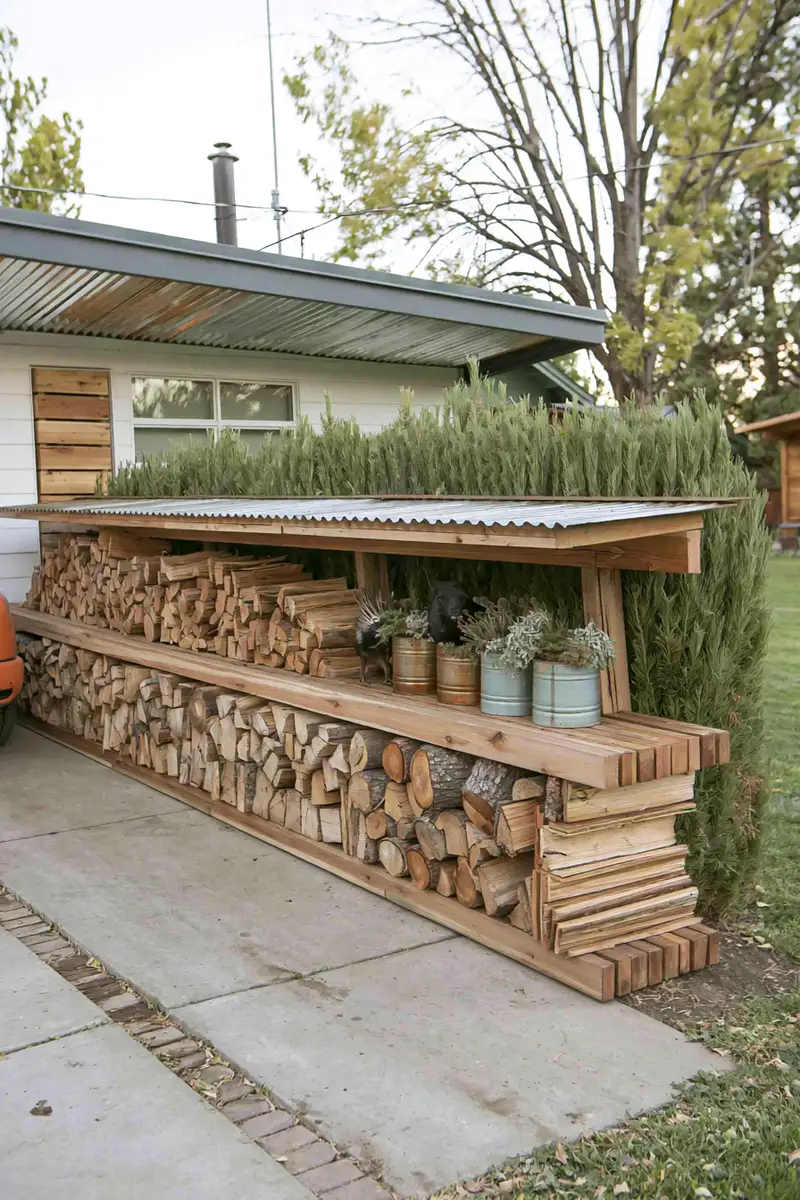
Open driveways lack privacy. A long, freestanding timber rack provides an immediate, solid visual partition that handles massive fuel loads.
10. Uniting the grill and fuel supply
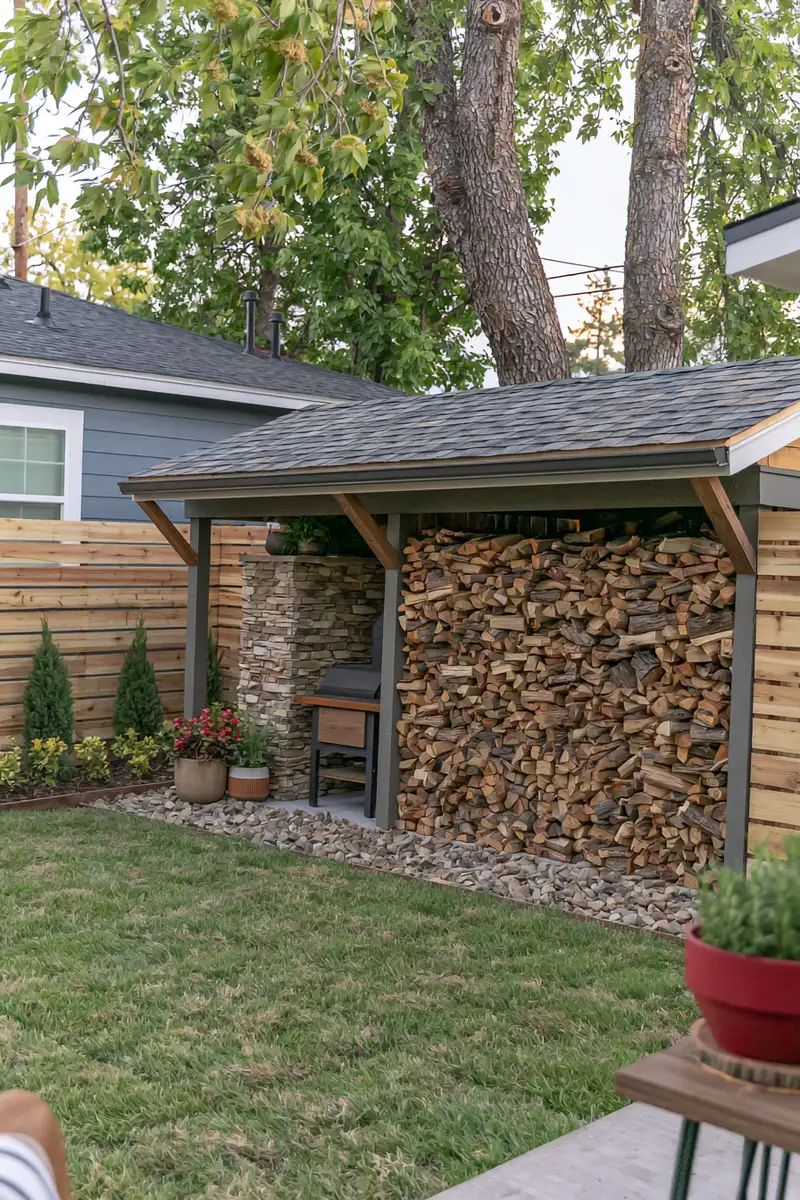
Managing a smoker and fetching wood from different yard zones is highly inefficient. Building an extended roof structure unites the cooking station and the primary fuel supply into one highly protected, cohesive outdoor kitchen hub.
11. Geometric honeycomb compartments
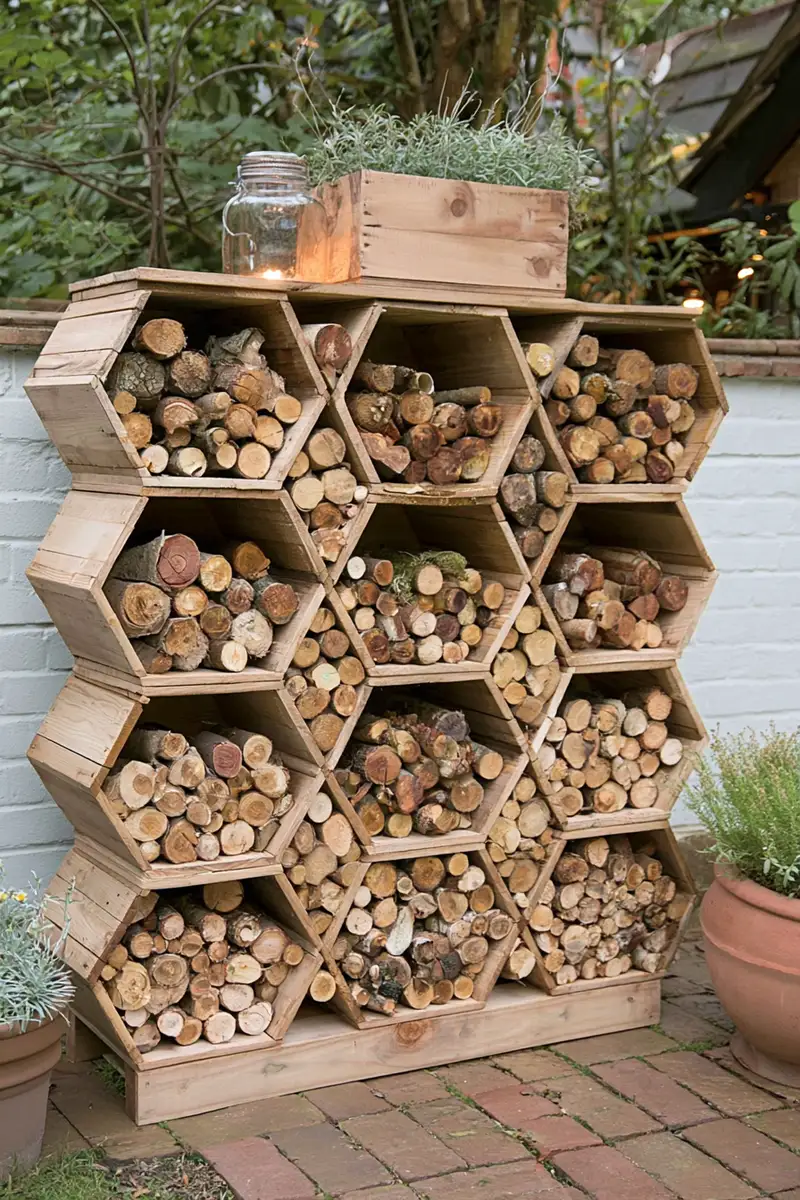
Sorting varying log sizes often results in unstable piles. Stacking these clever hexagonal boxes naturally separates kindling from heavy logs, turning chaotic fuel storage into a highly structured wall display.
12. Deep deck-integrated cooking stations
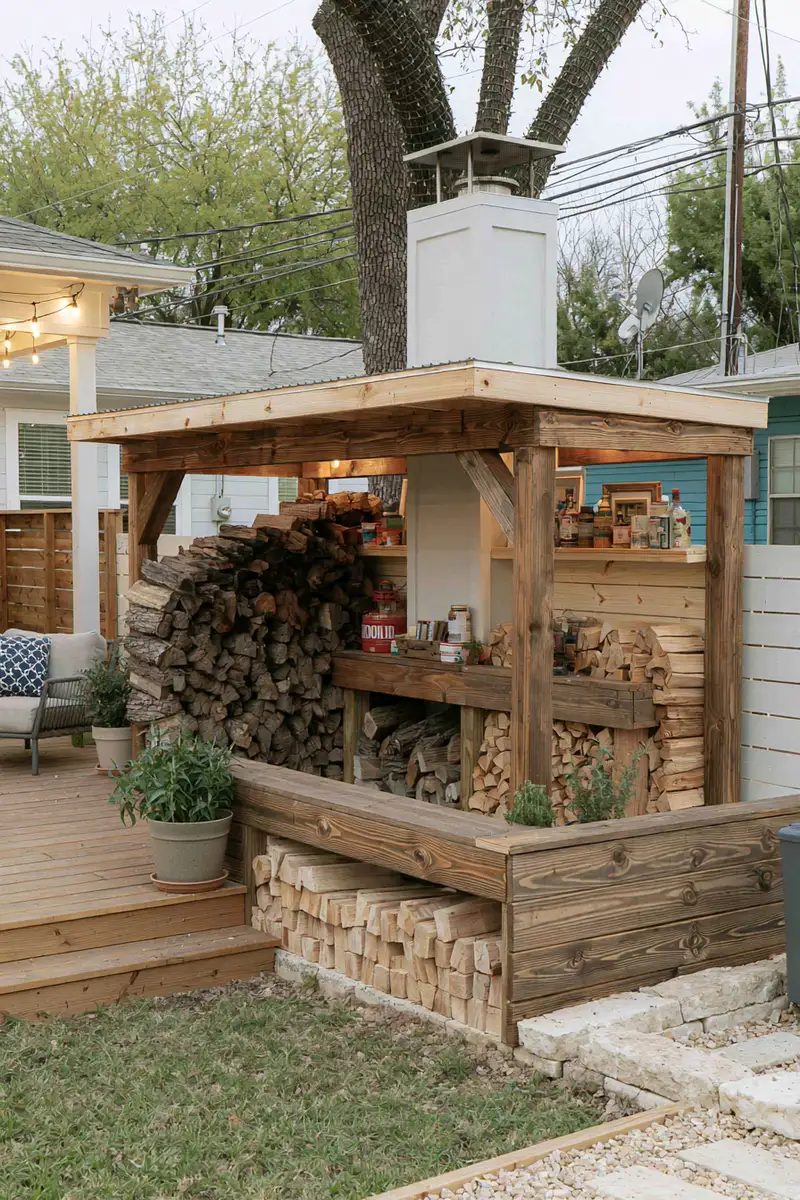
Hauling heavy fuel up to a raised deck mid-party completely breaks the relaxed atmosphere. Building deep storage bays right into the heavy timber outdoor kitchen structure keeps everything instantly accessible. It brilliantly doubles as a solid windbreak.
13. Slatted curing towers
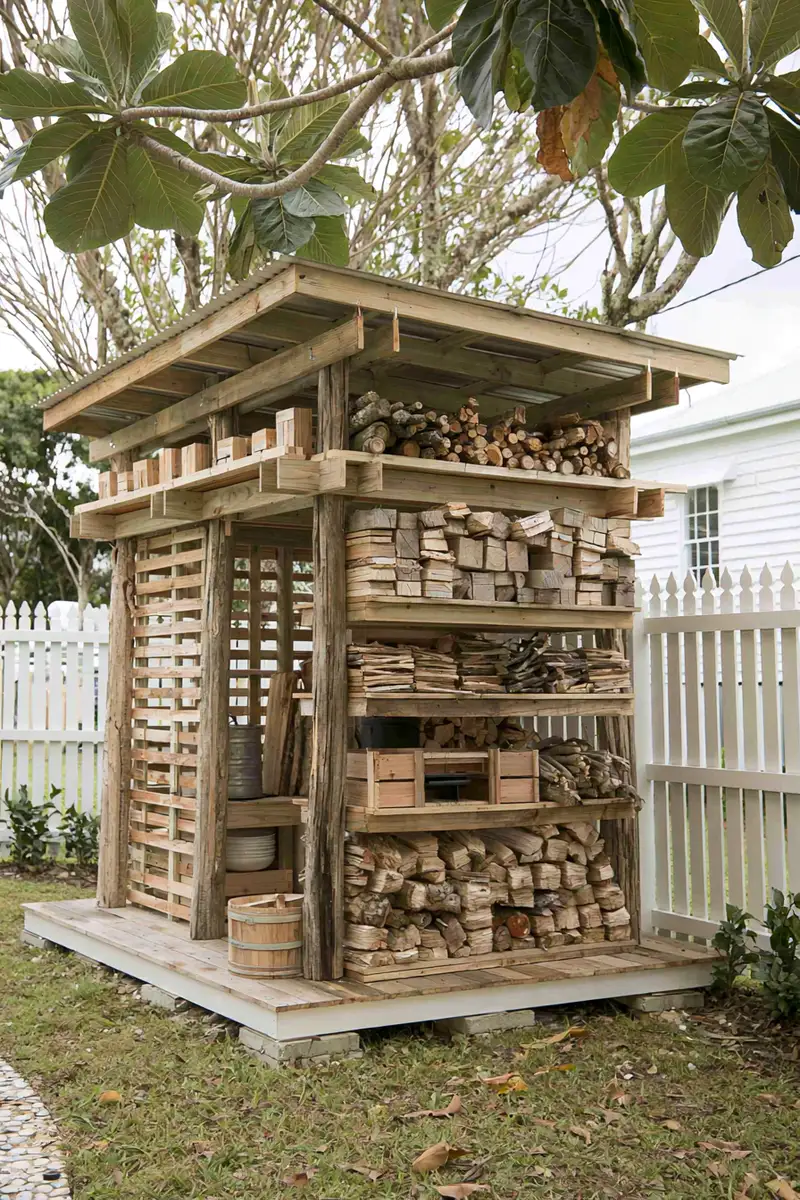
Damp wood rots quickly. Utilizing widely spaced timber slats alongside open tiered shelving maximizes aggressive cross-ventilation, curing green logs perfectly.
14. The slanted A-frame profile
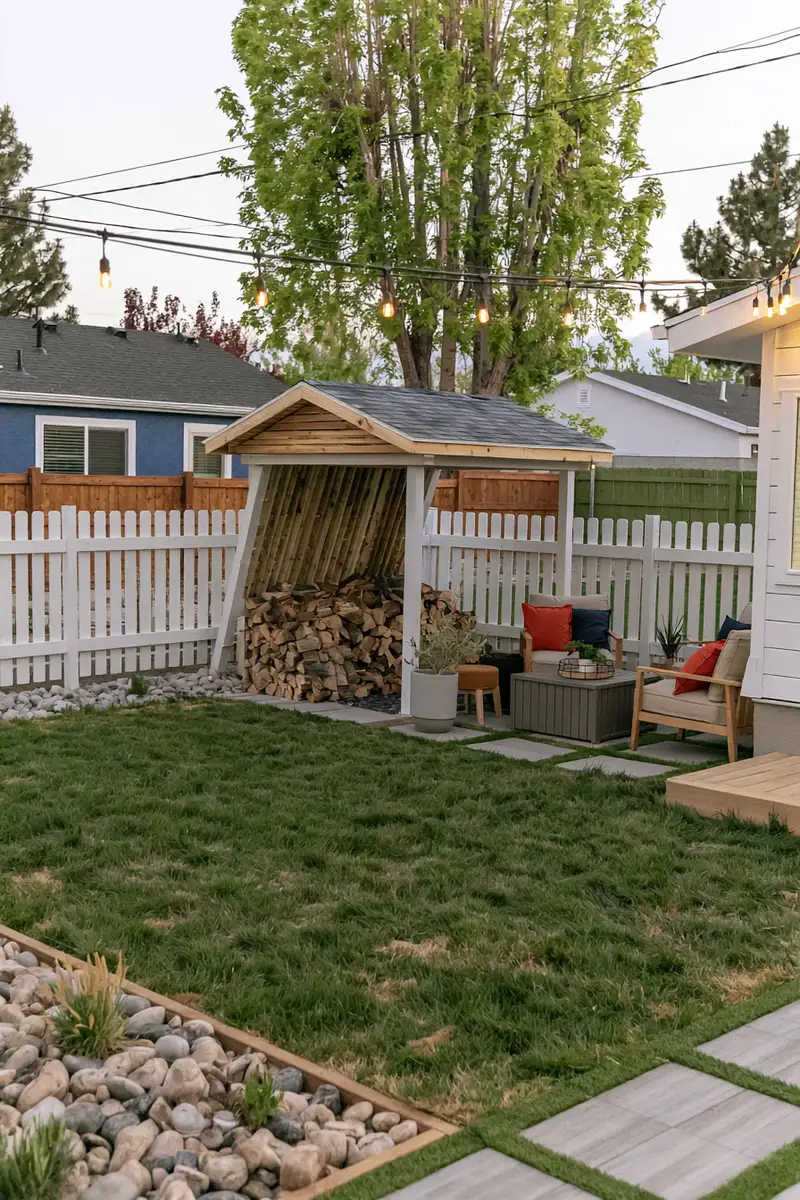
Boxy utility structures easily overwhelm small patio zones. Adopting a smartly pitched A-frame design drastically reduces the visual bulk. It provides deep weather protection while maintaining a surprisingly light footprint.
15. Organic timber arches
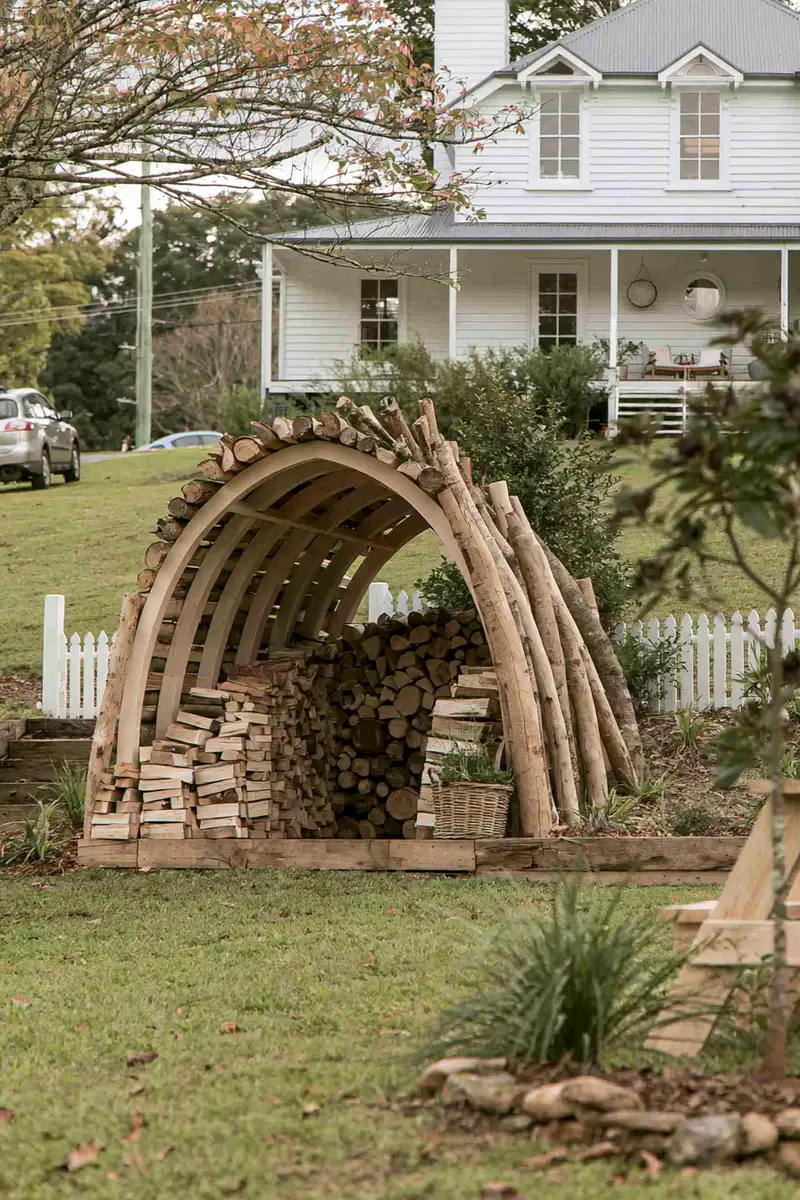
Rigid utility boxes look harsh on sweeping lawns. A curved branch tunnel blends the necessary storage seamlessly into the organic landscape.
16. The dual-purpose storage gazebo
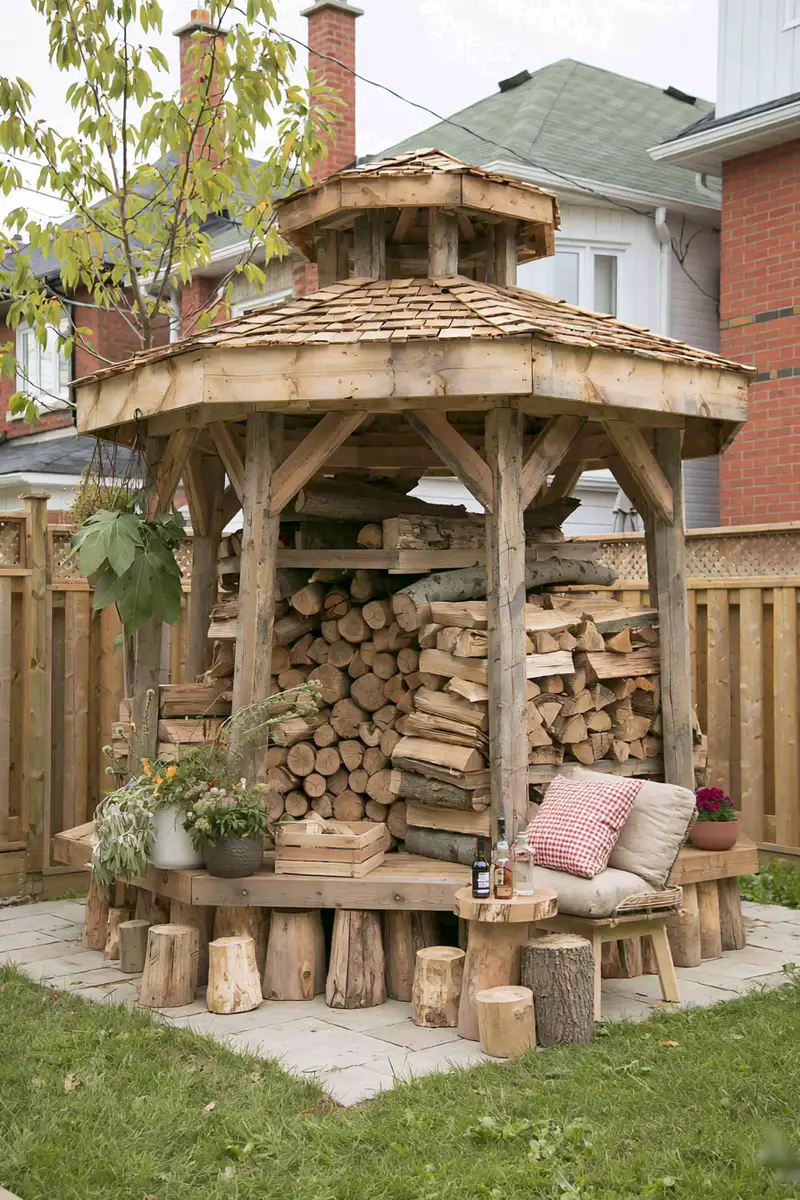
Surrendering premium backyard footage strictly for a massive wood pile feels highly inefficient. Integrating a central fuel core inside a classic pavilion cleverly pairs high-capacity winter storage with deep wrap-around seating.