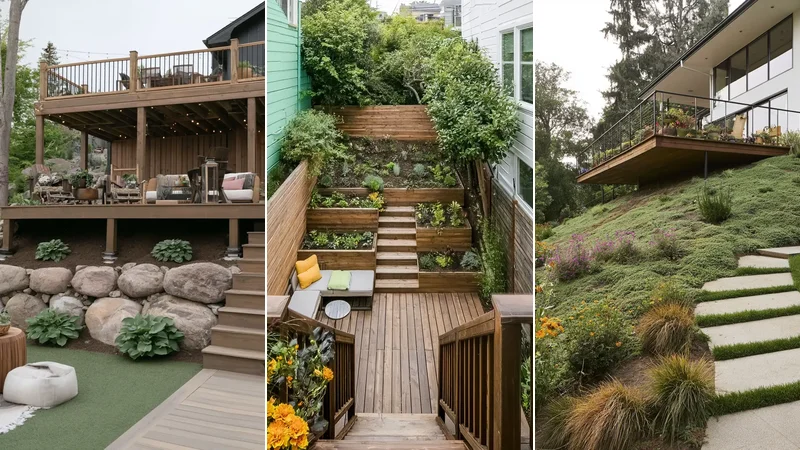
Bare wooden decks look completely unfinished when they just sit awkwardly on top of a flat lawn. You need a solid transition to anchor the structure. These smart landscaping solutions solve that harsh drop-off while permanently eliminating annoying maintenance around the base.
1. Creeping groundcover for steep drops
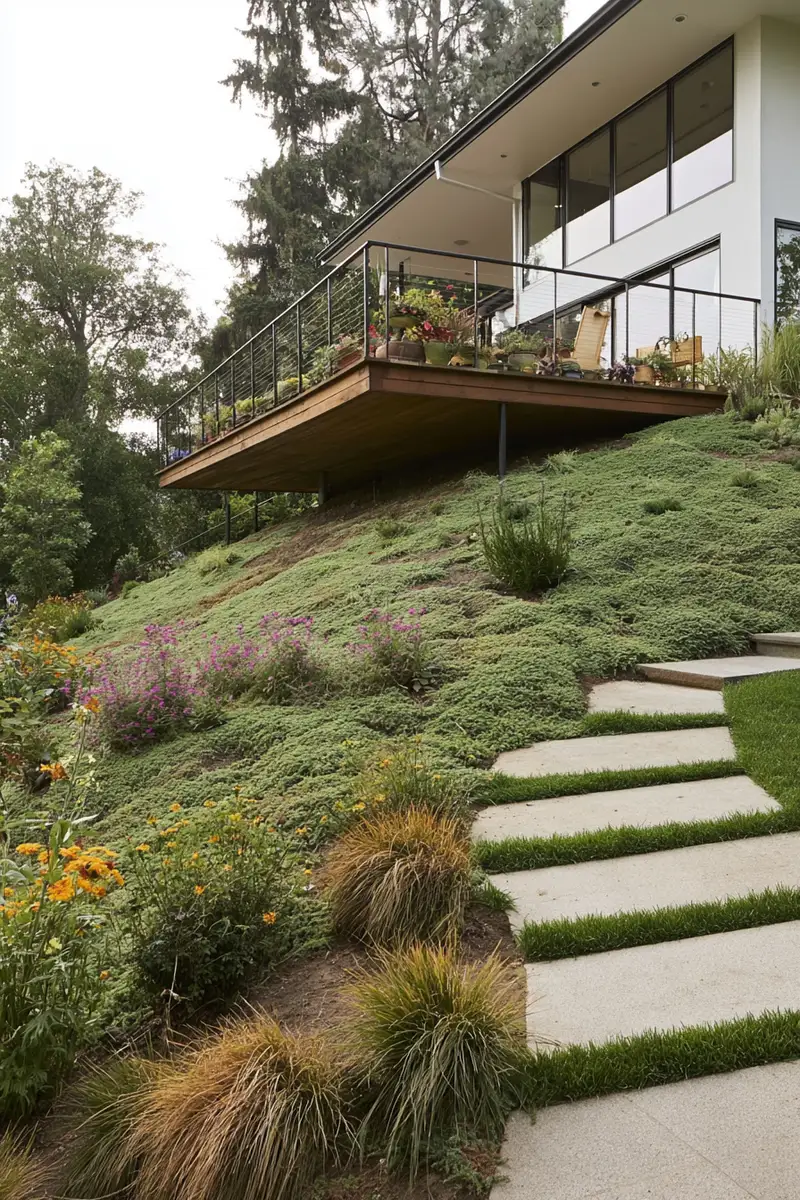
Steep slopes create erosion nightmares and awkward mowing hazards. Planting dense creeping groundcover directly beneath a cantilevered deck stabilizes the hillside instantly. It entirely eliminates grass maintenance while softening the harsh elevation drop.
2. Deep planter box barriers
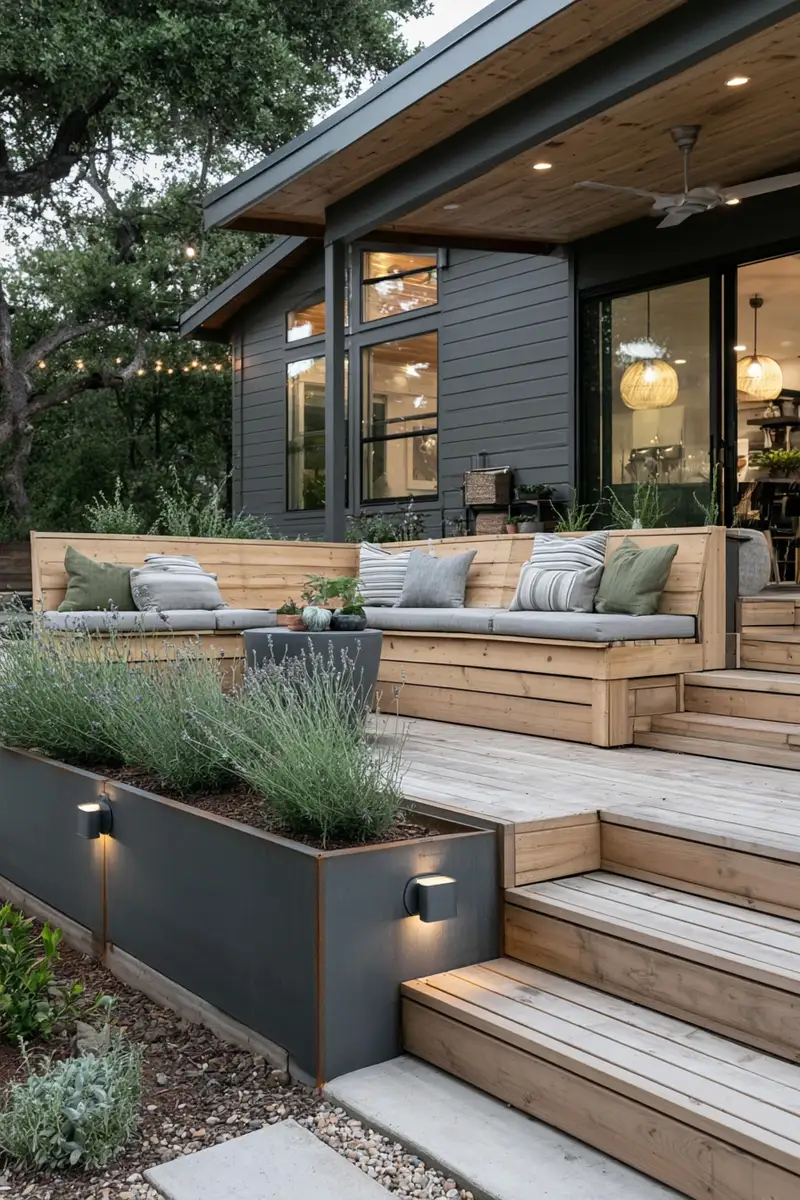
Open deck edges usually require bulky, view-blocking railings. Using deep metal planter boxes as a natural boundary defines the seating zone beautifully. Built-in lighting handles nighttime step safety seamlessly.
3. Heavy timber accents
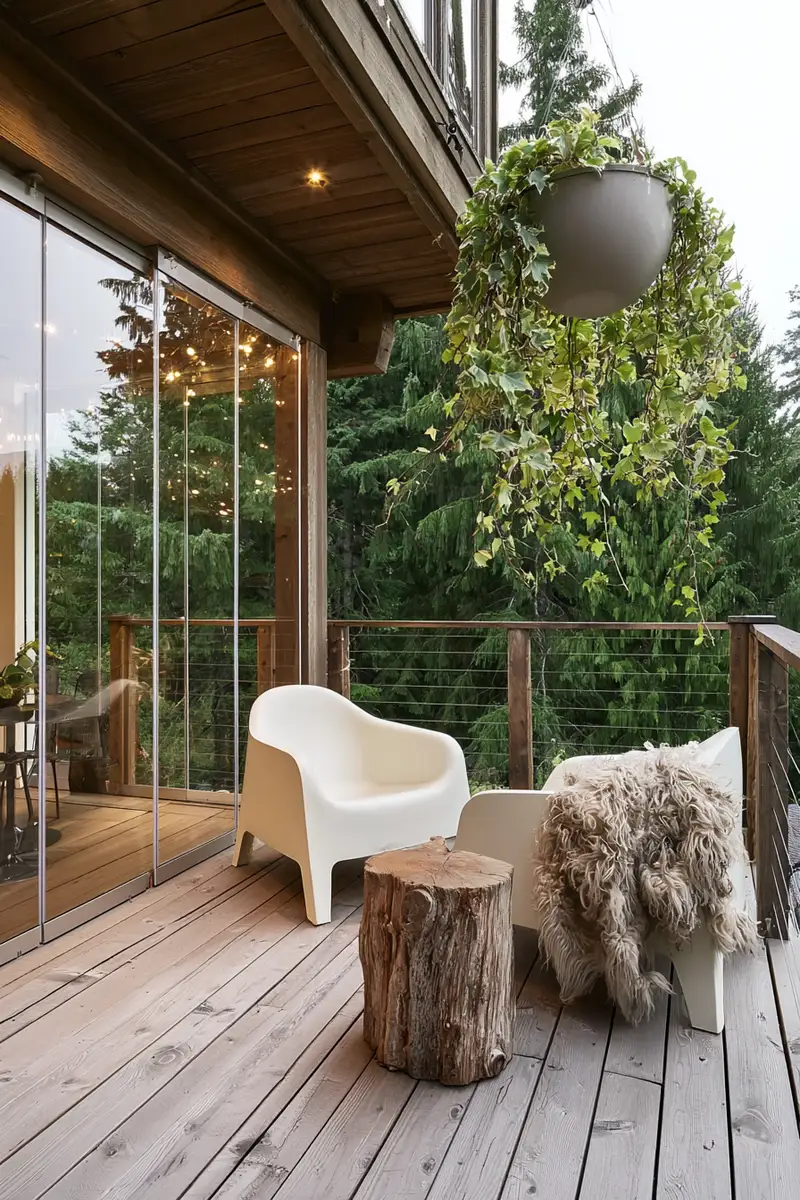
Deep wooded backyards often swallow delicate furniture. A raw timber stump table grounds the seating area perfectly, bridging the gap between the refined glass deck and the rugged evergreens.
4. The moisture-blocking rock border
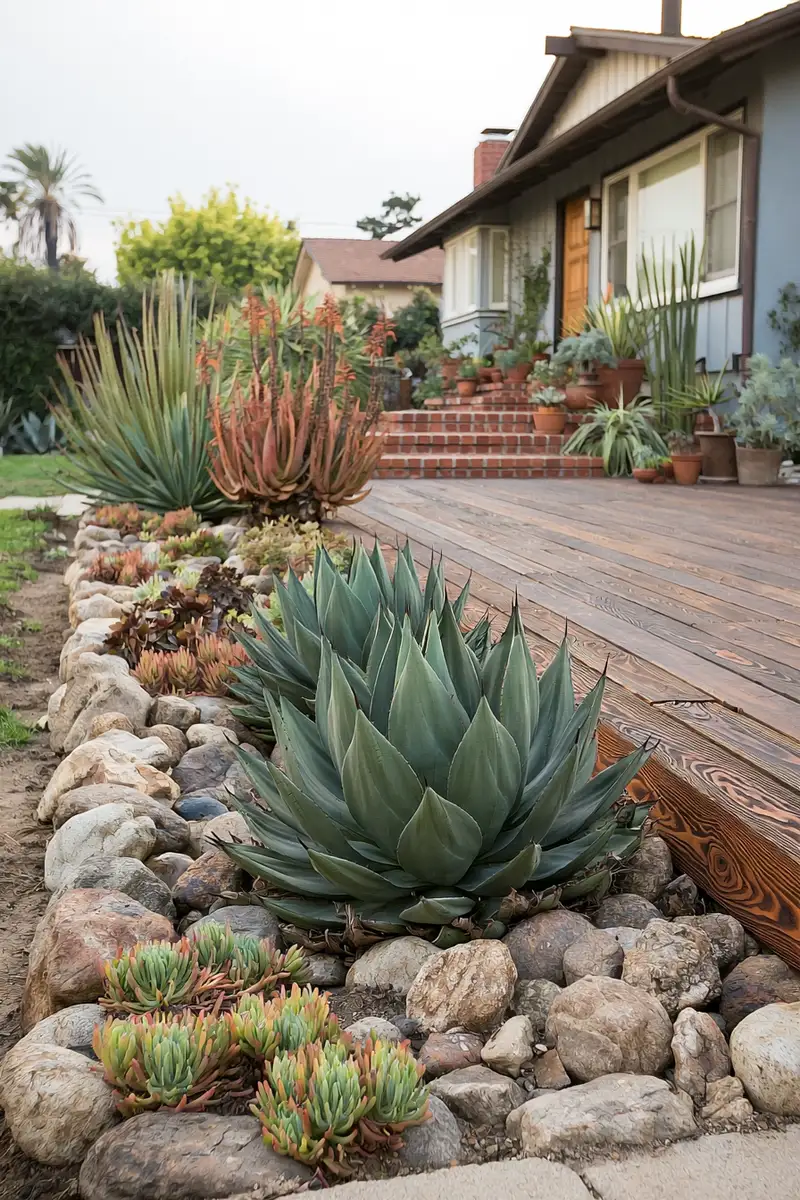
Ground-level timber decks rot quickly when pushed against damp lawns. A heavy river rock border filled with structural succulents pulls moisture away from the wood, providing a sharp, drought-tolerant transition.
5. Dissolving the deck perimeter
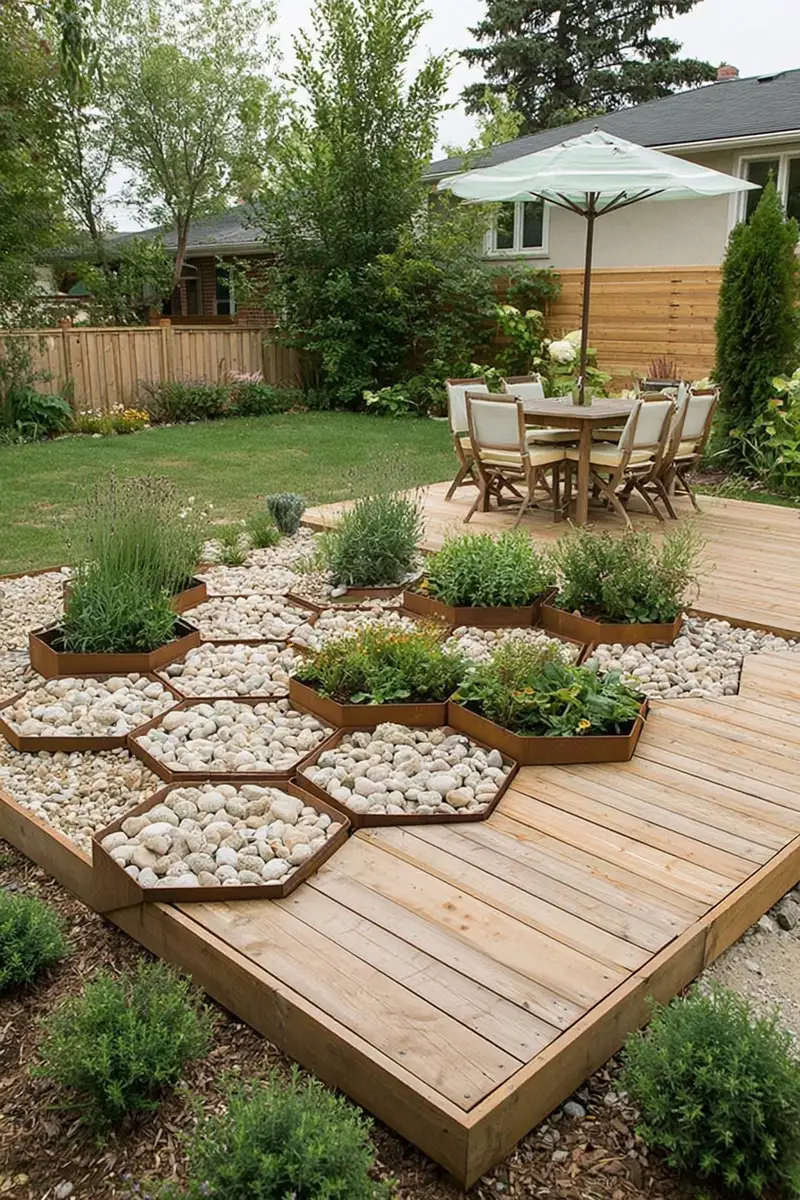
Boxy deck edges feel abruptly disconnected from the yard. Breaking the wooden boundary into geometric hexagonal planters dissolves that rigid line. This smart layout pulls gravel and soft herbs directly into the footprint.
6. Tiered retaining wall planters
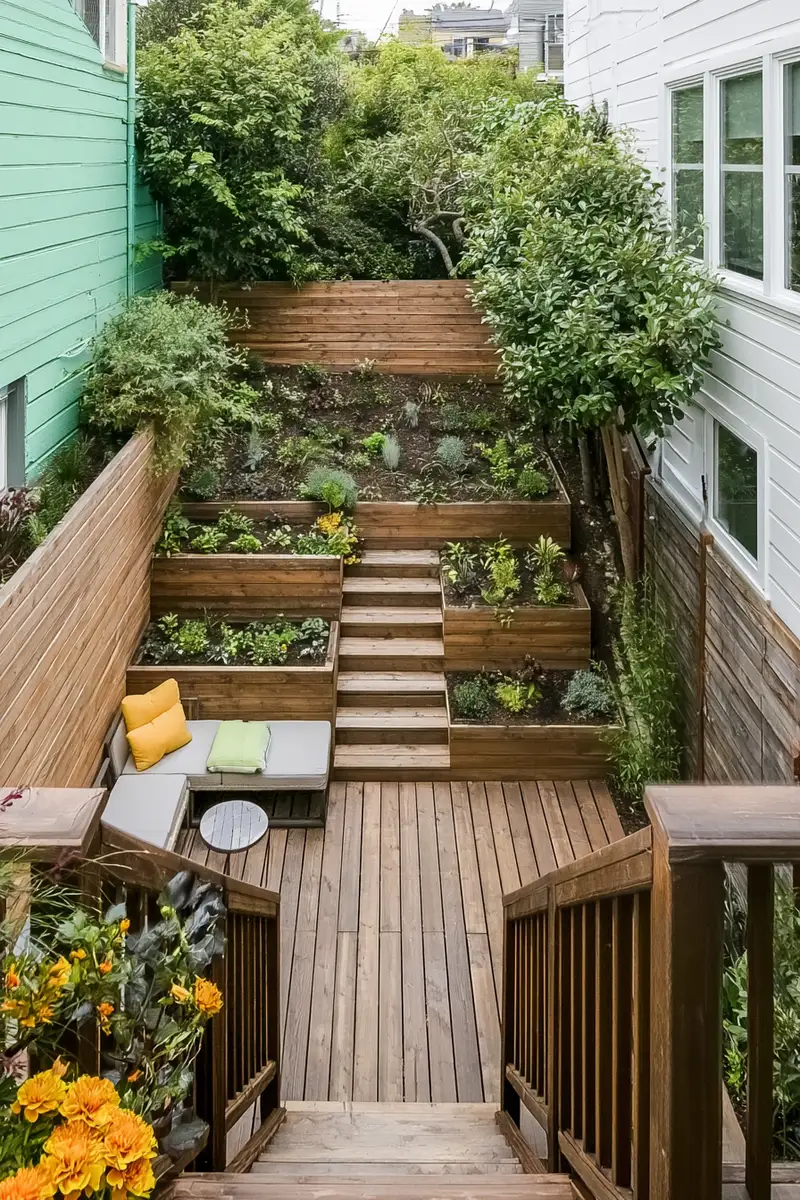
Steep urban lots easily feel claustrophobic. Tiering the sharp incline with deep timber retaining walls prevents soil collapse. It turns a hostile slope into an organized vertical garden.
7. Boulder dry creek beds
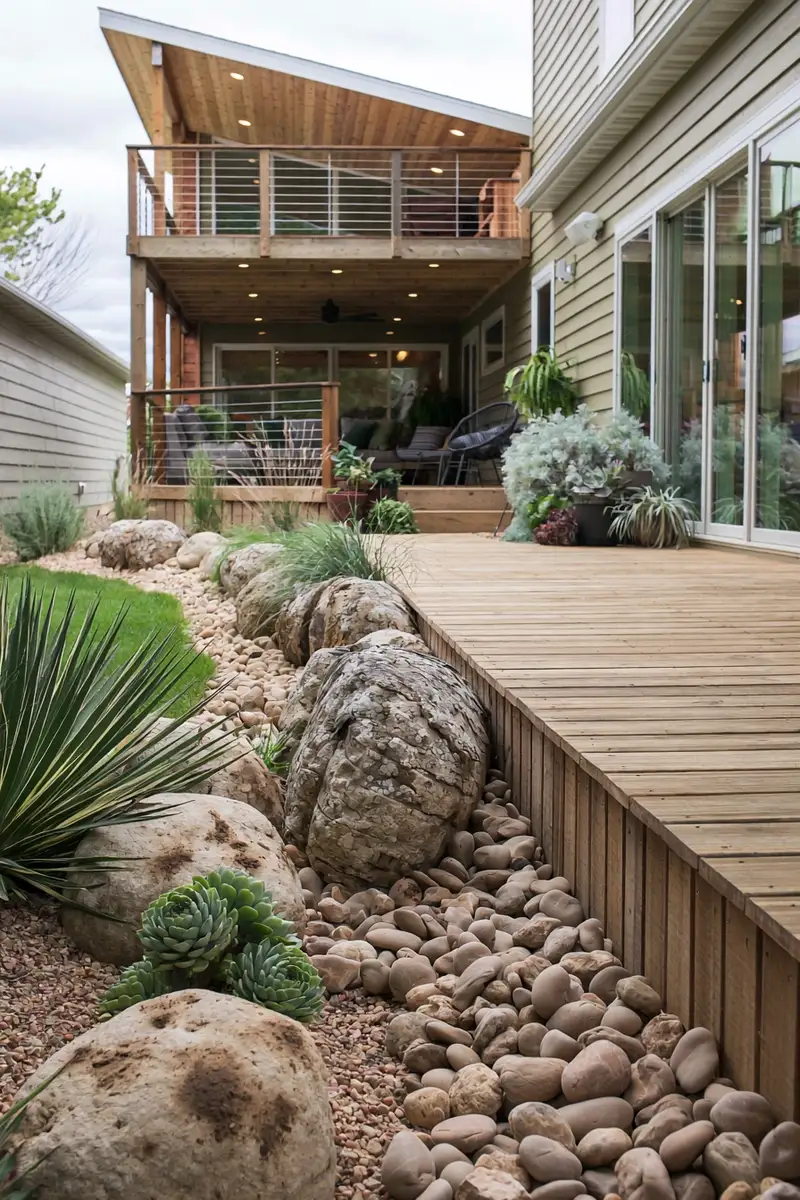
Heavy roof drainage washes out lawns alongside ground-level decking. Designing a dry creek bed with massive boulders handles runoff gracefully. This rock feature survives heavy rain and brutal droughts alike.
8. Massive fieldstone anchors
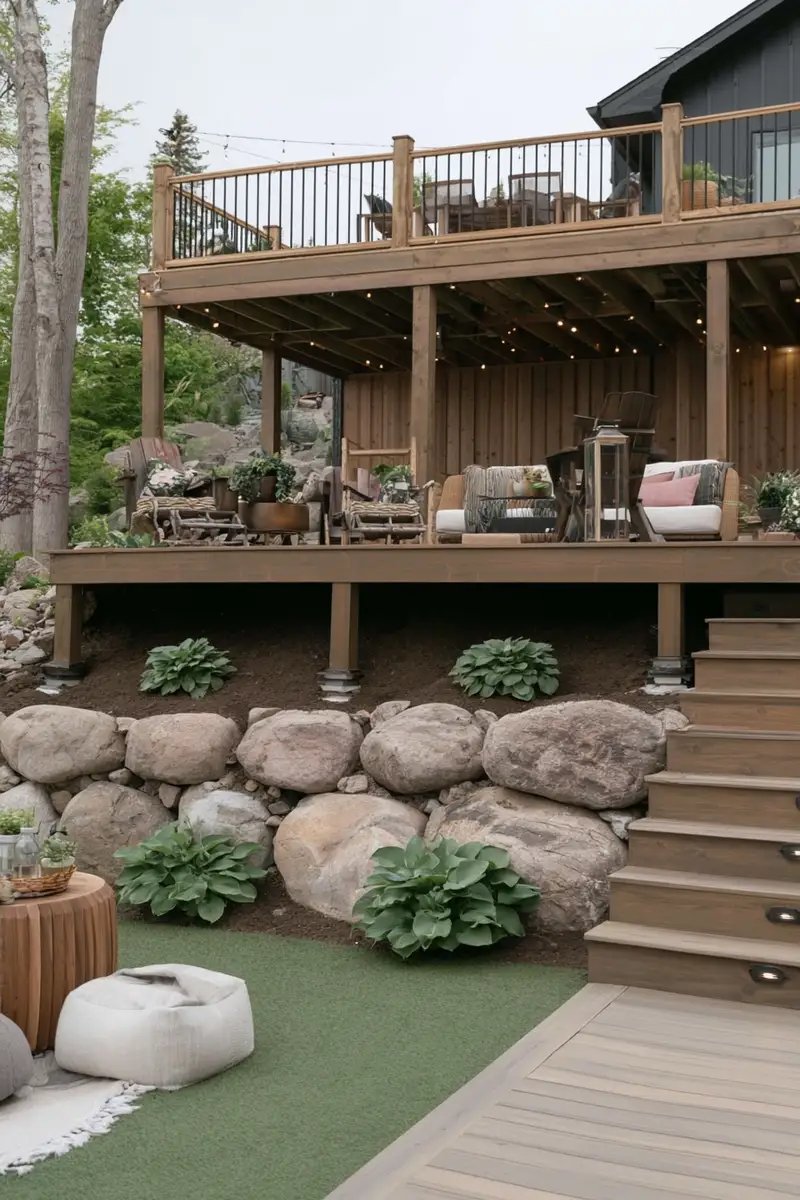
Exposed soil beneath elevated decks erodes quickly. Massive fieldstone boulders lock the grade in place permanently. Tucked-in hostas easily soften the heavy masonry.
9. The modern mower buffer
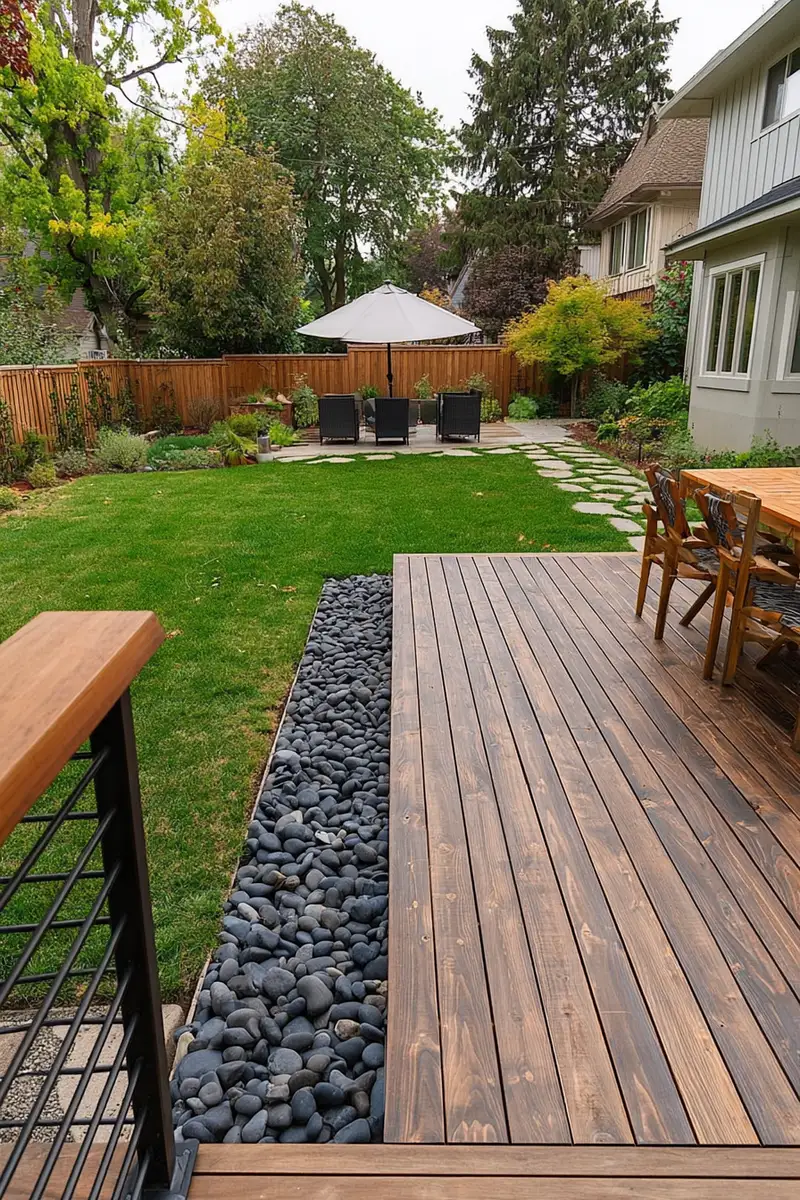
String trimmers quickly chew up low wooden deck borders. Installing a narrow trench filled with oversized dark river stones creates a foolproof mower buffer. It keeps the timber dry and looks sharply modern.
10. Natural rock slab walls
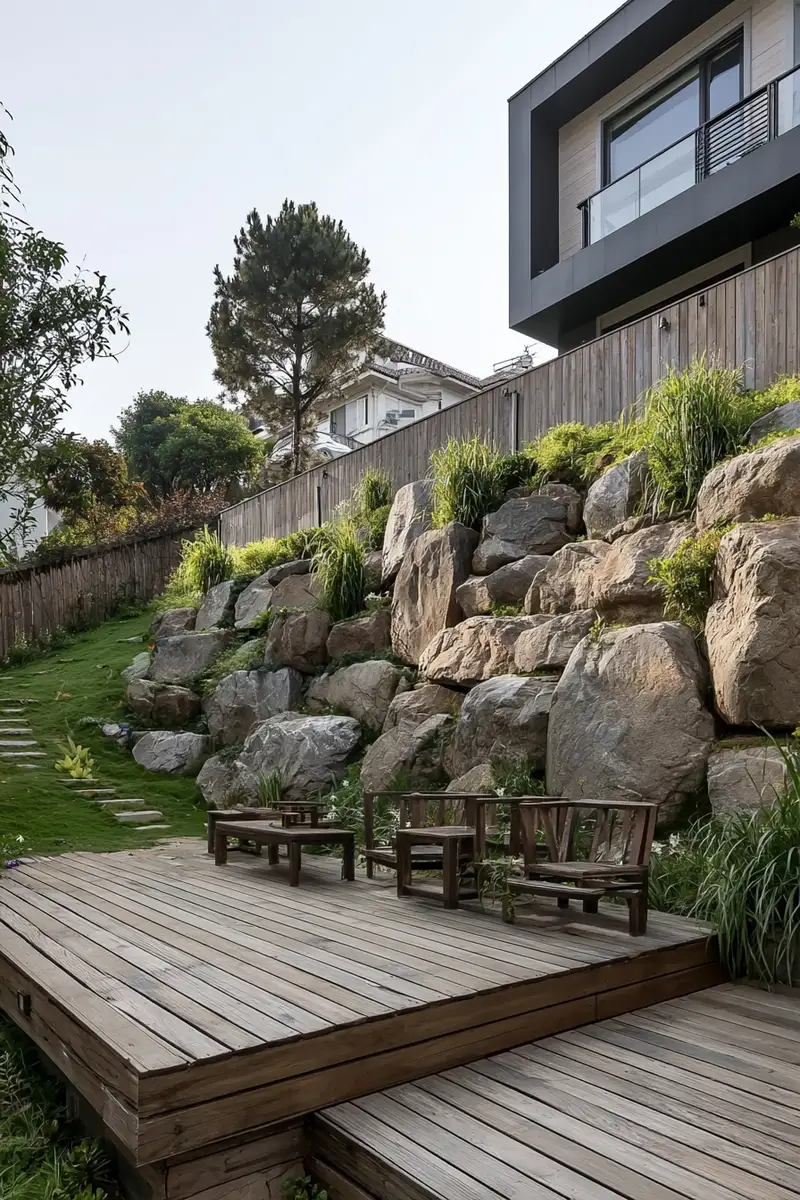
Securing a severe hillside usually demands harsh industrial concrete. Stacking gigantic natural rock slabs builds a dramatic, cliff-like retaining wall instead. It locks the earth down and frames the wooden deck beautifully.
11. Built-in deck perimeter seating
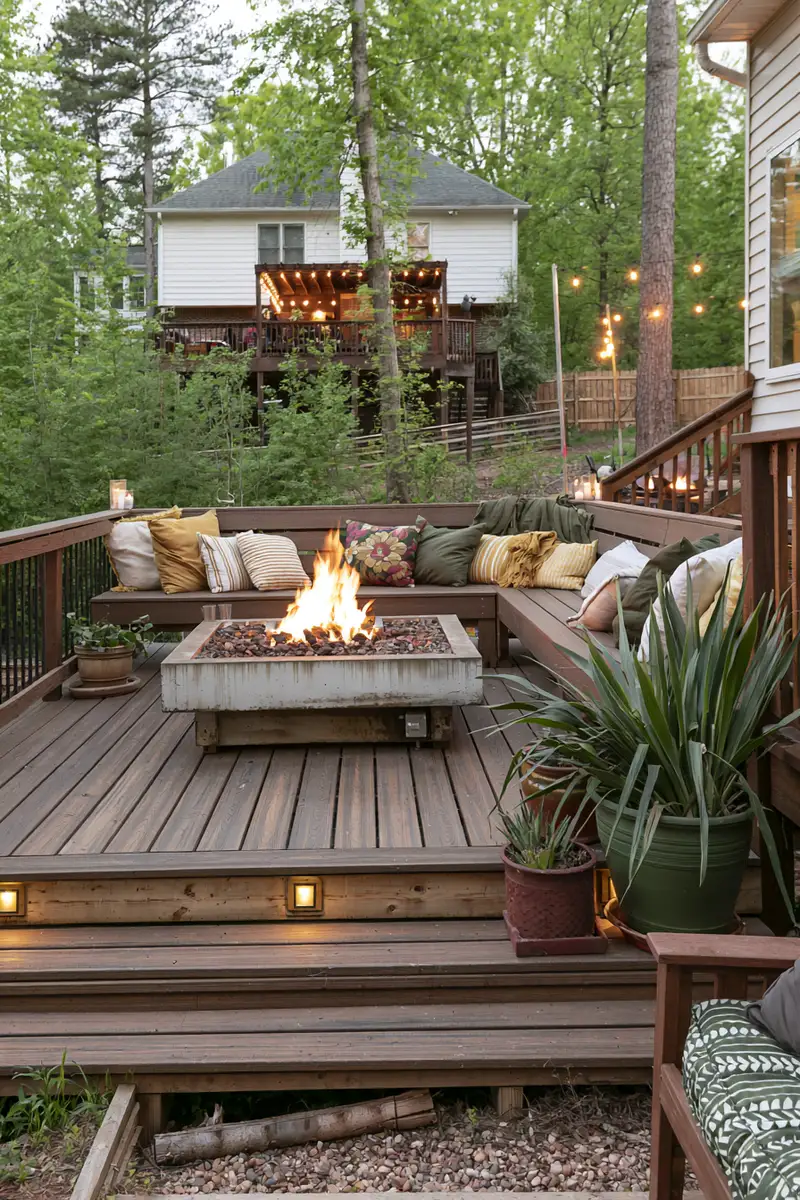
Loose chairs around an open fire pit constantly clutter the deck floor plan. Integrating a massive wrap-around wooden bench directly into the railing structure solves this instantly. It maximizes guest capacity while acting as a safe, solid boundary.
12. Taming steep yard drop-offs
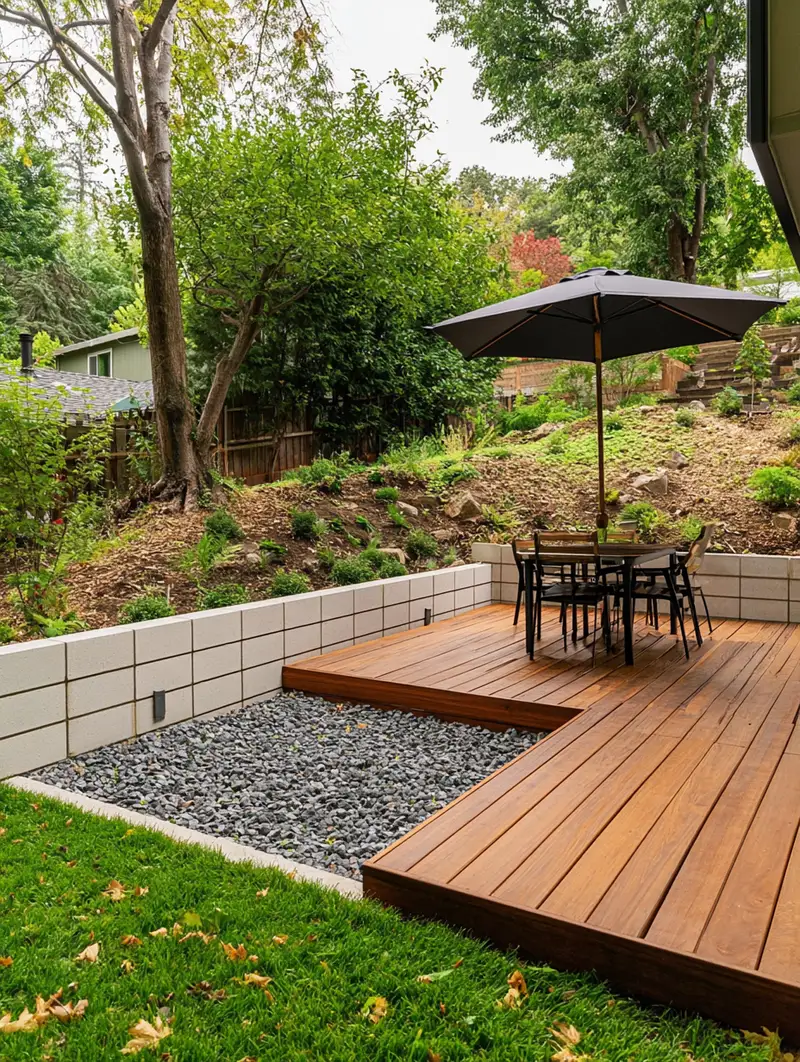
Sloped dirt quickly ruins flat dining zones. This sharp retaining wall blocks the mud entirely, and the gravel pit handles heavy runoff.
13. The zero-mow transition buffer
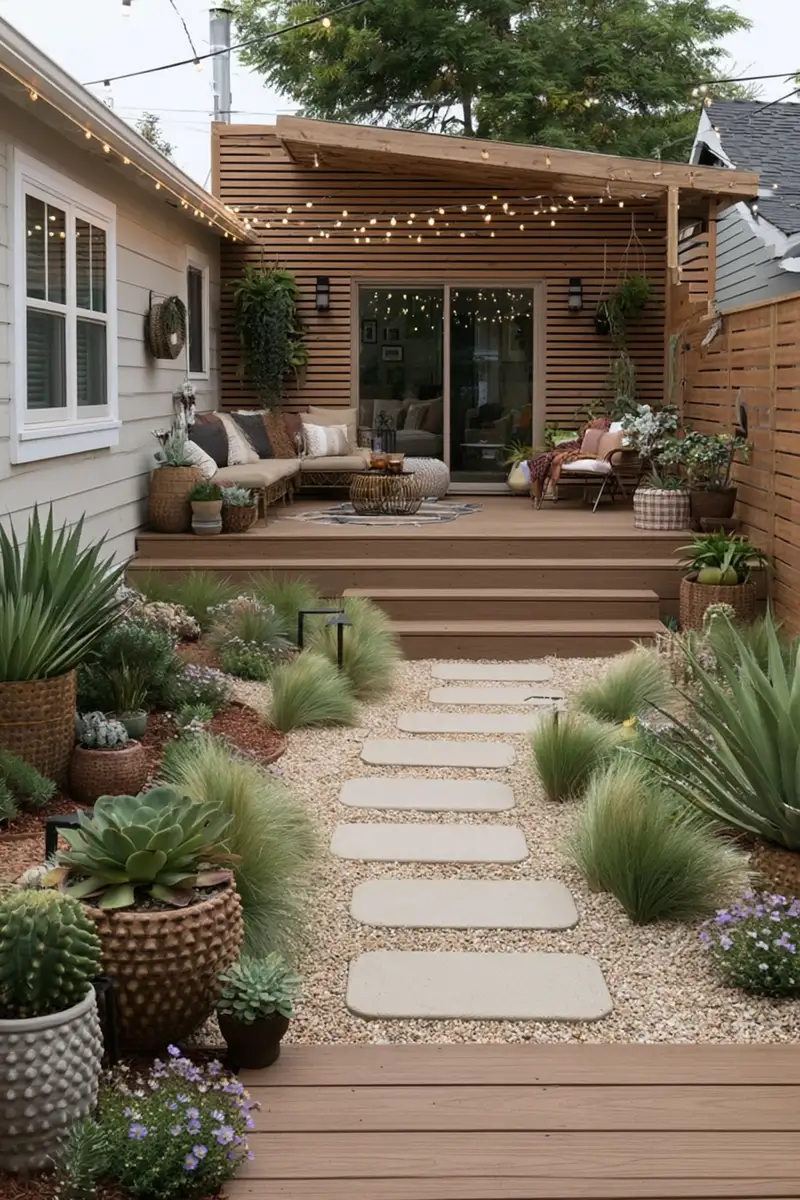
Maintaining grass against low wooden steps guarantees annoying weekly trimming. Swapping that high-maintenance border for crushed gravel and drought-tolerant succulents builds a highly practical, zero-mow transition. It visually anchors the floating deck to the earth.
14. Softening tight urban courtyards
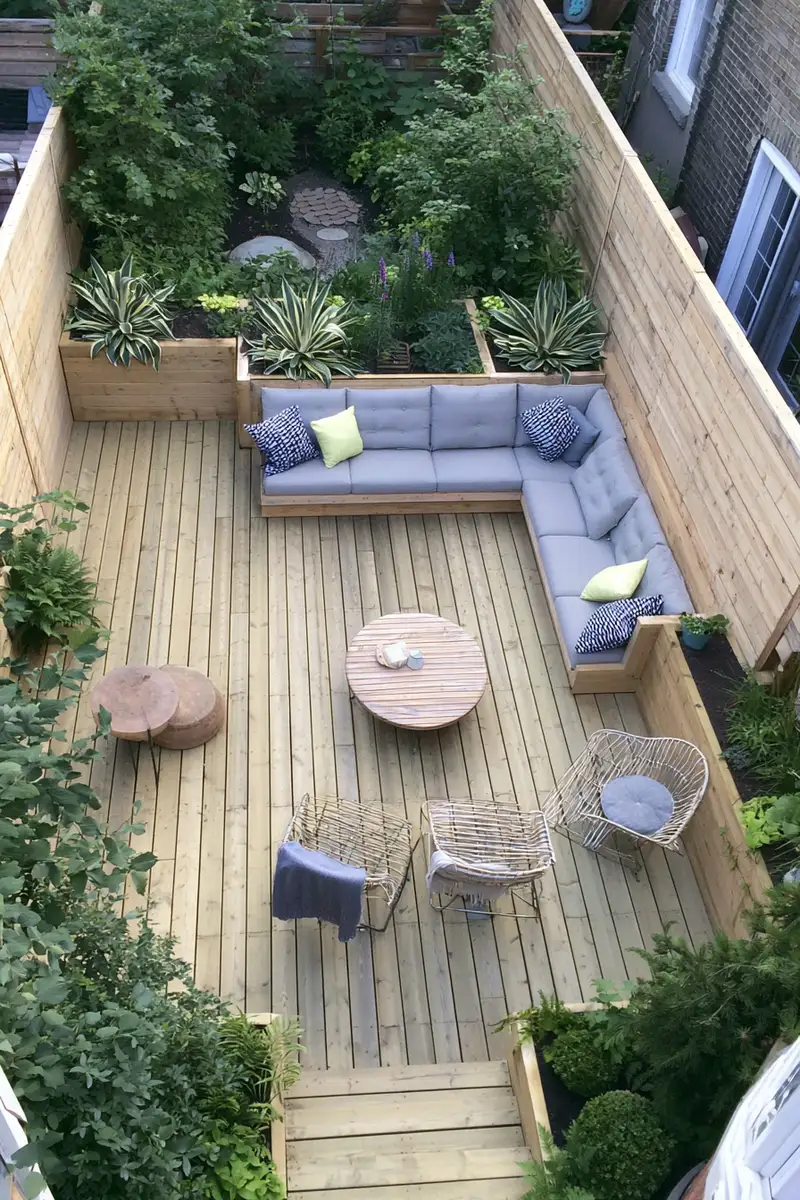
Tall urban fences easily feel claustrophobic. Pushing raised planters to the extreme perimeters softens those rigid wooden boundaries without sacrificing central floor space.