Buying brand new paving materials drains a landscaping budget instantly. That fresh masonry often looks completely out of place in an established yard anyway. Reclaimed materials solve both issues beautifully. Weathered clay adds instant history and rich texture to boring dirt patches. Explore these smart ways to use old brick in your garden. This is serious inspiration for adding permanent, timeless character.
1. Elevated drainage for desert plants
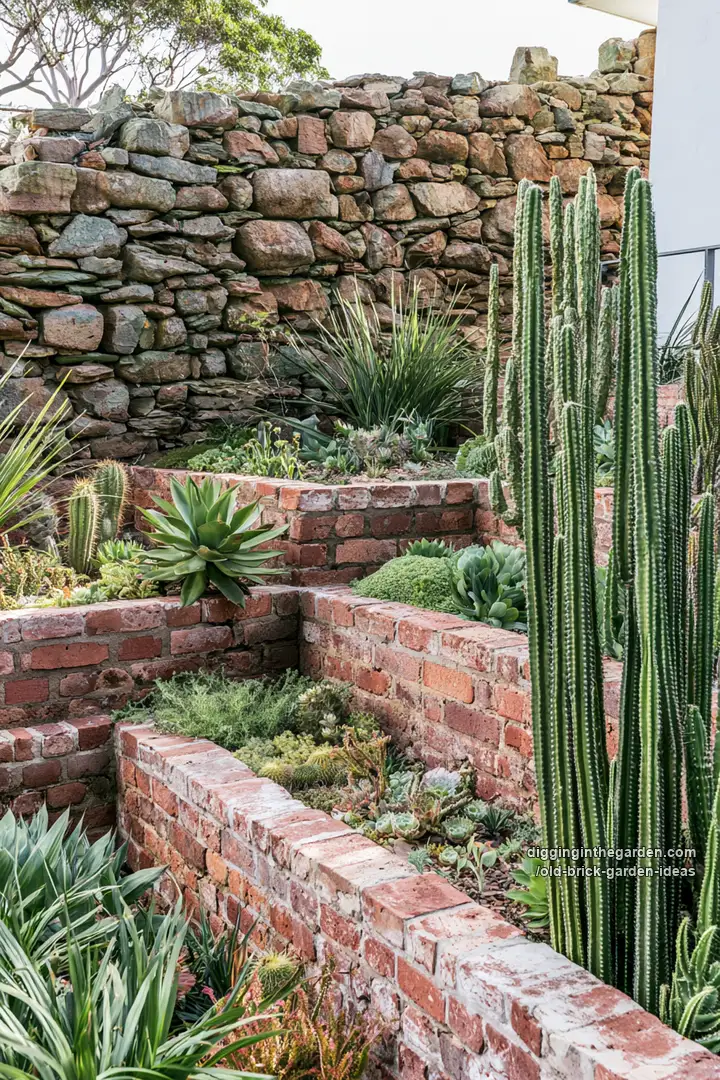
Flat ground holds too much water for desert species. Staggered brick planters solve this by elevating the root zone. The porous material provides perfect drainage and absorbs daily heat, keeping succulents completely dry and thriving.
2. An indestructible potting station

Flimsy outdoor sinks rot fast. Resting a heavy concrete basin on salvaged brick pillars creates a permanent, weather-proof wash station. It handles heavy mud easily.
3. Taming steep grassy hills with shallow treads

Mowing steep slopes is dangerous and leads to major soil runoff. Slicing shallow brick treads into the incline fixes the terrain. It locks the dirt in place and breaks a risky hill into safe, highly walkable turf terraces.
4. The zero-cost patio plinth

Light side tables always blow over. Stacking leftover bricks forms a heavy, immovable pedestal. Pure function.
5. Protecting tree trunks from mower damage

Trimming right against trees ruins bark and kills roots over time. A flush brick border establishes a safe wheel path for the mower. It keeps the lawn cleanly separated from the inner ground cover without needing plastic edging.
6. A porous fountain base

Elevating a heavy stone fountain usually demands expensive masonry. Dry-stacking old bricks builds a rugged, stable base for free. It lets splashing water drain instantly straight into the gravel below.
7. Anchoring heavy garden accents

Standard birdbaths sink and tilt in soft soil. A thick, dry-stacked brick column provides a rock-solid anchor.
8. Containing messy gravel walkways
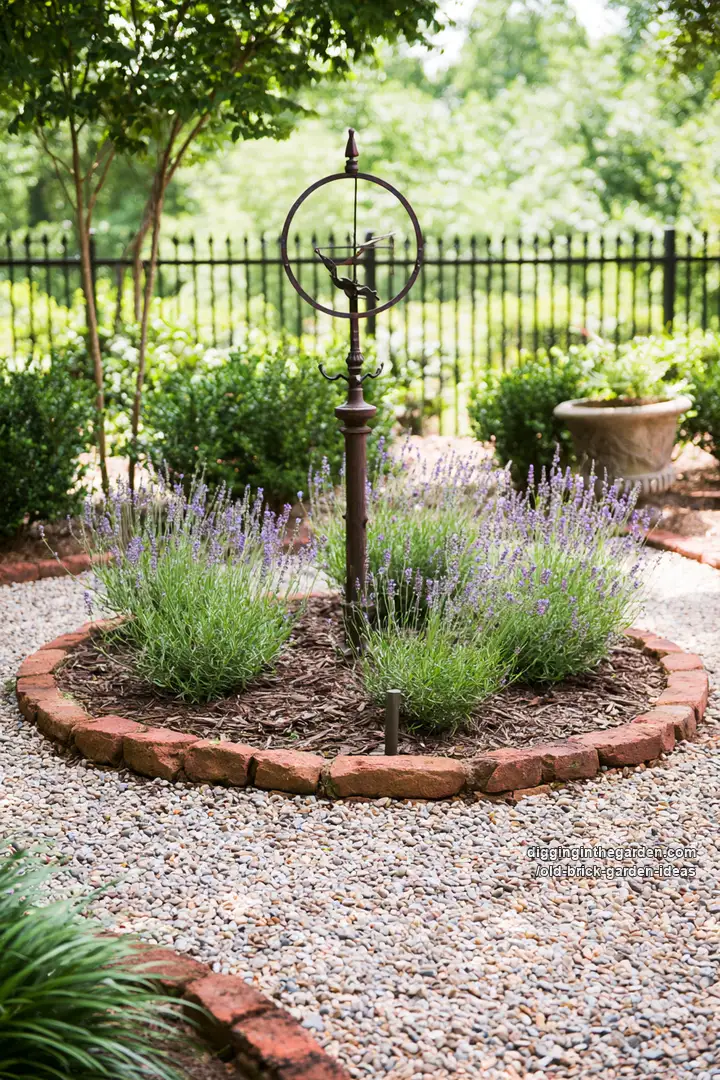
Loose gravel paths constantly spill into soft planting beds. A single row of raised brick acts as a strict physical barrier. It keeps the stones totally contained while sharply defining the central planting zone.
9. Keeping timber benches bone-dry

Wooden seating rots quickly when placed directly against damp soil. Using old brick as the actual retaining wall keeps the floating timber bench completely dry. It solves the moisture problem seamlessly.
10. Slip-resistant shaded walkways

Heavy foot traffic turns shaded dirt paths into slippery mud traps. Laying weathered bricks directly through the gravel creates a solid, highly textured walking surface. It manages heavy rain without ever forming puddles.
11. Stabilizing pond edges

Muddy pond banks erode quickly and cloud the water. Framing the water feature with reclaimed brick locks the soil firmly in place. It provides a clean, architectural border while preventing dirty runoff during heavy rain.
12. A built-in firewood rack

Loose firewood stacks rot fast and look terrible. Building a dedicated brick storage rack keeps logs dry, elevated, and perfectly organized.
13. Indestructible mailbox pillars
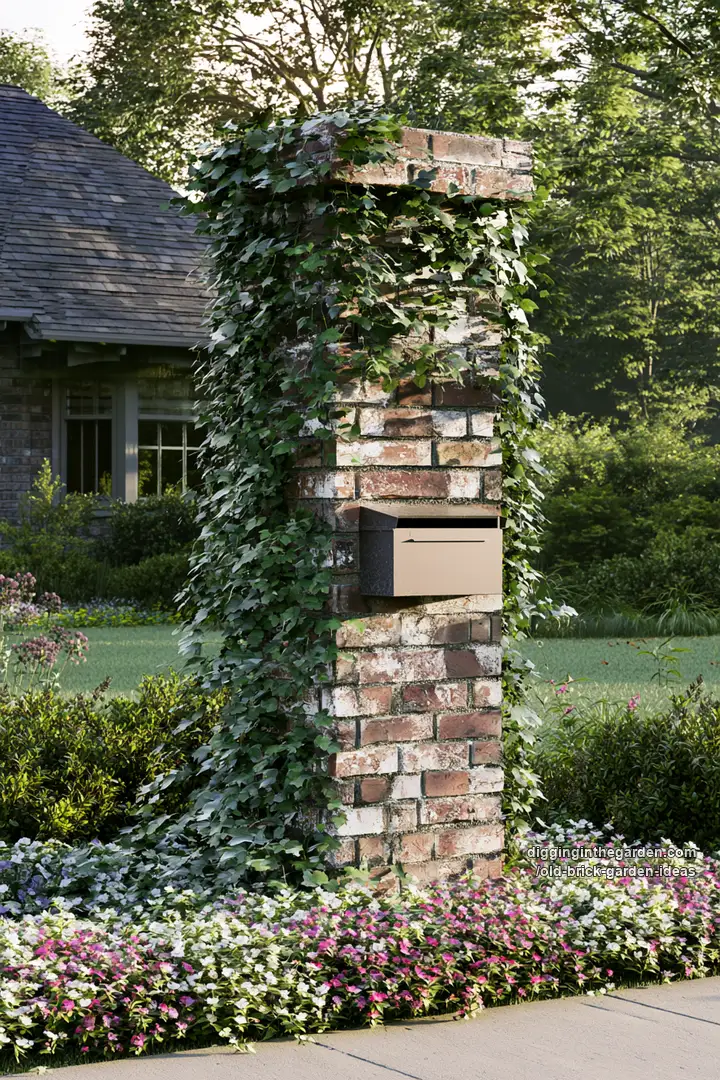
Flimsy metal mailbox posts constantly lean or snap in bad weather. A solid brick column offers total permanence. It grounds the front yard visually and acts as a sturdy trellis for aggressive ivy.
14. Rot-proof raised vegetable beds for the yard

Standard wooden planter boxes decay rapidly when exposed to constant soil moisture. Constructing raised vegetable beds from old brick completely eliminates that replacement cycle. The masonry absorbs daytime heat to boost root growth while lasting absolutely forever.
15. Fire-safe outdoor ovens

Building an outdoor kitchen requires serious heat resistance. Reclaimed brick is the ultimate fire-safe material for a custom pizza oven. It holds heat brilliantly.
16. Vertical herb spirals

Invasive herbs like mint easily choke out flat garden beds. Stacking bricks into a tiered spiral contains aggressive roots perfectly. This layout maximizes planting area in a tiny footprint while making harvesting much easier.
17. The permanent fire ring

Cheap metal fire pits rust out after one season. A heavy brick fire ring contains the flames safely and permanently. It seamlessly connects to the paved patio.
18. Guiding foot traffic softly

Solid concrete walkways often look way too harsh in a lush garden. Laying a narrow, broken track of aged brick provides a clear, mud-free walking route. It guides foot traffic gently without ruining the wild aesthetic.
19. Supporting heavy climbers

Weak wooden trellises snap under the weight of mature climbing shrubs. A solid brick boundary wall easily handles heavy hydrangeas.