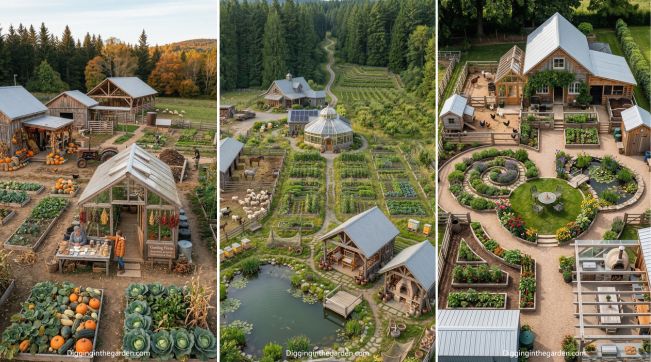
Starting a hobby farm on a small piece of land can feel exciting… and a little overwhelming at the same time. When space is limited, every corner matters. The chicken coop, garden beds, compost area, and small barn all need to work together without making the property feel crowded or chaotic. That’s where a thoughtful hobby farm layout makes all the difference.
A well-planned layout helps a small farm run smoothly while still leaving room for beauty and comfort. Paths stay practical, animals have enough space, and gardens remain easy to manage. Even a compact homestead can feel organized and productive when everything is placed with intention.
1. Multi-Level Barn with Integrated Rooftop Garden
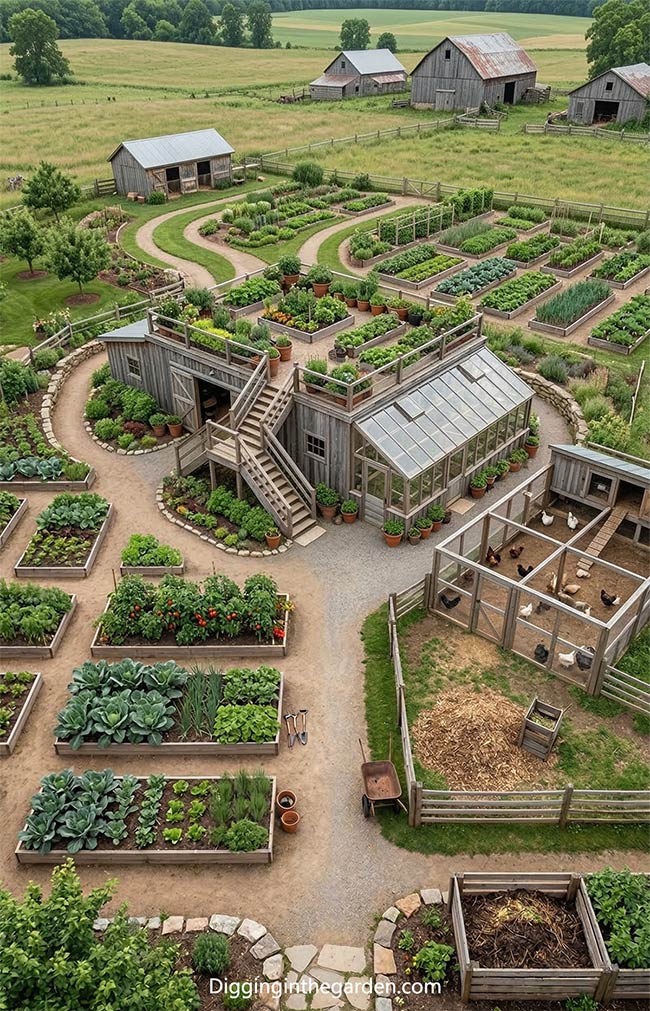
Building a multi-level barn with a rooftop garden is the ultimate way to maximize every square foot on a compact hobby farm. This design uses the roof for heat-loving vegetables while the ground floor manages animal stalls and greenhouse propagation. I’ve found that using vertical stairs to connect these zones makes daily chores feel like a brisk, high-productivity workout.
2. Symmetrical Path Layout with Sheep Paddock
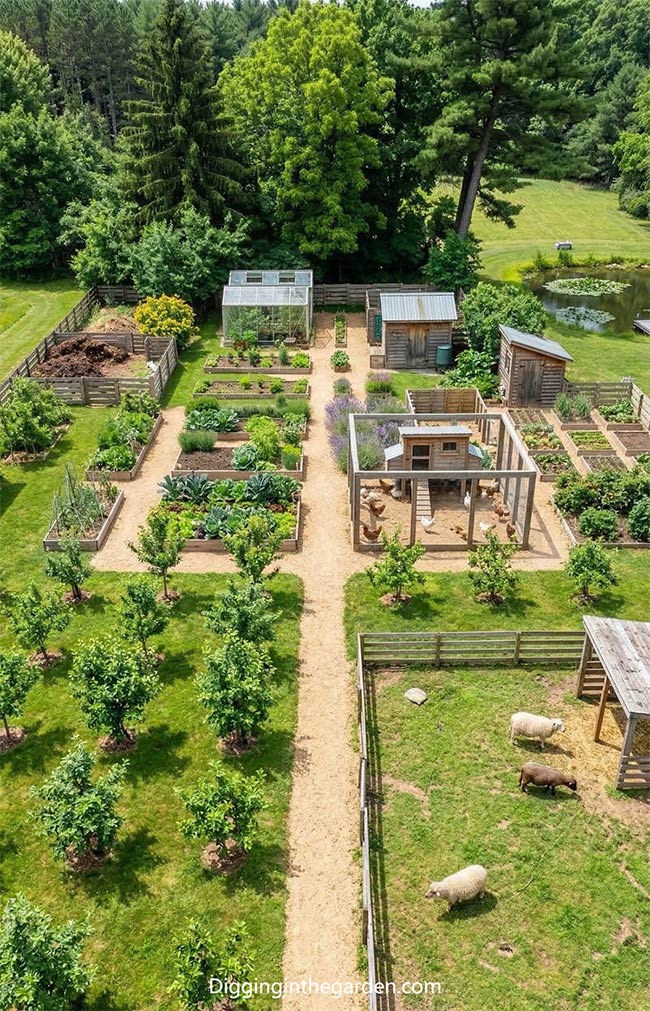
A long central path provides clear visual order and easy wheelbarrow access between your vegetable beds and the sheep paddock. It’s a classic layout that simplifies rotational grazing management.
3. Rustic Courtyard with Outdoor Pizza Oven & Rabbit Hutch
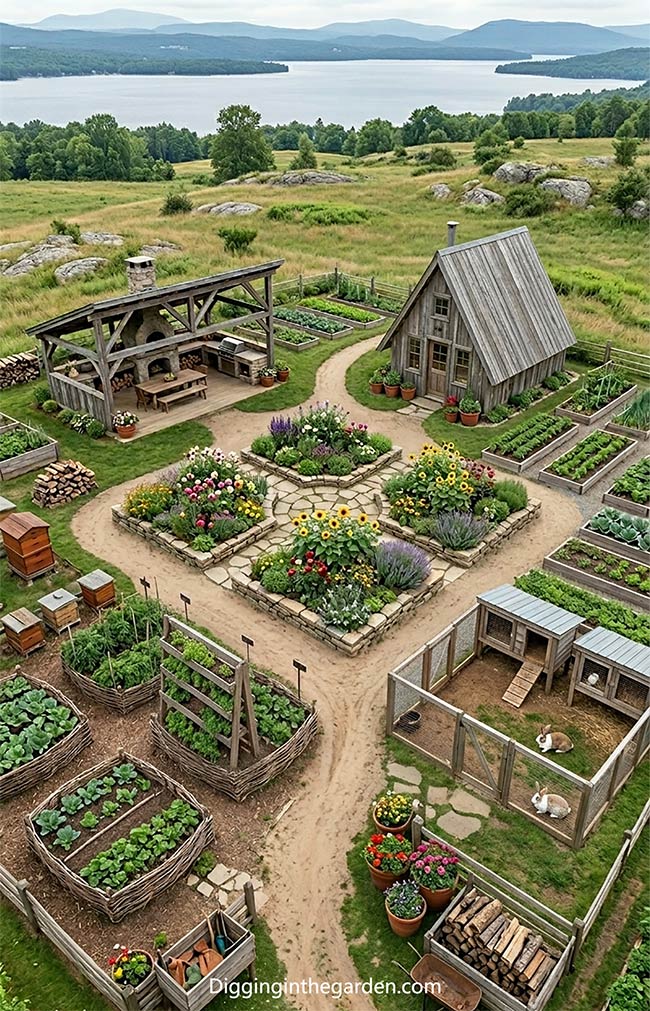
Combining a productive harvest with a social hub is the secret to a farm that doesn’t feel like a chore. This courtyard features symmetrical stone-edged beds radiating from a central floral focal point, all within view of a professional outdoor pizza oven. Integrating the rabbit hutch and beehives into the same fenced area creates a cohesive ecosystem where everything is within arm’s reach for the busy homesteader.
4. Comprehensive Hobby Farm with Goat Pen & Tiered Beds
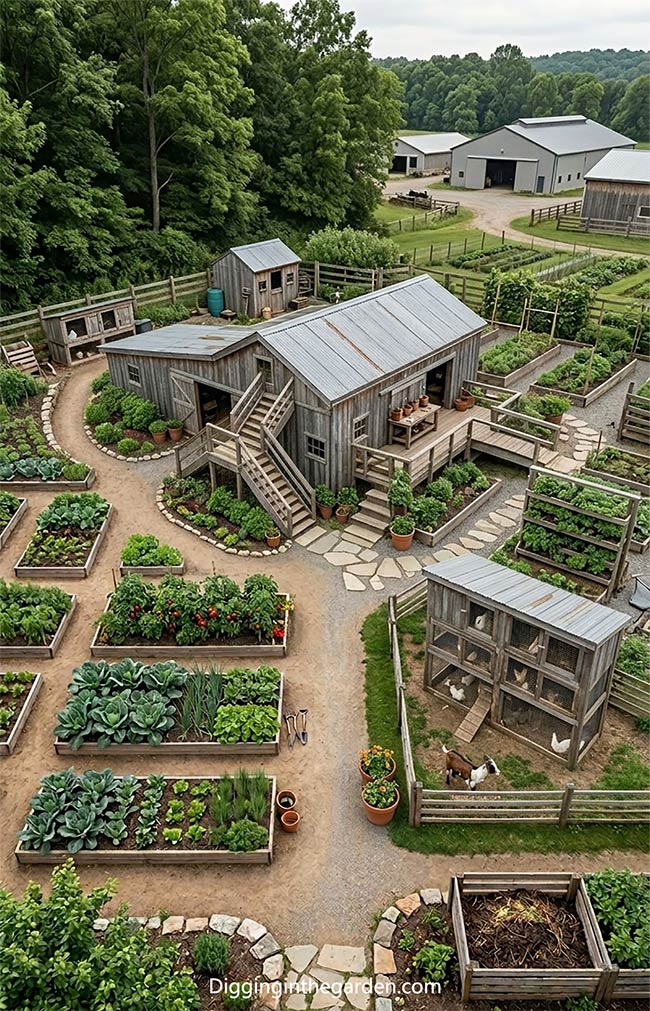
If you’re dealing with varying elevations, staggered wooden decks and tiered beds are essential for keeping your livestock and crops organized. Placing the goat pen on a lower level ensures you have a clear sightline to your seedlings from the main barn porch.
5. Eco-Village Tiny House Circle with Central Pond
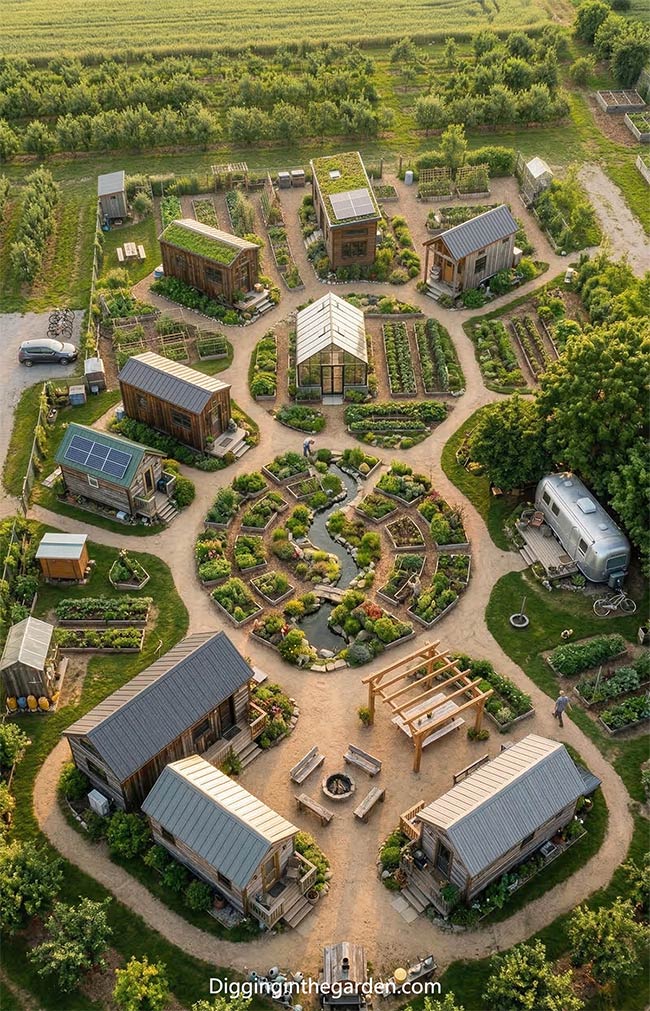
This eco-village layout arranges tiny houses in a protective circle around a central winding pond. It’s a brilliant way to create a community atmosphere while giving everyone their own private garden plot.
6. Gravel Path Vegetable Oasis with Greenhouse Vista
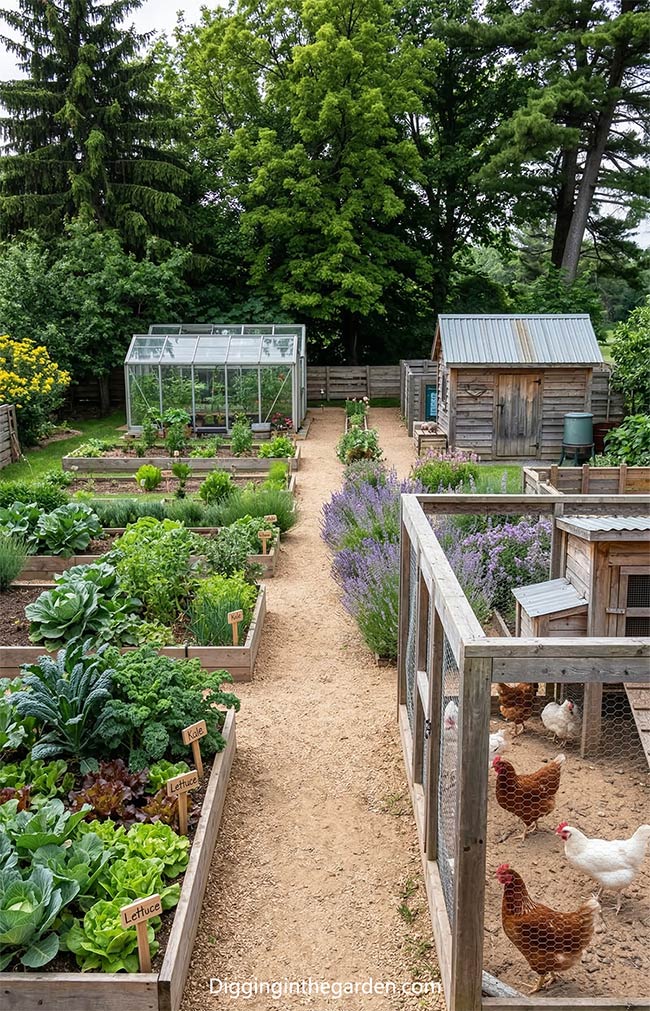
Lining your main gravel walk with fragrant lavender and thriving kale creates a sensory journey toward your greenhouse. It is a simple but high-impact way to make a functional farm feel like a manicured estate.
7. Modern Green-Roof Studio with Duck Pond Sanctuary
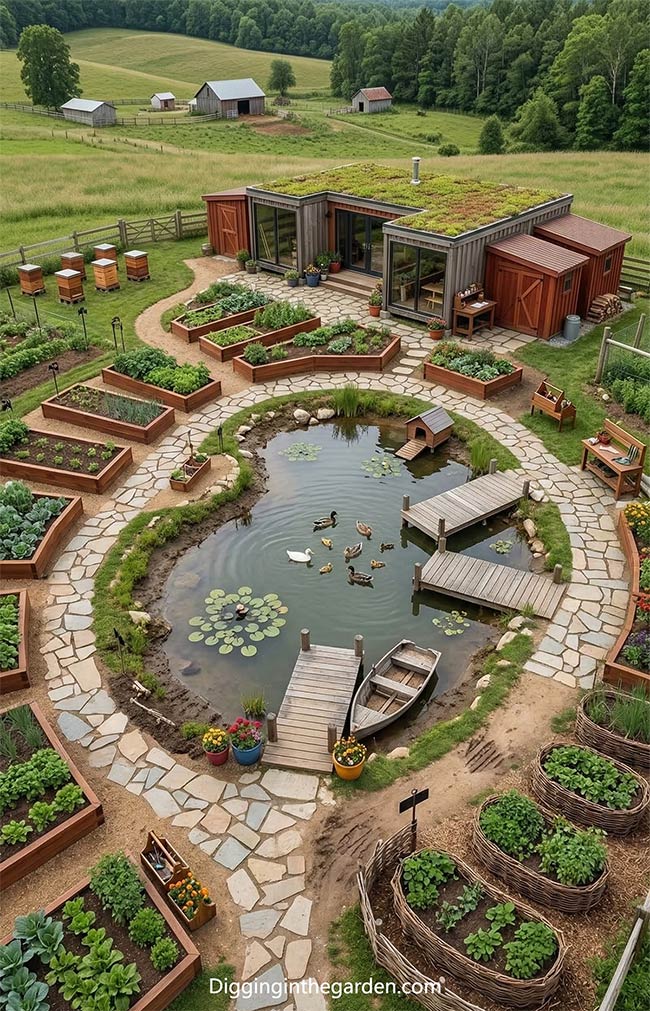
Utilizing container-style buildings with living green roofs offers a modern, high-tech solution for a luxury duck sanctuary. The stone-lined pond acts as a natural irrigation source for the surrounding raised beds, creating a closed-loop system that is both sustainable and visually stunning. From my experience, adding a small wooden dock gives you a peaceful spot to observe the ducklings while you plan your next crop rotation.
8. Terraced Hillside Retreat with Glass Greenhouse
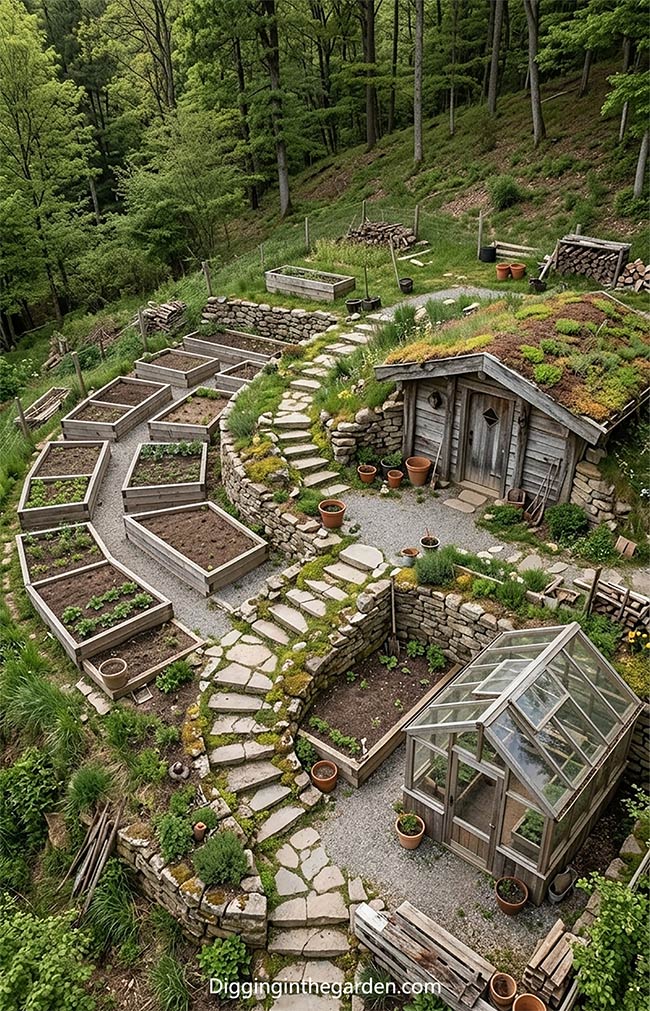
Building a glass greenhouse directly into a steep hillside provides incredible natural insulation for year-round growing. It is a masterpiece of sloped engineering that turns a difficult terrain into a highly efficient micro-farm.
9. Underground Root Cellar with Hillside Terrace Harvest
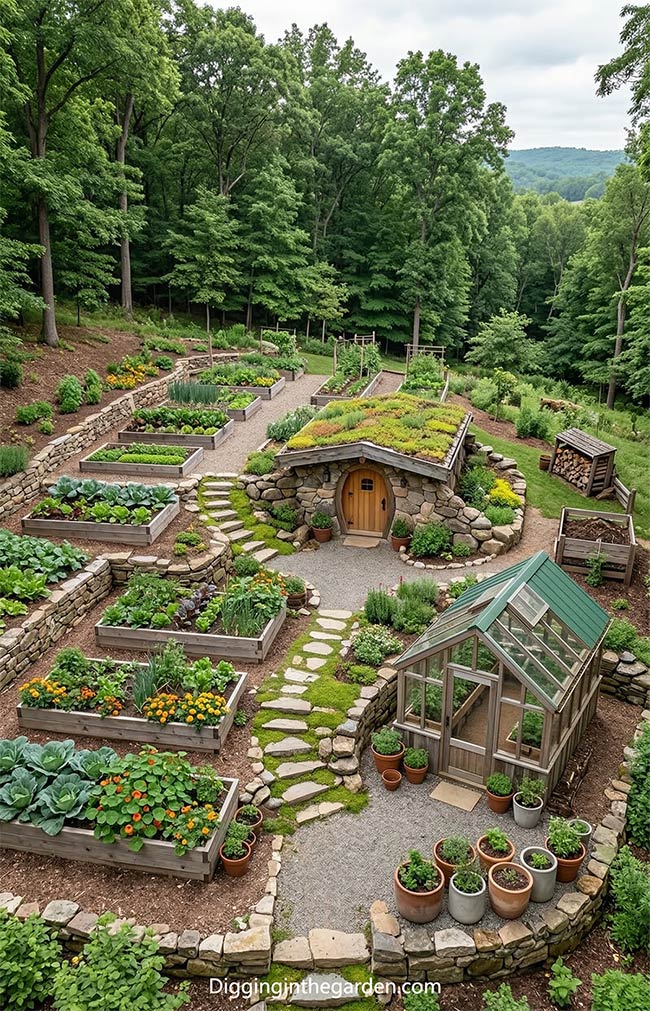
This “Hobbit-style” underground root cellar keeps your harvest cool while the rooftop succulents prevent soil erosion on the steep slope. Staggered stone terraces provide perfect drainage for large-scale brassica planting.
10. Clean-Line Wooden Bed Layout with Chicken Coop
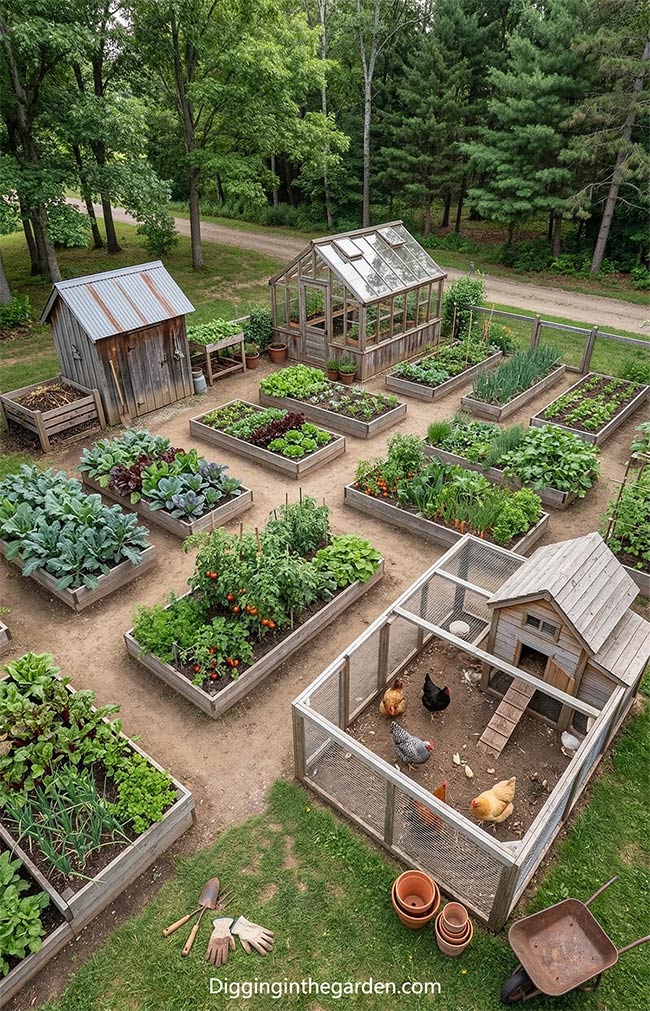
For those who crave total symmetry, these clean wooden raised beds and a modern walk-in chicken coop are perfection. This organized grid makes it incredibly easy to track soil health and pest management across different vegetable varieties.
11. Expansive Multi-Species Paddock System
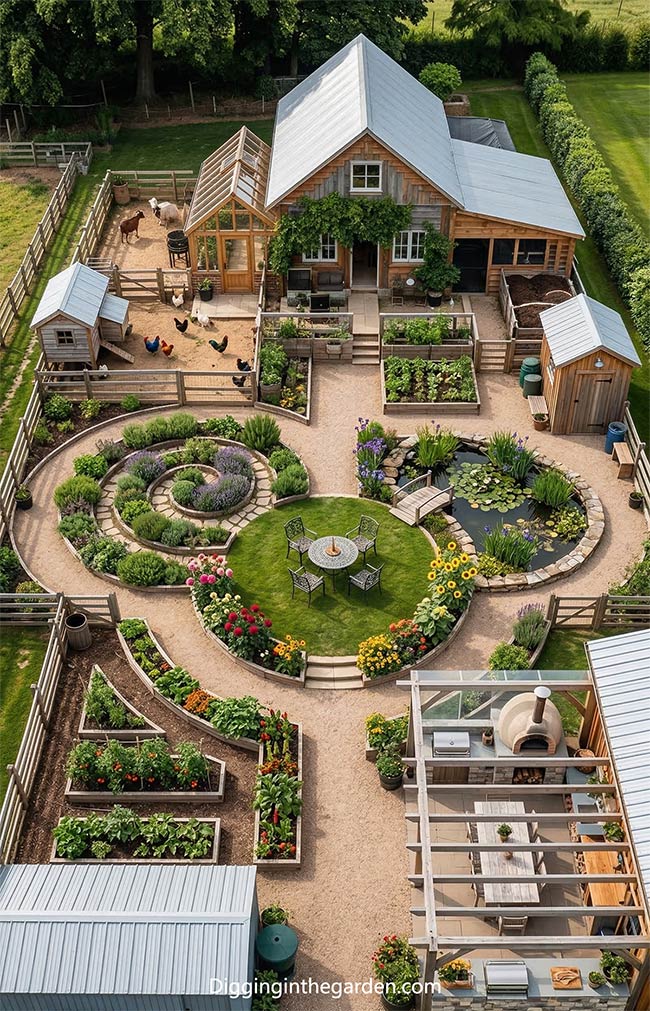
Managing multiple species requires a highly organized paddock system to prevent overgrazing and maintain animal health. This layout uses a central hub for essential infrastructure, like the greenhouse and garden beds, making it easy to monitor everything from one spot. From my experience, keeping the chicken coops and alpaca pens within a clear sightline of the main barn is the best way to ensure safety and efficiency during morning chores.
12. Rustic Stone-Terraced Hillside Barn
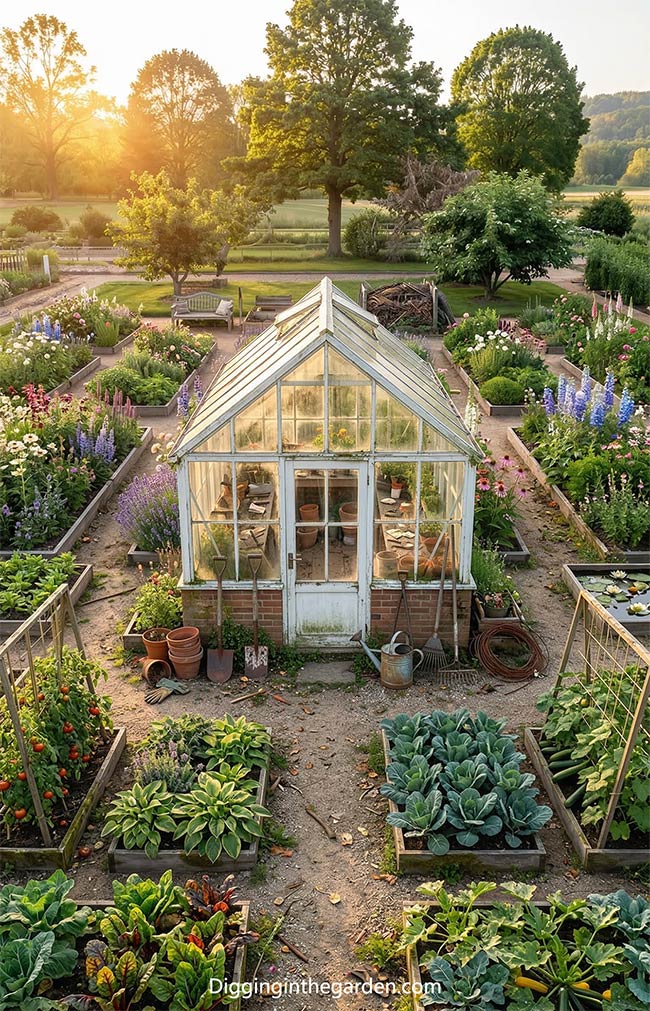
Stone retaining walls are a must for any sloped property, providing the necessary stability for a tiered garden and a hillside barn. This design creates a beautiful, winding journey from the lower greenhouse up to the hilltop retreat.
13. Circular Tiny House Community Garden
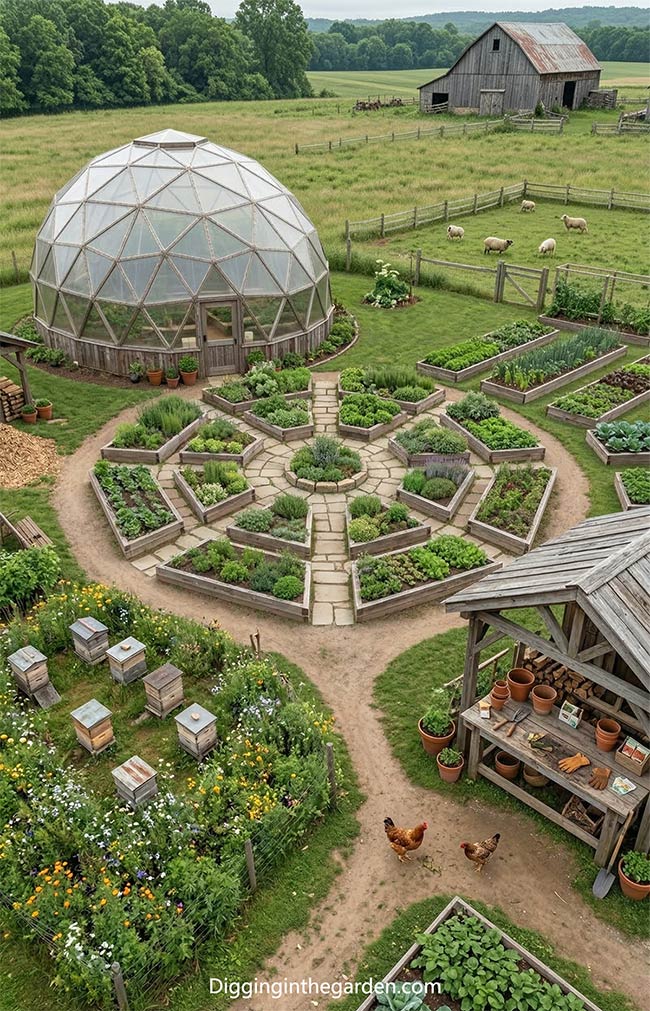
Designing tiny houses in a circular formation around a central garden fosters a deep sense of community and shared responsibility. It is a brilliant way to maximize a small footprint while ensuring every resident has direct access to fresh produce and a communal fire pit. I’ve found that this “village” approach is perfect for multi-generational families or cooperative homesteaders looking to live sustainably together.
14. Sustainable Modern Farm with Living Roofs
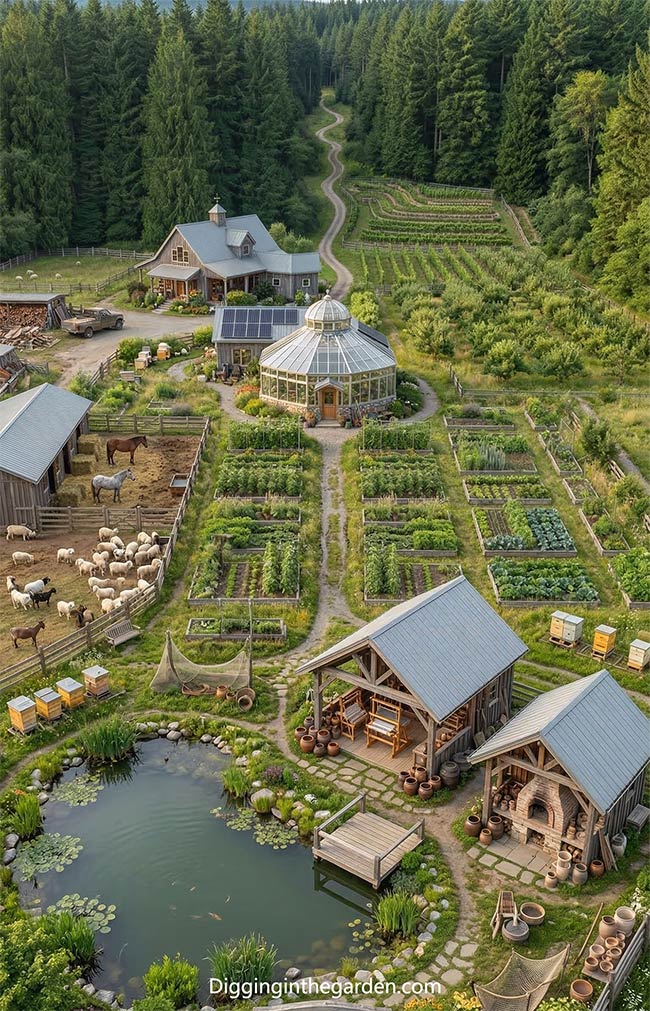
Integrating living roofs and a central duck pond transforms a functional farm into a modern, self-sustaining ecosystem. The natural water feature provides a serene environment for livestock while acting as a natural cooling system for the property.
15. Systematic Grid Vegetable Garden & Poultry Zone
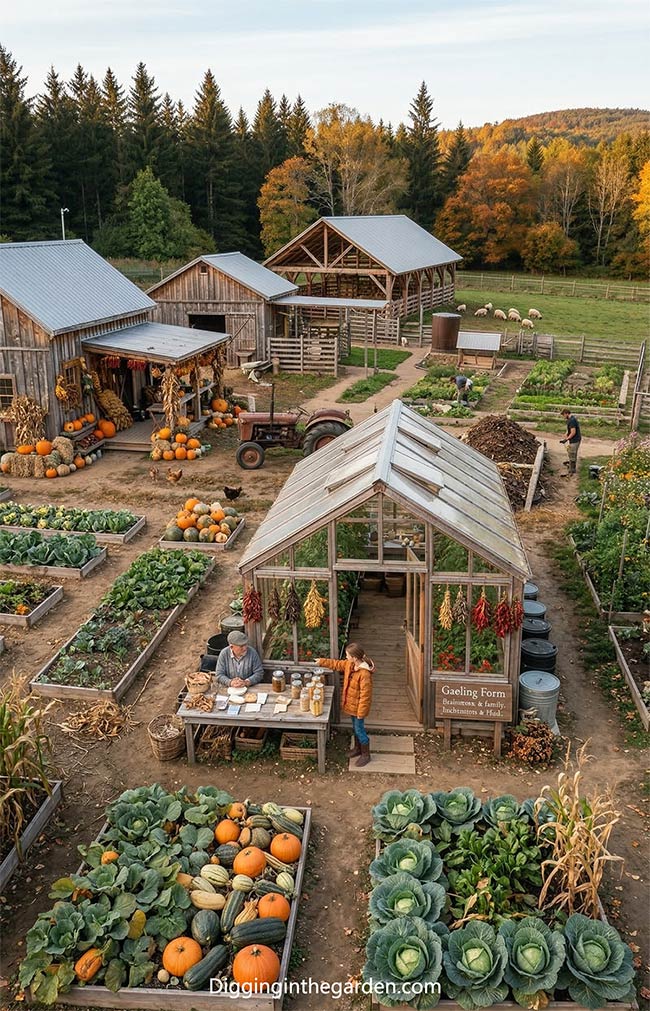
A systematic grid layout for vegetable beds is the gold standard for high-density urban farming. Placing the chicken coop in the corner allows for easy nutrient cycling, as you can directly transport garden waste to the hens. It’s an efficient, tidy design that makes managing a diverse harvest feel simple and rewarding.