
Grass creeping into your flower beds ruins a clean yard instantly. You spend hours pulling weeds, only for them to return next week. A solid brick edge acts as a ruthless barrier. It locks the soil in and keeps the mower out perfectly.
1. A rigid barrier for loose gravel

Loose gravel constantly spills into garden soil, creating a messy maintenance nightmare. Setting red bricks vertically along the curve builds a rigid barrier. It keeps the crushed stone locked exactly where it belongs.
2. The flush mower track

String trimmers easily destroy delicate edge flowers. A flush double-brick border solves this instantly. It creates a safe, solid track for the mower wheel to glide over.
3. Elevated planters blocking mud runoff

Rain washes loose front-yard soil onto flat entry paths constantly. Building elevated brick planters completely eliminates this muddy runoff. The masonry frames the walkway beautifully, adding essential vertical dimension to a flat facade.
4. Taming severe slopes

Steep lawns cause dangerous mowing and heavy erosion. Terracing the incline with brick retaining walls creates flat, manageable grass tiers instantly.
5. Defining sweeping garden boundaries

Sprawling garden beds easily blur into walkways during storms. A low, curved brick wall sharply defines the boundary. It prevents wet soil from spilling over onto the clean paving.
6. Breaking up rigid wooden fences
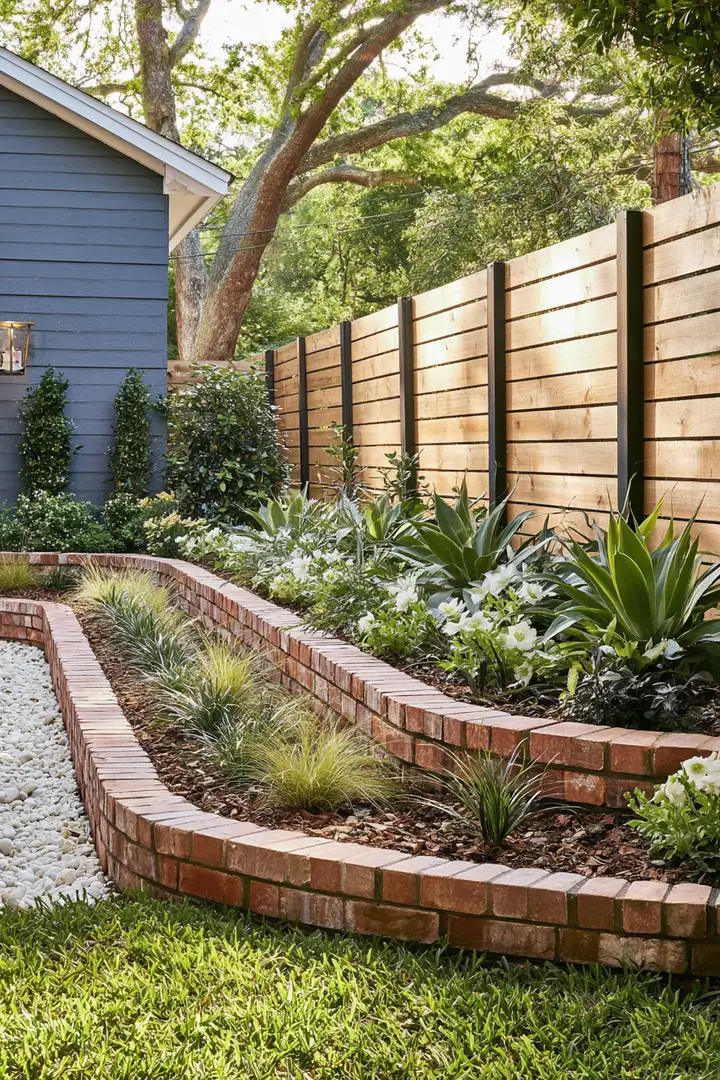
Flat modern fences often feel too rigid. Introducing tiered, curving brick borders breaks up those harsh straight lines. This clever elevation also guarantees deep, fast drainage for sensitive succulents.
7. Stopping the mulch wash
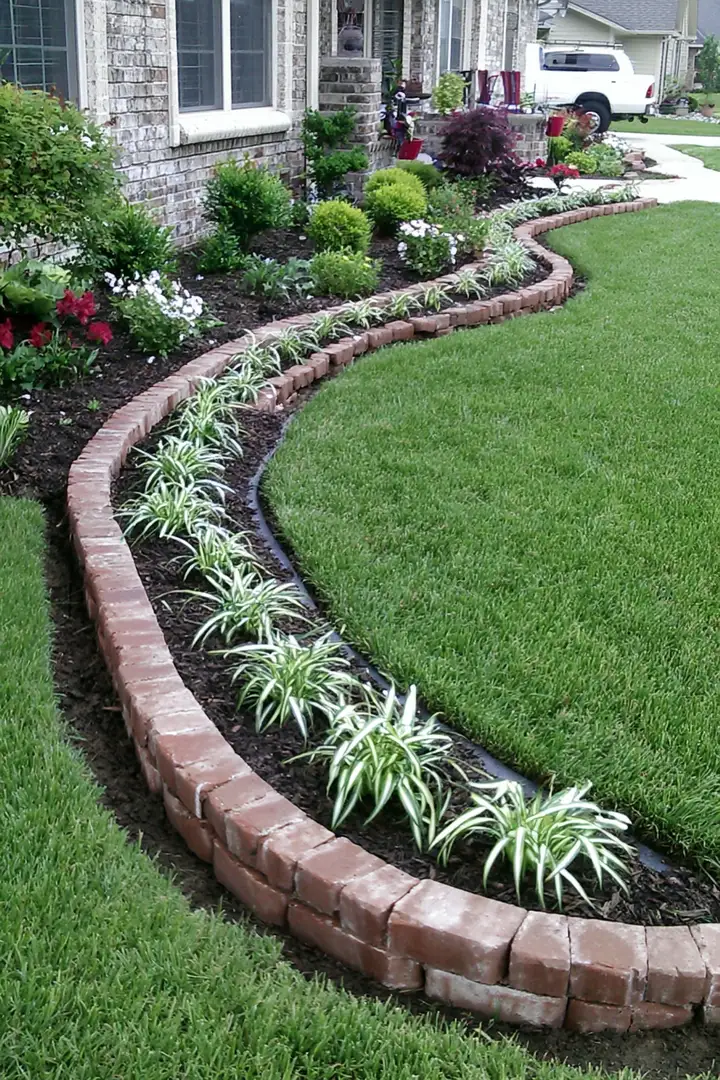
Heavy rain washes dark mulch directly into green lawns. A stacked brick border stops this muddy mess entirely.
8. Carving out sunken lounge zones

Open dirt yards lack structured entertaining spaces. Using raw brick to build staggered planters acts as a smart retaining system. It naturally carves out a clean, sunken gravel lounge area away from the damp soil.
9. The zero-trimming herringbone edge

Manually edging grass against dense shrubbery is an exhausting weekly chore. Installing a wide, flush herringbone brick strip provides a flawless mowing margin. You just roll the mower right over it. Zero trimming needed.
10. Unified root protection
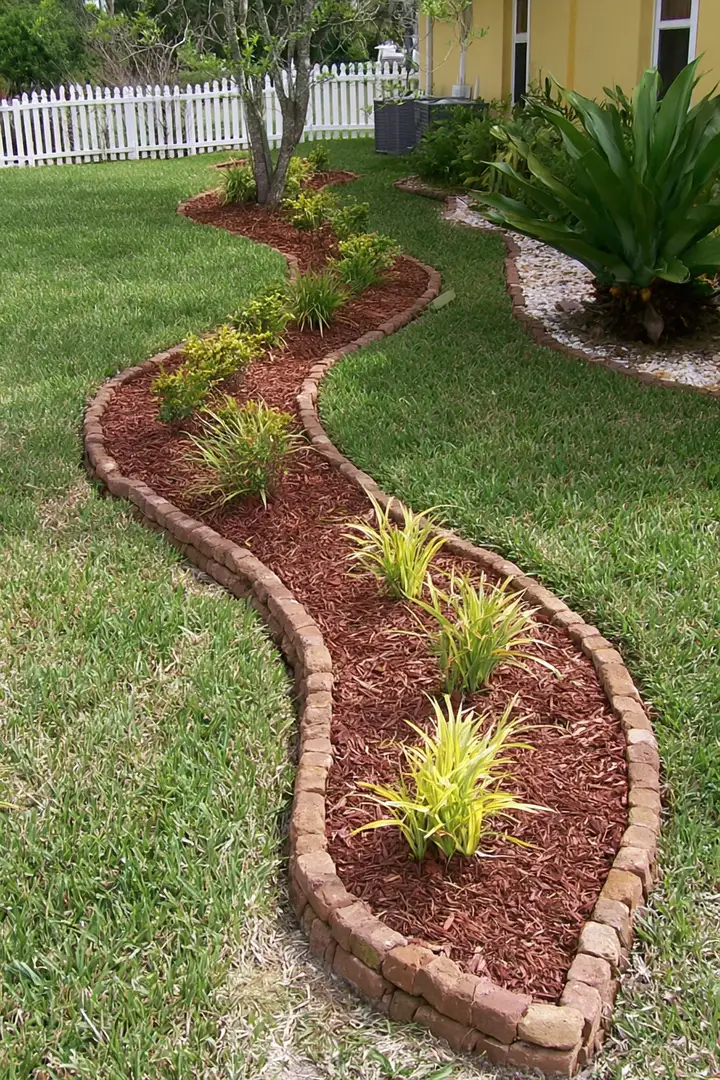
Navigating a mower around scattered tree roots easily damages the trunk. Enclosing the drip zone with a winding brick border creates one unified mulch bed. It protects the roots perfectly.
11. Stopping the mulch bleed

Mulch bleeds into the lawn after every rainstorm. Stacking a single line of raw brick slightly above grade stops this immediately. It locks the soil in place and gives the mower a safe, hard boundary.
12. Guiding traffic and protecting trees
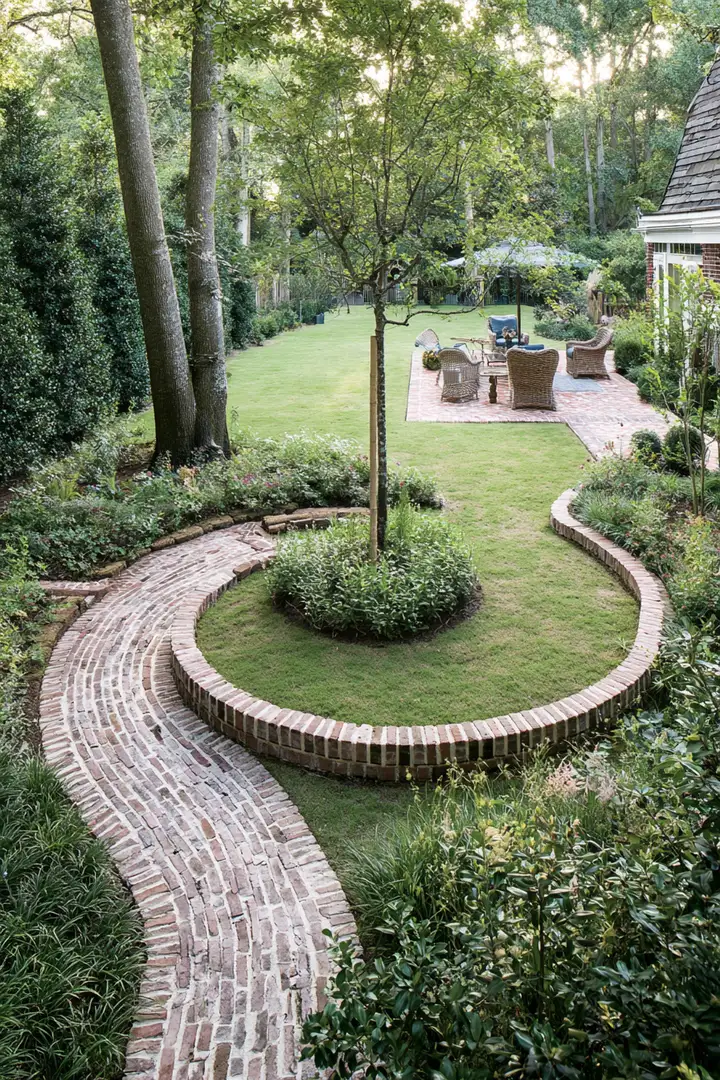
Heavy foot traffic quickly ruins soft grass. Laying a solid, winding brick path directs movement perfectly. Adding a matching raised ring around a young tree protects the fragile trunk from aggressive string trimmers entirely.
13. The clean pond barrier
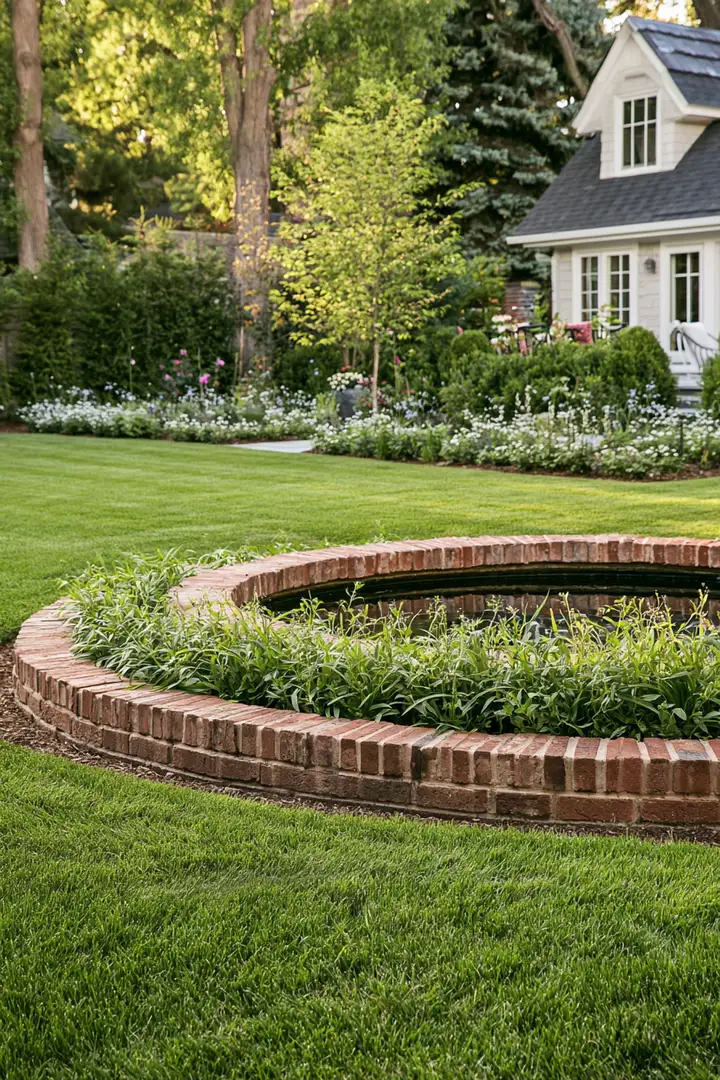
Grass clippings constantly blow into open water features. A raised brick ring stops the mess instantly. Clean and simple.
14. A firm mower track

Aggressive flower beds often swallow the grass. A flush brick border fixes this. It provides a crisp visual line and a firm mower track.
15. Keeping concrete walkways spotless

Flat concrete walkways easily collect loose dirt. Adding a raised brick ribbon along the edge blocks the soil entirely. It keeps the entry path totally clean while adding a classic texture to boring cement.
16. The driveway buffer zone

Tires easily crush garden beds near curved driveways. Installing a wide, flush brick margin creates a solid buffer zone.
17. Managing heavy driveway runoff

Huge concrete driveways dump massive rainwater into garden beds. Building a brick-lined gravel trench along the edge catches this runoff. It handles the flood beautifully.