Floating high above the yard often feels more awkward than luxurious. You are totally exposed to the wind, the neighbor’s curious eyes, and the harsh afternoon sun. It usually ends up as a dead space where an abandoned grill slowly rusts. But a high-elevation outdoor space does not have to feel like a flimsy afterthought bolted to your siding. Grounding the architecture with raw materials or adding clever windbreaks completely flips the script. You can easily turn a cramped upper patio into a deeply private, highly functional retreat that actually connects with the landscape below.
1. Instant privacy screens for tight city balconies
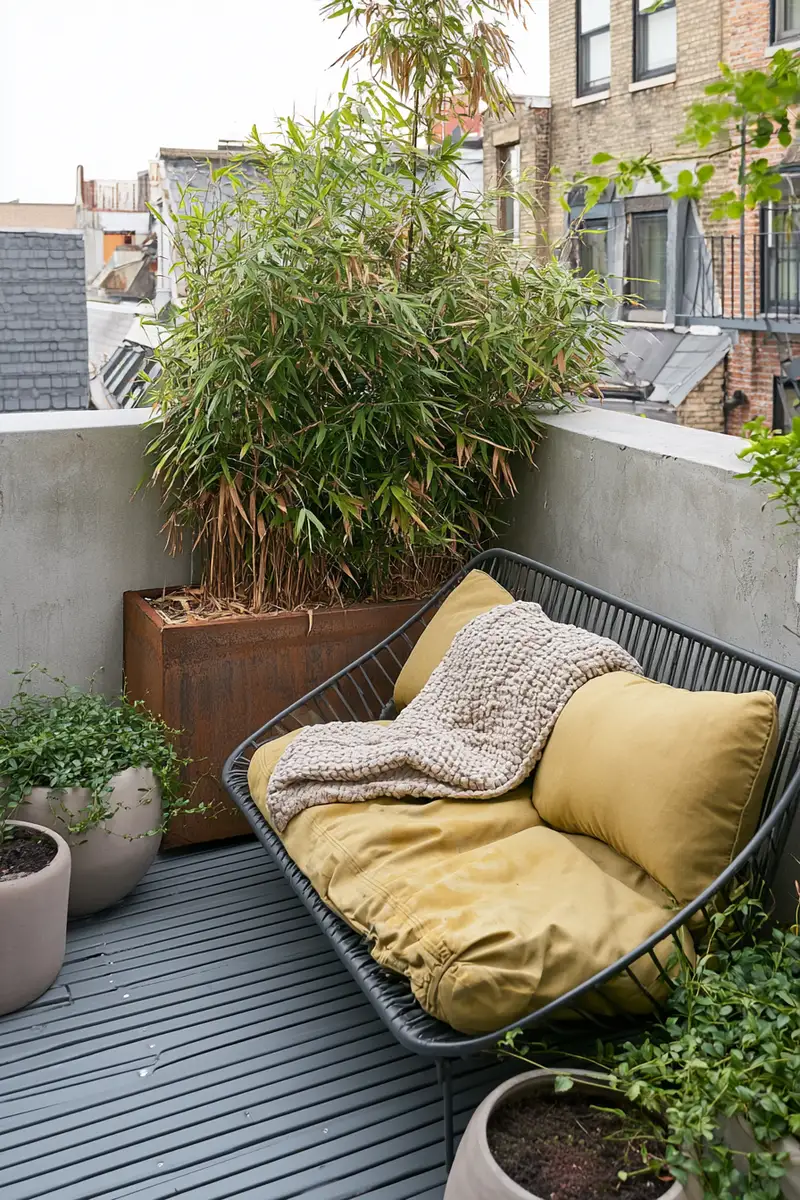
Urban balconies usually mean zero privacy from the building next door. Neighbors can see right onto your seating area. Planting dense bamboo in a narrow metal trough solves this instantly. It creates a solid green wall. You block unwanted sightlines without eating up valuable floor space on a tiny deck.
2. Hiding the ugly grill station completely
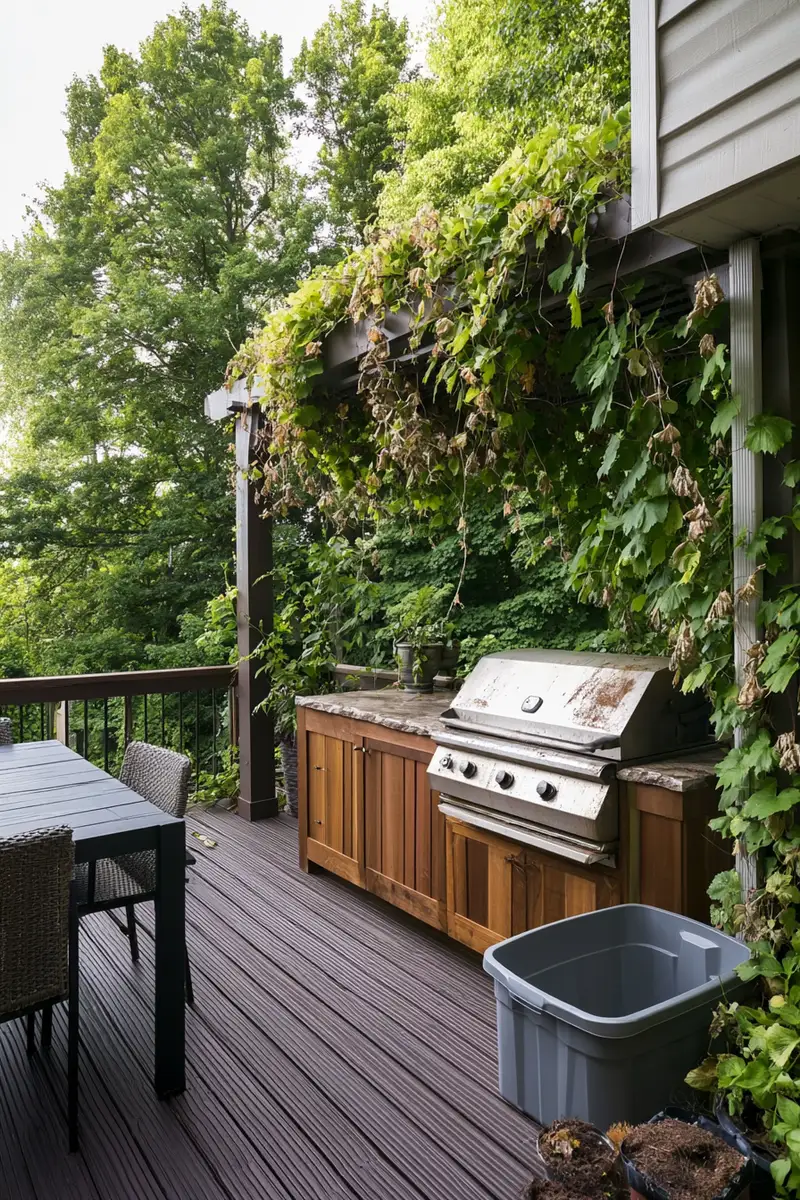
Standalone grills often look like bulky metal boxes. They easily ruin the natural vibe of a wooden deck. Building a custom timber cabinet base for the grill integrates it completely into the architecture. Adding an overhead structure draped in heavy, fast-growing vines is a very smart move. It provides much-needed shade for the chef on hot summer afternoons. It also softens those harsh stainless steel edges beautifully. The whole cooking zone feels built-in and permanent.
3. Heavy stone pillars anchor the space
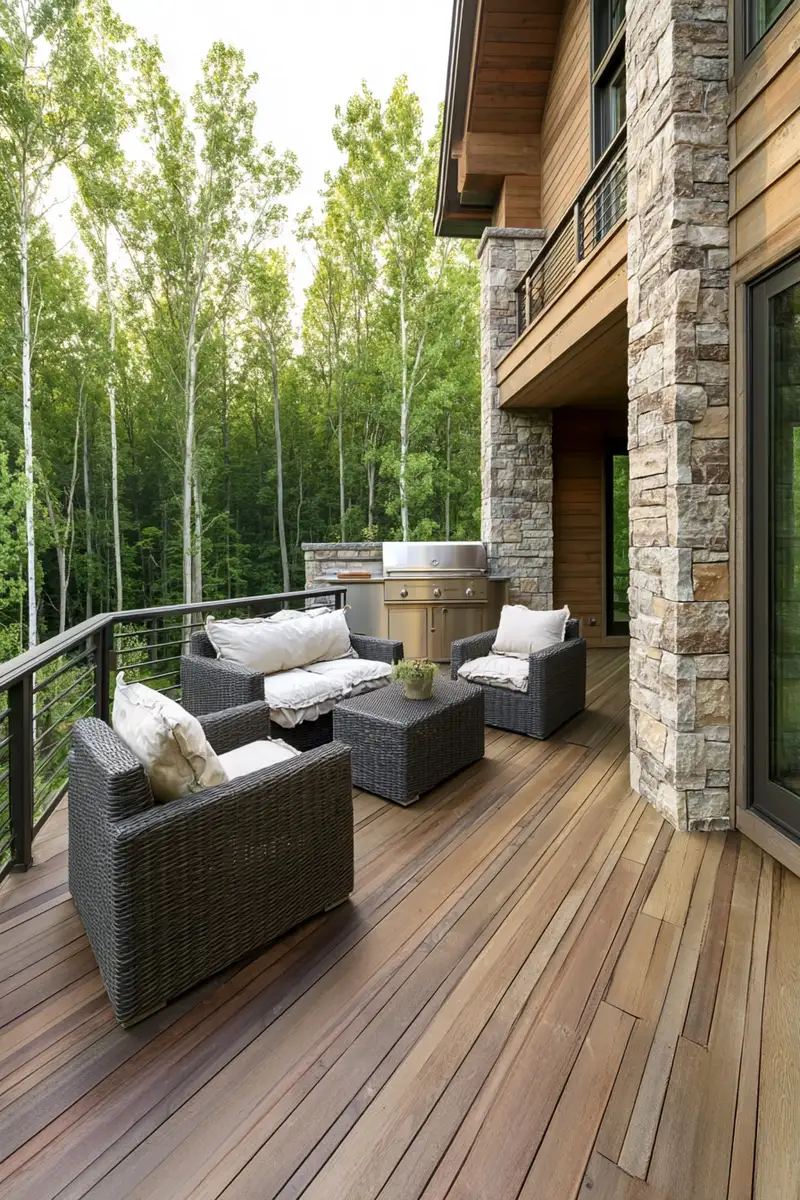
High-elevation decks can feel flimsy in strong winds. Wrapping the support columns in heavy, stacked stone adds serious visual weight. It creates a secure, solid corner for the outdoor furniture.
4. Pushing seating to the absolute edge
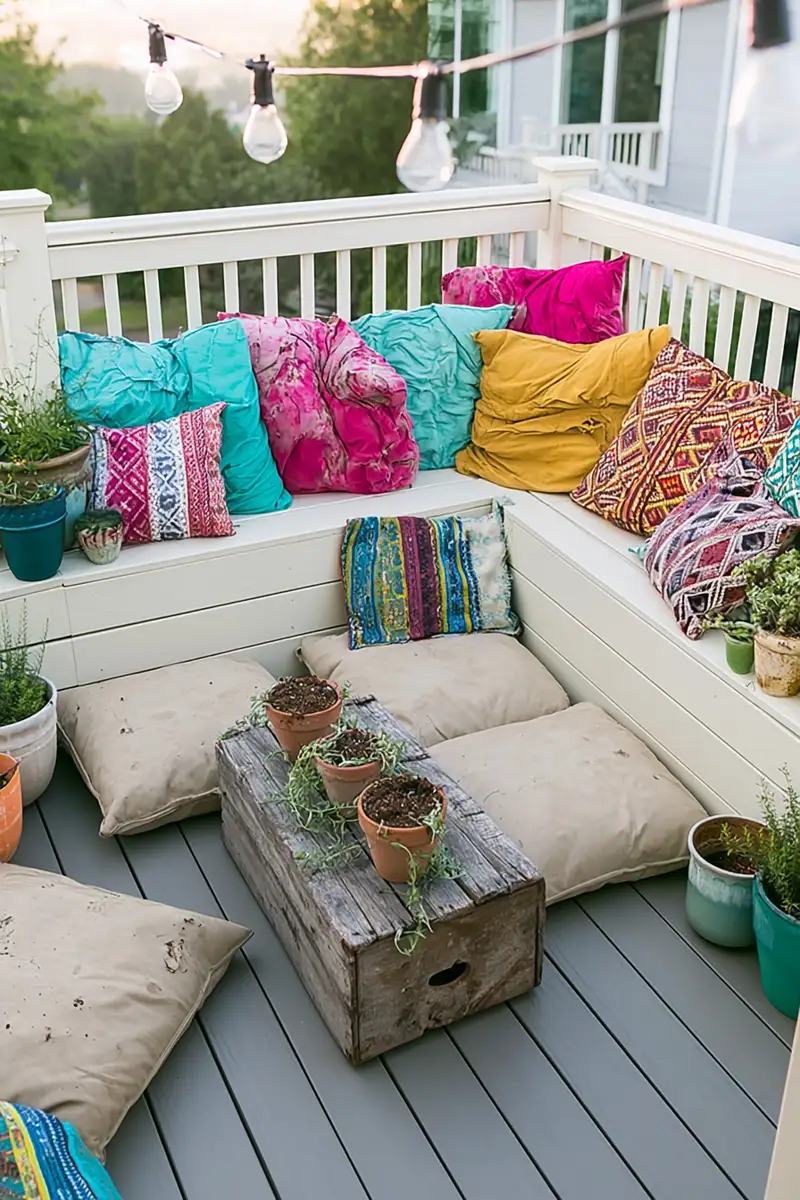
Trying to squeeze standard patio chairs onto a micro-balcony is a common mistake. It usually leaves no room to actually walk. A built-in corner bench pushes the footprint to the absolute edge of the railing. It maximizes the usable floor area. This setup handles a crowd surprisingly well.
5. Let vines hide the gap
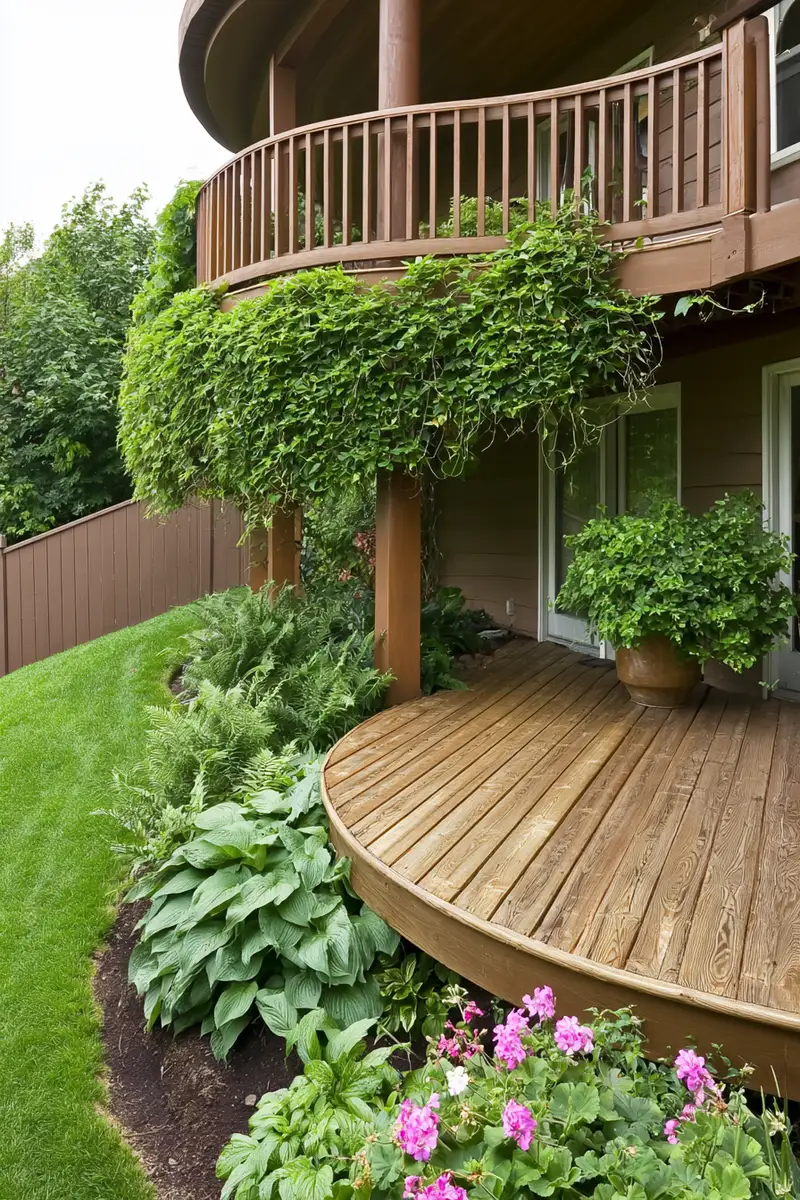
The dark void under a second-story deck is a classic landscaping headache. Letting aggressive creeping vines cascade down acts as a living curtain. It smoothly connects the upper architecture to the lower garden beds.
6. Reclaiming the dark space underneath
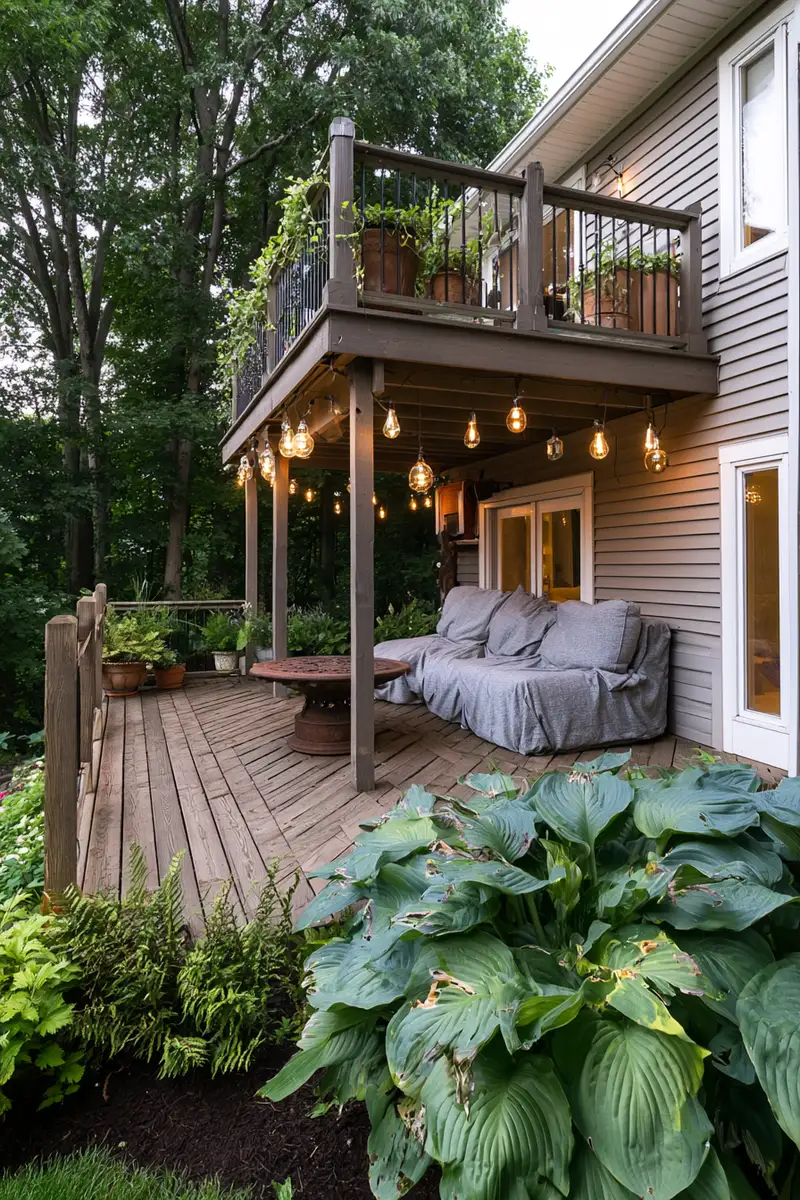
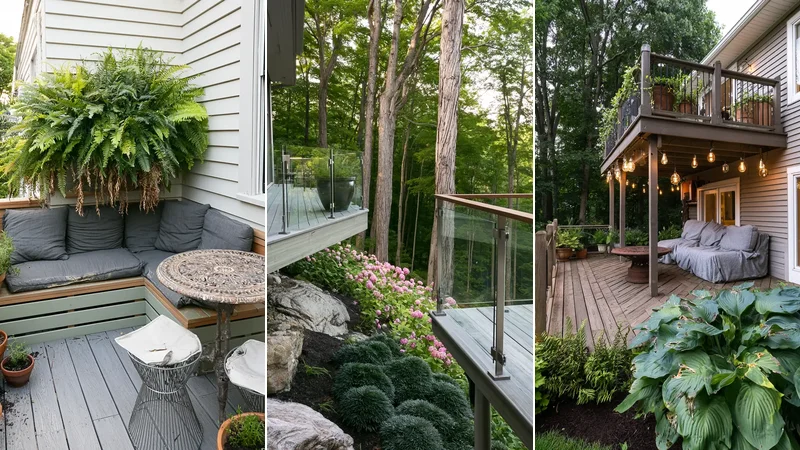
An exposed lower patio is basically useless during a summer downpour. It just gets muddy and wet. Sealing the floorboards of the upper deck changes everything. It creates a dry, protected outdoor room down below. String lights and a heavy, covered sofa instantly turn a dark corner into a prime lounging spot. You get double the footprint without pouring a new foundation.
7. Frameless glass
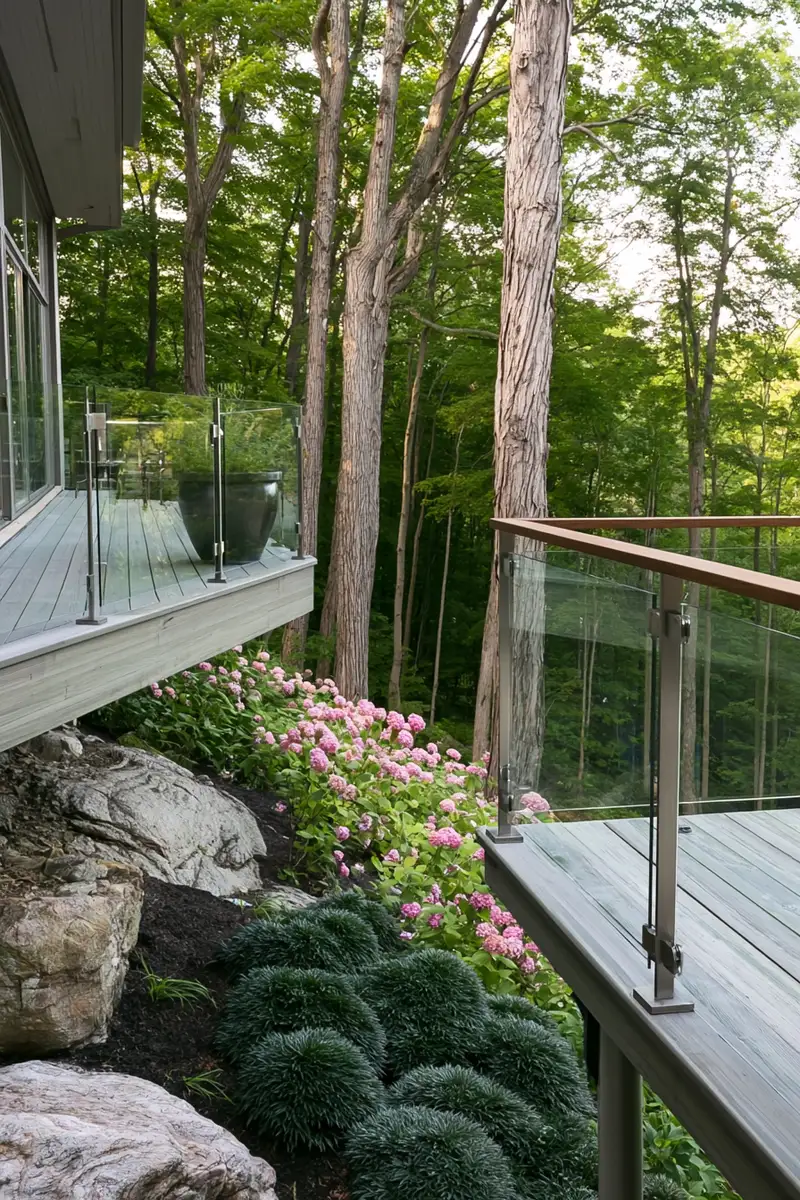
Thick wooden balusters completely ruin a good forest view. Installing clear glass panels keeps the boundary safe but makes the barrier practically invisible. You see the trees, not the fence.
8. A fully enclosed seasonal transition zone
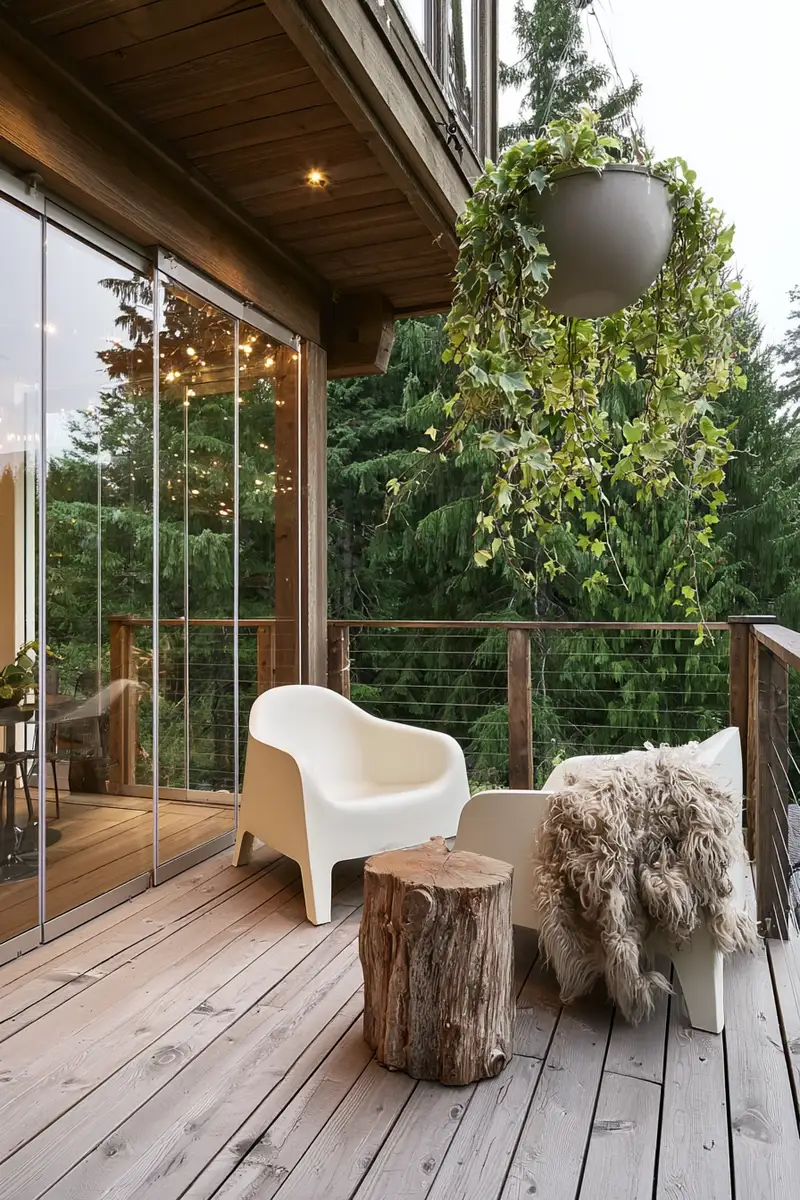
Mosquitoes and cold autumn winds easily cut the outdoor living season short. Installing a track system with sliding glass panels solves this perfectly. You can open it entirely on a hot July afternoon. Or pull it shut to create a warm, bug-free sunroom in October. It makes the deck functional year-round.
9. Navigating a steep yard drop gracefully
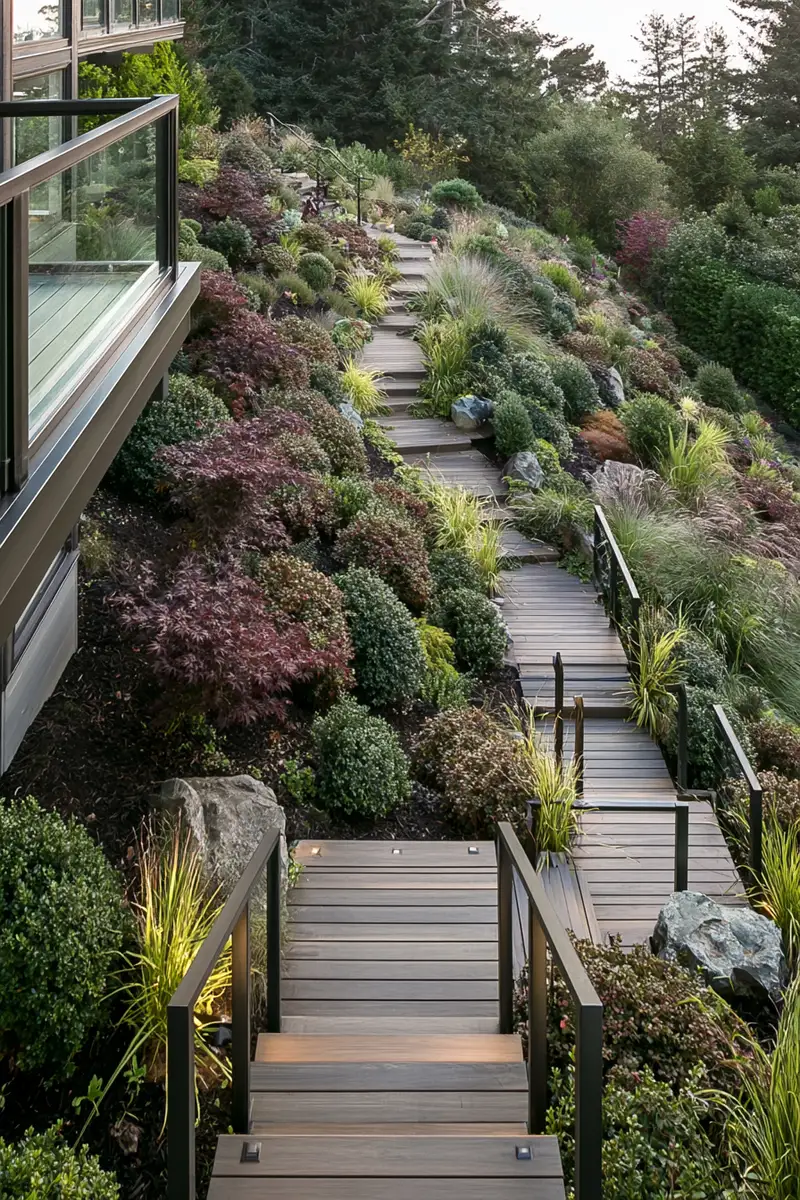
Connecting a high deck to a severely sloped backyard is a huge logistical problem. A straight ladder just looks cheap and unsafe. Building a long, meandering wooden staircase directly into the hillside handles the elevation drop safely. Flanking those stepped paths with dense, deep-rooted shrubs stops soil erosion entirely. It also softens the harsh wooden lines of the steps. The walk down becomes a scenic garden path instead of a scary climb.
10. Grounding a high structure
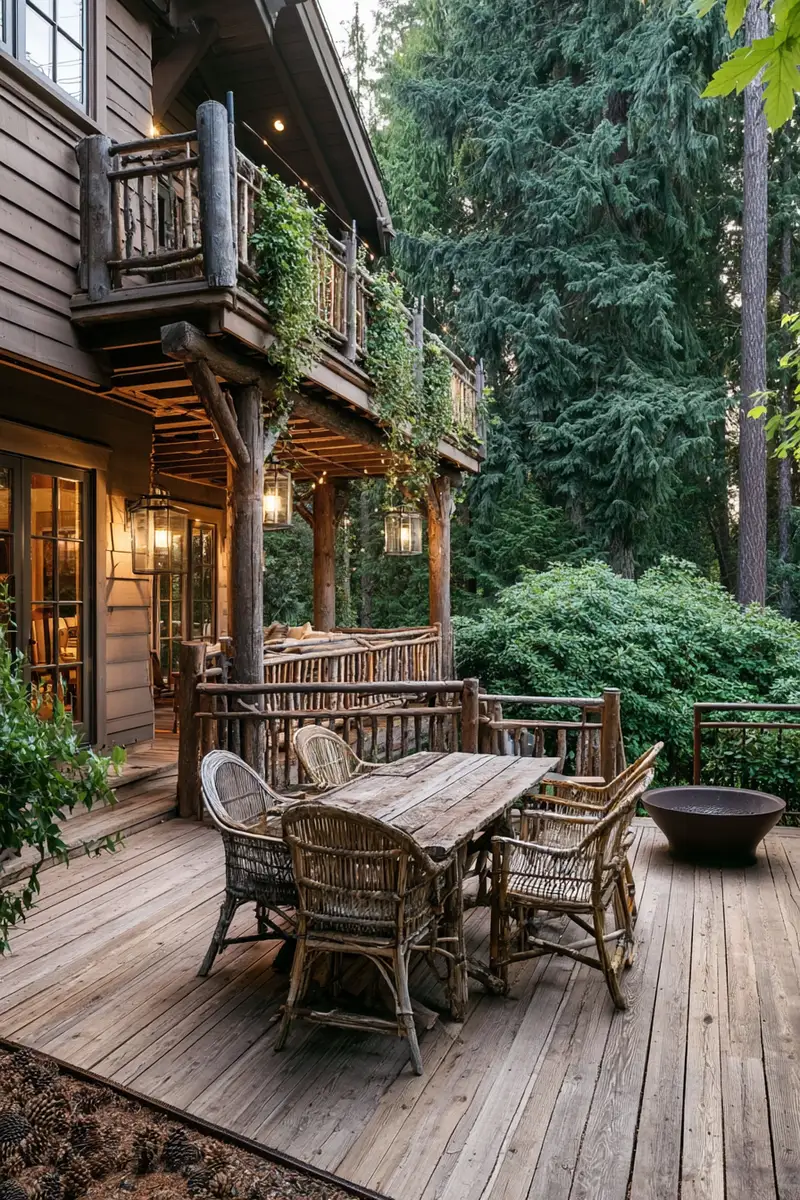
Upper-level additions frequently look awkward. They seem completely detached from the yard below. Using massive, raw log posts to support the second story changes the whole dynamic. It physically anchors the upper deck to the forest floor.
11. Floor-to-ceiling storage that actually works
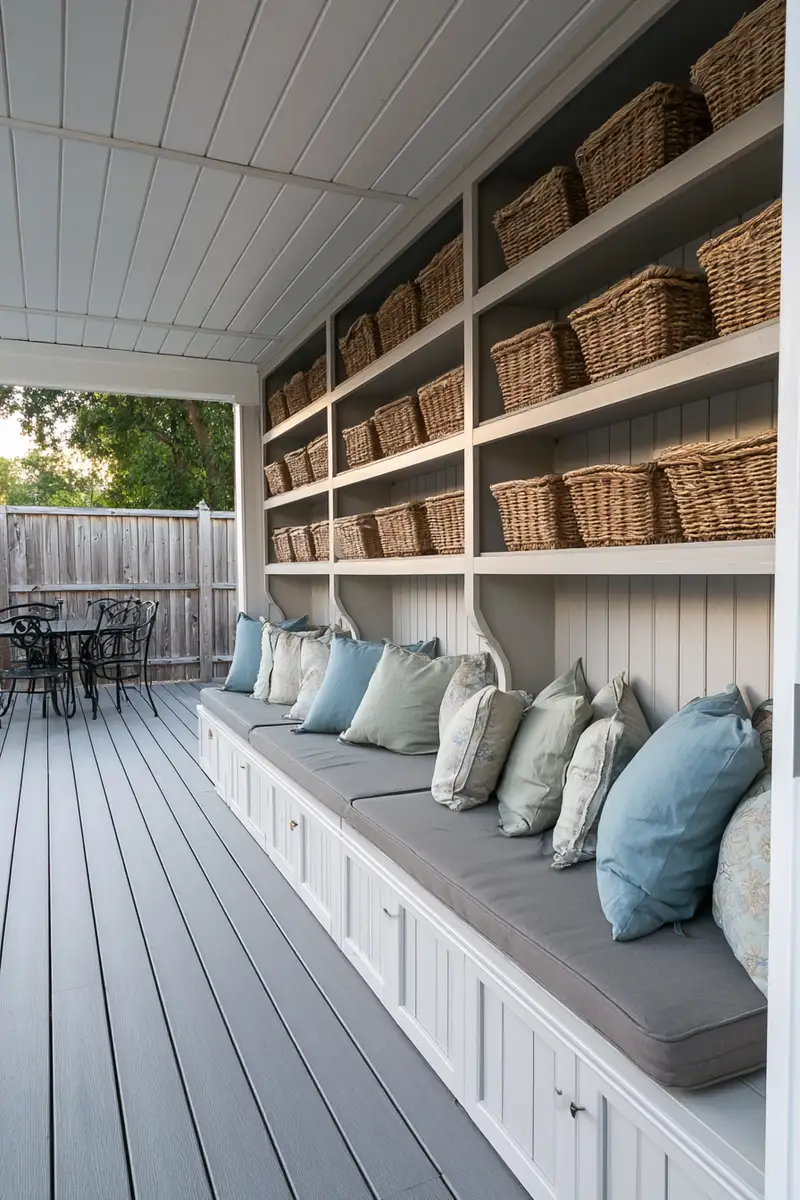
Keeping outdoor cushions and dining gear clean is a constant battle. Most people just throw them in a bulky plastic bin that ruins the deck’s aesthetic. Building an entire wall of open shelving paired with identical wicker baskets completely changes the game. It hides the messy items out of sight while adding incredible texture to the space. Meanwhile, the integrated bench creates a massive seating zone without taking up extra square footage in the center of the porch. It feels exactly like a high-end mudroom brought outside.
12. Softening harsh architecture with natural water features
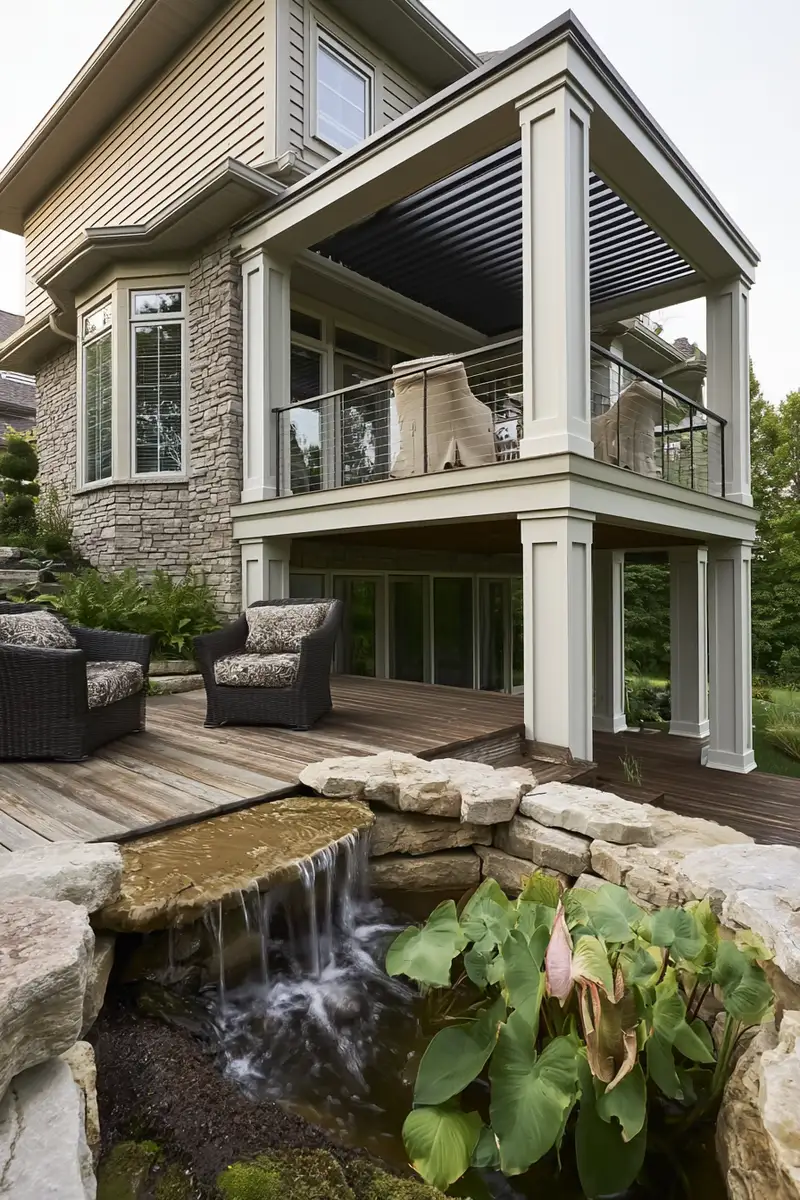
A giant two-story deck often looks like a heavy, rigid block just bolted to the back of a house. Integrating a natural stone waterfall right at the base of the lower patio softens those harsh architectural lines immediately. The sound of moving water naturally drowns out neighborhood noise. Plus, that sleek louvered roof on the upper level offers instant climate control for hot afternoons.
13. The protected library nook
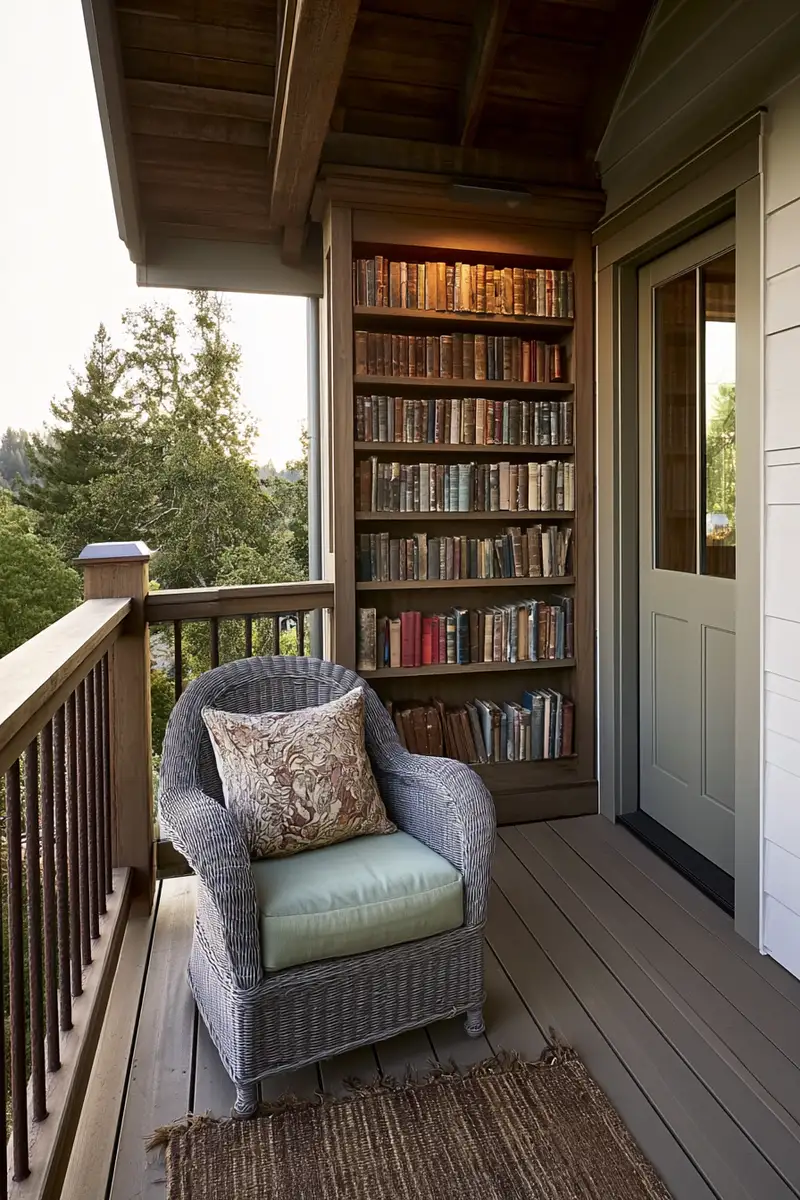
Narrow, deep balconies usually end up feeling like useless outdoor hallways. Turning that dead end into a custom bookshelf is a brilliant use of a deep roof overhang. A single comfortable chair turns a wasted corner into the ultimate quiet reading retreat.
14. Movable jungle screens
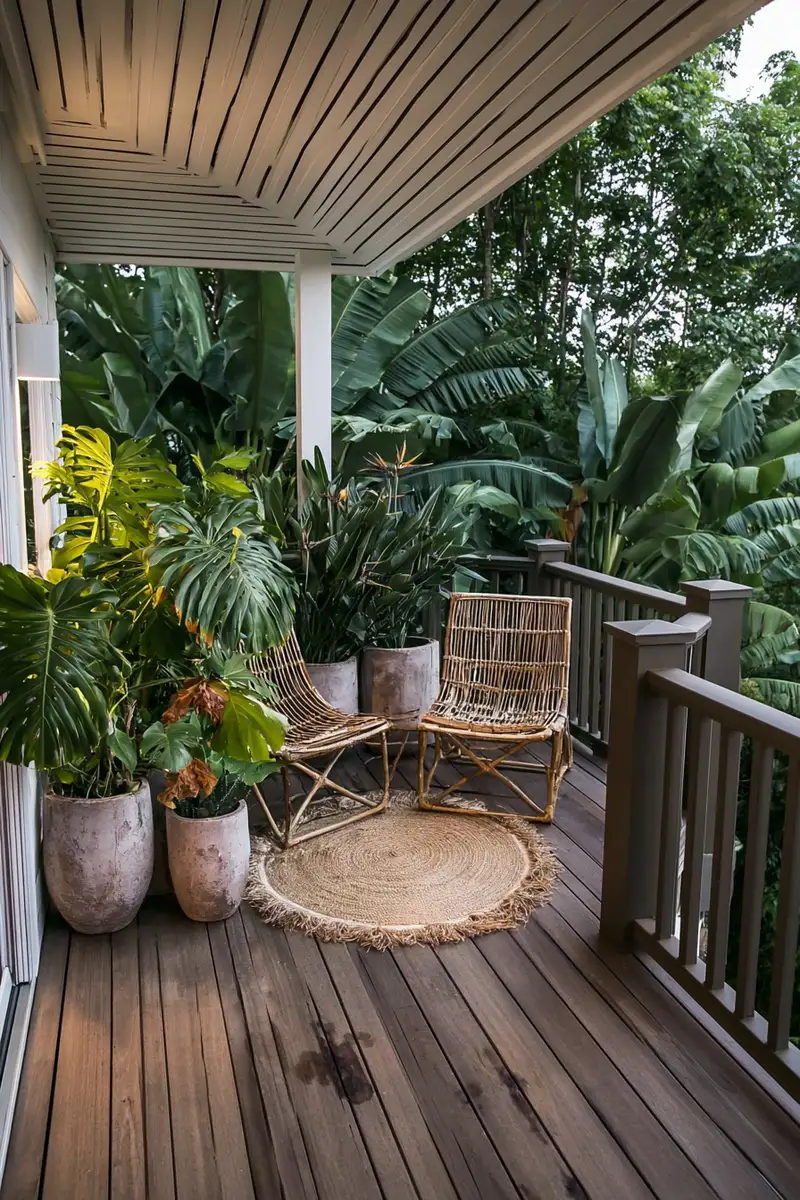
Permanent privacy walls often block the summer breeze entirely. Using a tight cluster of oversized tropical potted plants acts as a flexible, living screen instead. You get instant privacy from the neighbors. The heavy concrete pots anchor the layout, while the large monstera leaves filter sunlight beautifully without closing off the space.
15. Fixing the awkward corner
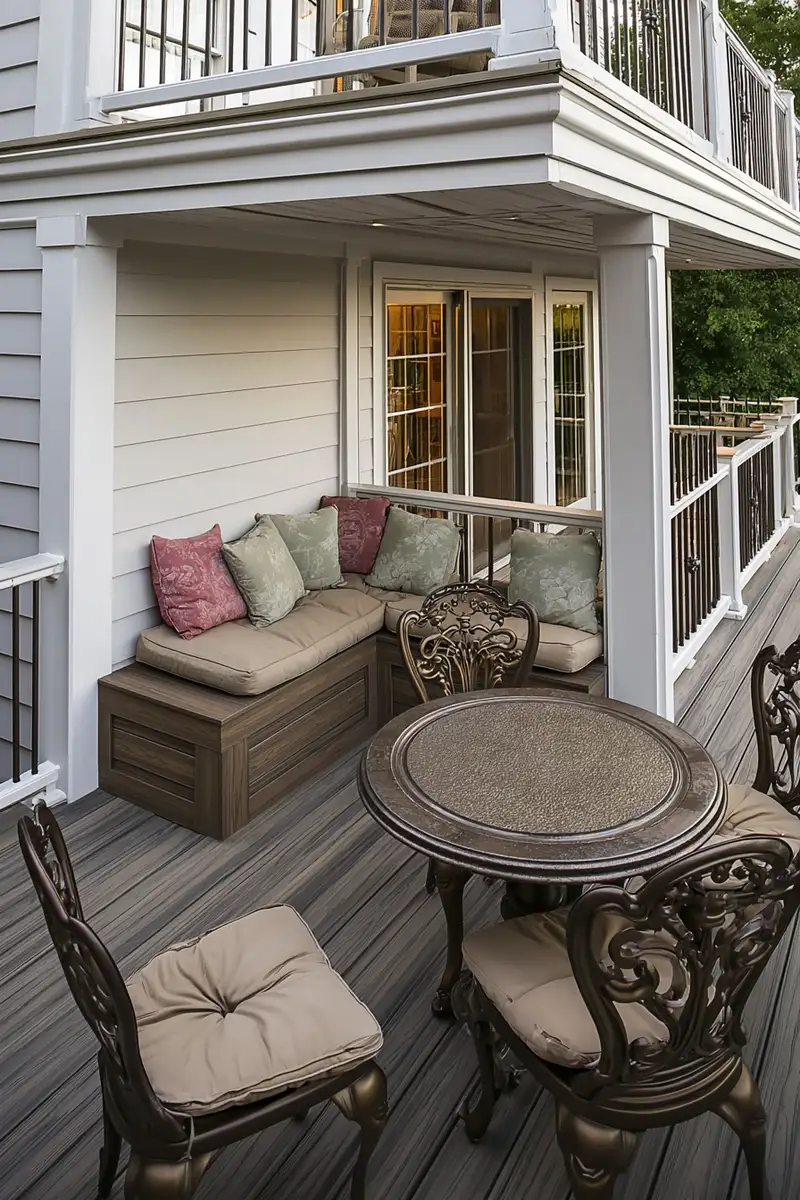
Standard patio furniture never fits perfectly into tight right angles. You always lose valuable space. Sliding a custom L-shaped wooden bench directly into the corner solves the seating puzzle perfectly. It frames the small dining table and keeps the main walkway completely clear. Problem solved.
16. A living roof for sun-baked upper decks
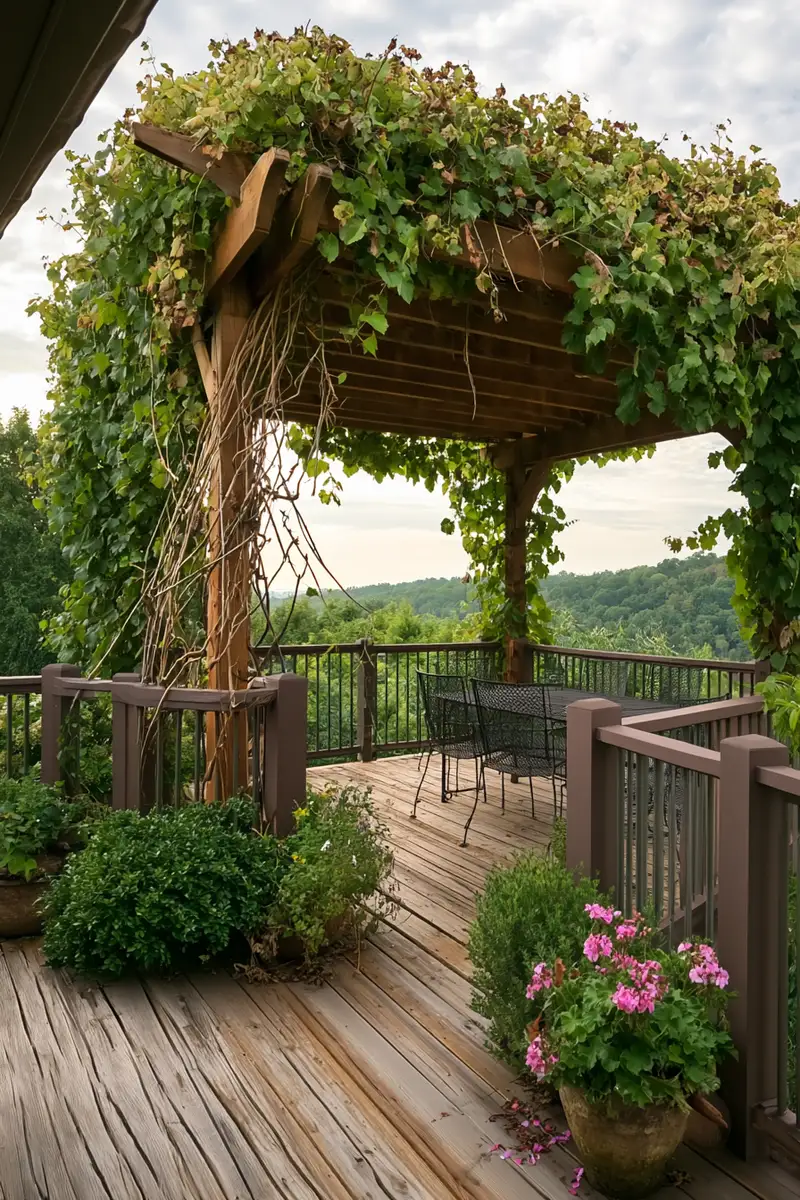
High-elevation decks suffer from brutal afternoon sun. Flimsy patio umbrellas just blow away in the wind and constantly need adjusting. Building a heavy timber pergola and letting aggressive vines swallow the roof creates deep, reliable shade. It naturally cools the dining area below. The rugged wood frame easily handles strong valley winds while the greenery ties the high structure back to the surrounding landscape.
17. The overhead canopy trick
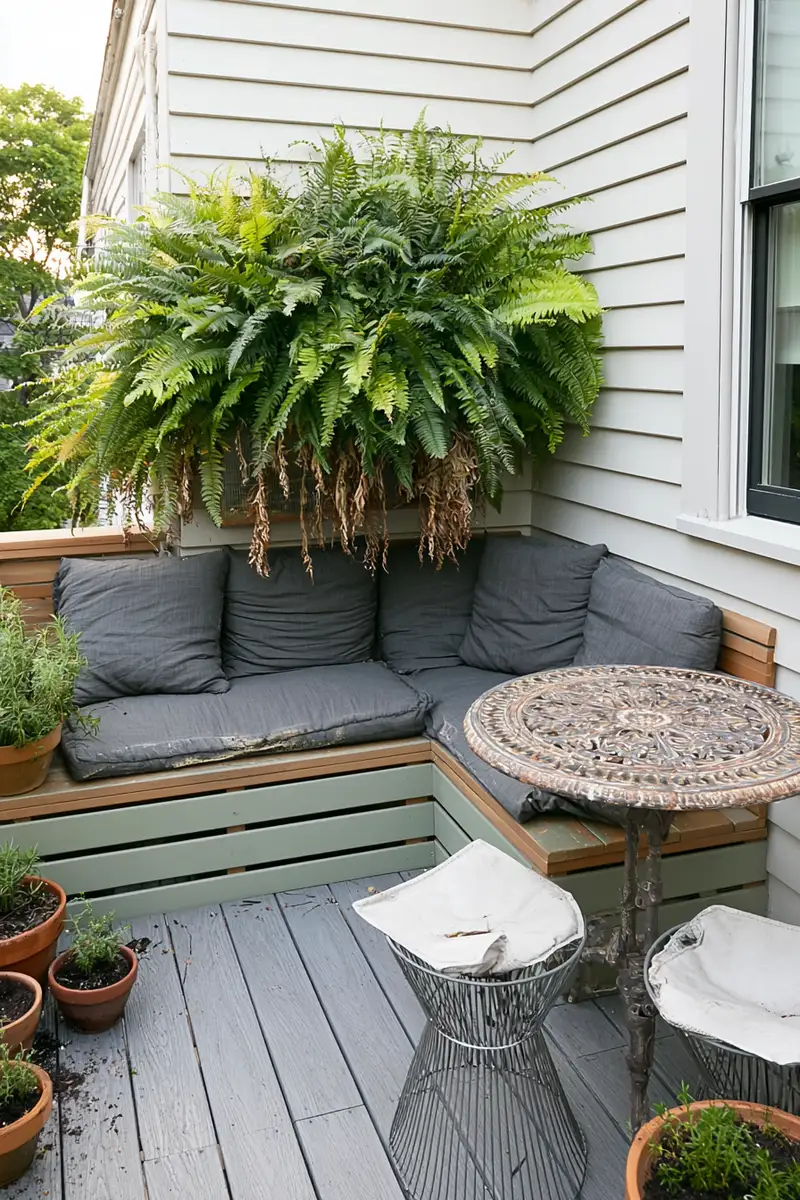
Tiny balconies wrapped in siding often feel sterile. Floor space is too precious for large planters. Hanging a massive, overflowing fern directly above the corner seat acts like a green canopy. It draws the eye up and brings lush volume to the space without stealing a single square inch of the deck floor.
18. Breaking the grid with an integrated Zen corner
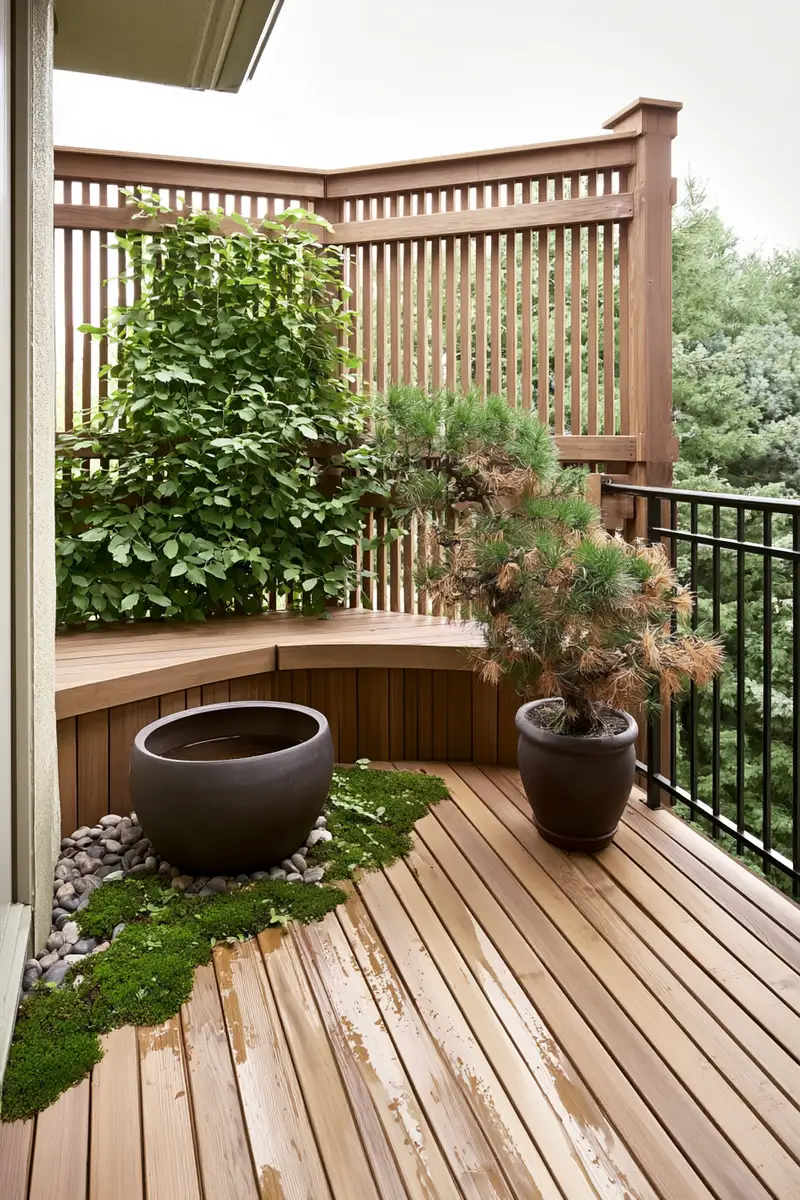
Standard wooden decks are usually defined by rigid straight lines and harsh 90-degree angles. This layout completely breaks that boring grid. A curved corner bench immediately softens the boundary of the balcony. But the real genius here is integrating live moss and river rocks directly into the floorboards. It blurs the strict line between the built structure and nature. Add a simple water bowl and a potted pine, and an otherwise useless corner becomes a highly architectural Zen retreat.
19. Zoning with mixed materials
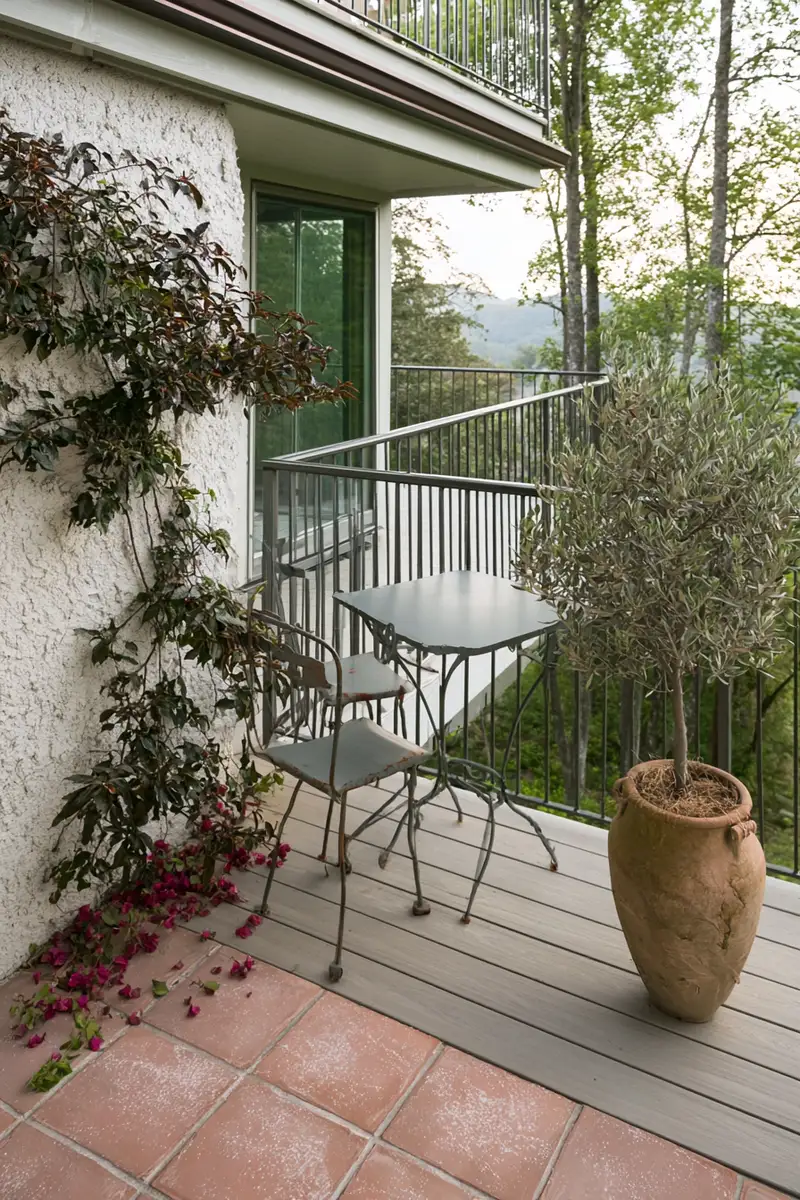
Long, narrow balconies are notoriously difficult to decorate. They easily end up looking like bowling alleys. Changing the flooring material halfway through is a very clever zoning trick. The warm terracotta tiles clearly define the dining spot. The grey decking acts as a visual walkway. A compact folding bistro set and a single olive tree finish the relaxed Mediterranean aesthetic perfectly.